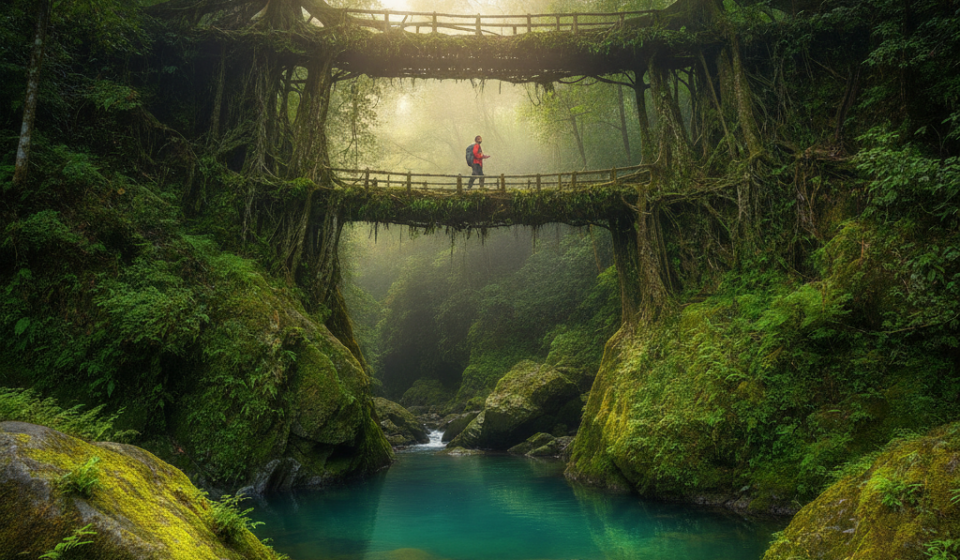

Deep in the moist, subtropical forests of Northeast India, nature and human ingenuity have fused to create some of the most remarkable architectural wonders on Earth. While modern infrastructure relies on concrete and steel, the indigenous Khasi and Jaintia communities have spent centuries weaving living tree branches into sturdy, self-strengthening structures. Visitors from across the globe trek through rugged terrain to witness and walk upon the living root bridges meghalaya. These biological structures represent an ancient heritage of sustainable design, showing how humans can cooperate with nature rather than conquer it. For travellers seeking an extraordinary travel experience that challenges conventional ideas of architecture, exploring the living root bridges meghalaya is an absolute necessity. The journey requires physical effort, but the sight of these organic bridges spanning pristine forest streams remains etched in memory forever. It is basically a living testament to human patience and ecological coordination. These structures are not just static tourist destinations. They are growing, breathing systems that provide critical ecological and commercial support to the local Khasi people.
Key Takeaways
- Unique Bio-Engineering: Hand-grown over decades by the indigenous Khasi and Jaintia tribes using the living aerial roots of the Ficus elastica tree.
- Double-Decker Trek: The most famous bridge is the Double-Decker in Nongriat, requiring a challenging trek of 3,500 stone steps each way.
- Accessible Option: The single root bridge in Riwai (near Mawlynnong) is highly accessible, requiring only a gentle 15-minute walk.
- Sustainable Durability: Unlike concrete or steel, these bridges grow stronger and more resilient with age, with some lasting over 500 years.
- Travel Smart: The post-monsoon and dry winter months (October to April) offer dry trails and clear, turquoise river pools.
Understanding the Living Root Bridges Meghalaya
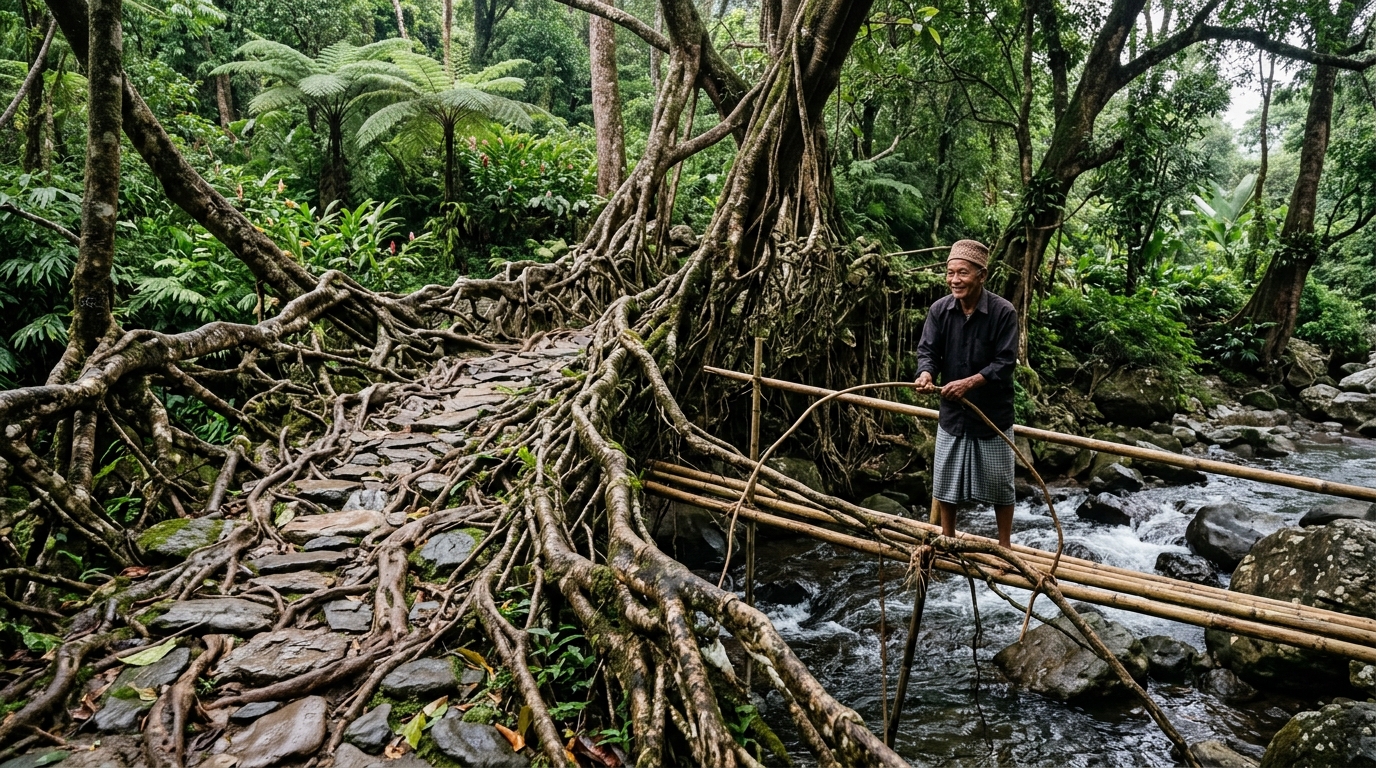
To appreciate these wonders fully, one must understand that a living root bridge is grown rather than built. The local communities utilise the aerial roots of the Ficus elastica tree (commonly known as the Indian rubber tree) to span fast-flowing rivers. When young rubber trees grow along riverbanks, their strong, flexible root systems naturally search for anchor points. Khasi elders noticed this trait centuries ago and developed a method to guide these roots across wide chasms, forming the foundation of what are now famous living root bridges meghalaya. Understanding this timeline is crucial for appreciating the patience required to manage these biological monuments. A bridge grown today is an investment in the village’s future, decades down the line.
The Science and Botany Behind Ficus Elastica
The biology of the Ficus elastica is perfectly suited to the wet climate of the East Khasi Hills. The tree produces strong aerial roots from high up its trunk that are incredibly pliable when young, yet become tough and wood-like as they mature. In a region with some of the highest rainfall globally, standard building materials fail quickly while these organic structures thrive:
- High Pliability: Young roots are highly flexible, allowing them to be guided across wide chasms without snapping.
- Moisture Resilience: Unlike iron which rusts or wood which rots, these living root bridges meghalaya thrive on extreme humidity and continuous rainfall.
- Natural Elasticity: The roots absorb the immense mechanical stress of rushing monsoon waters, bending rather than breaking.
- Thickening with Age: The constant rain keeps the host trees healthy, causing the root systems to grow thicker, heavier, and more stable over centuries.
Over decades, these guided roots graft together through a biological process called inosculation (which is basically the natural fusion of tree branches), forming a single, solid structure that withstands severe floods. While critics might think living infrastructure is unstable, in this environment, this living wood acts as a highly resilient, self-repairing system. When a root is damaged, the tree simply grows a new one to replace it.
The Indigenous Khasi and Jaintia Architecture
The construction of the living root bridges meghalaya is a masterclass in ancient engineering. Local builders do not use blueprints or power tools. Instead, they utilise hollowed-out trunks of betel nut trees or bamboo scaffolding to direct the growing roots horizontally across rivers. Once the roots reach the opposite bank, they take firm root in the soil. Over a span of 15 to 30 years, the bridge becomes strong enough to support human weight. The indigenous builders then place flat stones along the pathway to create a stable walkway.
This is a multi-generational gift (a bridge started by a grandfather is often completed and utilised by the grandchildren), which demonstrates the long-term thinking of the Khasi culture. Unlike concrete, which deteriorates with age, these living root bridges meghalaya grow stronger over centuries, with some estimated to last for over 500 years. The War-Khasi people have turned civil engineering into a shared community heritage.
Famous Living Root Bridges Meghalaya to Explore
While dozens of these organic structures are scattered across the forested valleys, certain specimens stand out for their scale and historical significance. When travellers search for the most iconic living root bridges meghalaya, they generally focus on a few famous locations. Each site offers a distinct atmosphere, ranging from easily accessible roadside spots to deep-jungle treks. Finding the right balance between adventure and comfort is key to an enjoyable trip.
| Bridge Name & Location | Trekking Difficulty | Steps / Distance | Best Suited For |
|---|---|---|---|
| Double-Decker Bridge (Nongriat) | Challenging (Strenuous) | Approx. 3,500 steps (each way) | Adventure seekers, fit hikers, and overnight trekkers |
| Single Root Bridge (Riwai) | Very Easy (Gentle walk) | 15-minute flat stone pathway | Families, senior travellers, and casual day-trippers |
| Secret Bridges (Pynursla & Kudeng Rim) | Moderate to Hard | Unmarked jungle trails (requires local guide) | Off-the-beaten-path explorers seeking solitude |
The Double-Decker Root Bridge of Nongriat
Located in the village of Nongriat, the double-decker structure is arguably the most famous example of all the living root bridges meghalaya. Officially known as Jingkieng Nongriat, this structure features two parallel paths grown on top of each other. The locals added the second tier decades ago when extreme monsoon waters rose high enough to submerge the lower walkway. To reach this remarkable site, travellers must walk down a steep path of approximately 3,500 stone steps from Tyrna village.
The effort is significant. But still, the reward is unmatched. The bridge spans a clear, turquoise pool perfect for resting after the long descent. It stands as an absolute symbol of Meghalaya tourism, surrounded by basic homestays for those wishing to spend the night in the forest, listening to the roar of nearby waterfalls.
The Single Root Bridge of Riwai
For those wanting to witness these wonders without the physical strain of a 3,500-step trek, the single root bridge near Riwai village is the ideal alternative. Located just a short distance from Mawlynnong (famously recognised as the cleanest village in Asia, depending on who you ask), this bridge is highly accessible. A gentle, fifteen-minute walk over a flat stone pathway leads directly to the site. Because of this accessibility, this specimen is one of the most photographed living root bridges meghalaya.
The Riwai bridge spans a picturesque stream surrounded by lush green foliage. It provides a perfect introduction to Khasi bio-engineering for families, seniors, and casual hikers, making it a convenient day-trip option. Although it lacks the dramatic height of the Nongriat double-decker, its pristine setting and thick canopy of leaves offer a highly rewarding visual experience.
The Secret Bridges of Pynursla and Kudeng Rim
If travellers prefer a quiet experience away from crowds, the lesser-known living root bridges meghalaya offer the perfect escape. The village of Pynursla houses several spectacular structures, including the longest single-span root bridge currently known, stretching over 50 meters (according to local survey estimates). Similarly, the remote village of Kudeng Rim in the Jaintia Hills features pristine bridges that remain virtually untouched by tourism.
Trekking to these hidden gems requires hiring a local guide, as the paths are unmarked and wind through thick, ancient forests. Visiting these quiet locations allows travellers to hear the sounds of the jungle and fully appreciate the spiritual connection between the indigenous people and their surroundings. For adventurous souls, these secret paths represent the ultimate wilderness journey.
How to Reach the Living Root Bridges Meghalaya
Reaching the primary living root bridges meghalaya involves a combination of regional air or rail travel, scenic mountain drives, and active trekking. Because Meghalaya is located in a mountainous corner of Northeast India, planning the transport route carefully is essential for a smooth and comfortable journey.
Getting to Meghalaya: Air, Rail, and Road
Reaching the state involves coordinated regional travel. Here are the primary transit options to kickstart your journey:
- By Air: Fly into Lokpriya Gopinath Bordoloi International Airport in Guwahati, Assam, which is exceptionally well-connected to major Indian cities.
- By Rail: Book a train to the Guwahati Railway Station, the major railhead serving the Northeast region.
- By Road: From Guwahati, hire a private taxi or board a shared cab to Shillong (the capital of Meghalaya), a scenic 100-kilometre drive taking about three to four hours.
From Shillong, travellers can arrange local transport to Cherrapunji (locally known as Sohra) or Mawlynnong, which serve as the starting points for treks to the living root bridges meghalaya. The drive from Shillong to Cherrapunji is spectacular, featuring deep gorges, cascading waterfalls, and rolling mist.
The Trekking Route to Nongriat from Tyrna Village
To see the double-decker living root bridges meghalaya, the road journey ends at Tyrna village, roughly 20 kilometres from Cherrapunji. From there, the only way forward is on foot down a steep river valley. The descent involves walking through beautiful dense forests where wild orchids and giant ferns drape the hillsides. The sound of chirping cicadas and distant roaring rivers accompanies hikers along the entire path. Here is a breakdown of the key markers on the trek to the double-decker living root bridges meghalaya:
- Tyrna Village Start: The steep descent begins here. Bamboo walking sticks are highly recommended to save your knees.
- The Split Point: Halfway down, the path splits toward a single root bridge or continues to Nongriat village.
- The Steel Suspension Bridges: Travellers cross two wire bridges spanning deep gorges with crystal-clear water below.
- Nongriat Village: The final destination where the double-decker living root bridges meghalaya are located, along with basic homestays.
This journey is physically demanding (especially the return hike back up to Tyrna), but the incredible forest scenery makes every step worthwhile. Adequate hydration and pacing are crucial to managing the ascent.
Essential Preparation and Packing Guide
An expedition to see the living root bridges meghalaya is not a standard sightseeing tour. It is an active adventure that requires careful planning, appropriate gear, and realistic expectations regarding physical effort. Being well-prepared is the difference between an unforgettable adventure and a painful ordeal.
Physical Fitness and Trekking Difficulty
Before embarking on a trip to the deep living root bridges meghalaya, travellers must assess their physical fitness. The descent to Nongriat is manageable for most, but the return climb up 3,500 steps is a serious test of cardiovascular endurance. It is common to experience sore calf muscles for days. The steep steps are uneven and require constant concentration. Hiking back up can take anywhere from two to four hours depending on pacing and physical conditioning. If travellers have chronic knee issues or severe asthma, the Nongriat trek may not be suitable. For travellers with physical limitations, visiting the Riwai bridge near Mawlynnong is a much safer alternative, providing a similar visual experience without the physical strain.
What to Pack: The Meghalaya Monsoon Essentials
Meghalaya is famous for sudden downpours. Even in the dry season, the humid forest valleys around the living root bridges meghalaya can experience unexpected rain. Packing light, high-performance gear is essential. Storing main bags at a hotel in Cherrapunji and carrying only a light daypack is highly recommended. Consider the following packing checklist for your trek to the living root bridges meghalaya:
| Gear Item | Recommended Type | Why You Need It |
|---|---|---|
| Footwear | Sturdy trekking shoes or trail runners with excellent grip | Wet stone steps are slippery and require solid traction. |
| Rain Protection | Lightweight waterproof poncho or quick-dry rain jacket | Heavy umbrellas are awkward to carry while climbing steep steps. |
| Backpack | Waterproof daypack (20 to 30 litres) | Keeps your dry clothes, camera gear, and snacks safe from moisture. |
| Insect Repellent | Formulations containing DEET or natural citronella | The humid jungle environment has a high concentration of mosquitoes and leeches. |
| Hydration | Reusable insulated water bottle with built-in purification | Crucial for staying hydrated during the humid climb without generating plastic waste. |
Packing light ensures that the steep steps do not become a grueling chore, while quick-drying clothing prevents garments from staying damp in the high valley humidity.
Best Seasons to Tour the Living Root Bridges Meghalaya
Choosing the right time for your journey is critical, as the weather dictates the safety of the trekking trails. The state experiences distinct seasons, each offering a unique perspective of the living root bridges meghalaya.
The post-monsoon and winter months (from October to April) are generally the best time to visit the living root bridges meghalaya. During this period, rainfall is minimal, the weather is cool, and the trails are dry. The water in the river pools beneath the bridges turns a transparent turquoise, perfect for a refreshing swim. Conversely, visiting during the peak monsoon season (from June to September) offers a vastly different experience. Rain is incredibly intense, turning local waterfalls into roaring giants. During these months, the living root bridges meghalaya look spectacular, draped in wet moss with wild rivers rushing beneath them. But still, paths become slippery and landslides are common, requiring extreme caution.
Sustainable Tourism and Preservation of the Bridges
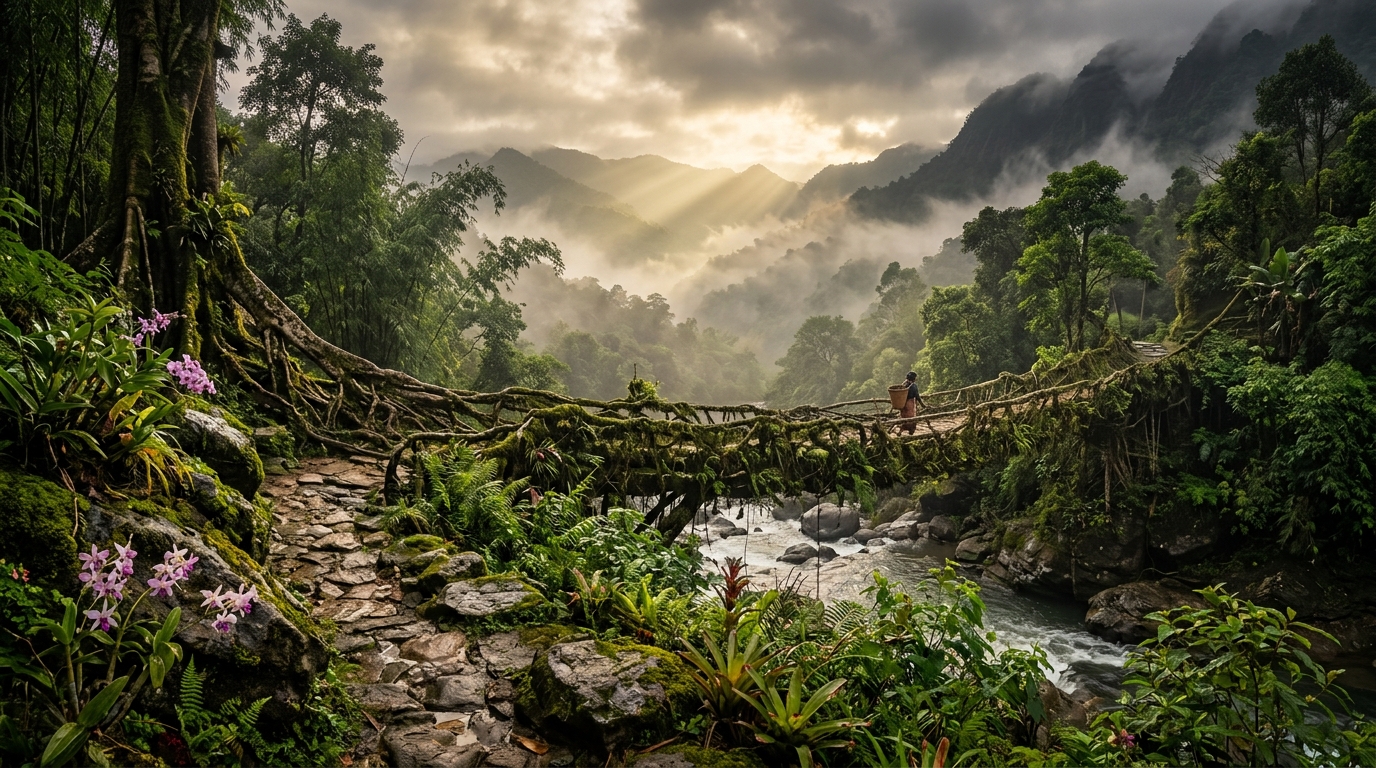
As global interest in the living root bridges meghalaya continues to grow, the influx of tourists presents both economic benefits and environmental challenges. These organic structures are living organisms, highly sensitive to human impact. To protect the fragile living root bridges meghalaya, local Khasi communities enforce strict rules. Tourists are prohibited from stepping on young roots, peeling bark, or littering. Overcrowding can stress the soil around the tree roots, potentially weakening the structures. The village councils (known locally as the dorbars) actively monitor the sites. To ensure these wonders survive, travellers must practice low-impact tourism. Hiring local guides directly supports the economy and ensures compliance with cultural norms. By travelling responsibly, visitors contribute to the ongoing preservation of the unique living root bridges meghalaya.
TravelDham Custom Meghalaya Tour Packages
Planning an expedition to Northeast India can feel overwhelming due to remote terrain and complex logistics. At TravelDham, we specialise in crafting custom, hassle-free itineraries that let travellers focus entirely on the beauty of their journey. Our specialised Assam-Meghalaya tour packages provide a mix of active adventure and deep cultural immersion, with standard luxury being a secondary priority.
Whether looking to conquer the 3,500 steps to the double-decker living root bridges meghalaya or preferring a leisurely tour of clean villages, we handle every detail. From booking reliable transport and arranging homestays to securing experienced indigenous guides, our team ensures a smooth travel experience. Let us manage the complexities while travellers experience the magic of the living root bridges meghalaya firsthand.
Frequently Asked Questions About Living Root Bridges Meghalaya
How are the root bridges of Meghalaya built?
The creation of the living root bridges meghalaya is a collaborative effort between nature and local Khasi builders. They guide the flexible aerial roots of the Ficus elastica tree across rivers using temporary bamboo or betel nut trunks. Once the roots anchor in the soil, they grow stronger over several decades, grafting together to form a solid, living walkway.
How long is the trek to the double-decker root bridge?
The trek to the double-decker living root bridges meghalaya in Nongriat village starts from Tyrna and takes roughly two hours to descend. The return journey is an uphill climb of 3,500 steps and typically takes between two to three hours, depending entirely on physical fitness and pacing.
Are there entry fees to visit the root bridges?
Yes, small entry fees are collected by local village cooperative committees at sites like Nongriat and Riwai. These nominal fees (usually around 30 to 50 rupees per person) are used directly for the maintenance of pathways, cleaning trails, and supporting the community members who protect the living root bridges meghalaya.
Can children and seniors visit the living root bridges?
While the arduous trek to the double-decker living root bridges meghalaya in Nongriat is not recommended for young children or elderly travellers due to the steep, exhausting steps, the single root bridge at Riwai is highly suitable for all ages. The flat, short walk allows everyone to appreciate these wonders without strenuous physical exertion.