The Ultimate Guide to Touring Motorcycles in India: Choose Your Perfect Ride for Adventure

Long-distance riding across the subcontinent demands a machine that balances mechanical dependability with ergonomic endurance. Over the past decade, highways have expanded and remote passes have become accessible, triggering a dramatic shift in how riders approach long journeys. Selecting a dedicated touring motorcycle india riders can rely on requires a precise understanding of how specific engineering choices perform under demanding local conditions. From the high-altitude dirt tracks of Himachal Pradesh to the smooth multi-lane highways of the golden quadrilateral, each terrain demands distinct capabilities from a chassis and engine. Finding the ideal touring motorcycle india provides is no longer a matter of simply purchasing the most expensive machine on the market. Instead, riders must analyze power delivery, suspension travel, and long-term mechanical reliability (which can vary wildly depending on the brand). A miscalculation in these areas can transform a highly anticipated adventure into a lesson in physical exhaustion.
Key Takeaways
- Engine Performance: Prioritize low-end torque and a flat torque curve over high peak horsepower for navigating Indian highways and mountain passes.
- Ergonomics & Comfort: Ensure a neutral rider triangle (upright posture) and a well-padded seat to minimize fatigue during long-distance rides.
- Terrain Suitability: Match your bike type (ADV, Cruiser, or Sports Tourer) with your primary destinations, ensuring adequate ground clearance (minimum 170 mm).
- Reliability & Support: Choose brands with extensive rural service networks if traveling to remote zones like Spiti, Ladakh, or the Northeast.
The Rise of Long-Distance Motorcycle Touring in India
Motorcycle touring in India has undergone a major shift over the last fifteen years. Historically, long-distance journeys were undertaken on standard commuter motorcycles or heavy, single-cylinder machines that lacked modern safety features and suspension travel. The road environment of the country was similarly challenging, with poorly maintained state highways and limited access to roadside assistance. Today, the expansion of high-quality national expressways and the growth of active riding communities have altered this situation completely. A dedicated touring motorcycle india enthusiast chooses now is designed to cover hundreds of kilometers a day with minimal rider fatigue.
Several factors have contributed to this growing culture of highway exploration:
- Improved Mechanical Standards: Modern mid-capacity touring bikes now feature advanced technologies like liquid-cooled engines, dual-channel anti-lock braking systems (ABS), and ride-by-wire throttles as standard equipment.
- Expanded Infrastructure and Support: Widespread availability of high-octane fuel and extensive dealer networks have significantly minimized the risks of long-distance breakdowns.
- Localized Manufacturing: Purchasing a touring motorcycle india riders can easily service and maintain is now a reality due to localized production and abundant spare parts.
Despite these technological leaps, some vintage enthusiasts still long for the simple mechanical character of older machinery.
Choosing the right machine involves understanding that no single motorcycle excels in every environment. A motorcycle that performs exceptionally well on the fast, open expressways of Uttar Pradesh might struggle on the water crossings of Spiti. Conversely, a lightweight dual-sport machine that glides over broken Himalayan roads might feel underpowered and uncomfortable during a twelve-hour transit on the national highways. This structural tension defines the Indian touring market. Riders must prioritize their primary touring destinations before committing to a specific machine.
Key Parameters for Selecting a Touring Motorcycle in India
Selecting an appropriate touring motorcycle india has available requires a detailed evaluation of several critical parameters. Rather than relying on marketing materials, an objective assessment of engineering specifications is necessary to ensure the machine aligns with the intended usage patterns.
Engine Performance and Power Delivery
The character of an engine determines how a motorcycle behaves at sustained highway speeds. For long-distance touring, a flat torque curve is far more valuable than high peak horsepower. An engine that produces its maximum torque at lower revolutions per minute (RPM) allows the rider to overtake slow-moving vehicles without constantly shifting gears. Single-cylinder engines are generally lighter and highly efficient, making them ideal for technical mountain passes. However, they tend to produce vibrations at high highway speeds (typically above 110 km/h). Parallel-twin engines offer superior balance and smooth power delivery at sustained high speeds. They make long highway transits exceptionally comfortable, though they add weight and mechanical complexity. A suitable touring motorcycle india highway riders select should ideally maintain a cruising speed of 100 km/h to 120 km/h without straining the engine.
Ergonomics and Long-Distance Comfort
The physical relationship between the rider, the seat, the handlebars, and the footpegs is known as the rider triangle (the geometric connection between hands, hips, and feet). In a dedicated touring motorcycle india manufacturers design, this triangle is configured to keep the spine in a neutral, upright position. Handlebars should be wide and positioned high enough to prevent the rider from leaning forward, which reduces strain on the wrists, shoulders, and lower back. Slightly forward-set or neutral footpegs prevent cramped knees during long stints in the saddle. A wide, well-padded seat with adequate lumbar support is critical. Both rider and pillion comfort must be evaluated, as a narrow or overly soft seat can cause discomfort within the first hour of riding.
Suspension and Ground Clearance
Indian roads present a diverse mix of smooth asphalt, unexpected potholes, and unpaved detours. A high-quality suspension system is essential to isolate the rider from these impacts. For comprehensive touring, a suspension setup with long travel is highly desirable. Evaluating a touring motorcycle india suspension setup requires analyzing both front fork travel and rear monoshock adjustability. Upside-down (USD) forks generally provide better chassis stability and feedback, while traditional telescopic forks remain easier and cheaper to service in remote areas. A monoshock with preload adjustability is crucial. This allows the rider to stiffen the suspension when carrying heavy luggage or a pillion, preventing the motorcycle from bottoming out. A minimum ground clearance of 170mm is recommended to protect the engine sump and exhaust pipes from high speed breakers and rocky trails.
Fuel Tank Capacity and Range
A touring motorcycle india buyers select must have a reliable operating range. Remote regions, particularly in parts of Ladakh, Rajasthan, and the northeast, can have long stretches of road without functional fuel stations. A tank capacity of 15 liters or more, combined with reasonable fuel efficiency, should provide a minimum range of 350 kilometers per tank. This range provides a safety margin, allowing the rider to bypass unreliable fuel stations without anxiety. Cruising through the deserts of Rajasthan or ascending the high passes of Ladakh requires an accurate fuel gauge and a highly efficient fuel injection system.
Luggage Mounting Options and Accessories
A motorcycle’s ability to carry gear safely is fundamental to long-distance touring. A well-designed touring motorcycle india adventurers choose should feature sturdy subframe construction capable of supporting hard panniers, top boxes, or soft luggage systems. Integrated mounting points reduce the need for aftermarket welding or weak brackets. Additionally, the alternator must produce sufficient wattage to power auxiliary lights, GPS devices, and heated grips without draining the main battery. Most modern adventure tourers now offer these features out of the box.
| Touring Metric | Ideal Specifications for Indian Conditions |
|---|---|
| Engine Displacement | 250cc to 650cc (provides optimal balance of power and fuel efficiency) |
| Cruising Speed | 90 km/h to 110 km/h (aligns with highway safety limits and engine health) |
| Ground Clearance | 180 mm minimum (essential for unpaved detours and tall speed bumps) |
| Fuel Tank Range | 350 km to 450 km (necessary for remote mountain regions and desert highways) |
| Suspension Travel | 150 mm (front) / 130 mm (rear) minimum (absorbs heavy road imperfections) |
| Braking System | Dual-channel ABS with switchable rear ABS (for loose gravel control) |
Braking Performance and Electronic Aids
Stopping power is critical when riding a touring motorcycle india roads present with unexpected challenges. Modern electronic safety features have become standard on many mid-capacity machines, providing an invaluable safety net. Dual-channel ABS prevents both wheels from locking up during emergency braking on slippery or wet surfaces. For off-road riding, the ability to disable ABS on the rear wheel allows the rider to slide the rear of the motorcycle to negotiate tight dirt turns. A traction control system (TCS) prevents rear-wheel spin on wet asphalt, loose gravel, or sand, keeping the machine stable during hard acceleration. Cornering ABS uses an Inertial Measurement Unit (IMU) to adjust braking pressure based on the motorcycle’s lean angle, preventing low-side crashes in corners. Selecting a touring motorcycle india highway riders use should involve checking if the safety electronics can be tailored to the environment. For instance, having a dedicated rain mode can prevent accidents during sudden monsoon downpours on fast national highways.
Service Network and Reliability in Remote Areas
Even the most advanced touring motorcycle india riders purchase is only as good as its support network. Mechanical issues are an inevitable part of long-distance travel, especially when riding through harsh environments like Spiti or Zanskar. Brands like Royal Enfield and Hero MotoCorp have service centers in almost every major town in India, making it easy to find genuine spare parts and qualified mechanics. Premium European or Japanese brands may offer exceptional refinement, but their limited dealership networks mean that a simple mechanical issue in a remote area could result in days of waiting for a flatbed truck. Therefore, riders must strike a balance between mechanical sophistication and real-world serviceability. A simpler, air-cooled single-cylinder machine that can be repaired by any roadside mechanic might be a more practical touring motorcycle india adventurers choose for extreme wilderness travel than a complex multi-cylinder import.
Aftermarket Ecosystem and Spare Parts Availability
A stock motorcycle rarely fits a rider’s unique physical dimensions perfectly. The availability of aftermarket accessories allows owners to customize their machines for optimal long-distance ergonomics. High-quality aftermarket brands often design custom luggage plates, saddle stays, and tank bags specifically for popular models. Sturdier bash plates, radiator guards, and fork sliders are readily available for mainstream models, protecting the bike from expensive damage. These modifications are highly viable for a touring motorcycle india enthusiast to consider, especially if they plan to undertake extensive off-road journeys where drops are common.
“When evaluating a touring motorcycle india riders must look past the peak horsepower numbers on the spec sheet. For long-distance journeys across diverse Indian topographies, the quality of low-end torque and the reliability of the cooling system will determine your daily comfort far more than top speed.” – Senior Riding Instructor, Himalayan Motorcycle Academy
Top Touring Motorcycle Categories in the Indian Market
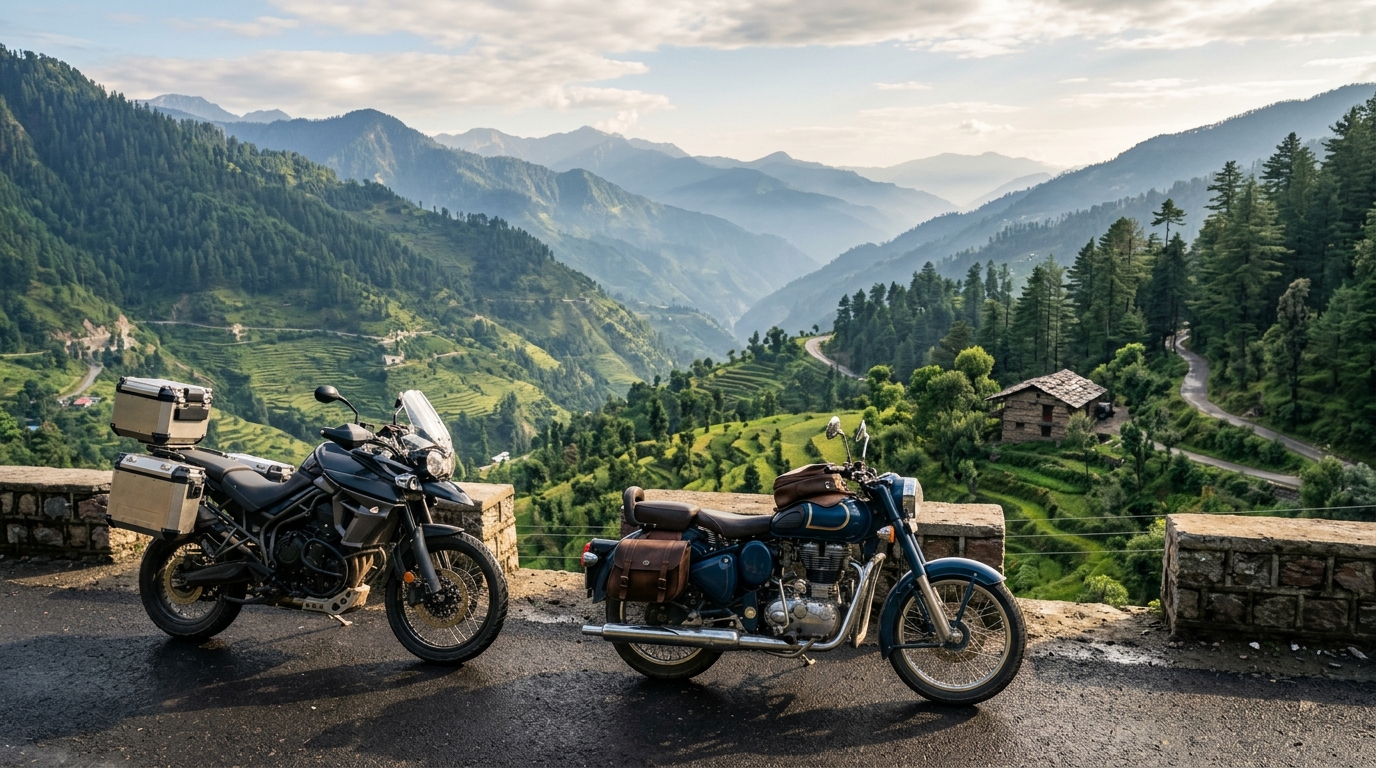
The domestic motorcycle market has bifurcated into distinct categories, each designed to address specific riding styles and geographical preferences. Understanding these categories is essential for selecting a touring motorcycle india riders can use to match their specific travel goals.
Adventure Tourers (ADVs)
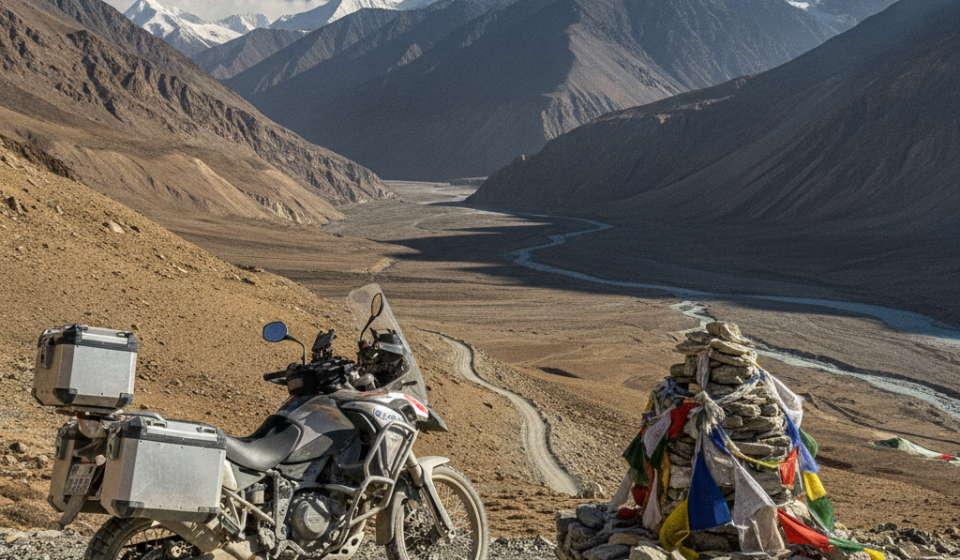
Adventure touring motorcycles have become the most popular segment for long-distance exploration in India. These machines are designed for maximum versatility, featuring long-travel suspension, high ground clearance, and upright riding positions. They excel on broken roads, dirt tracks, and water crossings. The high seat height offers an excellent view of the road ahead, allowing riders to spot hazards early. However, the tall seat height (often exceeding 820mm) can make them difficult to manage for shorter riders, particularly when fully loaded with luggage. Popular models include the Royal Enfield Himalayan 450, KTM 390 Adventure, and Suzuki V-Strom SX 250. For riders heading north, an adventure-style touring motorcycle india has available is arguably the most sensible choice. These machines handle unpredictable road conditions with minimal chassis disruption, keeping the rider comfortable over long hours.
Cruisers and Retro-Modern Tourers
Cruisers are built for relaxed, low-speed highway travel. They feature low seat heights, forward-set footpegs, and pulled-back handlebars, creating a distinctive aesthetic and riding posture. The low center of gravity makes them exceptionally stable at highway speeds and easy to manage at stops, regardless of rider height. However, the limited suspension travel (often under 100mm at the rear) means that sharp potholes can transmit impact directly to the rider’s spine. Forward-set footpegs also prevent the rider from standing up to absorb bumps. Popular models include the Royal Enfield Super Meteor 650 and the Jawa 42 Bobber. Choosing a cruiser-style touring motorcycle india riders favor is highly suited for wide, well-paved national highways. In these environments, the lack of suspension travel is rarely an issue, and the smooth power delivery of multi-cylinder cruiser engines provides a satisfying experience.
Sports Tourers
Sports tourers combine the aerodynamic protection and high-speed handling of a sports bike with the comfortable ergonomics of a touring machine. They typically feature fairings to deflect wind, powerful multi-cylinder engines, and road-biased tires. These machines offer exceptional stability at high speeds, precise handling in mountain twisties, and excellent wind protection from fairings. However, they have limited off-road capability due to low ground clearance and stiff, road-tuned suspension. Popular models include the Kawasaki Versys 650 and the Triumph Tiger Sport 660. For those who prioritize speed, handling precision, and paved-road comfort, a sports-focused touring motorcycle india enthusiasts purchase represents the pinnacle of highway performance. These machines allow riders to cover massive distances on national highways with absolute confidence and minimal wind fatigue.
Detailed Comparison of Leading Touring Motorcycles in India
To clarify differences, we must compare the leading touring motorcycle india choices across key performance metrics. Finding the best touring bike in India requires weighing off-road capabilities against pure highway performance. The market features a healthy mix of single-cylinder and twin-cylinder options. The Royal Enfield Himalayan 450 utilizes a modern liquid-cooled engine producing 40 horsepower with long-travel suspension, making it highly capable off-road. The KTM 390 Adventure offers advanced safety electronics and high-speed refinement, though its stiffer suspension is less comfortable on continuous gravel. For cruiser enthusiasts, the Royal Enfield Super Meteor 650 offers parallel-twin smoothness and excellent highway stability, though its low ground clearance of 135 mm limits it to paved roads. Lastly, the Kawasaki Versys 650 represents the premium mid-weight touring motorcycle india riders turn to for adjustable suspension and wind protection.
| Model | Engine & Power | Ground Clearance | Best Suited For |
|---|---|---|---|
| RE Himalayan 450 | 452cc liquid-cooled, 40 PS | 230 mm | All-terrain adventure & mountain trails |
| KTM 390 Adventure | 373cc liquid-cooled, 43.5 PS | 200 mm | Fast tarmac touring & light off-roading |
| RE Super Meteor 650 | 648cc parallel-twin, 47 PS | 135 mm | Relaxed highway cruising on paved roads |
| Kawasaki Versys 650 | 649cc parallel-twin, 66 PS | 170 mm | Premium long-distance sports touring |
Essential Gear and Modifications for Motorcycle Touring in India
Equipping a touring motorcycle india riders plan to use for long journeys involves selecting the right protective gear and functional modifications. Riders should adopt an all-weather riding jacket and pants featuring CE Level 2 armor, alongside waterproof touring boots and a modular helmet. While stock machines are highly capable, simple modifications can enhance a touring motorcycle india adventurers rely on. A taller aftermarket windscreen reduces wind blast on the chest, while sturdy engine guards and handguards protect vital mechanical components during minor drops.
| Gear Type | Recommended Specification | Primary Safety Function |
|---|---|---|
| Helmet | ECE 22.06 or DOT certified, double-D ring, pinlock-ready visor | High-impact head protection and anti-fog visibility |
| Riding Suit | All-weather textile jacket and pants with CE Level 2 armor inserts | Abrasion resistance and joint impact mitigation |
| Boots | Full-length waterproof adventure/touring boots with ankle protectors | Ankle stabilization and crush protection in off-road drops |
| Gloves | Full-gauntlet leather gloves with hard knuckle sliders and palm protection | Hand abrasion defense and weatherproofing |
Top Route Recommendations for Your Touring Motorcycle in India
India offers spectacular riding routes that demand specific riding techniques, making it essential to choose a touring motorcycle india owners can trust to handle the terrain. For those passionate about motorcycle touring in India, these routes represent the ultimate test of machine endurance.
- The Manali to Leh Route: This route crosses high-altitude passes, presenting riders with water crossings and loose gravel. Conquering this with a touring motorcycle india enthusiast owns requires meticulous planning. For riders targeting these high-altitude passes, securing a professionally organized Leh Ladakh tour package ensures comprehensive medical and mechanical support. Utilizing a structured Manali tour package as a base for acclimatization before ascending the high passes is also highly recommended to prevent mountain sickness.
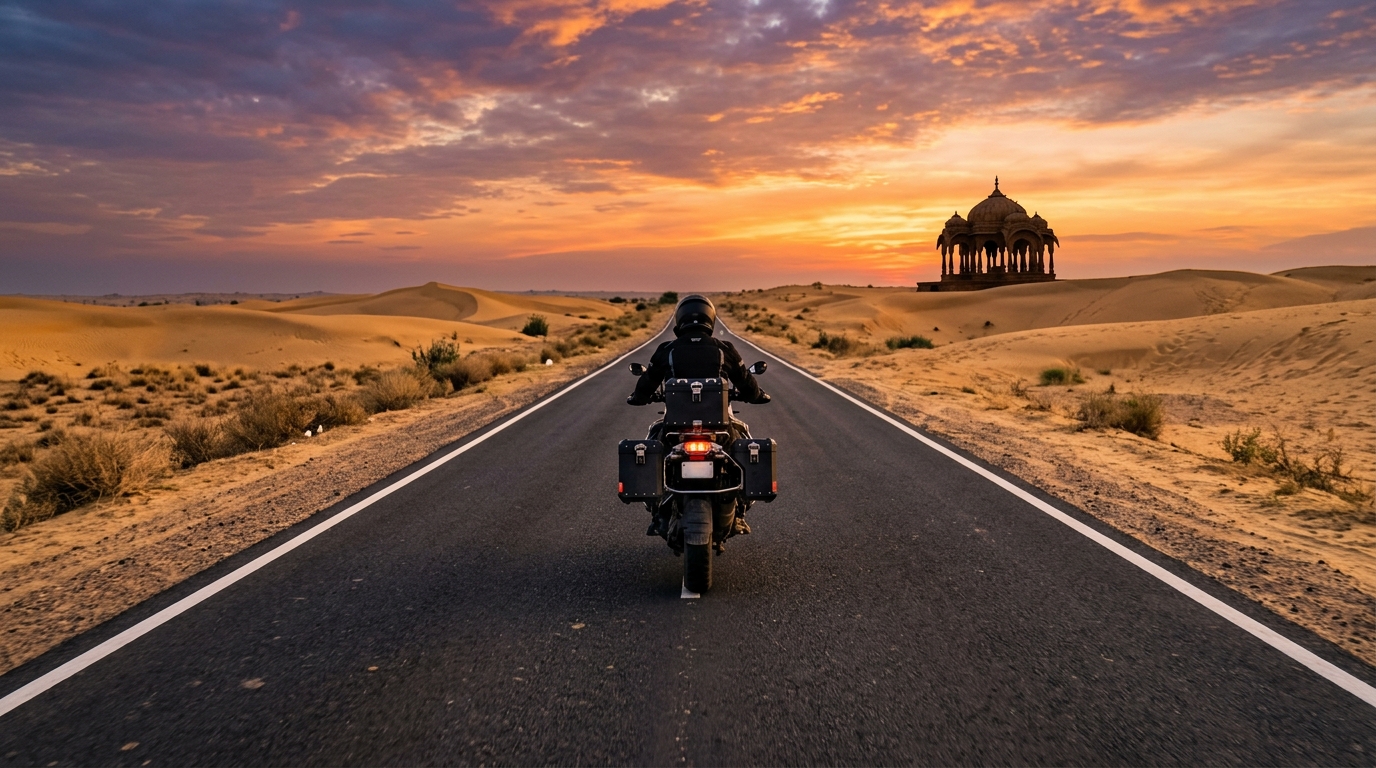
- The Rajasthan Highway: This connects Jaipur, Jodhpur, and Jaisalmer on smooth asphalt, making it the perfect environment for a heavy touring motorcycle india highway riders prefer.
Physical Preparation and Safety Protocols for Long-Distance Touring
Choosing the perfect touring motorcycle india offers is only the first step; long-distance riding is a physically demanding activity that requires mental alertness and physical endurance. Spending eight to ten hours in the saddle for consecutive days can lead to severe fatigue if proper precautions are not taken.
Ergonomic Endurance and Physical Fitness
To sustain physical stamina on a touring motorcycle india riders operate for extended periods, focusing on structural conditioning and road hygiene is vital:
- Core Conditioning: Strengthening the core via planks and lower back extensions stabilizes the spine, decreasing the strain placed on the shoulders and lower back.
- Strategic Hydration: Dehydration accelerates mental fatigue, impairs reaction times, and triggers muscle cramps. Carrying a hydration bladder and sipping water continuously is highly recommended.
- Structured Breaks: Adopting a strict schedule—such as riding for 90 minutes followed by a 10-minute stretching session—helps maintain proper blood circulation and sharp cognitive focus.
Riding Etiquette and Safety Protocols in Indian Traffic
Negotiating traffic on domestic routes requires a highly defensive mindset due to unpredictable road variables. Riders must implement the following safety protocols:
- Safe Following Distance: Maintain a minimum three-second gap behind any leading vehicle to ensure adequate reaction time for unexpected stops.
- Avoid Night Riding: Poor highway illumination, unlit tractors, stray animals, and blinding high-beams make nighttime travel extremely hazardous. Plan early morning departures to maximize daylight hours.
- Group Riding Discipline: When traveling in groups, always maintain a staggered formation rather than riding side-by-side, and establish standardized hand signals for road hazards, refueling, and rest stops.
Conclusion
Selecting the ideal touring motorcycle india offers is a deeply personal decision that depends on a rider’s preferred terrain, physical height, and budget. Whether opting for a highly versatile adventure tourer to explore the remote corners of Himachal and Ladakh, or a refined cruiser for long, smooth highway journeys, matching the machine to the journey is the key to safety and enjoyment. By focusing on critical engineering parameters, riders can ensure their chosen motorcycle becomes a reliable companion. Investing in a suitable touring motorcycle india has available is the gateway to exploring this diverse subcontinent on two wheels.