
Building a realistic packing list for India in January requires planning for multiple distinct climates within the same country. While sub-zero temperatures and snow settle over the High Himalayas, the coastal stretches of Goa and Kerala remain warm and tropical. At the same time, the northern plains battle dense morning radiation fog, and desert regions like Jaisalmer drop from sunny, mild afternoons straight down to near-freezing nights. Packing one standard “winter wardrobe” will leave you either freezing in unheated hotel rooms or lugging heavy parkas through tropical beach resorts.
Whether you are taking a multi-region trip from Delhi to the beaches of the south or heading into the mountain snow, this region-by-region guide breaks down the exact outfits, gear, footwear, and transit essentials you need for traveling across India in January.
January Climate Matrix: Regional Weather Breakdown
January is peak winter across India, but temperature swings vary dramatically depending on altitude, humidity, and latitude. Review these regional historical averages before packing your luggage:
| Region | Day Temp (°C) | Night Temp (°C) | Climate Characteristics |
|---|---|---|---|
| High Himalayas (Ladakh, Spiti) | -5°C to 5°C | -25°C to -10°C | Sub-zero dry cold, heavy snow, intense altitude UV glare. |
| Himalayan Hill Towns (Manali, Shimla, Gulmarg, Gangtok) | 2°C to 10°C | -5°C to 2°C | Active snow and slush, strong winds, unheated indoor spaces. |
| Northern Plains (Delhi, Agra, Amritsar, Varanasi) | 15°C to 20°C | 4°C to 9°C | Thick morning radiation fog, chilly evenings, low day temperatures. |
| Desert Rajasthan (Jaisalmer, Jodhpur) | 20°C to 25°C | 2°C to 8°C | Extreme diurnal shift: Warm, sunny days dropping rapidly at night. |
| Northeast Hills (Shillong, Cherrapunji) | 14°C to 18°C | 3°C to 7°C | High relative humidity (75–80%), damp penetrating cold. |
| Central & West Plains (Mumbai, Pune) | 28°C to 31°C | 15°C to 18°C | Mild, dry, pleasant days with clear afternoons. |
| South India & Coasts (Goa, Kerala, Tamil Nadu) | 28°C to 33°C | 20°C to 24°C | Tropical beach conditions, minimal rainfall, warm seas. |
| South Hill Stations (Munnar, Ooty) | 18°C to 22°C | 8°C to 12°C | Crisp mornings and evenings; light fleece or sweater required. |
Complete Packing List for India in January: Regional Outfit Guide
Because weather patterns split drastically across regions, structure your wardrobe around where you are actually spending your time.
1. High Himalayas & Snow Zones (Ladakh, Spiti, Kashmir, Upper Himachal)
High-altitude winter destinations experience severe sub-zero conditions. The key to staying warm without feeling weighed down is sticking strictly to a three-layer system. For deeper route recommendations and altitude preparation, read our guide on how to plan a trip to North India.
- Base Layer (2–3 Sets): Merino wool or synthetic thermal tops and leggings. Avoid pure cotton thermal undergarments—cotton traps perspiration, which chills against your skin in sub-zero air.
- Mid-Layer (2 Tops): High-loft fleece jackets or heavyweight Merino wool pullovers to trap ambient body warmth.
- Outer Layer (1 Heavy Outerwear): A windproof and waterproof down parka rated for sub-zero temperatures with an attached, insulated hood.
- Essential Accessories:
- 1 fleece-lined balaclava or monkey cap covering ears, neck, and chin.
- 1 pair of insulated, waterproof ski gloves (preferably with touchscreen-compatible inner liners).
- 3–4 pairs of heavy wool thermal socks.
- UV-400 polarized sunglasses to prevent snow blindness from UV reflection off snowbanks.
- Chemical heat packs (such as Warmpads) for hands and feet during outdoor treks.
2. Northern Plains & Golden Triangle (Delhi, Agra, Jaipur, Amritsar, Varanasi)
Sightseeing across North India in January involves crisp mornings, cool sunny afternoons, and sharp temperature drops after sunset. Reviewing when to visit Golden Triangle India helps align your sightseeing schedule with peak afternoon sun.
The standard outfit formula here relies on lightweight, modular layers you can easily strip off by midday and put back on by 5:00 PM.
- Bottoms: Comfortable denim jeans, fleece-lined leggings, or durable cotton trousers.
- Tops: Full-sleeve breathable cotton or linen shirts layered beneath a cardigan or medium fleece pullover.
- Outerwear: One medium-weight jacket, such as a fleece-lined denim jacket, tailored coat, or lightweight padded puffer.
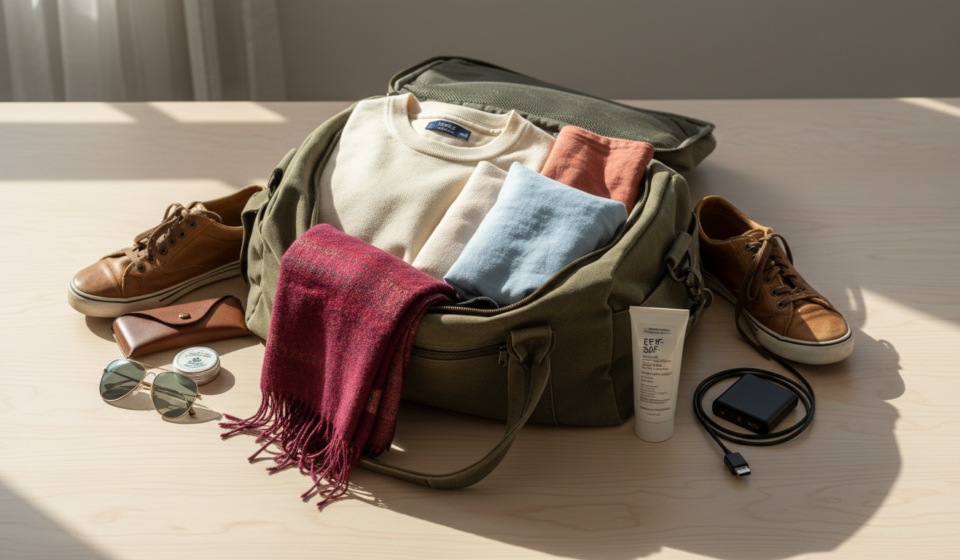
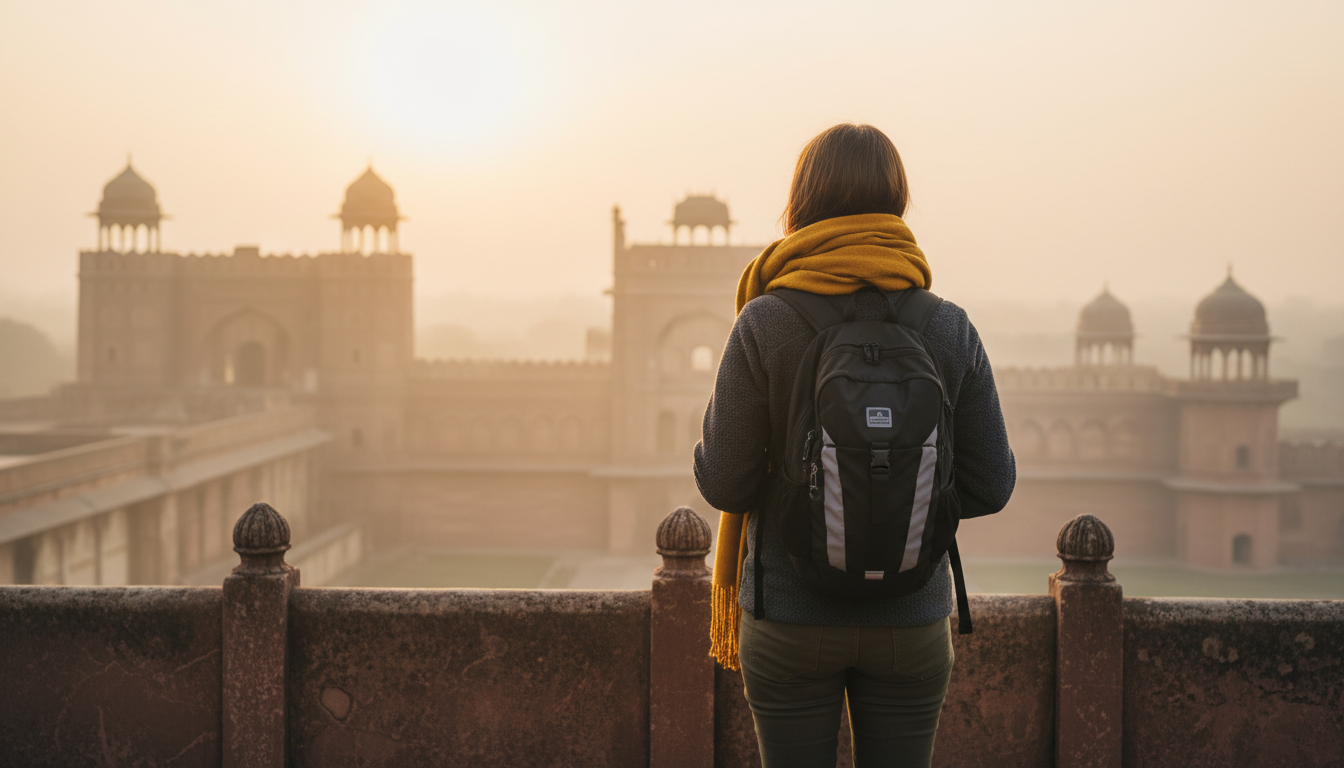
- Essential Accessory: A warm pashmina stole or woolen scarf. You can wrap it around your neck during early morning fort tours, then roll it into your daypack when the sun emerges at midday.
Indoor Heating Reality Check: Most budget-to-mid-range hotels and homestays across Delhi, Agra, and Varanasi do not feature central heating. Pack thermal pajama bottoms and thick fleece socks specifically for wearing indoors at night. At TravelDham, we pre-screen our partner properties across North India to guarantee verified heating options like oil radiators or room blowers for a warm indoor stay.
3. Desert Rajasthan (Jaisalmer, Jodhpur, Thar Desert Camping)
The Thar Desert experiences extreme diurnal temperature swings in January. Midday temperatures reach a comfortable 24°C, but once the sun drops behind the dunes, temperatures plunge rapidly down to 2°C–5°C.
- Daytime Attire: Loose, breathable cotton tunics, long shirts, or ankle-length skirts in bold jewel tones (such as deep ochre, cobalt blue, or rust red) that stand out against golden sand and sandstone architecture. Long sleeves protect your skin from intense desert sun exposure.
- Nighttime Dune Attire:
- Thermal base layer + fleece + windproof jacket or wool trench coat.
- Woolen beanie and gloves for evening cultural performances and outdoor campfires.
- Dust-proof cotton bandana or light neck gaiter to keep blowing sand out of your mouth during jeep safaris.
4. Northeast Hills (Shillong, Meghalaya, Sikkim)
Unlike the dry cold of Western Himalayas, the Northeast hill regions combine cool temperatures (3°C to 18°C) with high relative humidity (75–80%). High humidity makes cold air feel significantly damper and colder than the thermostat indicates.
- Outfit Essentials: Moisture-wicking Merino wool thermals and quick-dry synthetic tops. Avoid thick cotton sweatshirts that easily absorb ambient humidity.
- Outerwear: A windproof jacket with a water-resistant outer shell to shield against mist along exposed ridges like Laitlum Canyons.
- Footwear: Ankle-support trekking shoes with reliable rubber grip for walking across damp Living Root Bridges and wet stone trails.
5. South India & Coastal Regions (Goa, Kerala, Tamil Nadu)
If your itinerary leads south, switch completely to tropical summer gear. Day temperatures hover around 28°C to 33°C with minimal rainfall. If you are structuring a full south itinerary, consult our detailed breakdown on how to plan a trip to South India.
- Clothing: Light cotton tops, t-shirts, linen shorts, breathable dresses, and loose linen trousers.
- Beach & Leisurewear: 2–3 sets of swimwear, light sarongs, or beach cover-ups.
- Sun Protection: Broad-brimmed straw hat and UV-blocking sunglasses.
- Hill Station Detours (Munnar / Ooty): If visiting high-altitude southern tea plantations, pack one light cardigan or fleece pullover—night temperatures in these hills frequently drop to 8°C–12°C.
Footwear Strategy & Temple Etiquette Protocols
Selecting the right footwear saves space in your luggage and prevents blistered feet on cobblestones, sand, or snow slush.
| Destination / Activity | Recommended Footwear | What to Avoid |
|---|---|---|
| Snow & Slush (Manali, Solang, Gulmarg) | Insulated, water-resistant boots with deep rubber treads. | Canvas sneakers, flat leather shoes, high heels. |
| Heritage City Sightseeing (Delhi, Jaipur, Varanasi) | Broken-in cushioned walking sneakers or supportive loafers. | Brand-new un-broken shoes that cause friction blisters. |
| Desert Dunes & Safaris (Jaisalmer, Khuri) | Closed-toe slip-on shoes or lace-up sneakers. | Open sandals on hot sand (sand burns and chafes skin). |
| Beaches & Backwaters (Goa, Kovalam, Alleppey) | Breathable sports sandals, rubber floaters, or flip-flops. | Heavy leather boots or non-breathable footwear. |
Temple and Religious Site Footwear Rules
Every major place of worship in India—whether Hindu, Sikh, or Jain—requires shoes to be removed before entering sanctums or inner courtyards. First-time travelers should review our full set of India travel tips for first timers to navigate local customs comfortably.
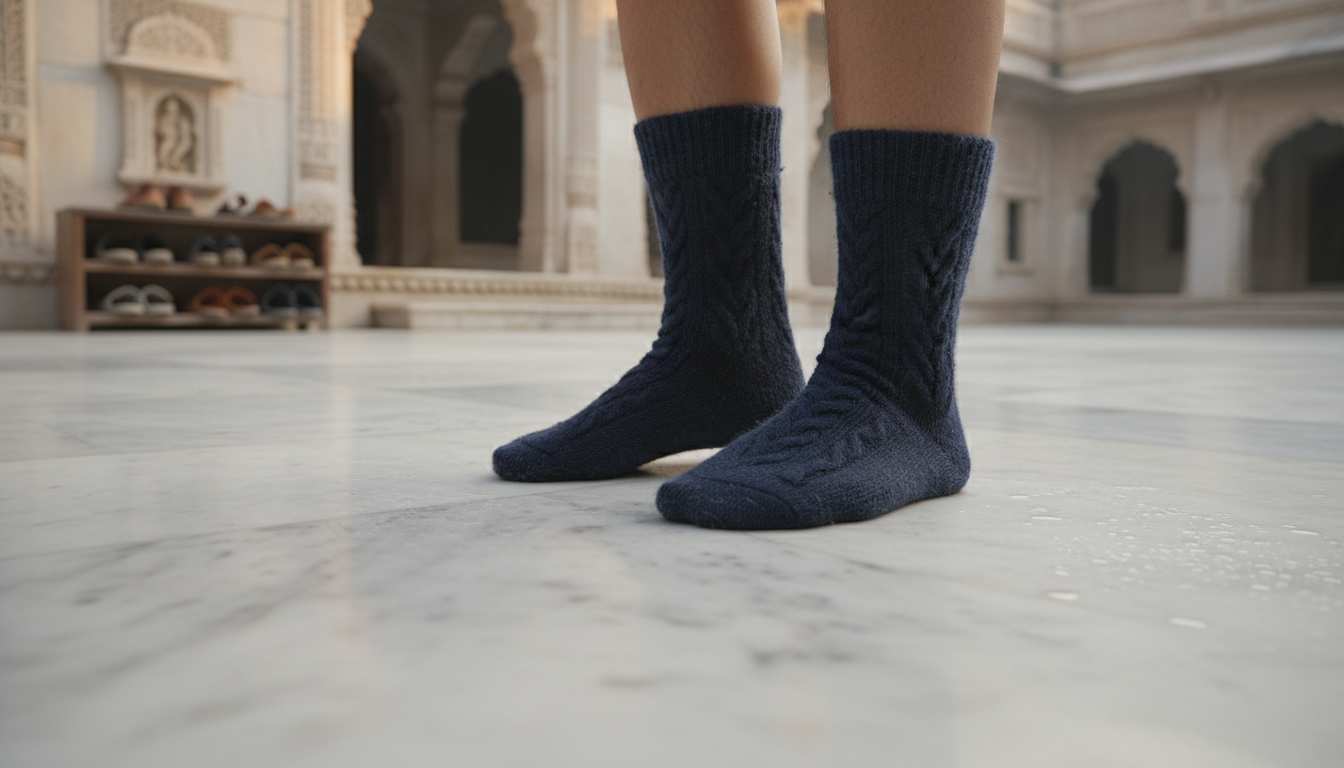
- The Temple Sock Protocol (North & West India): Standing barefoot on ice-cold marble floors in January (such as at the Golden Temple in Amritsar or Jaipur’s city temples) can freeze your feet fast. Carry a pair of clean, dedicated wool or heavy cotton “temple socks” in your daypack to slip on after removing your shoes.
- South Indian Orthodox Temples: Traditional temples across Kerala and Tamil Nadu frequently mandate complete barefoot entry, prohibiting all footwear including socks inside temple walls.
- Leather Restrictions: Sacred sites like Jain temples strictly forbid leather items inside. Leave leather belts, wallets, and leather bags in your hotel room or with the shoe counter attendant.
- Dress Codes: Keep shoulders and knees covered. When entering Sikh Gurudwaras, keep your head covered with a clean cloth scarf or bandanna.
Winter Gear Rentals: Costs & What Not to Buy
You do not need to purchase expensive high-altitude parkas or snow boots for a brief two-day snow outing in Himachal or Kashmir. Local rental shops operate right at the base of major snow zones.
| Location | Available Rental Items | Approx. Daily Rental Cost (INR) |
|---|---|---|
| Manali / Solang Valley | Heavy snow suits, rubber gumboots, winter riding jackets. | ₹250 – ₹300 / day for suits ₹100 – ₹150 / day for boots |
| Gulmarg (Kashmir) | Waterproof ski suits, down parkas, high-snow rubber boots. | ₹300 – ₹500 / day full set |
| Leh / Old Manali | Level-2 armor motorcycle jackets, heavy winter parkas. | ₹250 – ₹350 / day |
What to rent: Outer heavy snow suits, high gumboots, and heavy insulated ski parkas.
What to bring yourself: Thermal base layers, personal socks, inner fleece layers, beanies, and glove liners for hygiene and proper sizing.
North Indian Fog Contingency & Transit Emergency Kit
January brings thick atmospheric radiation fog across Punjab, Haryana, Delhi, Uttar Pradesh, and Bihar. Morning visibility regularly drops below 50 meters.
This fog creates major transport disruptions across the region:
- Long-distance trains (including Shatabdi and Rajdhani express routes) frequently experience delays ranging from 5 to 12 hours.
- Airports in Delhi (DEL), Amritsar (ATQ), Jaipur (JAI), and Lucknow (LKO) regularly encounter morning flight holds, ground delays, or reroutings.
Your Carry-On “Fog Emergency Kit”
Never pack critical winter layers or supplies into checked baggage when transit delays hit. Keep a small emergency kit in your carry-on daypack:
- Power Bank: A charged 10,000 to 20,000 mAh portable battery charger. Station and terminal power outlets quickly fill up during long delays.
- Personal Warm Layer: Keep your main pashmina shawl or lightweight jacket with you inside the cabin or train compartment instead of stowing it away. Unheated train coaches and airport gates get chilly quickly.
- Calorie-Dense Snacks & Insulated Bottle: Pack almonds, energy bars, ORS sachets, and an insulated stainless steel flask to hold hot tea or warm water from station vendors.
- Hygiene & Meds: Wet wipes, hand sanitizer, intensive lip balm, and an extra 2-day supply of personal prescription medications.
Health, Skincare & Medical Essentials
Cold air, low humidity, and harsh alpine sun combine to strip moisture from your skin quickly in winter.
- High-SPF Sunscreen (SPF 50+, PA+++): Essential for both dry desert sand and high-altitude snowfields where sunlight reflects strongly off white surfaces.
- SPF Lip Balm & Ceramide Moisturizers: Prevents painful lip cracking and skin flaking caused by harsh dry winds.
- Motion Sickness Medication: Helpful for navigating the winding hairpin bends of Himachal Pradesh, Uttarakhand, Sikkim, or the Western Ghats.
- Altitude Adjustment Supplies: If flying directly into high-altitude zones like Leh (3,500m), consult your physician regarding altitude medications like Diamox, and pack rehydration salts (ORS).
5 Common Packing Mistakes to Avoid
- Packing One Heavy Coat Instead of Multiple Layers: Wearing a single heavy jacket makes it hard to regulate your body temperature. Walking warms you up quickly, but unzipping a heavy coat lets cold air hit sweaty skin. Three lighter layers work much better.
- Relying Only on Cotton Base Layers: Cotton absorbs body moisture and holds it against your skin. Synthetic fabrics or Merino wool wick moisture away, keeping you warm and dry.
- Wearing Flat Canvas Sneakers in Snow Zones: Standard canvas running shoes soak through in melting snow within minutes. Always use water-resistant boots with deep rubber treads.
- Forgetting Light Long Sleeves for Desert Days: Packing only heavy winter coats for Jaisalmer overlooks sun protection during warm afternoons. Breathable, full-sleeve cotton shirts keep you cool while shielding skin from sun and sand.
- Overpacking Heavy Clothes for Multi-Region Trips: Carrying heavy winter coats around Goa or Kerala because your flight departed cold Delhi takes up valuable luggage space. Wear your heaviest jacket during transit, then compress it into a lightweight travel duffel once you reach your coastal destination.
Frequently Asked Questions
Do I need thermal innerwear for Delhi and Jaipur in January?
Yes. Early morning sightseeing at open monuments and late-night outdoor dining often bring temperatures down to 4°C–8°C. Thermals also help you stay comfortable at night if your hotel lacks central heating.
Can I wear shorts or sleeveless tops in India during January?
In coastal resort destinations like Goa and Kerala, shorts, light dresses, and standard swimwear are completely fine. However, when visiting North India, heritage sites, smaller towns, and religious places, dress modestly with clothing that covers your shoulders and knees.
Is it better to buy snow gear in advance or rent it on arrival in Manali/Gulmarg?
Renting heavy outer snow suits and gumboots directly from local shops in Manali, Solang Valley, or Gulmarg (at ₹250–₹500 per day) saves both money and luggage space. Just pack your own inner thermals, socks, beanies, and glove liners for proper hygiene and fit.
What should I wear on a multi-destination trip like Delhi and Goa?
Dress in layers on travel days. Wear a light t-shirt or shirt under a fleece layer and outer jacket when leaving chilly Delhi. Once you land in warm Goa, stow the jacket and fleece in your bag and wear the lighter shirt.
How do I manage laundry while traveling across North India in winter?
Because high humidity and low sunshine slow down outdoor line drying in January, standard hotel laundry service can take 24 to 48 hours. Bring quick-dry synthetic innerwear, or budget an extra day when handing clothes over to hotel laundry services in the north.