
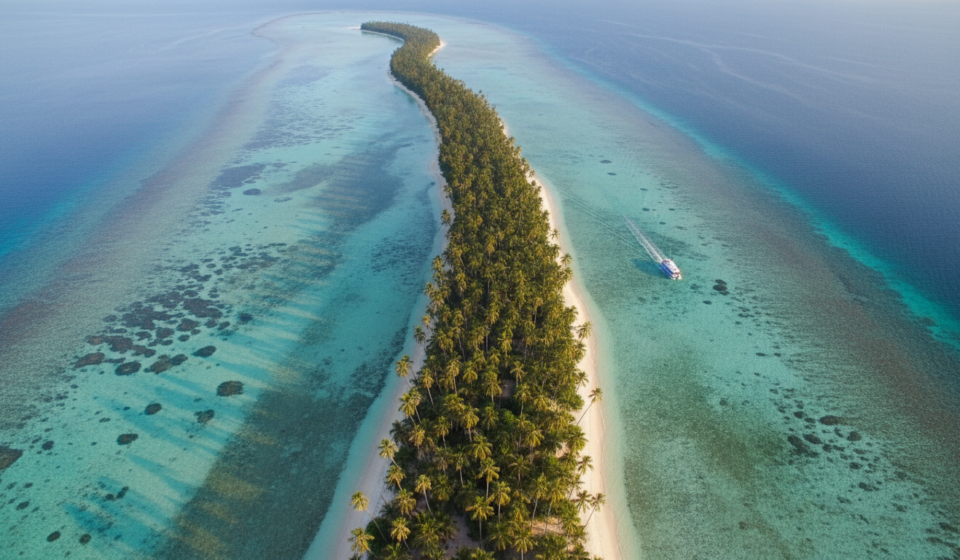

Planning a trip to Lakshadweep requires a fundamentally different mindset than booking a quick getaway to Goa or Kerala. With its low-lying coral atolls, vibrant lagoons, and strict environmental regulations, discovering the top places to visit in lakshadweep is as much about understanding permits and transport logistics as it is about choosing the right island. Whether you are seeking an off-grid honeymoon, an adventurous scuba diving trip, or a memorable ocean cruise, this guide breaks down every island, permit rule, and real-world expense so you can plan a seamless journey to India’s most pristine archipelago.
How to Get a Lakshadweep Entry Permit (2026 Process)
Every non-resident visiting Lakshadweep—including Indian citizens—must obtain an official Entry Permit under the Laccadive, Minicoy, and Amindivi Islands (Restriction on Entry and Residence) Rules, 1967. In the past, securing a permit involved visiting a local police station for a Police Clearance Certificate (PCC) and finding a local island sponsor. Under updated official regulations issued by the Lakshadweep Administration, PCC uploads and local sponsor undertakings have been officially abolished for domestic tourists. Background security clearance is now processed digitally by the Lakshadweep Police after you submit your application.
Step-by-Step Permit Application Steps
Permit applications are managed online through the official U.T. Administration of Lakshadweep ePermit portal at epermit.utl.gov.in. Up to 6 travellers can be included in a single application form.
- Application Lead Time: You must submit your online permit application at least 14 days prior to your travel date. Approved permits are issued electronically 7 to 10 days before departure.
- Required Documents: Scanned copy of a valid government photo ID (Aadhaar Card, Passport, Voter ID, or Driving License), a clear passport-sized photo in JPEG format, and confirmed travel itineraries (flight or ship tickets alongside hotel/homestay vouchers from an authorized provider).
- Mandatory Fees: The application fee is ₹50 per person. A Heritage Fee of ₹200 applies to adults (over 18 years) and ₹100 for children aged 12–18. Nominal Green Tax charges are also levied depending on the specific islands visited to fund waste management and eco-preservation.
Strict Permit Protocol and Printing Rules
Your approved permit must explicitly list every island you plan to set foot on, including transit hubs like Agatti or Kavaratti (which carry a maximum transit allowance of 12 hours). Security officials at island jetties cross-check paper permits against passenger lists; stepping onto an unlisted island is illegal and results in immediate deportation to Kochi.
Crucial Tip: Always carry at least 3 to 4 printed hard copies of your approved permit. Physical copies are collected and verified at Kochi Airport boarding gates, Agatti arrival security, inter-island boat jetties, and hotel check-in desks.
Rules for Foreign Nationals and OCI Cardholders
Foreign tourists and OCI cardholders operate under stricter entry guidelines. Foreigners are restricted exclusively to three islands: Agatti, Bangaram, and Kadmat. In addition to a valid Indian Visa and Passport, foreign nationals must secure a Protected Area Permit (PAP). Foreign citizens are not permitted to book or board the government-operated SPORTS Samudram Ship Cruise.
Top Places to Visit in Lakshadweep: An Island-by-Island Breakdown
Out of Lakshadweep’s 36 islands, only 6 islands are open for domestic leisure stays and independent sightseeing: Agatti, Bangaram, Thinnakara, Kavaratti, Kadmat, and Minicoy. A seventh island, Kalpeni, is accessible exclusively via day-excursion cruise packages. Each island offers a distinct character and appeal depending on your travel style.
1. Agatti Island – The Ocean Gateway
Stretching just 7 kilometres in length, Agatti is home to Lakshadweep’s sole airstrip (Agatti Aerodrome – AGX). As you descend, the runway appears as a thin strip of land flanked on both sides by glowing turquoise waters.
- Key Highlights: Agatti serves as the primary water sports hub for independent travellers. The Dolphin Dive Center offers glass-bottom boat excursions, jet-skiing, windsurfing, and introductory scuba dives. The expansive, shallow Agatti Lagoon provides safe swimming conditions for beginners and children.
- Atmosphere & Staying Here: Agatti features a laid-back local village atmosphere. Accommodation consists of budget and mid-range licensed homestays and small resorts, such as Coral Beach Resort and Kasims Homestay.
2. Bangaram Island – The Uninhabited Luxury Jewel
Located a short speedboat ride north of Agatti, Bangaram is a tiny, uninhabited teardrop island widely regarded as the crown jewel of the archipelago for luxury seekers and honeymooners.
- Key Highlights: Between October and December, night-time beach walks often reveal phosphorescent plankton washing ashore, turning the wet sand into a glowing neon-blue display. Offshore coral reefs offer underwater visibility ranging between 20 and 50 meters, where divers regularly swim alongside sea turtles, manta rays, and gentle reef sharks.
- Exclusive Feature: Bangaram is the only island in Lakshadweep where alcohol consumption is legally permitted, served exclusively at licensed resort bars.
- Atmosphere & Staying Here: Premium eco-resorts, including Bangaram Island Resort and Praveg Atoll eco-tents, dominate the island.
3. Thinnakara Island – Teardrop Islet & Sea Turtle Haven
Positioned directly across the shared lagoon from Bangaram, Thinnakara is an uncrowded islet reachable via a 15-minute boat transfer.
- Key Highlights: The shallow seagrass beds surrounding Thinnakara host a large resident colony of green and hawksbill sea turtles. Just off the shoreline lies an underwater shipwreck site, offering fantastic snorkeling where vibrant fish shelter inside the rusted iron hull.
- Atmosphere & Staying Here: Ideal for travelers seeking off-grid quiet, Thinnakara features beachfront eco-tented accommodation managed by Praveg.
4. Kavaratti Island – Cultural & Administrative Capital
Kavaratti serves as the administrative headquarters of the Union Territory. Unlike resort-centric islands, Kavaratti offers an authentic glimpse into local island heritage.
- Key Highlights: Visit the 17th-century Ujra Mosque, constructed from solid coral stone and featuring ornate teakwood pillars; local legend holds that its well water possesses curative properties. The local Marine Aquarium & Museum houses live coral species, sea cucumbers, and unique regional marine fauna. Water activities are anchored around the municipal Dolphin Dive Center complex.
- Atmosphere & Staying Here: Kavaratti is a lived-in, historic town home to over 50 mosques. It is best suited for cultural day trips or budget travellers, as high-end resort beachfronts are non-existent here.
5. Kadmat Island – The Diver’s Sanctuary
Kadmat is a long, extremely narrow island—8 kilometres end-to-end but barely 550 meters wide at its broadest point—bordered by broad coral lagoons on both sides.
- Key Highlights: Home to a renowned PADI Scuba Diving School, Kadmat offers calm lagoon diving conditions alongside dramatic wall drop-offs on its outer reefs.
- Atmosphere & Staying Here: Peaceful and uncluttered, Kadmat Beach Resort (run by the government tourism division) sits at the pristine southern tip. It remains a top pick for serious divers and couples desiring long, empty stretches of sand.
6. Minicoy Island (Maliku) – Southernmost Cultural Hub
Geographically isolated near the northern Maldives, Minicoy boasts a distinct social fabric, culture, and language (Mahl) separate from the northern islands.
- Key Highlights: The landmark 45-meter (300 ft) Minicoy Lighthouse, constructed by the British in 1885, rewards visitors who climb its interior stairs with a 360-degree panoramic view of the entire atoll. Visitors can tour the historic island tuna canning plant, watch traditional Lava Dance cultural performances, or hire a small local vessel to visit the tiny uninhabited islet of Viringili.
7. Kalpeni Island – Coral Storm Bank & Lagoon
Kalpeni is famous for its shoreline of massive coral debris, deposited by a historic cyclone in 1847. Its vast Koomel Beach lagoon features shallow waters suited for pedal boating, kayaking, and reef walking. Kalpeni is primarily visited as a scheduled day stop on government cruise itineraries.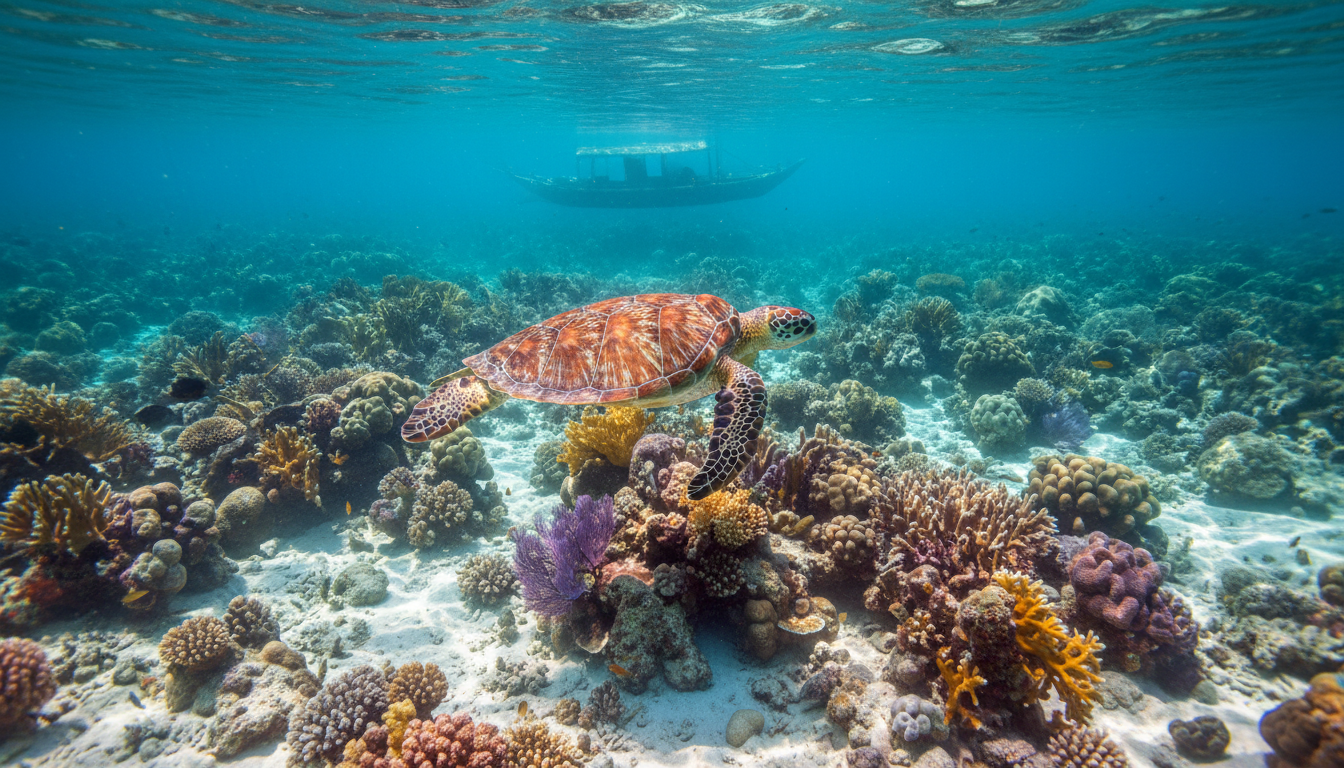
How to Reach Lakshadweep and Navigate Between Islands
Kochi (Cochin) in Kerala acts as the sole primary gateway for all travel to Lakshadweep, whether you travel by air or sea. It is easily accessible from Kerala, making it a standout entry among places to visit in South India.
Option A: Reaching Lakshadweep By Air
Daily direct flights connect Cochin International Airport (COK) to Agatti Aerodrome (AGX). Operators including IndiGo, Alliance Air, and Fly91 run regular services using ATR-72 turboprop aircraft. The flight time is approximately 1 hour 15 minutes to 1 hour 30 minutes.
- Standard Fares: ₹12,000 – ₹18,000 round-trip per person when booked 2 to 3 months in advance.
- Peak Season / Last-Minute Fares: Fares frequently climb to ₹22,000 – ₹30,000+ round-trip during holiday periods.
Option B: Reaching Lakshadweep By Sea (SPORTS Samudram Cruise)
For a complete multi-island trip without worrying about individual boat bookings, the government tourism wing (SPORTS) operates the popular Samudram Cruise aboard passenger vessels like the MV Kavaratti. The 4-Night / 5-Day itinerary departs from Willingdon Island in Kochi, sailing overnight to conduct day excursions across Kavaratti, Kalpeni, and Minicoy.
- Package Cost: Approximately ₹44,625 per adult for a Diamond Class First-Class AC cabin.
- Inclusions: AC cabin berth, all onboard and shore meals, permit fees, heritage fees, island transfer boats, and 1 complimentary water activity (such as snorkeling or glass-bottom boating) on each island.
- LTC/LTA Benefits: Central Government employees can claim Leave Travel Concession (LTC) components worth roughly ₹31,500 per head on this package, making it an ideal option if you are researching places to visit in India with family without the stress of managing daily boat schedules.
Inter-Island Speedboats and Helicopters
Once at Agatti Airport, reaching neighboring stay islands requires inter-island transfers:
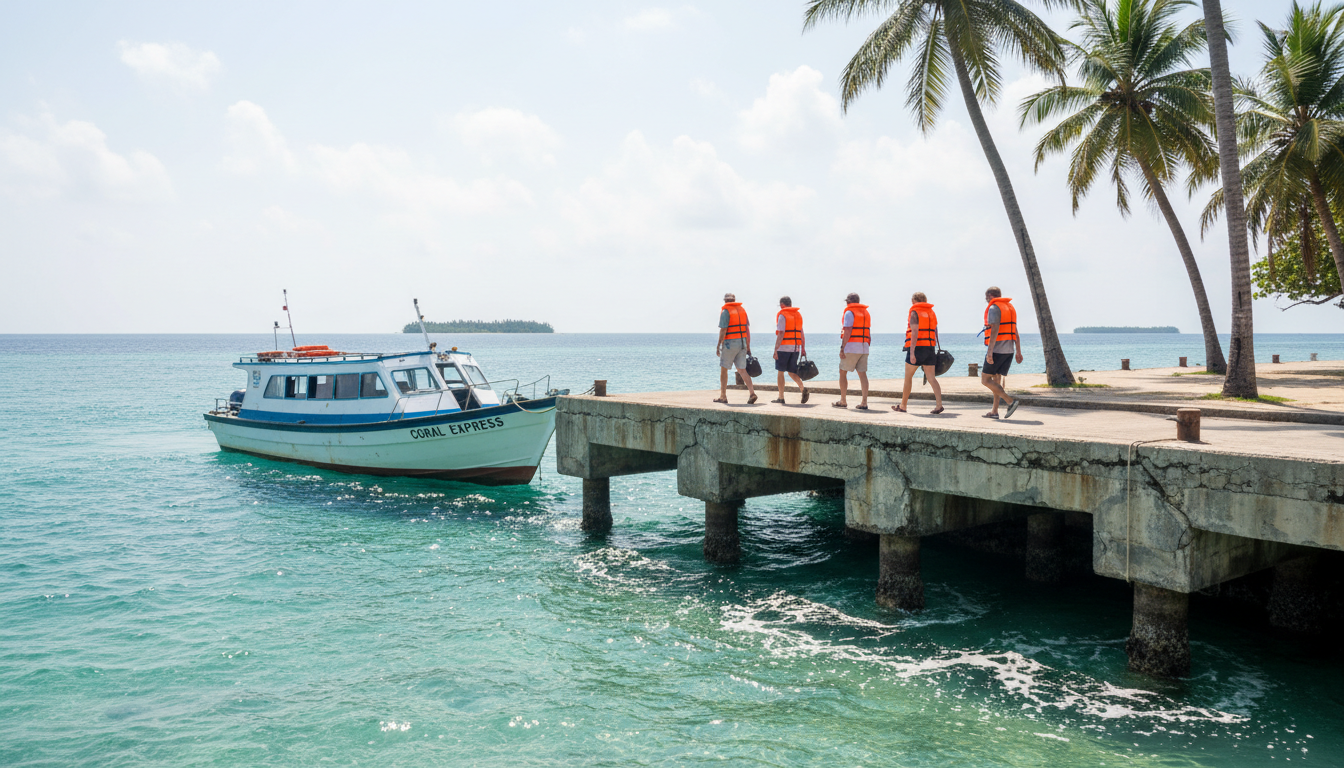
- Agatti to Bangaram / Thinnakara: Speedboats take 45 to 60 minutes and cost ₹4,000 – ₹6,500 round-trip per person.
- Agatti to Kadmat: High-speed boats take 2.5 to 3 hours across open water, costing roughly ₹8,000 round-trip per person.
- Government Ferries: Passenger ferries run between Agatti and Kavaratti for around ₹500 one-way, but schedules vary weekly based on weather conditions, ocean tides, and vessel maintenance. Always confirm ferry timings with your homestay host upon arrival.
- Monsoon Helicopter Transfers: During the rough monsoon window (May 16 – September 15), inter-island speedboats stop running. Commercial helicopters connect Agatti Airport to Bangaram and Kavaratti for approximately ₹6,000 round-trip per passenger.
| Route | Transport Mode | Duration | Approximate Cost (INR) |
|---|---|---|---|
| Kochi to Agatti | Flight (IndiGo / Alliance Air / Fly91) | 1 hr 30 mins | ₹12,000 – ₹18,000 (Round-trip) |
| Kochi to Islands Circuit | SPORTS Samudram Ship Cruise | 4 Nights / 5 Days | ₹44,625 (All-inclusive package) |
| Agatti to Bangaram | Speedboat Transfer | 45 – 60 mins | ₹4,000 – ₹6,500 (Round-trip) |
| Agatti to Kadmat | Speedboat Transfer | 2.5 – 3 hours | ₹8,000 (Round-trip) |
| Agatti to Bangaram / Kavaratti | Helicopter (Monsoon Only) | 15 mins | ₹6,000 (Round-trip) |
Realistic Budget Breakdown for Visiting Lakshadweep
Travel costs in Lakshadweep are higher than mainland beach destinations due to remote island logistics, government tariffs, and boat transfers. Below are three realistic budget profiles based on updated pricing.
Budget Profile 1: Independent Homestay Travel (Agatti Base)
Ideal for: Budget travellers, small groups, and first-time visitors staying at local homestays.
- Round-trip Flight (Kochi–Agatti): ₹14,000
- Entry Permit & Heritage Fees: ₹250
- 3 Nights Standard AC Homestay (Twin Sharing): ₹12,000 (₹4,000/night)
- Food & Dining: ₹3,000 (₹1,000/day)
- Speedboat Excursion & Water Sports (1 Scuba Dive + Snorkeling): ₹8,000
- ESTIMATED TOTAL: ₹37,250 – ₹45,000 per person
Budget Profile 2: Government Ship Cruise (SPORTS Samudram)
Ideal for: Families, senior citizens, and government employees claiming LTC benefits.
- Samudram Cruise Diamond Class Package: ₹44,625
- Kochi Travel & Transfers: ₹5,000
- Optional Water Sports Add-ons: ₹2,500
- ESTIMATED TOTAL: ₹49,625 – ₹52,000 per person (Before applying LTC refunds)
Budget Profile 3: Luxury Island Resort Escape (Bangaram / Praveg Thinnakara)
Ideal for: Honeymooners and luxury seekers desiring private resort beaches.
- Round-trip Flight (Kochi–Agatti): ₹16,000
- Permit & Heritage Fees: ₹250
- 3 Nights Resort Stay with All Meals Included: ₹45,000 – ₹75,000 (₹15,000–₹25,000/night)
- Inter-Island Speedboat Transfers: ₹4,000 – ₹8,000
- Scuba Diving & Lagoon Excursions: ₹7,000
- ESTIMATED TOTAL: ₹72,250 – ₹1,06,250+ per person
Standalone Activity Price Reference
- Discover Scuba Dive (1 Dive with instructor): ₹2,500 – ₹4,500 (Diving in Agatti/Kavaratti is generally cheaper than at Bangaram Resort).
- Snorkeling Session with Gear: ₹800 – ₹1,500 per person.
- Glass-Bottom Boat Tour: ₹1,000 – ₹1,500 per head.
- Kayaking Rental: ₹500 – ₹1,000 per hour.
- Jet Skiing / Parasailing: ₹1,500 – ₹2,500 per ride.
Best Time to Explore the Places to Visit in Lakshadweep
Weather plays a dominant role in determining what you can see and do in Lakshadweep. Because ocean swells directly affect boat transfers, picking the right season is crucial.
Peak Season: October to March (Best Overall Weather)
Clear skies, calm seas, and daily temperatures ranging between 22°C and 32°C make winter the prime time for visiting. Underwater visibility peaks between 20 and 50 meters, creating optimal conditions for scuba diving and reef snorkeling. The October-to-December window also aligns with moonless phases when bioluminescent plankton sightings are most frequent on Bangaram and Thinnakara beaches, making it one of the premier places to visit in India in December.
Shoulder Season: April to May (Warm but Navigable)
Temperatures rise up to 35°C with higher humidity, but sea conditions remain mostly calm. Flight and stay availability is better during these months before seasonal closures begin.
Monsoon Season: June to September (Not Recommended)
Strong monsoonal winds bring torrential rains, rough seas, and high swells. Ship cruise operations are completely suspended during these months, and inter-island speedboats stop running. Only Agatti and Bangaram remain accessible via air and emergency helicopter transfers, severely limiting travel between islands.
Crucial Rules, Laws, and Tips for Lakshadweep Travellers
Respecting local laws and environmental regulations keeps your trip hassle-free and protects the fragile marine ecosystem.
- Strict Prohibition on Carrying Alcohol: Lakshadweep is a dry Union Territory. Attempting to bring alcohol in checked or hand luggage is illegal and results in immediate confiscation and potential fines by airport customs. Bangaram Island Resort is the only licensed establishment permitted to serve alcohol to tourists.
- Local Dress Code & Cultural Etiquette: Over 93% of Lakshadweep’s local population practices Sunni Islam. While bikinis and swimwear are appropriate on private resort beaches (Bangaram, Thinnakara) and at offshore dive sites, dress modestly—covering shoulders and knees—when walking through local villages on inhabited islands like Agatti, Kavaratti, Kadmat, and Minicoy.
- Environmental Laws & Marine Conservation: Collecting live or dead corals, sea shells, or turtle shells from beaches is strictly prohibited under the Indian Wildlife Protection Act. Checked bags are X-rayed at Agatti Airport upon departure; carrying coral or shells leads to severe fines and prosecution. Additionally, single-use plastic bags and bottles are banned across all islands.
- Mobile Networks and Carrying Cash: BSNL provides the most reliable network coverage across the archipelago. Airtel and Jio 4G/5G function well in Agatti, Kavaratti, and Bangaram, but signal drops completely during inter-island boat transfers and on outer beaches. Digital payments like UPI frequently fail due to spotty data connectivity, and ATMs on Agatti and Kavaratti often run out of cash. Always carry sufficient Indian Rupee (INR) cash to pay for auto-rickshaws, local meals, water sports, and boat captains.
Frequently Asked Questions About Visiting Lakshadweep
Do Indian citizens need a passport to visit Lakshadweep?
No. Indian citizens do not require a passport. A valid government photo ID—such as an Aadhaar Card, Voter ID, or Driving License—alongside your official online Lakshadweep Entry Permit is all that is required for travel.
Can I plan a last-minute spontaneous trip to Lakshadweep?
No. Spontaneous travel is not possible. Online permit applications take up to 14 days to process, and seat capacity on flights from Kochi to Agatti is limited. It is best to finalize your bookings 2 to 3 months before your intended travel dates.
Is Lakshadweep suitable for vegetarian travellers?
Yes. Government-run resorts, Praveg eco-properties, and the SPORTS Samudram Cruise offer dedicated vegetarian and Jain meal choices. Local homestays on Agatti accommodate vegetarian dietary requests easily when informed in advance, though street-side dining on inhabited islands is heavily focused on fresh seafood and tuna dishes.
How does Lakshadweep compare to the Andaman Islands?
Lakshadweep consists of low-lying coral atolls with shallow, calm turquoise lagoons and far smaller tourist numbers due to permit caps. The Andaman Islands feature much larger, forested landmasses with extensive road networks, historical sights like Cellular Jail, and large commercial beach resorts. Lakshadweep offers a more quiet, lagoon-focused escape; you can read our detailed 7-Day Andaman Itinerary to compare both destinations before deciding.