
Most mainstream travel publications confuse East India with North East India, often directing readers to places like Sikkim, Meghalaya, or Assam. True East India comprises four distinct states: West Bengal, Odisha, Jharkhand, and Bihar. This region contains red laterite canyons, dense Sal forests, quiet estuarine islands, and ancient plateau hill stations that remain completely uncrowded. If you are looking for authentic, peaceful destinations, this guide details 15 remarkable hidden places to visit in east india along with precise costs, transport options, and practical trip planning advice.
If you wish to explore other quiet regions across the country, check out our guide to hidden places in North East India as well as our curated list of offbeat destinations in South India.
West Bengal: Misty Hills, Canyons, and Island Camps
1. Tinchuley & Takdah (Darjeeling District)
While thousands of tourists pack the main roads of Darjeeling town, the twin hamlets of Tinchuley and Takdah sit in quiet mist just 32 km away. Surrounded by pine forests and colonial tea estates, these villages offer unobstructed vistas of Mount Kanchenjunga without tourist crowds.
Key highlights include the Takdah Heritage British Bungalows, the Takdah Orchid Centre, Tinchuley Sunrise Point, and walking through the Peshok Tea Garden. Accommodations here are largely local family-run homestays such as Gurung Guest House and Abiraj Homestay.
- Best Time to Visit: October to April for clear mountain views and crisp air.
- How to Reach: Drive 73 km from New Jalpaiguri (NJP) Railway Station or 77 km from Bagdogra Airport (IXB). A private cab costs between ₹3,000 and ₹3,500. Shared jeeps run from Siliguri to Teesta Bazaar or Takdah.
- Average Cost: ₹1,500 – ₹2,200 per person, per night (includes room and home-cooked meals).
- Local Tip: Mobile network signals can be weak and card readers rarely work. Bring enough physical cash for your entire stay.
2. Gongoni / Garhbeta (Paschim Medinipur)
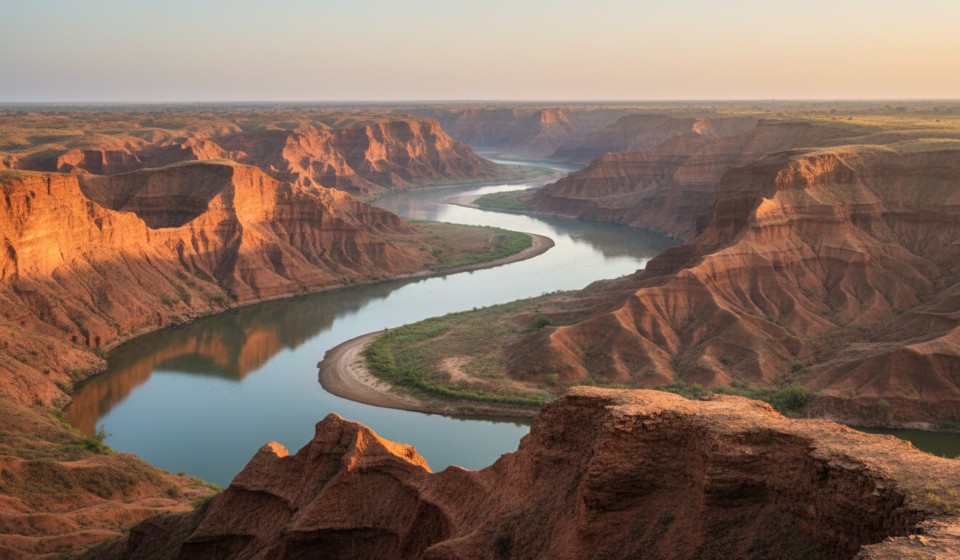
Often called the “Grand Canyon of West Bengal,” Gongoni is a 70-foot-deep natural gorge carved out of vibrant red laterite soil by the Silabati River. The water and wind erosion over thousands of years has formed intricate cave-like structures and steep canyon walls.
You can walk down into the gorge via government-built staircases, explore the carved rock cliffs, and watch the sunset over the river. It makes an excellent budget day trip from Kolkata or Bishnupur.
- Best Time to Visit: November to March. Visit in the early morning or late afternoon light. Avoid monsoon months as river currents flood the canyon floor.
- How to Reach: Take the morning Rupashi Bangla Express or Aranyak Express from Howrah or Santragachi to Garbeta Station (GBA), which takes about 3 to 3.5 hours. From the station, take an electric rickshaw (Toto) for 4.2 km to the site (₹150–₹200 round trip including waiting time).
- Average Cost: ₹800 – ₹1,500 per person for a complete day trip including train fares, Toto rental, and food.
- Local Tip: Midday heat on the unshaded red laterite ground is intense. Wear a hat and carry adequate drinking water.
3. Jhargram & Belpahari (Jangalmahal)
Located in the southwestern forest belt of West Bengal, Jhargram offers a blend of royal palace history and quiet woodland trails. Sal, Mahua, and Teak trees blanket the landscape, leading to ancient tribal hamlets and hidden waterfalls in the nearby Belpahari region.
Key spots include the historic Jhargram Rajbari, Chilkigarh Kanak Durga Temple, Ghagra Waterfalls, Khandarani Lake, and Kakrajhor forest.
- Best Time to Visit: October to March, or during the monsoon when the Sal forests turn deep green.
- How to Reach: Take the Ispat Express from Howrah to Jhargram Station (JGM), a journey of roughly 3 hours. Reserve a Toto for local city sights (₹400–₹800/day) or a cab for Belpahari and Kankrajhor (₹2,500–₹3,000/day).
- Average Cost: ₹3,000 – ₹5,000 per person for a 2-night/3-day stay including transfers, entry fees, and meals.
4. Mousuni Island (South 24 Parganas)
Situated roughly 120 km south of Kolkata, Mousuni is an isolated estuarine island where the Chinai River meets the Bay of Bengal. There are no high-rise hotels or paved highways here—just continuous sandy shores, mud houses, and eco-camps.
Visitors come to lounge in beachside hammocks, taste fresh local seafood, watch fishermen haul in their daily catch at Baliara Beach, and sit around evening beach bonfires.
- Best Time to Visit: October to March. Avoid the monsoon period due to extreme tides and cyclone risks.
- How to Reach: Take a local train from Sealdah to Namkhana (3.5 hours), followed by a Toto to Durgapur Ghat or Hujuter Ghat. Cross the river on a motorized wooden boat, then take another short Toto ride to Baliara Beach. Cars must be parked at mainland ferry ghats (₹100–₹150 per night).
- Average Cost: ₹1,200 – ₹1,800 per person, per night in beachfront tents or bamboo huts, which includes a standard 4-meal Bengali food package.
- Local Tip: Do not rely on mobile banking or UPI apps; cellular connections on the beach are unreliable. Carry small cash notes.
Odisha: Wetland Sanctuaries, Gorges, and High Peaks
Odisha’s Scenic Hidden Places to Visit in East India
5. Mangalajodi (Chilika Lake)
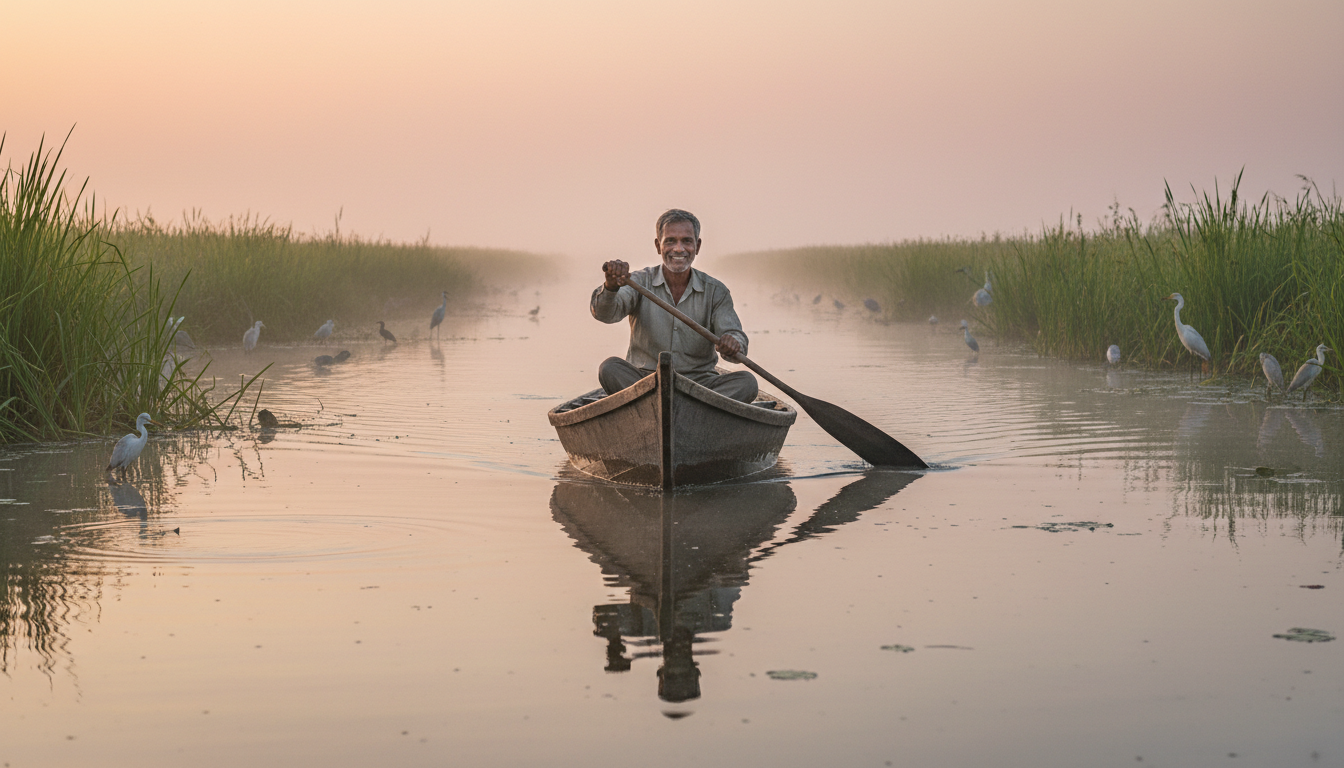
Located on the northern rim of Chilika Lake (~70 km from Bhubaneswar), Mangalajodi is a premier eco-tourism destination. Through dedicated conservation programs, a village once known for bird poaching has transformed into a community of certified birding guides and conservationists.
During the winter, over 200 species of migratory birds—including Black-tailed Godwits, Northern Pintails, and Purple Swamphens—fill the marshlands. Visitors observe them at eye level from silent, hand-paddled wooden canoes.
- Best Time to Visit: November to February for peak bird concentrations.
- How to Reach: Drive 1.5 to 2 hours from Bhubaneswar via NH16. The nearest railheads are Mukteshwar, Kalupara Ghat, or Balugaon (30 km).
- Average Cost: Accommodations at Mangalajodi Ecotourism Eco Cottage or Godwit Eco Cottage cost ₹1,500 – ₹4,500 per night. A 3-hour non-motorized boat safari costs ₹1,200 (max 4 adults + guide).
- Local Tip: Avoid hiring motorized boats with high roofs for photography. Hand-paddled wooden boats (dangi) move quietly and navigate shallow channels where birds rest.
6. Deomali Hills & Koraput
At an elevation of 1,672 metres (5,486 ft), Deomali is the highest peak in Odisha. It features a 5-km flat tableland ridge that overlooks the rolling valleys of the Eastern Ghats. The surrounding Koraput district is home to rich tribal culture, dense forests, and high-altitude waterfalls.
Key highlights include watching the sunrise above cloud levels from Deomali peak, visiting the Koraput Tribal Museum, seeing Duduma Waterfalls, and exploring regional coffee plantations.
- Best Time to Visit: October to March for pleasant temperatures. Monsoon months (July–September) bring bright green landscapes to the hillsides.
- How to Reach: Koraput Railway Station connects directly to Visakhapatnam and Bhubaneswar. Deomali is 50 km from Koraput town; daily private cab hire ranges between ₹2,000 and ₹3,000.
- Average Cost: ₹3,500 – ₹6,000 per person for a 3-day trip, using OTDC Tourist Lodge Koraput or local lodges in Semiliguda.
- Local Tip: Early morning winds on Deomali tableland are cold and strong. Carry a windproof jacket even during warmer months.
7. Satkosia Gorge & Badmul
Satkosia Gorge is a 22-km-long natural pass cut through the Eastern Ghats by the Mahanadi River inside the Satkosia Tiger Reserve. It combines steep jungle slopes with wide sandbars where mugger and gharial crocodiles come out to sunbathe.
The primary experience here is staying at the Badmul Sandbar Eco-Resort, which puts visitors in eco-tents right on the riverbank. You can take boat tours through the gorge and join guided forest walks.
- Best Time to Visit: November to March, when the river water recedes to reveal sandbars.
- How to Reach: Drive about 3 hours (120–130 km) from Bhubaneswar or Cuttack via Nayagarh or Angul.
- Average Cost: Odisha Ecotourism packages at Satkosia Sands Resort range from ₹4,000 to ₹5,350 per night for two people, which covers room, all meals, boating, and guided treks.
- Local Tip: Monsoon water surges submerge the sandbars entirely, causing the riverfront tent camps to close down seasonally.
8. Daringbadi (Kandhamal)
Located at an elevation of 3,000 feet in the Kandhamal district, Daringbadi is often called the “Kashmir of Odisha.” It is known for pine forests, pepper plantations, and winter night temperatures that drop low enough to cover the ground in thin frost.
Popular places to explore include Lovers Point, Midubanda Waterfall, Putudi Waterfall, Hill View Park, and the Mandasaru Gorge (known locally as the Silent Valley of Odisha).
- Best Time to Visit: November to March for crisp, cold weather.
- How to Reach: The nearest major railway station is Berhampur (Brahmapur), roughly 120 km away. A private cab from Berhampur station takes about 3 hours.
- Average Cost: Daringbadi Nature Camp (Odisha Ecotourism) costs ₹4,000 – ₹4,500 per night with meals included. Private budget hotels in town range from ₹1,000 to ₹2,000 per night.
Jharkhand: Hill Plateaus, Waterfalls, and Colonial Retreats
Jharkhand & Bihar: Offbeat Hidden Places to Visit in East India
9. Netarhat (Latehar)
Perched at an altitude of 3,700 feet on the Chota Nagpur Plateau, Netarhat is surrounded by Sal and pine woodlands. Famed for its sunrise and sunset viewpoints, this quiet hill station was historically favored by colonial officers seeking relief from summer heat.
Main attractions include Magnolia Sunset Point, the Koel River Viewpoint, Upper and Lower Ghaghri Waterfalls, Netarhat Dam, and local pear orchards.
- Best Time to Visit: October to April.
- How to Reach: Drive 155–160 km from Ranchi (approx. 4.5 hours) via Lohardaga and Ghaghra. Round-trip private cab fare from Ranchi costs between ₹4,500 and ₹7,000.
- Average Cost: Stays at JTDC Hotel Prabhat Vihar or private homestays cost ₹1,500 – ₹3,500 per night.
- Local Tip: Avoid driving up the winding mountain ghat roads after dark. Fog and minimal street lighting make evening driving tricky, so aim to reach Netarhat before 5:00 PM.
10. Patratu Valley & Dam (Ramgarh)
Located just 35 to 40 km north of Ranchi, Patratu Valley features a serpentine ghat road with dramatic hairpins and hairpin curves winding down to a clear blue lake. It is widely considered one of the most picturesque short driving routes in East India.
At Patratu Dam, visitors can enjoy speedboating, Shikara rides, dining on a floating restaurant, and visiting the nearby Palani Waterfalls.
- Best Time to Visit: October to March for comfortable outdoor temperatures.
- How to Reach: Drive 45 minutes to 1 hour from Ranchi via the Kanke-Pithoria road. Cab hires cost ₹1,800–₹2,400 for a day trip; rental motorcycles cost ₹400–₹500 per day.
- Average Cost: Most travellers visit on a day trip from Ranchi. Entry to the dam complex is ₹20. The government-run Patratu Lake Resort offers overnight rooms if you want to stay near the water.
- Local Tip: Drive down during the late afternoon to experience the golden hour light hitting the valley curves, and avoid the peak midday heat.
11. McCluskieganj (Ranchi District)
Founded in 1933 by Ernest Timothy McCluskie as a dedicated settlement for the Anglo-Indian community, this quiet village once featured over 300 red-tiled colonial bungalows. Today, it remains a slow-paced countryside retreat set amidst Sal trees and quiet dirt tracks.
You can walk past old Raj-era cottages, visit St. John’s Church, stroll along the Chatti River, and see Duli village—a unique site where a Temple, Mosque, Gurdwara, and Church sit right beside each other.
- Best Time to Visit: October to March.
- How to Reach: Take a train directly from Ranchi to McCluskieganj Station (MKGJ, 1.5 to 2 hours), or hire a taxi from Ranchi for a 1.5-hour drive (₹2,000–₹2,500).
- Average Cost: Rooms in restored heritage cottages (such as Gordon’s Bungalow or Rana’s Country Cottage) cost ₹1,500 – ₹3,000 per night, including home-cooked meals.
12. Kiriburu & Meghahatuburu / Saranda Forest
Tucked deep inside the Saranda Forest—Asia’s largest Sal forest, covering over 820 square kilometers—the twin mining towns of Kiriburu and Meghahatuburu offer thick wilderness views. Saranda translates to the “Land of Seven Hundred Hills.”
The main attraction is the Meghahatuburu Sunset Point, which offers a unbroken view over hill after hill of dense forest canopy. Nearby spots include Jhinkara Waterfall and wild elephant corridor paths.
- Best Time to Visit: October to March.
- How to Reach: The closest railway station is Barbil (19 km away). By road, it is roughly 200 km from Ranchi (a 4.5-hour drive).
- Average Cost: Accommodation at SAIL Guest Houses or hotel options in Barbil ranges from ₹1,500 to ₹3,500 per night.
- Local Tip: Saranda is an active elephant habitat and forest reserve. Do not explore interior forest tracks without a knowledgeable local guide or official forest department clearances.
Bihar: Tiger Reserves, Fortresses, and Ancient Monasteries
13. Valmiki Tiger Reserve (West Champaran)
Valmiki is the only tiger reserve in Bihar, situated along the Indo-Nepal border on the Himalayan Terai belt. Here, Sal forests and tall grasslands sit against the backdrop of the Gandak River, creating a rich habitat for wildlife.
Activities include jeep safaris through tiger territory, motorboat safaris, river rafting on the Gandak River, nature walks, and visits to the historical Valmiki Ashram. Wild rhinos and bison occasionally cross over here from Nepal’s Chitwan National Park.
- Best Time to Visit: November to March.
- How to Reach: Valmiki Nagar Railway Station is 5 km away; larger railheads include Narkatiaganj and Bettiah (80 km). By road, it is 295 km from Patna (approx. 7 hours) and 120 km from Gorakhpur.
- Average Cost: Eco-tourism bamboo huts and wooden cottages operated by the Bihar Forest Department cost ₹2,000 – ₹4,000 per night. A jeep safari costs around ₹1,500 per vehicle.
- Local Tip: Reserve forest accommodations online in advance via the official Bihar Eco Tourism portal. On-the-spot bookings are rarely available during winter weekends.
14. Rohtasgarh Fort & Tutla Bhawani (Rohtas)
Rohtasgarh is a massive historical plateau fort covering 42 square kilometers at an elevation of 1,500 feet on the Kaimur hills. Nearby lies the Tutla Bhawani canyon, featuring a 180-foot waterfall framed by green cliffs and a hanging suspension bridge.
You can trek through ancient stone gateways (including Hathiya Pol) and underground passageways at the fort, visit Tutla Bhawani temple, and stop by Sher Shah Suri’s Tomb in nearby Sasaram.
- Best Time to Visit: July to October for roaring waterfalls, or November to March for comfortable temperatures while exploring the fort ruins.
- How to Reach: Dehri-on-Sone (DOS) and Sasaram (SSM) are the closest major railway hubs (30–40 km away). Patna is 150 km away (a 4-hour drive).
- Average Cost: Standard budget hotels in Sasaram cost ₹1,000 – ₹2,500 per night. Total trip cost runs around ₹2,000 – ₹3,500 per person for two days.
- Local Tip: Rohtasgarh Fort requires extensive walking across an open plateau. Wear sturdy hiking shoes, bring plenty of water, and hire a local guide in Sasaram or Dehri before heading up.
15. Vikramshila University Ruins (Bhagalpur)
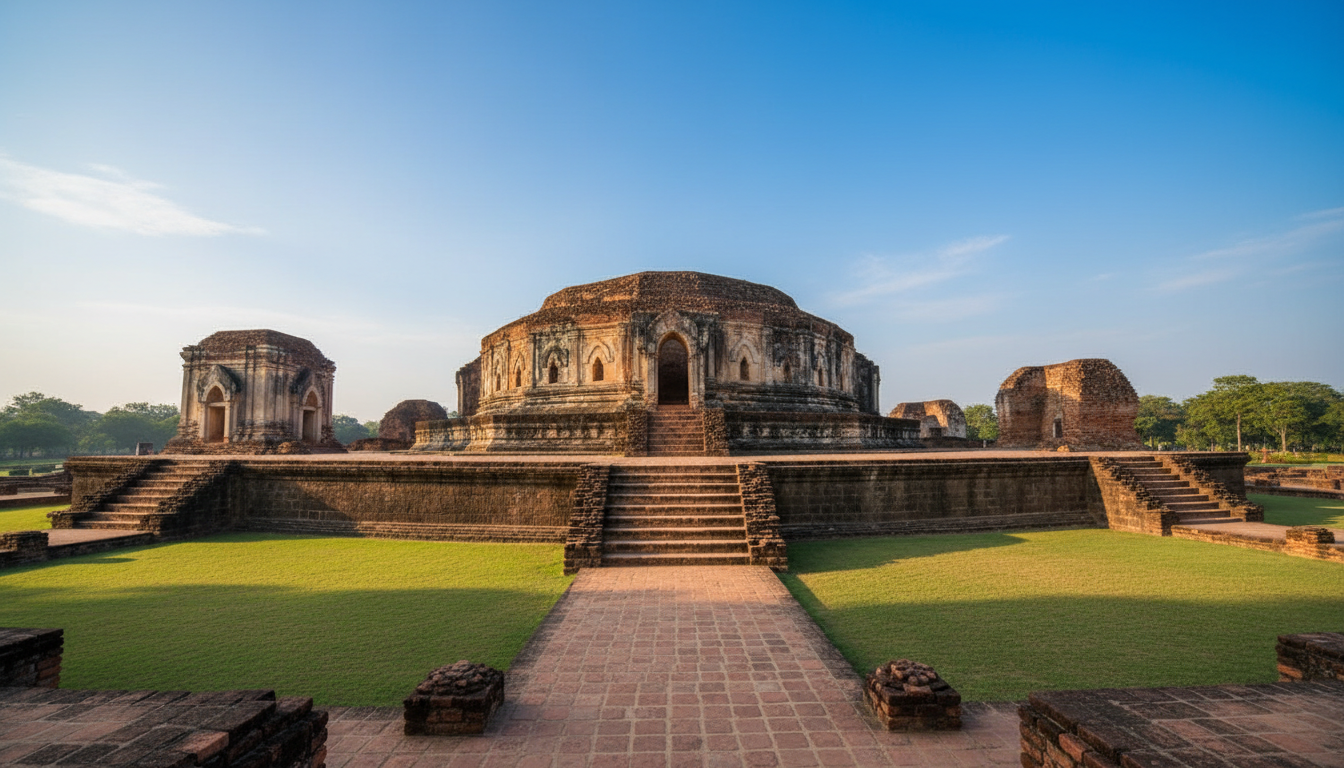
Founded by Pala Emperor Dharmapala in the late 8th century AD, Vikramshila was one of ancient India’s premier Buddhist universities alongside Nalanda. Despite its rich history, it sees only a tiny fraction of the visitors that travel to other historical sites in the state.
Visitors can explore the large central stupa decorated with original terracotta plaques, walk among excavated monastic cells, and view stone and bronze sculptures at the on-site ASI Archaeological Museum.
- Best Time to Visit: October to March.
- How to Reach: Located in Antichak Village, 50 km from Bhagalpur Junction and 13 km from Kahalgaon Railway Station. Local taxis and auto-rickshaws run regularly from Bhagalpur city.
- Average Cost: Entry fee is ₹20 for Indian citizens. Hotel accommodations in Bhagalpur range from ₹1,200 to ₹3,000 per night. A day trip costs about ₹1,000 – ₹2,000 per person.
- Local Tip: Make sure to visit the ASI Archaeological Museum on site. Note that the museum is closed on Fridays.
If you enjoy discovering quiet places across different parts of India, explore our guides on hidden places in North India and offbeat destinations in West India to plan your next trip.
Quick Trip Planning & Budget Matrix
This summary matrix breaks down the estimated expenses, ideal trip durations, and travel styles for each destination:
| Destination | State | Duration | Est. Budget (Per Person) | Best For |
|---|---|---|---|---|
| Tinchuley & Takdah | West Bengal | 2N / 3D | ₹3,500 – ₹5,500 | Mountain Stays / Couples |
| Gongoni (Garhbeta) | West Bengal | 1D / 1N | ₹1,000 – ₹2,000 | Day Trips / Canyon Views |
| Jhargram & Belpahari | West Bengal | 2N / 3D | ₹3,000 – ₹5,000 | Forests & Heritage / Families |
| Mousuni Island | West Bengal | 1N / 2D | ₹1,800 – ₹3,000 | Beach Camping / Friend Groups |
| Mangalajodi | Odisha | 1N / 2D | ₹2,500 – ₹4,500 | Birdwatching / Eco-Travel |
| Deomali & Koraput | Odisha | 2N / 3D | ₹3,500 – ₹6,000 | Trekking & Tribal Culture |
| Satkosia Gorge | Odisha | 2N / 3D | ₹4,500 – ₹7,500 | River Safaris / Nature Camps |
| Daringbadi | Odisha | 2N / 3D | ₹3,500 – ₹6,000 | Hill Climate / Nature Walks |
| Netarhat | Jharkhand | 2N / 3D | ₹4,000 – ₹6,500 | Plateau Views / Sunsets |
| Patratu Valley | Jharkhand | Day Trip | ₹1,200 – ₹2,500 | Scenic Drives / Short Escapes |
| McCluskieganj | Jharkhand | 1N / 2D | ₹2,500 – ₹4,000 | Colonial Heritage / Solo Travel |
| Kiriburu & Saranda | Jharkhand | 2N / 3D | ₹4,000 – ₹7,000 | Dense Woodlands / Adventure |
| Valmiki Tiger Reserve | Bihar | 2N / 3D | ₹4,000 – ₹7,000 | Jungle Safaris / Wildlife |
| Rohtasgarh & Tutla Bhawani | Bihar | 1N / 2D | ₹2,000 – ₹3,500 | Fort Trekking / Waterfalls |
| Vikramshila Ruins | Bihar | Day Trip | ₹1,000 – ₹2,000 | Ancient History / Archaeology |
Frequently Asked Questions
What is the geographical difference between East India and North East India?
East India officially consists of four states: West Bengal, Odisha, Jharkhand, and Bihar. North East India comprises the “Eight Sister States” (Assam, Meghalaya, Arunachal Pradesh, Nagaland, Manipur, Mizoram, Tripura, and Sikkim). East India features Gangetic plains, laterite gorges, coastal mangrove ecosystems, and plateau hill stations, offering a completely distinct landscape and cultural identity from North East India.
Which offbeat place in East India is best for a quick weekend trip from Kolkata?
Gongoni (Garhbeta) in Paschim Medinipur (~3.5 hours by train or car), Mousuni Island (~4 hours by train/car and local ferry), and Jhargram (~3 hours by direct train) are the three easiest weekend trips from Kolkata. All three offer low crowd levels, affordable accommodations, and distinct landscapes.
Which destinations in East India are ideal for wildlife and nature travel?
Mangalajodi in Odisha is excellent for close-up wetland bird photography from paddle boats. Satkosia Gorge (Odisha) offers river stays alongside crocodile conservation areas, while Valmiki Tiger Reserve in Bihar provides jungle jeep safaris through Sal forests near the Himalayan foothills.
Are these offbeat East India destinations safe for family trips and female travellers?
Yes. Destinations like Tinchuley, Jhargram, Daringbadi, Netarhat, Patratu, and Mangalajodi have active eco-tourism initiatives, state-run nature camps, or established homestay networks. Local communities are welcoming, and travel safety conditions across these specific tourist belts are good.