

Central India hides some of the country’s most spectacular yet under-visited architectural wonders, ancient geological sites, and pristine forest valleys. While mainstream tourists flock to Khajuraho or Pachmarhi, discovering the hidden places to visit in central india requires venturing into the quiet hinterlands of Madhya Pradesh and Chhattisgarh. From the restored 8th-century temple complexes tucked inside the Chambal ravines to the subterranean caves of Bastar and the bouncing peat bogs of Mainpat, this offbeat guide breaks down 15 secret destinations with practical road routes, ticket costs, local guidelines, and pit-stop warnings.
Hidden Places to Visit in Central India: Madhya Pradesh Heritage & Wilderness
1. Bateshwar Group of Temples (Morena, Madhya Pradesh)
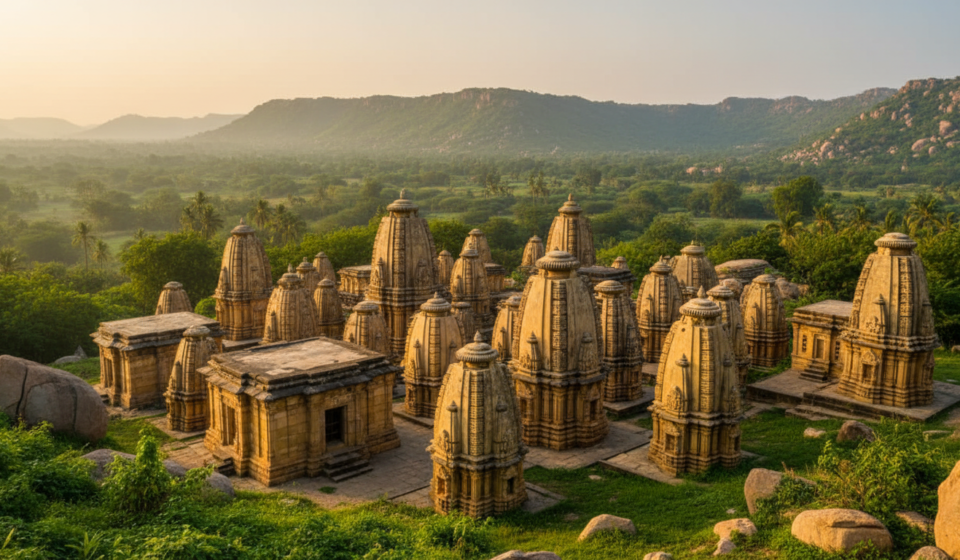
Tucked inside the Padavali village in Morena district, the Bateshwar complex contains nearly 200 sandstone temples spread across 25 acres. Built between the 8th and 10th centuries CE by the Gurjara-Pratihara dynasty, this massive site lay in ruins for centuries, forgotten inside the dacoit-infested Chambal ravines. In the early 2000s, Archaeologist K.K. Muhammed and the Archaeological Survey of India (ASI) undertook an extraordinary restoration project, piecing together thousands of fallen stone blocks without modern mortar.
- Key Sights: Hundreds of reassembled mini-shrines dedicated to Shiva, Vishnu, and Shakti; intricate stone carvings; active archaeological restoration zones.
- How to Reach: Located ~35 km north of Gwalior and ~30 km from Morena town. The nearest airport and major railhead are in Gwalior. Hire a private taxi or rental vehicle from Gwalior via the Gwalior–Morena highway.
- Entry Fees & Timings: ~₹25 for Indian citizens; ~₹300 for foreign nationals (paying digitally via QR code usually offers a ₹5 discount). Open daily from 8:00 AM to 6:00 PM.
- Best Time to Visit: October to March, when winter temperatures range between 15°C and 28°C.
- Local Tip: Arrive by 8:30 AM. Morning light illuminates the yellow-sandstone shrines, and you will likely have the entire complex to yourself. Clean washroom facilities are available near the ASI ticket booth.
- Mistake to Avoid: Relying on public buses. Local buses drop passengers on the highway, leaving you stranded 4 km from the complex with limited auto-rickshaw availability. Rent a cab for the full circuit.
2. Mitawali (Chausath Yogini) & Padavali (Morena, Madhya Pradesh)
Located just 3 km apart from each other and 40 km from Gwalior, Mitawali and Padavali form an extraordinary architectural pairing. Mitawali sits atop a 100-foot hilltop and houses a 14th-century circular Chausath Yogini temple featuring 64 outer chambers surrounding a central Shiva shrine. Its distinct layout famously inspired Sir Edwin Lutyens’ design for India’s Old Parliament House (Sansad Bhawan). Nearby Padavali features a 10th-century fortress built over a ruined temple complex, renowned for its high-relief roof carvings depicting mythological scenes and detailed erotic artwork.
- Key Sights: The 100-step climb to Mitawali’s open sky courtyard; ancient rainwater harvesting channels inside the circular courtyard; the carved assembly hall (mandapa) at Padavali Fort.
- How to Reach: Best visited alongside Bateshwar as part of a half-day private cab circuit from Gwalior (~40 km).
- Entry Fees & Timings: ASI combined entry rules apply (~₹25 for Indians, ₹300 for foreigners). Open daily from 6:00 AM to 6:00 PM.
- Best Time to Visit: October to March. Winter mornings offer comfortable temperatures for climbing the stone stairs.
- Local Tip: Village homestays around Mitawali offer simple, authentic rural meals like Bajra Roti with fresh butter and local Malpua.
- Mistake to Avoid: Visiting during peak summer afternoons (April to June). The stone court exposed to direct sun gets extremely hot, making walking barefoot near the inner shrines uncomfortable.
3. Kakanmath Temple (Sihoniya, Morena, Madhya Pradesh)
Rising abruptly out of mustard fields in Sihoniya village, Kakanmath is a 115-foot-tall, 11th-century Shiva temple built by Kachchhapaghata ruler Kirttiraja. What makes Kakanmath staggering is its construction: the entire towering structure stands without binding cement or mortar. Massive carved sandstone blocks are stacked relying purely on geometric precision and counter-balancing weight. It looks partially destroyed—as if a strong breeze could knock it down—yet it has survived centuries of earthquakes.
- Key Sights: The gravity-defying main spire (shikhara); the two-story pillared assembly hall; panoramic views over rural Morena.
- How to Reach: Located ~65 km north of Gwalior via Morena town. Accessible by private taxi via state roads.
- Entry Fees & Timings: Free entry. Open daily from 6:00 AM to 6:00 PM.
- Best Time to Visit: November to February, when yellow mustard crops surround the dark sandstone ruins.
- Local Tip: Village roads leading into Sihoniya are narrow. Drive a compact car or sedan rather than a large tour bus.
- Mistake to Avoid: Climbing on loose, unanchored stone blocks resting around the temple perimeter. They can shift underfoot.
4. Tamia Valley & Patalkot (Chhindwara, Madhya Pradesh)
Tamia Valley is a deep, horseshoe-shaped gorge carved 1,200 to 3,000 feet into the Satpura Range. At the bottom of this massive canyon lies Patalkot, an isolated valley consisting of 12 villages inhabited by the indigenous Bharia and Gond tribes. The valley is so deep that several sections receive direct sunlight for only a few hours around noon. If you are comparing regional nature escapes across the country, much like exploring the hidden places to visit in North India, Tamia offers a rare combination of raw geology and deep tribal culture.
For travellers looking for lush wilderness during the rainy season, Tamia also stands among the top places to visit in India during monsoon when streams line the valley walls.
- Key Sights: Overlook views from the Tamia PWD Rest House; trekking down into Patalkot valley floor; learning about traditional Bharia ethnobotany and herbal medicine; Zingaria Waterfall.
- How to Reach: Located ~78 km from Chhindwara Junction and ~210 km from Nagpur Airport. It lies along the Chhindwara–Pachmarhi road.
- Entry Fees & Timings: Viewpoints are free. Local eco-guides charge ~₹300–₹600 for day treks into the valley. Accessible during daylight hours (8:00 AM – 5:00 PM).
- Best Time to Visit: July to February (Monsoon brings lush greenery and full waterfalls; winter offers pleasant trekking conditions).
- Local Tip: Stay at MPT Motel Tamia or forest department eco-camps on the ridge. Cellular network connection drops completely once you descend into the valley floor.
- Mistake to Avoid: Venturing into Patalkot Valley without a local Bharia guide. The trails are unmarked, extremely steep, and light fades significantly earlier inside the ravine than on the ridge.
5. Chaturbhuj Nala Rock Art & Gandhisagar Sanctuary (Mandsaur, Madhya Pradesh)
Stretching along an 800-meter dry stream bed inside the Gandhisagar Wildlife Sanctuary, Chaturbhuj Nala is one of the longest continuous open-air rock art galleries in the world. The site features over 2,500 individual rock paintings, with depictions dating from the Upper Palaeolithic period (10,000+ BCE) continuous through the 10th century CE. Ancient humans painted detailed hunting scenes, dances, rhinoceroses, elephants, and tribal rituals using natural red ochre and mineral pigments.
- Key Sights: Guided prehistoric rock art walks; boat safaris on the backwaters of Gandhi Sagar Dam; nearby Hinglajgarh Fort and Dharmrajeshwar monolith cave temple.
- How to Reach: Located in Bhanpura Tehsil, ~165 km from Mandsaur and ~100 km from Kota Junction (Rajasthan).
- Entry Fees & Timings: Sanctuary vehicle entry ~₹100–₹200 plus forest guide fee. Open 8:00 AM to 5:00 PM. Prior clearance from the Bhanpura Forest Range Office is required.
- Best Time to Visit: October to March.
- Local Tip: Wear durable hiking shoes with good traction. Viewing the shelter paintings requires walking over uneven riverbed boulders and crouching under low rock ledges.
- Mistake to Avoid: Never touch the ancient rock shelter surface or use camera flash, as moisture and artificial flash light degrade the mineral pigments.
6. Chanderi & Pranpur Craft Village (Ashoknagar, Madhya Pradesh)
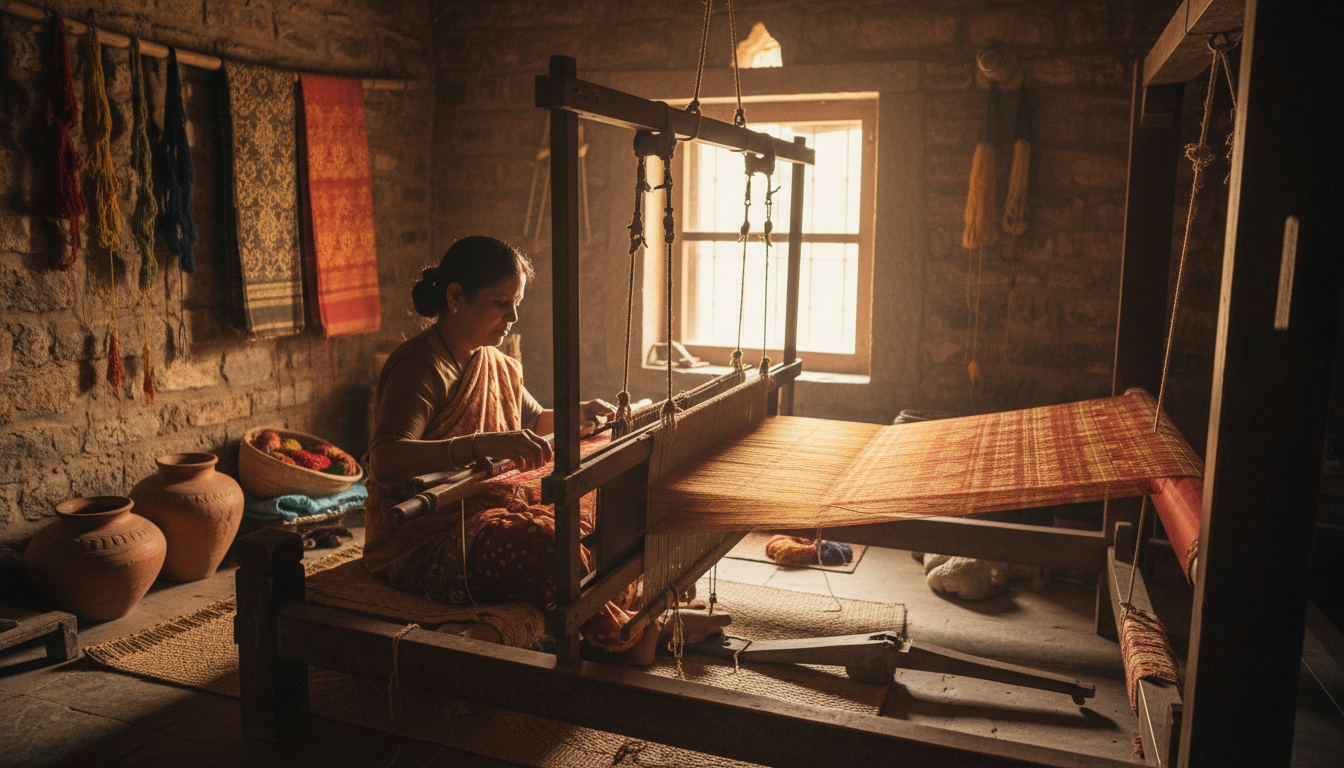
Chanderi is an ancient fortified town surrounded by hills, lakes, and historical monuments. Famous worldwide for its gossamer-light handwoven silk sarees, the town is dominated by the 11th-century Chanderi Fort. Just 3 km away lies Pranpur, recognized as India’s first Handloom Craft Tourism Village. Here, visitors can walk through quiet stone streets, hear the rhythmic click of wooden handlooms inside traditional homes, and watch master artisans weave authentic GI-tagged Chanderi fabric.
| Attraction | Highlight / Significance | Recommended Time |
|---|---|---|
| Pranpur Craft Village | Direct interaction with master weavers; step-by-step yarn dyeing and silk weaving demonstrations. | 2 – 3 Hours |
| Koshak Mahal | 15th-century victory palace built by Sultan Mahmud Khilji of Malwa, featuring four equal multi-story wings. | 1 Hour |
| Chanderi Fort & Badal Mahal Gate | Panoramas over the old walled city; singular stone carved ceremonial gateway. | 2 Hours |
- How to Reach: Located ~36 km from Lalitpur Railway Station (UP) and ~127 km from Jhansi Junction. Well connected via state highways.
- Entry Fees & Timings: Fort and palace entry ~₹20–₹25. Monitored sites open from sunrise to sunset. Pranpur village walk is open throughout the day.
- Best Time to Visit: October to March.
- Local Tip: Stay at MPT Tana Bana in Chanderi. Purchase sarees directly from weaver cooperatives in Pranpur to ensure genuine quality and fair wages for artisans.
- Mistake to Avoid: Buying “Chanderi silk” from commercial gift shops near bus stands without checking for the official Handloom Mark or GI tag.
7. Parsili & Sanjay-Dubri National Park (Sidhi, Madhya Pradesh)
Parsili is a quiet eco-tourism node situated on the banks of the Banas River. Its signature attraction is a unique sensory experience: a 4 km barefoot walk along the soft, shallow, wet sand bed of the Banas River. Parsili acts as the quiet buffer gateway to Sanjay-Dubri Tiger Reserve, an expansive forest of Sal trees that historically formed part of the natural habitat of the wild white tiger.
- Key Sights: Sunset barefoot walking on Banas River sandbed; morning jeep safaris into Sanjay-Dubri Tiger Reserve to spot sloth bears, tigers, leopards, and gaur; birdwatching along riverbanks.
- How to Reach: Located in Sidhi district, ~90 km from Rewa Railway Station and ~180 km from Prayagraj Airport.
- Entry Fees & Timings: Barefoot river walks are open to all visitors (arranged freely for guests at MPT Parsili Resort). Park safaris cost ~₹2,500–₹4,000 per gypsy including guide fees.
- Best Time to Visit: October to April.
- Local Tip: Reserve your stay at the MPT Parsili Resort months in advance. The resort sits directly on the riverbank, offering direct access to the sandbed.
- Mistake to Avoid: Visiting only for game drives and skipping the Banas River sandwalk, which is the region’s most refreshing activity.
8. Dhubela / Maharaja Chhatrasal Museum & Mastani Mahal (Chhatarpur, Madhya Pradesh)
Located off the Chhatarpur–Nowgong highway near Mau Sahaniya village, Dhubela sits on the banks of a quiet lake. The complex houses a 17th-century palace complex constructed by Bundela king Maharaja Chhatrasal. Within the grounds is the original birth palace of Mastani (wife of Peshwa Bajirao I), along with several royal cenotaphs and an extensive museum housing 8 galleries filled with rare Bundela armaments, plate armor, and 10th-century Kalachuri sculptures.
- Key Sights: The Arms & Armor collection inside the museum; Mastani Mahal; the Lake Cenotaph of Maharani Kamlapati; traditional Bundela palace architecture.
- How to Reach: Located ~16 km from Chhatarpur railway station and ~62 km from Khajuraho Airport. It makes an easy stopover when travelling between Orchha and Khajuraho.
- Entry Fees & Timings: ₹20 for Indian adults; ₹400 for foreign visitors. Camera fee ~₹250. Open 10:00 AM to 5:00 PM. Closed every Monday.
- Best Time to Visit: October to March.
- Local Tip: Allow about 2.5 hours to tour both the main museum interior and Mastani’s standalone palace across the road.
- Mistake to Avoid: Scheduling your visit on a Monday when all state-managed museums in Madhya Pradesh remain closed.
9. Sailana Cactus Garden & Palace (Ratlam, Madhya Pradesh)
Located within the grounds of the 200-year-old Sailana Royal Palace, this site contains one of Asia’s largest private collections of exotic cacti and succulents. Established in the mid-20th century by Raja Dilip Singh and maintained by the royal family, the botanical garden features over 1,200 distinct species of cacti collected from South America, North America, and Mediterranean zones.
- Key Sights: Towering Saguaro cacti, rare flowering succulents, bulbous desert plants; guided walks through royal courtyard gardens.
- How to Reach: Located ~21 km from Ratlam Junction (a major train junction on the Delhi–Mumbai railway line) along the Ratlam–Banswara Highway (NH 927A). Nearest airport is Indore (~160 km).
- Entry Fees & Timings: ~₹20–₹50 entry fee. Open daily from 8:00 AM to 5:00 PM.
- Best Time to Visit: November to March, when many desert succulent species come into bloom.
- Local Tip: Stop by famous sweet and snack shops near Ratlam Railway Station on your return journey to buy authentic, fresh Ratlami Sev.
- Mistake to Avoid: Visiting during late afternoon hours in summer (May–June) when outdoor garden temperatures in Ratlam frequently exceed 40°C.
Offbeat Central India Travel Destinations: Unexplored Chhattisgarh
10. Mainpat / Phendeling (Surguja, Chhattisgarh)
Perched on a forested plateau at an altitude of 3,500 feet in northern Chhattisgarh, Mainpat is often called the “Mini Tibet” or “Shimla of Chhattisgarh”. In 1962, the Government of India resettled roughly 1,400 Tibetan refugees across seven camps on this high-altitude tableland. Mainpat is also famous for a unique geological phenomenon known as Jaljali (or Daldali)—a natural peat bog where the earth bounces like a trampoline when jumped on.
- Key Sights: Bouncing on the natural peat bog at Jaljali; visiting Dhakpo Shevli Ling Monastery in Tibetan Camp No. 1; Tiger Point Waterfall; Fish Point Waterfall; experience Ultapani (a gravity-defying stream where water appears to flow uphill).
- How to Reach: Located ~55 km from Ambikapur Railway Station and ~360 km from Swami Vivekananda Airport in Raipur. Drive uphill via the scenic Ambikapur–Sitapur route.
- Entry Fees & Timings: Free access to natural sites and monasteries. Monasteries welcome visitors from 6:00 AM to 6:00 PM; natural viewpoints operate during daylight hours.
- Best Time to Visit: October to March for cool, misty weather; July to September for roaring post-monsoon waterfalls.
- Local Tip: Eat hot handmade Tibetan momos and Thukpa at small family-run eateries in Tibetan Camp No. 1.
- Mistake to Avoid: Stepping off marked soil areas at Jaljali/Daldali. While the main central clearing is safe for bouncing, peripheral marshy zones marked with warning boards can be soft and deep.
11. Sirpur Archaeological Site (Mahasamund, Chhattisgarh)
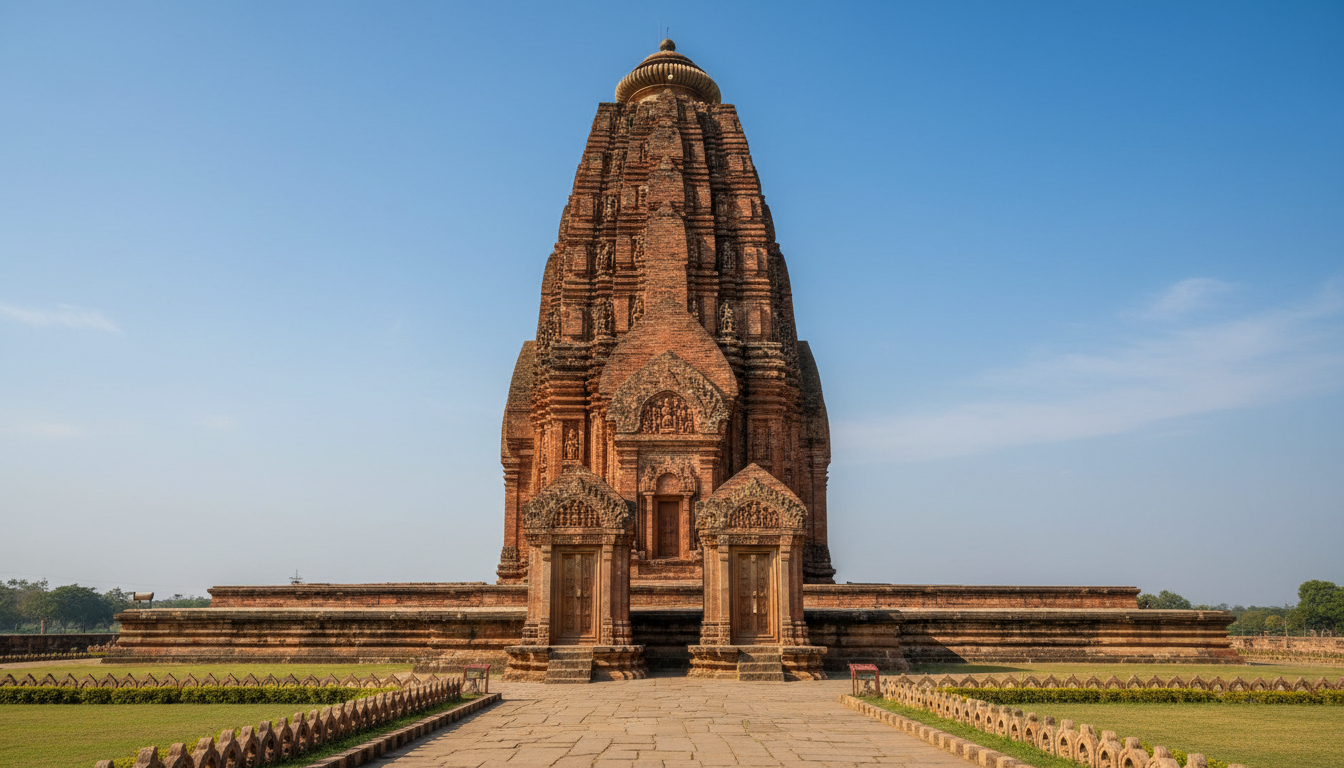
Situated on the banks of the Mahanadi River, Sirpur was the 5th to 8th-century capital of the South Kosala kingdom. Mentioned in the travelogues of Hiuen Tsang, Sirpur features remarkable excavated ruins spanning Hinduism, Buddhism, and Jainism. Its main landmark is the 7th-century Laxman (Lakshmana) Temple—one of India’s finest surviving early brick temples, constructed entirely from unglazed red bricks with carved stone doorframes.
- Key Sights: Laxman Temple’s brick carvings; the massive stone foundation steps of Surang Tila; Teevardev Buddha Vihara with its large seated stone Buddha; excavated ancient underground market complexes.
- How to Reach: Located ~78 km east of Raipur along NH-53. The trip takes about 1.5 hours by private cab or car from Raipur Airport or Railway Station.
- Entry Fees & Timings: ₹20 (online) / ₹25 (cash) for Indian citizens; ₹250/₹300 for foreign visitors. Open daily from 6:00 AM to 6:00 PM.
- Best Time to Visit: October to March.
- Local Tip: Hire an official ASI guide at the Laxman Temple entrance gate. Excavated ruins are scattered across a 3 km radius, and a guide will help you navigate between the individual sites efficiently.
- Mistake to Avoid: Spending time only at Laxman Temple and leaving. Make sure to visit Surang Tila and Teevardev Vihara, which lie deeper inside the village.
12. Bhoramdeo Temple & Maikal Hills (Kabirdham/Kawardha, Chhattisgarh)
Referred to as the “Khajuraho of Chhattisgarh,” Bhoramdeo is an 11th-century Nagara-style stone temple built by King Ramchandra of the Nagavanshi dynasty. Set against the forest backdrop of the Maikal Hills, the temple’s outer walls feature complex stone sculptures of deities, musicians, dancers, and erotica. Much like exploring hidden places in West India, discovering Chhattisgarh’s stone heritage offers rich historical context away from heavy commercial crowds.
- Key Sights: Bhoramdeo main temple architecture and exterior friezes; Mandwa Mahal (a brick marriage hall structure); Cherki Mahal; surrounding Baiga tribal hamlets.
- How to Reach: Located ~18 km from Kawardha town and ~125 km from Raipur. Accessible by state bus or taxi from Raipur to Kawardha, followed by a local auto/cab.
- Entry Fees & Timings: Free entry. Open daily from 6:00 AM to 8:00 PM.
- Best Time to Visit: October to March (The annual Bhoramdeo Mahotsav cultural festival takes place around March/Mahashivratri).
- Local Tip: Stay at the Chhattisgarh Tourism Baiga Resort located right near the temple complex.
- Mistake to Avoid: Skipping Mandwa Mahal and Cherki Mahal, which sit within an easy 1 km walk from the main temple complex.
13. Kutumsar Caves & Kanger Valley National Park (Bastar, Chhattisgarh)
Located deep within Kanger Valley National Park, Kutumsar Cave is a 35-meter underground limestone cave system stretching over 330 meters in length. Descending into its subterranean chambers reveals massive stalactites and stalagmites formed over millions of years. The cave is completely dark and home to a rare, genetically blind species of pale cave fish (Indoreonectes evezardi) that adapted to life without sunlight.
- Key Sights: Guided subterranean torchlight cave walks; viewing natural stalagmite structures like the subterranean Shivling; Tirathgarh Waterfall (a 300-foot multi-tiered fall nearby); bamboo rafting on the Kanger River.
- How to Reach: Located ~40 km from Jagdalpur town in Bastar district. Jagdalpur is connected by rail and a regional airport, as well as highways from Raipur (~320 km).
- Entry Fees & Timings: National park entry ~₹50–₹100 per vehicle plus compulsory local Dhurwa tribal eco-guide fee (~₹150–₹200 per group). Open 8:00 AM to 3:00 PM.
- Best Time to Visit: November to May.
- CRUCIAL WARNING: Kutumsar Cave is strictly closed from mid-June to late October every year. Monsoon rains submerge the subterranean passages completely. Do not attempt to visit in monsoon.
- Local Tip: Wear sturdy shoes with wet-grip soles. Carry a small flashlight, although official guides carry primary solar lighting lanterns.
- Mistake to Avoid: Entering the cave if you experience severe claustrophobia, as the initial entrance requires descending a narrow, vertical steel staircase into absolute darkness.
14. Tamda Ghumar & Mendri Ghumar Valleys (Bastar, Chhattisgarh)
Located just a short drive from the famous Chitrakote Falls, Tamda Ghumar and Mendri Ghumar are twin horseshoe-shaped gorge valleys. Unaffected by commercial tourism, these natural lookouts open up over deep green canyons where seasonal rainfed streams plunge over sheer rock faces into the forest canopy below.
- Key Sights: Panoramic views over deep canyon gorges; Tamda Ghumar seasonal waterfall; scenic, quiet drives across the Bastar plateau.
- How to Reach: Located ~45 km from Jagdalpur and ~10 km from Chitrakote Falls. Easily reached by private taxi or rented scooter along the Jagdalpur–Chitrakote circuit.
- Entry Fees & Timings: Free entry. Open during daylight hours (6:00 AM – 5:30 PM).
- Best Time to Visit: July to December (Waterfalls are active through monsoon and remain lush into early winter).
- Local Tip: Bring your own drinking water and snacks; there are no commercial shops or restaurants at the valley lookouts.
- Mistake to Avoid: Standing close to unfenced cliff edges, particularly on rainy days when wet sandstone ledges become slippery.
15. Barnawapara Wildlife Sanctuary & Devdhara (Mahasamund, Chhattisgarh)
Barnawapara Wildlife Sanctuary spans flat, forested terrain covered in teak, Sal, and bamboo groves. Free from the heavy tourist traffic of commercial tiger reserves, Barnawapara features a high density of wildlife, including Gaur (Indian Bison), Sloth Bears, Striped Hyenas, Leopards, Sambar deer, and over 150 bird species.
- Key Sights: Open-gypsy morning and evening game drives; spotting large herds of Gaur around Pakkela Reservoir; visiting Devdhara Waterfall on the Balamdehi River.
- How to Reach: Located ~100 km east of Raipur along the NH-53 highway (turning off near Pithora). Driving time is roughly 2.5 hours from Raipur.
- Entry Fees & Timings: Sanctuary forest entry ~₹100; Gypsy safaris cost ~₹2,000–₹3,000 per vehicle shift. Morning shift (6:00 AM – 10:00 AM) and Afternoon shift (3:00 PM – 6:00 PM). Closed from July 1 to September 30 for monsoon wildlife breeding.
- Best Time to Visit: November to June.
- Local Tip: Book government eco-lodges (Mohda Eco Camp or Hareli Eco Resort) through Chhattisgarh Tourism well in advance, as luxury private hotels do not operate inside this protected buffer.
- Mistake to Avoid: Expecting fast-food outlets or commercial resort dining inside the sanctuary. Plan on taking simple, freshly cooked meals at state eco-camp dining halls.
How to Plan a Trip to These Hidden Places to Visit in Central India
Given the vast geographic spread across Central India, combining all 15 hidden gems into a single itinerary requires clear regional route planning. Rather than attempting to cover both states in one rushed drive, break your offbeat journey into two focused circuits:
If you enjoy offbeat regional exploration, you can easily pair these routes with trips to other parts of the country, such as discovering the hidden places to visit in South India on future travels.
Circuit 1: The Northern MP Heritage Loop (4 to 5 Days)
- Base City: Gwalior
- Day 1: Gwalior to Morena Circuit (Bateshwar, Mitawali, Padavali, Kakanmath). Return to Gwalior for overnight stay.
- Day 2: Drive Gwalior to Chanderi (~215 km). Explore Chanderi Fort and Koshak Mahal.
- Day 3: Morning artisan walk in Pranpur Craft Village. Drive to Dhubela Museum (~170 km) en route to Khajuraho/Jhansi.
Circuit 2: The Chhattisgarh Nature & Tribal Trail (5 to 6 Days)
- Base City: Raipur
- Day 1: Drive Raipur to Sirpur (~78 km). Tour Laxman Temple and Surang Tila. Drive to Bhoramdeo (~160 km) for night stay.
- Day 2: Morning at Bhoramdeo Temple. Drive to Barnawapara Wildlife Sanctuary (~180 km) for afternoon jeep safari.
- Day 3–5: Drive south to Jagdalpur/Bastar (~320 km). Explore Kutumsar Cave, Tirathgarh, Tamda Ghumar, and local tribal markets.
Planning Tip: Finding verified last-mile transport, reliable driver details, and direct bookings for state tourism properties (MPT and CG Tourism) across remote districts can be complex. You can coordinate custom vehicle hiring and stay bookings directly through TravelDham for a hassle-free trip.
Frequently Asked Questions
1. Which state is best for offbeat Central India travel: MP or Chhattisgarh?
Both states complement each other. Madhya Pradesh excels in historical stone architecture, rock shelters, and palace heritage (such as Bateshwar, Chanderi, and Dhubela). Chhattisgarh offers unique subterranean caves, tribal highlands, and uncrowded nature reserves (such as Kutumsar, Mainpat, and Sirpur). Combining regional legs based on your preferences yields the best experience.
2. Is it safe to travel through offbeat areas in Bastar and Morena?
Yes. The Chambal region in Morena, historically known for dacoit activity decades ago, is today a peaceful, protected heritage corridor managed by ASI. Bastar’s major eco-tourism zones (Kanger Valley, Kutumsar, Chitrakote, Tamda Ghumar) are safe, welcoming, and managed by local tribal eco-development committees that guide visitors through the sites daily.
3. How many days are required for an offbeat trip across Central India?
An ideal offbeat trip takes 8 to 10 days. Allocate 4 to 5 days to cover the Gwalior–Morena–Chanderi heritage loop in northern Madhya Pradesh, and 4 to 5 days to explore the Raipur–Sirpur–Bastar circuit in Chhattisgarh.
4. Do I need special permits to visit tribal villages in Patalkot or Bastar?
Indian citizens do not require Inner Line Permits to visit public tourist zones in Patalkot (MP) or Bastar (Chhattisgarh). However, hiring local community eco-guides at site entrances is strongly recommended for navigation, safety, and respectful cultural interaction.
5. When are subterranean caves like Kutumsar closed to visitors?
Kutumsar Cave inside Kanger Valley National Park is strictly closed from **mid-June to late October** every year. Monsoon rainwater fills the underground cavern chambers, making entry impossible until water levels drain out completely in late autumn.