
Learning how to plan a trip to bhutan from india requires understanding a few crucial policy changes introduced by the Royal Government of Bhutan. While Indian passport and Voter ID holders do not need a visa under the Indo-Bhutan Friendship Treaty, you must pay a daily Sustainable Development Fee (SDF), hire a certified local tour guide, and stay in approved accommodations. Whether you plan to fly into Paro or cross the land border at Phuentsholing, this guide covers entry permits, actual trip costs, driving regulations, money management, and day-by-day itineraries.
Bhutan Travel Rules for Indian Citizens: SDF, Guides, and Hotels
Bhutan’s post-pandemic tourism policy relies on a “High Value, Low Volume” strategy. For Indian travellers, three fundamental rules apply to all entries across land and air borders:
- Sustainable Development Fee (SDF): Indian nationals pay a concessional SDF of ₹1,200 (Nu. 1,200) per person, per night. Children aged between 6 and 12 years pay ₹600 per night (50% discount), while children under 6 years are fully exempt. This ₹1,200 rate is officially locked until August 31, 2027.
- Mandatory Local Tour Guide: Independent, unguided travel across Bhutan is no longer allowed. Every Indian tourist traveling beyond border towns or staying overnight must be accompanied by a Department of Tourism (DOT)-certified local Bhutanese guide.
- Mandatory Certified Accommodation: You can only stay in accommodations certified by the Department of Tourism (ranging from 3-star to 5-star hotels and approved homestays). Booking unaccredited budget lodges on arrival is prohibited.
- 24-Hour Border Town Exemption: Visitors staying within designated border zones (Phuentsholing, Samtse, Gelephu, or Samdrup Jongkhar) for less than 24 hours are exempt from paying the SDF. Once you cross the internal checkpoints towards Thimphu or Paro, the daily SDF applies.
- Goods and Services Tax (GST): A 5% local GST applies to tourism services, including hotel bookings, guide fees, and transport within Bhutan. The SDF payment itself is exempt from GST.
Entry Permits and Documentation: What Documents Are Required?
Immigration authorities in Bhutan enforce strict documentation checks. Presenting invalid documents will result in entry denial at the airport or land terminals.
Accepted Identity Documents
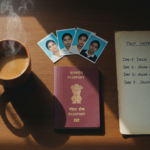
- Original Indian Passport: Must have a minimum validity of 6 months from the date of entry into Bhutan.
- Original Voter Identity Card (EPIC): Must be the physical plastic/paper card featuring an official hologram issued by the Election Commission of India.
Strictly Rejected Documents: Aadhaar Cards, PAN Cards, Driving Licenses, Ration Cards, and downloaded e-Voter IDs without physical holograms are strictly rejected at all immigration entry points.
Requirements for Minors (Under 18 Years)
Minors traveling with parents must present an original passport OR an original Birth Certificate written in English (or officially translated), clearly listing the child’s full name and date of birth, along with a valid School ID card. Minors must be accompanied by a parent or legal guardian.
How to Obtain the Bhutan Entry Permit
You can acquire your entry permit through two standard methods:
- Online Pre-Approval (Recommended): Apply directly via the official Department of Immigration portal (
visit.doi.gov.bt) or through a registered tour operator. You must upload passport/Voter ID scans, passport-sized photos, DOT-certified hotel confirmation vouchers, guide details, travel insurance proof, and pay the total SDF online. Processing takes 3 to 5 working days. - On-Arrival Permit: Obtain your permit upon arriving at Paro International Airport or at the Pedestrian Terminal in Phuentsholing, Gelephu, or Samdrup Jongkhar. Be prepared for processing queues ranging from 1 to 4 hours at land borders during peak travel seasons (March–May and September–November).
Note on Area Permits: The initial Entry Permit covers travel within Thimphu and Paro only for up to 7 days. If your itinerary extends to Punakha, Phobjikha Valley, Haa, or Bumthang, your guide must obtain a Special Area Permit (Route Permit) from the Immigration Office in Thimphu (open Monday to Friday) or pre-process it online.
Comprehensive Cost Breakdown for a Bhutan Trip from India
Planning your budget when figuring out how to plan a trip to bhutan from india depends heavily on your choice of transport and accommodation levels. Below is a baseline comparison for a 6-night, 7-day trip per person (all prices in INR / Nu.):
| Expense Category | Budget (Homestays / Shared Transport) | Mid-Range (3-Star Hotels + Private Sedan) | Luxury (4-Star / 5-Star Resorts) |
|---|---|---|---|
| Daily SDF Fee | ₹1,200 / night | ₹1,200 / night | ₹1,200 / night |
| Accommodation (Per Night) | ₹1,800 – ₹2,500 | ₹4,000 – ₹7,000 | ₹12,000 – ₹45,000+ |
| Licensed Guide (Per Day) | ₹1,500 – ₹2,000 (shared) | ₹2,000 – ₹2,500 | Included in luxury package |
| Transport / Cab (Per Day) | Shared buses / cabs | ₹3,500 – ₹4,500 (Sedan) | ₹5,500 – ₹8,000 (Innova / SUV) |
| Meals & Dining (Per Day) | ₹600 – ₹900 | ₹1,200 – ₹1,800 | ₹2,500 – ₹5,000 |
| Monument Entry Fees (Total) | ₹2,500 – ₹3,500 | ₹2,500 – ₹3,500 | Included in package |
| ESTIMATED TOTAL (6N / 7D per person) | ₹32,000 – ₹42,000 | ₹55,000 – ₹80,000 | ₹1,20,000 – ₹2,50,000+ |
Updated Monument Entry Ticket Charges
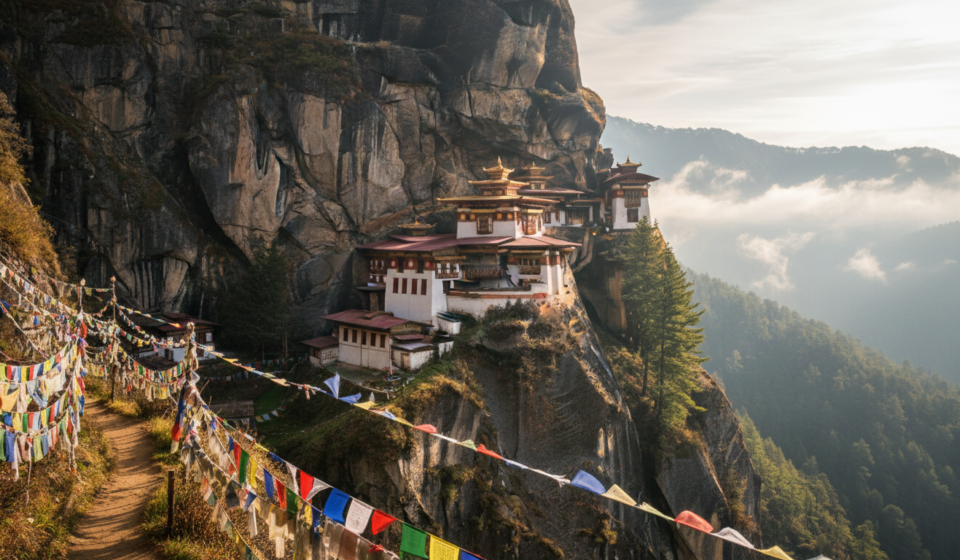
- Paro Taktsang (Tiger’s Nest): ₹1,000 per person
- Punakha Dzong: ₹500 per person
- Tashichho Dzong (Thimphu): ₹500 per person
- National Memorial Chorten (Thimphu): ₹500 per person
- National Museum of Bhutan (Paro): ₹500 per person
- Buddha Dordenma (Buddha Point): Free access to outer grounds (nominal fee for inner sanctum)
Driving or Motorcycling an Indian Vehicle into Bhutan
Driving your own car or riding a motorcycle across the border from West Bengal or Assam requires extra permits and administrative steps.
If you’ve previously researched taking your own car to Nepal, note that Bhutan’s land-entry system involves daily taxes and stricter age criteria for foreign vehicles.
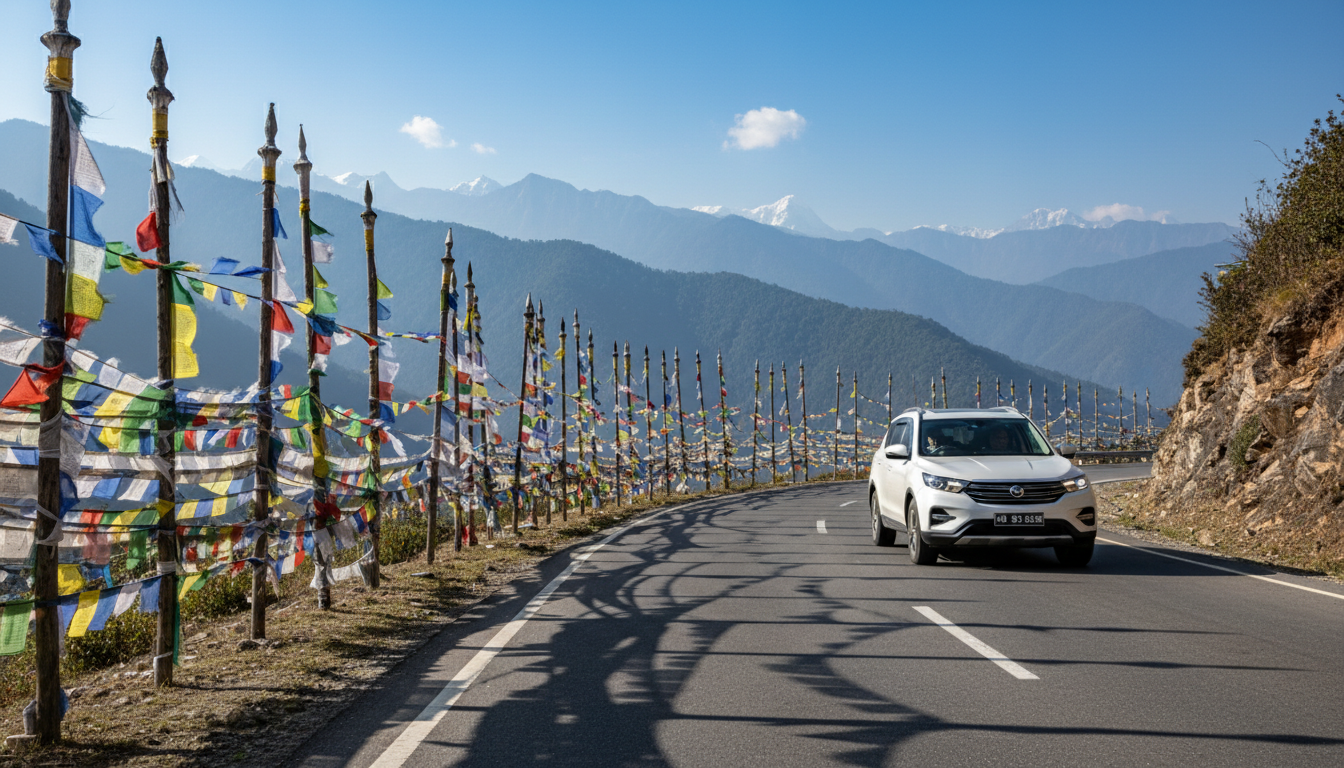
- Vehicle Green Tax: You must pay a non-refundable Green Tax of Nu. 4,500 / ₹4,500 per day for any foreign-registered car or motorcycle traveling beyond the Rinchending Checkpost in Phuentsholing. This fee is calculated for every day the vehicle remains inside the country.
- CPMS Registration: Vehicles must be registered on the Check Post Management System (BCTA) portal before arriving at Royal Bhutan Police checkpoints.
- 10-Year Age Limit: The vehicle’s Registration Certificate (RC) must show that the vehicle is 10 years old or less from its original registration date. Older vehicles are refused entry.
- Required Vehicle Documents: Original Driving License (matching the permit applicant), original RC, valid Pollution Under Control (PUC) certificate, and an insurance policy with an active geographical extension covering Bhutan. If the owner is not driving, a notarized authorization letter/NOC from the owner is mandatory.
- Guide Policy for Drivers: Driving your own vehicle does not excuse you from the guide mandate. A licensed Bhutanese tourist guide must ride inside your vehicle or accompany you in an escort vehicle throughout the trip.
Currencies, UPI, and SIM Cards in Bhutan
Currency Acceptance
The Bhutanese Ngultrum (Nu.) is pegged 1:1 with the Indian Rupee (INR). Indian currency is universally accepted across Bhutan. You can spend ₹10, ₹20, ₹50, ₹100, and ₹200 notes without restriction. ₹500 notes are widely accepted up to an official limit of ₹25,000 per individual. Discontinued ₹2,000 notes and Indian coins are not accepted anywhere.
Digital Payments and UPI
The Royal Monetary Authority of Bhutan has integrated digital payments with NPCI, allowing BHIM, PhonePe, Paytm, and Google Pay QR code payments at many shops, cafes, and hotels in Paro and Thimphu.
However, do not rely on digital payments alone. International network latency, local server dropouts, and standard SMS OTP failures on Indian SIM cards often disrupt digital transactions. If you plan on using UPI internationally, always keep a backup of ₹10,000 to ₹15,000 in physical cash for daily expenses, shopping, and tips.
Local Mobile SIM Cards
Indian SIM cards operating on international roaming are expensive and frequently suffer connection drops in mountain passes. You can buy a local tourist SIM card from **TashiCell** or **B-Mobile** at Paro Airport or near the Phuentsholing border terminal for Nu. 200–500 (inclusive of 5GB to 10GB data bundles). You must present your entry permit copy along with your physical passport or Voter ID to activate the card.
If your device supports digital SIM profiles, consider setting up an international eSIM for travel to maintain uninterrupted data while keeping your primary Indian SIM active to receive banking OTPs.
Best Time to Visit Bhutan
- Spring (March to May) — Peak Season: Daytime temperatures range between 15°C and 24°C. Wild rhododendrons bloom across the mountain passes. This season hosts the famous **Paro Tshechu**, a major festival featuring traditional mask dances.
- Autumn (September to November) — Peak Season: Brings blue skies, excellent mountain visibility, and comfortable weather for high-altitude trekking. Major cultural events like the **Thimphu Tshechu** take place during autumn.
- Winter (December to February) — Off-Peak / Budget: Daytime weather remains bright and sunny, though night temperatures drop below freezing in Thimphu and Paro. Expect fewer crowds, lower hotel rates, and opportunities to see endangered Black-Necked Cranes in Phobjikha Valley.
- Monsoon (June to August) — Avoid: Heavy rains create landslide hazards along mountain highways, low cloud cover obscures mountain views, and flight delays at Paro Airport are common.
Recommended Itineraries for Indian Travellers
Option A: 7-Day Classic Western Bhutan Loop
This is the standard route for first-time visitors, balancing cultural landmarks, scenic drives, and high-altitude hiking.
- Day 1: Arrival and Transfer to Thimphu
- By Air: Land at Paro International Airport (2,200 m). Meet your guide, drive 54 km (1.5 hours) to Thimphu, stopping at the Chuzom river confluence and Tachogang Lhakhang suspension bridge.
- By Land: Clear immigration at the Phuentsholing Pedestrian Terminal and drive to Thimphu (165 km / 5.5 to 6 hours).
- Overnight stay in Thimphu.
- Day 2: Thimphu Sightseeing
- Visit the 51-meter tall Buddha Dordenma (Buddha Point) for valley views.
- Explore the National Memorial Chorten, Simply Bhutan Museum, and Motithang Takin Preserve to view Bhutan’s national animal.
- Tour Tashichho Dzong in the late afternoon and browse the Centenary Farmers Market.
- Day 3: Thimphu to Punakha via Dochula Pass
- Drive 75 km (2.5 to 3 hours) to Punakha over Dochula Pass (3,100 m), home to 108 memorial chortens.
- Hike through paddy fields to reach Chimi Lhakhang (the Fertility Temple).
- Explore Punakha Dzong, located at the junction of the Pho Chhu and Mo Chhu rivers, and walk across the 160-meter Punakha Suspension Bridge.
- Overnight stay in Punakha.
- Day 4: Punakha to Paro
- Hike up to Khamsum Yulley Namgyal Chorten in the morning.
- Drive back towards Paro (125 km / 3.5 to 4 hours).
- Visit Ta Dzong (National Museum) and Rinpung Dzong. Explore Paro town market in the evening.
- Day 5: The Tiger’s Nest Hike (Paro Taktsang)
- Trek to Paro Taktsang (3,120 m altitude). The round-trip hike covers 6.5 km and takes 4 to 6 hours.
- Relax in the evening with a traditional Bhutanese Hot Stone Bath heated by river stones and infused with Khempa herbs.
- Day 6: Chele La Pass Excursion
- Drive to Chele La Pass (3,988 m), the highest motorable point in Bhutan, featuring views of Mt. Jomolhari.
- Optional drive down into the peaceful Haa Valley to visit Lhakhang Karpo and Lhakhang Nagpo.
- Return to Paro for a farewell dinner featuring local dishes like Ema Datshi and red rice.
- Day 7: Departure
- Transfer to Paro Airport for your return flight or drive down to the Phuentsholing border.
Option B: 5-Day Express Itinerary
- Day 1: Arrive in Paro, transfer to Thimphu (54 km). Visit Buddha Dordenma and National Memorial Chorten.
- Day 2: Day trip to Punakha via Dochula Pass. Tour Punakha Dzong and return to Thimphu.
- Day 3: Drive to Paro. Visit Rinpung Dzong and Kyichu Lhakhang.
- Day 4: Hike to Tiger’s Nest Monastery. Spend the evening resting in Paro.
- Day 5: Morning departure from Paro Airport.
Common Mistakes to Avoid When Planning
- Carrying Digital Voter IDs: Immigration at Phuentsholing and Paro will reject e-Voter ID printouts. Bring the original physical Voter ID card with an official embedded hologram, or use a valid passport.
- Assuming You Can Travel Without a Guide: Bhutan’s Department of Tourism requires all foreign visitors, including Indian citizens staying overnight, to travel with a certified local guide. Independent backpacking without a guide is not permitted.
- Forgetting the Green Tax for Self-Drives: Driving your own car or motorcycle into Bhutan incurs a ₹4,500 daily tax. Vehicles older than 10 years are denied permits at the border checkpost.
- Relying Entirely on UPI Payments: While UPI QR codes are visible in major towns, OTP delivery failures on Indian SIM cards and server issues can leave you stranded without payment options. Carry ₹10,000 to ₹15,000 in physical cash.
- Attempting to Visit Punakha on an Initial Entry Permit: The standard permit issued at the border covers only Thimphu and Paro. Traveling to Punakha or beyond requires an additional Special Area Permit arranged via your guide.
Frequently Asked Questions
Is a passport compulsory for Indian citizens visiting Bhutan?
No. An original Indian Passport (with at least 6 months validity) or an original Voters ID card featuring an official hologram is acceptable for adult entry. However, a passport is recommended if you plan to fly into Paro Airport via Drukair or Bhutan Airlines.
Can I travel to Bhutan from India on a budget without a tour operator?
You can apply for your entry permit directly through the official government immigration portal (visit.doi.gov.bt) and book DOT-certified hotels independently. However, you are still legally required to hire a certified local Bhutanese tourist guide for your trip. Unguided backpacking is prohibited.
Is an Aadhaar card valid for entry into Bhutan?
No. Aadhaar Cards, PAN Cards, Driving Licenses, and Ration Cards are not recognized as legal entry documents by Bhutanese immigration authorities.
How much cash should an Indian carry to Bhutan?
Carry approximately ₹10,000 to ₹15,000 per person in physical cash (₹100 and ₹500 notes). This covers tips, traditional hot stone baths, minor purchases, and situations where UPI or card terminals fail.
How fit do I need to be for the Tiger’s Nest Hike?
The hike requires a moderate level of physical fitness. The trail is 6.5 km round-trip with an altitude gain of roughly 900 meters, taking 4 to 6 hours to complete. Ponies can be hired for the uphill journey to the mid-way cafeteria, but all hikers must complete the downhill descent on foot.