
Planning a Kerala itinerary for a week-long journey requires balancing the diverse landscapes of this southern Indian state. Kerala offers a unique combination of misty mountain ranges, serene coastal waters, and rich cultural heritage. This seven-day plan focuses on maximizing regional exposure while minimizing unnecessary travel time between key destinations.
- Perfect Duration: A 7-day trip balances Western Ghat hill stations, serene backwaters, and coastal cliffs.
- Transport Choice: Hiring a private car or taxi is the most efficient way to navigate the winding roads.
- Best Season: Winter (October to February) offers the most pleasant and dry weather for sightseeing.
- Top Highlight: Spending an overnight stay in a traditional houseboat in Alleppey is an absolute must-do.
Best Time to Visit Kerala
Selecting the correct season dictates the quality of the experience. The state experiences a tropical climate, which means heat and humidity remain constant for much of the year. Strategic timing allows travelers to avoid the most intense monsoon rains and the peak summer heat.
- Winter (October to February): This remains the most popular period. Temperatures stay pleasant, and the skies are generally clear.
- Summer (March to May): Expect high heat and humidity. Coastal areas remain warm, while hill stations like Munnar offer a cooler retreat.
- Monsoon (June to September): Heavy rainfall transforms the landscape into a vibrant green. Many travelers visit during this time for Ayurvedic treatments, as the climate is considered ideal for these therapies.
Choosing when to go influences accessibility. Some mountain roads become difficult during heavy monsoons, while popular beaches become crowded during the peak winter months. Planning the Kerala itinerary around the temperate winter season provides the most consistent weather for both outdoor activities and relaxation.
7-Day Kerala Itinerary Overview
A balanced seven-day schedule integrates the highlands, the iconic backwaters, and the historic coastal centers. The following structure minimizes fatigue by grouping locations geographically.
| Day | Location | Primary Activity |
|---|---|---|
| 1 | Kochi | Arrival and cultural exploration |
| 2 | Munnar | Travel and tea plantation tour |
| 3 | Munnar | Nature trekking and viewpoints |
| 4 | Thekkady | Wildlife observation in Periyar |
| 5 | Alleppey | Houseboat boarding and backwaters |
| 6 | Varkala | Coastal cliffs and beach relaxation |
| 7 | Kochi | Departure |
| Route Segment | Distance (Approx.) | Estimated Travel Time | Best Transport Option |
|---|---|---|---|
| Kochi to Munnar | 130 km | 4 hours | Private Taxi / Cab |
| Munnar to Thekkady | 90 km | 3 hours | Private Taxi / KSRTC Bus |
| Thekkady to Alleppey | 140 km | 4 hours | Private Taxi / Cab |
| Alleppey to Varkala | 120 km | 3.5 hours | Train / Private Cab |
Exploring Kochi: The Gateway
Kochi serves as the primary arrival point for most international and domestic flights. This city blends colonial history with modern commercial activity. Spend the first day observing the Chinese fishing nets at Fort Kochi. These structures remain an iconic symbol of the region’s historical maritime trade.
Walk through the narrow streets of Mattancherry to observe a rich blend of history. Key highlights of this area include:
- Colonial Architecture: Buildings reflecting Portuguese, Dutch, and British styles side-by-side.
- Jewish Synagogue: A historic place of worship showcasing the region’s ancient multicultural links.
- The Dutch Palace (Mattancherry Palace): Famous for its exquisite murals depicting Hindu temple art.

Munnar: Highlands and Tea Gardens
Transitioning from the coast to the Western Ghats requires roughly four hours by car. Munnar stands as the centerpiece of this Kerala itinerary for those seeking cooler altitudes. The winding roads pass through dense forests and eventually open up into massive, manicured tea estates.
To fully experience Munnar, structure your 2-day stay with these recommended activities:
- Day 1 (Afternoon): Visit a local tea museum to learn about the traditional harvesting and processing methods.
- Day 2 (Morning): Enjoy a moderate trek in Eravikulam National Park to spot the endangered Nilgiri Tahr mountain goat.
- Day 2 (Afternoon): Capture panoramic views of the Western Ghats from the high-altitude photography ridges.
Thekkady: Wildlife and Nature
Continue moving south towards Thekkady, the home of Periyar National Park. The journey takes approximately three hours. This region focuses on wildlife conservation and spice production. A boat safari on Periyar Lake provides the best chance to spot wild elephants, deer, and various bird species residing along the water banks.
The Periyar landscape functions as a critical sanctuary. Maintaining silence during boat tours is essential for observing natural animal behavior without causing distress.
Beyond the lake, consider guided spice plantation tours. Kerala is famous for cardamom, pepper, and cinnamon production. Seeing these spices in their natural environment offers a deeper appreciation for the local agricultural economy.
Alleppey: The Backwater Experience
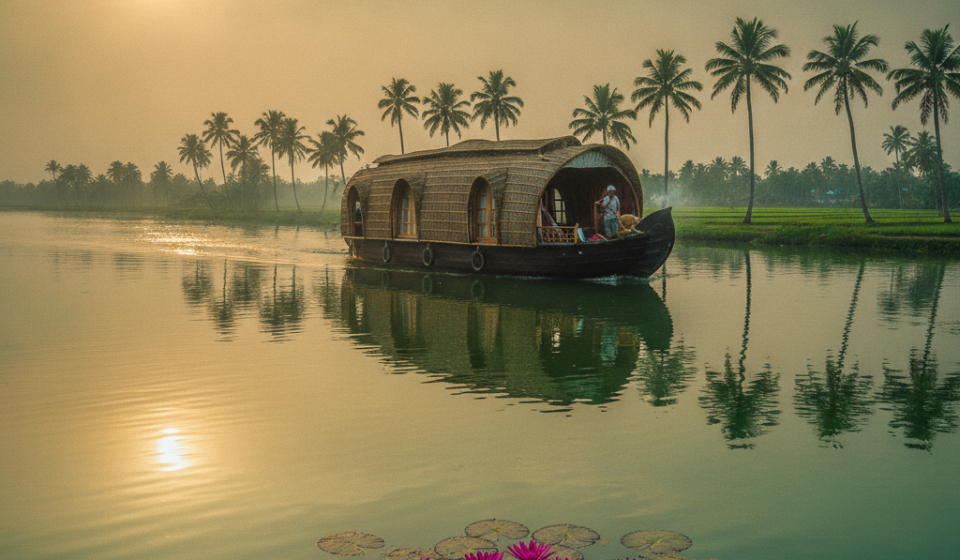
No trip to Kerala is complete without experiencing the backwaters. Travel from Thekkady to Alleppey, which serves as the hub for houseboat operations. Houseboats were once used to transport rice and spices across the labyrinth of canals, but today, they provide a slow, immersive way to view village life.
Boarding a houseboat for an overnight stay allows for a unique perspective on the region. The boat moves slowly through narrow waterways, passing local homes, churches, and lush paddy fields. This is arguably the most relaxing phase of the entire Kerala itinerary.

Varkala: Coastal Cliffs and Beaches
For the final leg, head to Varkala. This town is distinct due to its dramatic red cliffs that overlook the Arabian Sea. While other beaches in Kerala are flat and sandy, Varkala offers a vertical landscape. The cliff-top area is lined with cafes, shops, and guesthouses, creating a lively atmosphere.
The Papanasam Beach sits at the base of the cliffs. Locals believe the water here possesses healing properties. Spend the final day enjoying the ocean breeze and reflecting on the journey before heading back to the Kochi airport for departure.
Practical Travel Tips
Preparation is key to maintaining a smooth schedule. Consider these logistical factors when finalizing plans:
- Transportation: Hiring a private taxi for the entire duration offers the most flexibility. Road conditions vary, and private drivers often know the best routes and stops.
- Packing: Bring lightweight cotton clothing for the coast and a medium-weight jacket for the cooler temperatures in Munnar.
- Connectivity: Reliable 5G service is available in major towns, though signals may fluctuate in the deeper forested areas of the Western Ghats.
- Local Etiquette: Dress modestly, especially when visiting temples. Always remove footwear before entering a religious space or a local home.
Travelers often find that the pace of life in Kerala is slower than in major metropolitan hubs. Embracing this rhythm is essential. Trying to rush through every location often leads to burnout. If a particular spot feels particularly inviting, do not hesitate to extend time there at the expense of another secondary location.
Conclusion
A well-planned Kerala itinerary creates a framework for exploring the many facets of this diverse region. From the bustling history of Kochi to the silent canals of Alleppey and the mountain peaks of Munnar, this seven-day path covers the essential experiences for any first-time visitor. Consistent movement between these distinct ecosystems requires careful coordination, but the resulting variety provides a comprehensive overview of what makes Kerala a standout destination.