The Ultimate Guide to Astro-Ethno-Gastronomy Tourism Circuits in India: Dining Under the Stars with Ancient Culinary Wisdom and Celestial Rhythms

p>Modern travel often focuses on the physical world, ignoring the skies above and the ancient culinary wisdom that sustained civilizations for centuries. Yet, a growing number of experiential travelers are looking beyond traditional leisure tours to find deep, holistic connections with the cosmos and heritage food systems. This unique convergence has given rise to astro-ethno-gastronomy tourism circuits in india, where dark sky observation meets hyper-local, plant-based culinary heritages. By combining astronomical exploration with indigenous cooking methods, these curated pathways allow travelers to dine under pristine skies while eating food prepared according to traditional seasonal rhythms. It is not merely a vacation. It is a profound immersion into how humanity once lived in perfect alignment with the universe.
Key Takeaways:
- Celestial & Culinary Fusion: Astro-ethno-gastronomy tourism circuits in India uniquely bridge dark sky stargazing with ancestral plant-based cooking.
- Time-Tested Rhythms: Culinary practices are deeply rooted in Ayurvedic wisdom, syncing recipes directly with lunar phases and solar transits.
- Prime Circuits: Key destinations include Hanle (Ladakh), the Thar Desert (Rajasthan), the Rann of Kutch (Gujarat), and the tribal belts of Northeast India.
- Sustainable Travel: These pathways actively support the conservation of endangered night skies while generating vital income for remote indigenous communities.
Understanding Astro-Ethno-Gastronomy Tourism
This specialized segment of experiential travel is gaining traction among those who seek deeper meaning in their journeys. Tourism models have historically segregated activities, keeping cultural tours, culinary expeditions, and nature hikes separate from each other. However, the rise of astro-ethno-gastronomy tourism circuits in india highlights a shift toward integrated, multi-sensory travel experiences that engage both the intellect and the senses. By examining the night sky in regions with low light pollution, travelers can reconnect with the natural cycles of the earth and stars, which historically dictated agricultural practices.
These circuits are designed to cultivate a profound respect for nature. By stepping away from standard vacation patterns, travelers can cultivate a slower, more deliberate pacing that fosters genuine curiosity and mindfulness. To understand this concept fully, one must recognize that traditional Indian communities did not view the sky simply as a visual background. It was their calendar, their compass, and their spiritual guide. Indigenous food preparation was intimately linked to these celestial movements, with specific ingredients selected based on solar cycles and lunar positions. By participating in astro-ethno-gastronomy tourism circuits in india, travelers do not just observe these practices from afar; they actively participate in preserving these fragile, ancient ways of living.
Defining the Core Elements
This unique travel concept rests on three structural pillars:
- Astronomy: Visiting designated dark sky reserves or high-altitude regions to observe planets, stars, and deep-sky objects.
- Ethnography: Focusing on the preservation of indigenous cultural wisdom, oral histories, and community lifestyles.
- Gastronomy: Preparing and consuming ancient recipes using locally sourced, heirloom ingredients.
When these elements are merged, they form specialized astro-ethno-gastronomy tourism circuits in india that offer an unmatched depth of experience.
In practice, a typical itinerary on these pathways involves several curated phases:
- Daytime Cultural Interactions: Engaging with tribal or village elders to learn about ancestral lifestyle practices and oral histories.
- Traditional Cooking Demonstrations: Watching and participating in the preparation of heritage recipes using local, seasonal ingredients.
- Astronomical Observation: Using high-grade telescopes guided by expert astronomers and local sky-guides as dusk approaches.
This dual focus ensures that travelers understand both the celestial science and the terrestrial traditions of the host region. Furthermore, these journeys help generate alternative sources of income for remote communities, encouraging the younger generations to preserve their heritage. Selecting these specialized astro-ethno-gastronomy tourism circuits in india ensures that travelers support conservation efforts for both local dark skies and endangered culinary heritages.
Why Celestial and Culinary Traditions Align
Critics might argue that combining astronomy with culinary heritage is an artificial construct. They are not entirely wrong to question the connection, but they underestimate how deeply intertwined these disciplines were in ancient agrarian societies. Historically, the sowing, harvesting, and processing of crops in India were governed by the Hindu calendar (specifically the Panchangam, which tracks celestial alignments). For instance, certain grains were harvested only under specific lunar phases to ensure optimal moisture retention and nutritional value. Modern bio-dynamic farming practices often mirror these ancient celestial schedules, showing that ancestral wisdom aligns closely with current ecological science. Participating in astro-ethno-gastronomy tourism circuits in india allows modern travelers to experience this ancient wisdom firsthand.
For example, during a full moon, certain tribal communities prepare special rice dishes that are left under the open sky overnight to absorb the cool, purifying moonlight (a practice believed to enhance the digestive benefits of the food). This demonstrates that the alignment of celestial rhythms and food is not a modern marketing gimmick but a living science. The ongoing development of astro-ethno-gastronomy tourism circuits in india aims to bring these forgotten sciences back to the forefront of sustainable travel.

Top Astro-Ethno-Gastronomy Tourism Circuits in India
India’s diverse geography and rich cultural history provide the perfect conditions for these multidimensional travel networks. From the high-altitude cold deserts of the north to the vast salt plains of the west, each region offers a distinct celestial perspective and a completely unique culinary vocabulary. As travelers seek out these specialized experiences, several highly structured astro-ethno-gastronomy tourism circuits in india have emerged as premier options for discerning globetrotters. Let us explore the leading circuits that combine pristine night skies with deep-rooted culinary heritages.
The Himalayan High-Altitude Circuit (Ladakh and Spiti)
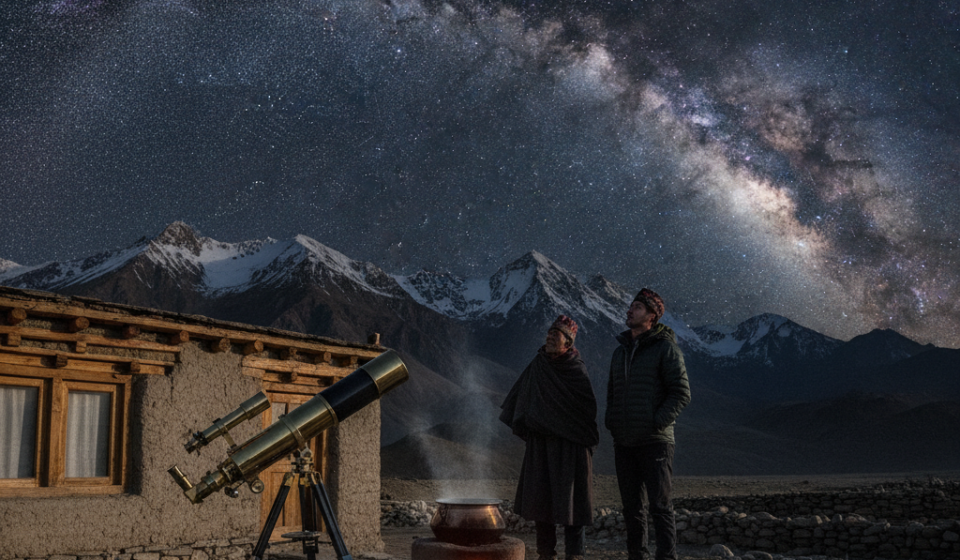
The cold desert regions of Ladakh and Spiti represent the pinnacle of dark-sky observation on the subcontinent. Home to the Hanle Dark Sky Reserve, located at an elevation of roughly 4500 meters, this region boasts exceptionally clear skies with minimal atmospheric water vapor. A report by the Indian Institute of Astrophysics in 2022 confirmed Hanle as India’s first official Dark Sky Reserve, noting its average of 270 clear nights annually. This dry, high-altitude environment makes it a primary hub for astro-ethno-gastronomy tourism circuits in india, attracting astronomers and culinary enthusiasts alike. Here, the low atmospheric density provides unparalleled views of the Milky Way galaxy, which stretches across the sky with striking clarity. The crisp mountain air is entirely devoid of urban smog, which permits telescopes to capture sharp, high-resolution celestial images.
But still, the physical challenge of acclimatizing to these heights requires a slow, measured travel style (which pairs beautifully with slow-food dining). In these remote settlements, travelers can stay in traditional Ladakhi homestays and enjoy dishes made from organic barley, local wild nettles, and dried yak cheese (which remains a staple of high-altitude sustenance). Travelers on these astro-ethno-gastronomy tourism circuits in india can book specialized itineraries, such as those offered by TravelDham Leh Ladakh Tours, to experience this perfect synergy of stellar observation and native gastronomy.
The Thar Desert Celestial Circuit (Rajasthan)
The vast expanse of the Thar Desert near Jaisalmer provides an entirely different, though equally captivating, backdrop for astronomical and culinary exploration. Far from the glaring lights of urban developments, the desert dunes offer exceptionally high SQM values (Sky Quality Meter readings that indicate pristine darkness). As measured by the International Dark-Sky Association during their 2023 survey, these remote desert regions consistently register night sky brightness levels exceeding 21.6 magnitudes per square arcsecond. This atmospheric clarity forms the foundation of the western astro-ethno-gastronomy tourism circuits in india, where stargazing is combined with the rugged, spice-forward traditions of Rajasthani cuisine. The dry sands act as natural insulation, absorbing heat during the intense day and releasing it quickly as the sun dips below the horizon.
Under the desert night sky, travelers can gather around open pit fires to watch local cooks prepare traditional Ker Sangri (a dish made of dried desert berries and beans) and Bajra Rotla (pearl millet flatbreads cooked over charcoal). These foods were originally designed to sustain nomads during long journeys across the arid landscape. Today, traveling along these western astro-ethno-gastronomy tourism circuits in india allows visitors to enjoy these historic dishes while learning about the astronomical navigational methods once used by desert traders.
The Salt Desert Ethno-Gastronomy Circuit (Rann of Kutch)
The white salt plains of the Great Rann of Kutch in Gujarat offer a surreal landscape where the horizon disappears into the night sky. During the dry winter months, the flat salt crust reflects the light of the stars, creating a luminous, otherworldly environment. This unique setting makes the region an ideal location for astro-ethno-gastronomy tourism circuits in india, particularly during the full moon phases when the salt desert glows with an eerie, beautiful silver light. During these lunar celebrations, local folk musicians often play traditional stringed instruments, creating a hauntingly beautiful acoustic environment.
The ethno-gastronomy of the Kutchi people is characterized by its reliance on milk products, millet, and indigenous vegetables that thrive in saline soils. Visitors to these specialized astro-ethno-gastronomy tourism circuits in india can enjoy hot Bajra Khichdi (a comforting millet and lentil porridge) and fresh curd beside traditional Kutchi mud houses, known as Bhungas. This culinary simplicity, coupled with the immense, star-filled dome overhead, offers a humbling reminder of human resilience in harsh environments. To plan an excursion to this unique destination, travelers can coordinate custom packages through TravelDham Domestic Tour Packages.
The Eastern Tribal and Astral Circuit (Sikkim and Arunachal)
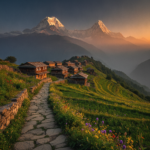
Moving toward the eastern reaches of the Himalayas, the states of Sikkim and Arunachal Pradesh present a lush, forested alternative to the northern cold deserts. In places like the Ziro Valley or the remote high valleys of Sikkim, indigenous tribal communities maintain a profound relationship with both the forest and the stars. These tribal regions are rapidly developing their own localized astro-ethno-gastronomy tourism circuits in india, offering travelers a chance to learn about tribal star-lore while sampling unique, fermented delicacies. The dense vegetation of the eastern hills acts as a natural acoustic buffer, resulting in an incredibly silent stargazing experience.
The culinary traditions of these eastern tribes revolve around fermented bamboo shoots, local leafy greens, smoked meats, and organic red rice. The preparation of these fermented foods is historically tied to seasonal shifts and celestial indicators, such as the appearance of specific constellations that signal the beginning of the monsoon or the harvest season. Exploring these eastern astro-ethno-gastronomy tourism circuits in india provides a rare opportunity to see how agricultural preservation, tribal identity, and celestial tracking remain active, daily realities rather than museum exhibits.
Incorporating Ancient Indian Celestial Culinary Rhythms
To fully appreciate the depth of these travel pathways, one must understand the underlying science that guides them. Ancient Indian culinary practices were never arbitrary; they were systematically structured around the celestial movements of the sun, moon, and planets. The integration of these historic concepts into modern astro-ethno-gastronomy tourism circuits in india allows travelers to experience a holistic approach to wellness that has been refined over thousands of years. Let us examine the two primary celestial systems that dictate these traditional culinary rhythms.
To better understand these distinct influences, here is a comparison of how solar and lunar rhythms dictate traditional Indian dietary guidelines:
| Celestial Cycle | Ayurvedic Principle | Dietary Focus | Key Health Benefits |
|---|---|---|---|
| Lunar Phases (Waxing/Waning) | Soma (Cooling & Nourishing Energy) | Hydrating, nutrient-rich, moon-infused foods | Improves digestion, supports detoxification, calms mind |
| Solar Transits (Uttarayana/Dakshinayana) | Agni (Heating & Metabolic Energy) | Warming root vegetables, seeds, or cooling fruits | Boosts seasonal immunity, maintains metabolic balance |
Lunar Phases and Ayurvedic Food Preparation
In Ayurvedic science, the moon is considered the ruler of the water element and the source of cooling energy (known as Soma). Consequently, lunar phases have always dictated specific dietary habits and food preparation methods. During the waxing moon (Shukla Paksha), when the moon’s energy is rising, traditional kitchens would focus on preparing nourishing, easily digestible foods to build physical strength. This celestial relationship is a key educational component of modern astro-ethno-gastronomy tourism circuits in india.
Conversely, during the waning moon (Krishna Paksha), the culinary focus shifts to detoxifying, light meals that encourage the elimination of toxins from the body. On specialized astro-ethno-gastronomy tourism circuits in india, travelers can participate in interactive cooking workshops that demonstrate these principles. For example, guests may learn how to prepare herbal decoctions and moon-infused waters that are left outside during the full moon to absorb the lunar light, a process believed to enhance their therapeutic qualities.
Solar Transits and Seasonal Harvesting
While the moon governs day-to-day culinary rhythms, the sun’s path across the zodiac determines long-term seasonal diets (a system known in Ayurveda as Ritucharya). The transit of the sun into different zodiac signs, such as Makar Sankranti (the entry of the sun into Capricorn), signals crucial shifts in harvesting and eating patterns. The developers of astro-ethno-gastronomy tourism circuits in india have carefully mapped these solar transits to design seasonal itineraries that reflect these traditional agricultural markers.
During the northern transit of the sun (Uttarayana), which corresponds to the warm summer months, the focus is on light, cooling, and hydrating foods to counteract the external heat. During the southern transit (Dakshinayana), which covers the colder winter months, the diet transitions to rich, warming foods, oil-rich seeds, and root vegetables that provide sustained energy. By traveling along these astro-ethno-gastronomy tourism circuits in india, visitors gain a deep, experiential understanding of how these ancient seasonal menus support human health and ecological balance throughout the year.

Selecting and Planning Your Journey
Embarking on a journey that combines astronomy, ethnography, and culinary arts requires careful preparation. Unlike standard leisure travel, these specialized experiences depend heavily on seasonal weather conditions, lunar cycles, and local agricultural calendars. Choosing the right path within the available astro-ethno-gastronomy tourism circuits in india ensures that your trip is both comfortable and deeply rewarding. To assist you in planning your excursion, we have compiled the essential considerations for selecting and preparing for your journey.
Best Seasons for Astro-Gastronomy Expeditions
Timing is the single most critical factor when planning an astronomical and culinary tour. Clear skies are absolutely essential for star observation, meaning that monsoon seasons must be avoided entirely across all regions. When choosing between the various astro-ethno-gastronomy tourism circuits in india, travelers must match their interests with the specific seasonal windows of each geographic zone. For instance, high-altitude regions like Ladakh are only accessible and clear during the summer, while desert areas are best visited during the crisp winter months.
To help you choose the ideal time for your journey, the following table outlines the peak seasons, key astronomical sights, and signature traditional dishes for the primary astro-ethno-gastronomy tourism circuits in india:
| Circuit Name | Peak Travel Window | Key Celestial Highlights | Signature Ethno-Gastronomy Dish |
|---|---|---|---|
| Himalayan Cold Desert (Ladakh) | June to September | Milky Way Core, Nebulae, Hanle Dark Sky | Khambir (yeast bread) with Yak Butter Tea |
| Thar Desert (Rajasthan) | October to March | Constellations, Meteor Showers, Planets | Ker Sangri with Bajra Rotla |
| Rann of Kutch (Gujarat) | November to February | Full Moon reflection, Supermoons | Bajra Khichdi with fresh local Curd |
| Eastern Tribal (Arunachal) | October to April | Deep Space Observation, Pristine Valleys | Fermented Bamboo Shoot with Red Rice |
Essential Equipment and Travel Preparation
To get the most out of these unique journeys, travelers should pack with both the sky and the kitchen in mind. High-quality binoculars or a portable telescope are excellent additions for those who wish to observe the night sky independently, although most established astro-ethno-gastronomy tourism circuits in india provide professional-grade observation equipment at their base camps. Additionally, packing layered, thermal clothing is vital, as the best dark-sky locations are often situated in high-altitude or desert areas where temperatures drop dramatically after sunset.
When preparing for your expedition, it is highly recommended to prioritize the following items:
- Red-Light Headlamps: These lights are critical because they allow you to read maps and navigate without disrupting your eyes’ adjustment to the darkness (an increasingly rare commodity in light polluted urban centers).
- Thermal Base Layers: High-altitude deserts experience severe temperature drops at night, making multiple clothing layers an absolute necessity.
- Field Journal: A durable notebook is ideal for writing down local recipes, star maps, and ethnographical stories shared by village hosts.
- Travel Insurance: Given the remote and high-altitude nature of these routes, having comprehensive travel medical coverage is highly advisable.
Selecting certified astro-ethno-gastronomy tourism circuits in india ensures that your journey actively supports the communities that protect these precious cultural and natural resources.
Conclusion
The rise of astro-ethno-gastronomy tourism circuits in india represents a meaningful evolution in how we explore our world. By stepping away from highly commercialized tourist hotspots, travelers can reconnect with the cosmic rhythms that have guided human civilization for millennia. Eating traditional foods prepared in harmony with solar and lunar cycles, while gazing at a pristine night sky, is a deeply grounding experience that modern life rarely affords. It is an opportunity to slow down, listen to ancient stories, and support the preservation of endangered cultural heritages. If you are ready to embark on a journey that nourishes both the soul and the intellect, exploring these unique pathways is the perfect path forward.