The Ultimate Velavadar Travel Guide: How to Visit India’s Spectacular Golden Grassland Savannah

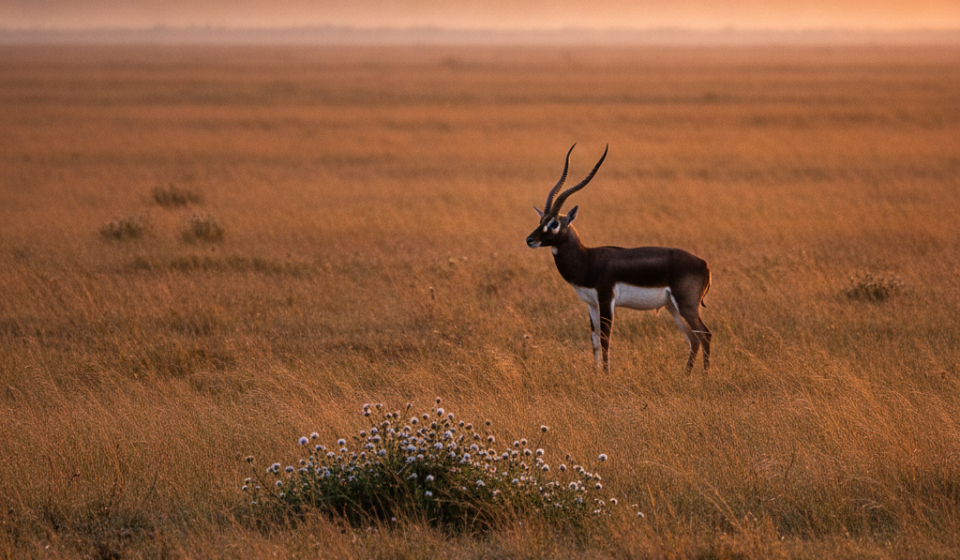
Velavadar represents a unique ecological niche within India. Often overshadowed by the more famous tiger reserves of the north or the dense jungles of the south, this national park in Gujarat offers a stark, mesmerising contrast. It is an expanse of golden grasslands, a true savannah that serves as the primary sanctuary for the blackbuck, one of the fastest antelopes on the planet. For those planning an expedition, this Velavadar travel guide provides the essential framework for observing one of India’s most specialised habitats.
Key Takeaways:
- Unique Savannah Landscape: Velavadar is India’s premier golden grassland ecosystem, offering unmatched visibility for wildlife.
- Abundant Wildlife: Home to thriving populations of the majestic blackbuck, endangered Indian wolf, and the rare lesser florican.
- Optimal Timing: The winter season (November to February) offers the most comfortable weather for safaris.
- Seamless Access: Best reached by hiring a private vehicle from nearby Bhavnagar (50 km) or Ahmedabad (145 km).
Understanding the Velavadar Ecosystem
The Blackbuck National Park at Velavadar is technically a semi-arid grassland. It is the only place in India where one can witness the majestic blackbuck antelope in such significant numbers. The park spans roughly 35 square kilometres. While that may seem small compared to massive forest reserves, the open terrain ensures high visibility for wildlife viewing.
The ecology here is driven by seasonal cycles. During the monsoon, the landscape turns a vibrant green, but for the majority of the year, it remains a golden savannah. This environment is perfectly suited for grassland species. Apart from the blackbuck, the park is a critical habitat for the Indian wolf, striped hyena, and the endangered lesser florican.
This unique environment is perfectly suited for several key grassland species, including:
- Blackbuck Antelope: The primary attraction, known for their spiraling horns and incredible speed.
- Indian Wolf: An elusive predator that thrives in the open plains.
- Striped Hyena: A nocturnal scavenger often spotted during late evening drives.
- Lesser Florican: An endangered bird species that breeds in these grasslands during the monsoon.
The Best Time to Visit
Timing your trip is the most critical decision for a successful safari. Because the park is an open grassland, the experience varies significantly throughout the year.
- Winter (November to February): This is the peak season. The weather is cool and pleasant, making it ideal for extended game drives.
- Summer (March to June): Temperatures rise significantly. While the heat is intense, this is the best time for wolf sightings as animals congregate near the few available water holes.
- Monsoon (July to September): The park is generally closed to visitors during the monsoon season to allow the grassland ecosystem to recover and to protect the breeding grounds of the lesser florican.
| Season | Months | Average Temperature | Key Highlights |
|---|---|---|---|
| Winter | November to February | 12°C – 28°C | Pleasant weather, migratory birds, active blackbucks |
| Summer | March to June | 25°C – 45°C | Excellent predator sightings near waterholes |
| Monsoon | July to September | 22°C – 35°C | Park closed; breeding season for the Lesser Florican |
Getting There and Logistics
Located in the Bhavnagar district of Gujarat, Velavadar is accessible by road from major cities in the state. Planning the transport logistics ahead of time is recommended to ensure you reach the park gates before the safari hours commence.
| Route | Approximate Distance |
|---|---|
| From Bhavnagar | 50 kilometres |
| From Ahmedabad | 145 kilometres |
| From Vadodara | 170 kilometres |
For air travellers, Bhavnagar Airport is the closest operational facility. From there, a taxi or private vehicle provides the most direct connection to the park entrance. It is worth noting that public transport is unreliable for reaching the park gates directly, so arranging a private vehicle is standard practice.

Safari Experiences at Velavadar
Wildlife viewing in Velavadar is exclusively conducted via vehicle-based safaris. Unlike dense forest parks where you might travel on elephant back or on foot, the open savannah structure demands a sturdy 4×4 vehicle. The park management sets strict timings for entry and exit.
| Safari Session | Entry Time | Exit Time | Best For |
|---|---|---|---|
| Morning Safari | 06:30 AM | 09:30 AM | Golden hour photography, active bird watching |
| Evening Safari | 03:00 PM | 06:00 PM | Predator activity, sunset landscape views |
The primary objective of a safari in Velavadar is not just to see the animals, but to observe the natural behaviour of the blackbuck in an environment that has remained largely untouched by large-scale agricultural encroachment.
Guides are mandatory for all safaris. These individuals possess a deep understanding of the movement patterns of the local wildlife. They are particularly skilled at locating the elusive Indian wolf, which remains one of the most sought-after sightings for serious wildlife enthusiasts.
Where to Stay Near the Park
Accommodations near Velavadar range from luxury wildlife resorts to more modest guesthouses. Selecting a place that aligns with your comfort requirements is important, as the surrounding region is rural.
The Blackbuck Lodge remains the primary choice for those seeking comfort. It is situated right on the periphery of the park, allowing guests to witness wildlife movement even from their rooms. Other options in nearby towns like Bhavnagar offer standard hotel amenities, though these require a longer daily commute to the park gates.
To help you choose, here is a breakdown of the primary stay options:
- The Blackbuck Lodge: A luxury resort situated on the edge of the park. It is the premier choice for visitors who want to view wildlife directly from their rooms.
- Forest Department Guesthouse: A budget-friendly, basic accommodation option located close to the park entrance (requires advance booking).
- Bhavnagar Hotels: Standard mid-range to luxury city hotels located 50 km away, suitable for those who prefer urban amenities but require a 1-hour daily commute.
Essential Travel Tips for Velavadar
Preparation is key when visiting a remote savannah. The following points should be considered by any visitor:
- Permits: Ensure all safari permits are booked well in advance through the official forest department portals.
- Photography: Due to the open nature of the terrain, long lenses are highly recommended for capturing quality images of the antelope and avian species.
- Clothing: Wear muted, earth-toned clothing to blend into the landscape and avoid disturbing the wildlife.
- Sun Protection: The lack of tree cover means high exposure to the sun, especially during mid-day drives. Hats and high-SPF sunscreen are non-negotiable.
What to Expect on a Typical Day
A typical day starts early, usually before dawn. The morning light provides the best opportunities for photography. During the middle of the day, activity in the grasslands slows down significantly as animals seek shelter in the shade or tall grasses. The late afternoon shift, leading up to dusk, is often when the park feels most alive. This is the optimal window to witness the social dynamics of the blackbuck herds and the stalking patterns of local predators.
A typical safari day unfolds in distinct phases:
- Early Morning (Dawn – 09:30 AM): Ideal cool temperatures and crisp morning light make this the absolute best window for wildlife photography and active birding.
- Mid-Day (10:00 AM – 02:30 PM): Activity slows down dramatically. Temperatures peak, and animals retreat into deep grass or shade to rest.
- Late Afternoon (03:00 PM – Sunset): The grasslands come alive again as predators emerge to hunt and blackbuck herds gather near water sources under the warm sunset glow.
Conservation Status and Ethical Tourism
Velavadar is a success story in grassland conservation. Decades ago, the blackbuck population was in sharp decline across India due to habitat loss and hunting. The protection offered by the park has allowed these populations to thrive. Visitors are encouraged to maintain a respectful distance, keep noise levels to an absolute minimum, and strictly follow the directions of the forest rangers.
Responsible tourism helps fund the ongoing efforts to protect these delicate corridors. If you are interested in exploring further conservation efforts or wish to book a guided itinerary, you can find more information about our organised excursions through our travel services page.

Conclusion
Visiting Velavadar offers a unique insight into a habitat that is often under-appreciated. The vast, golden savannah provides a rare chance to observe wildlife in a clear, unobstructed setting. By understanding the seasonal dynamics, managing your logistics effectively, and adhering to conservation guidelines, a trip to this part of Gujarat becomes an exceptionally rewarding experience for anyone interested in the natural world.