The Ultimate Guide to Slow Travel Itineraries in India: Immersive Journeys for Meaningful Experiences

The global shift toward mindful exploration has redefined how travelers engage with complex, culturally dense destinations. In a geography as vast and diverse as the Indian subcontinent, rushing through iconic landmarks often results in a superficial understanding of local traditions. By shifting the focus from ticking off sights to absorbing local rhythms, crafting a thoughtful slow travel itinerary India becomes not just an alternative, but an intellectual necessity for the discerning visitor. This approach prioritizes deep engagement with specific communities, encouraging travelers to unpack once, stay longer, and participate in local life. Through this method, the traveler ceases to be a mere spectator and becomes a quiet observer of the nation’s rich heritage. While conventional tourism prioritizes rapid movement, designing a focused slow travel journey in India allows for a deeper appreciation of the subtle transitions in cuisine, language, and custom that occur every hundred kilometers. It is a deliberate choice to trade superficial checklists for profound, lasting memories.
Key Takeaways
- Quality Over Quantity: Focus on exploring one region deeply rather than rushing through multiple distant highlights.
- Sustainable Economic Impact: Direct your travel spending toward family-run homestays, local guides, and community businesses.
- Mindful Transportation: Opt for trains, walks, and cycles to appreciate the physical transitions of the landscape.
- Acclimatization and Safety: Dedicate adequate time for physical adjustment, especially in high-altitude regions like Ladakh.
The Philosophy of Slow Travel in India
Slow travel is fundamentally about mindset rather than mileage. Embracing slow travel in India allows visitors to discover distinct linguistic, culinary, and social structures that rapid movement often dilutes. Traditional itineraries attempt to cover the Golden Triangle, the backwaters of the south, and the Himalayan peaks within a single fortnight (an exhausting endeavor that leaves little room for actual comprehension). In contrast, an intentional slow travel itinerary India acts as an antidote to the exhausting checklists of modern tourism. It emphasizes the quality of connection over the quantity of destinations visited. By choosing to stay in one place, travelers allow the local environment to reveal itself naturally, exposing nuances that are typically missed during hurried transits.
This philosophy aligns closely with the concept of experiential travel India, where the primary goal is to understand the underlying cultural fabric of a place. Embracing this mindset requires:
- An acceptance of physical and mental stillness
- An openness to spontaneous, unplanned encounters
- A willingness to spend days in a single village or neighborhood
For example, instead of rushing through five historic forts in Rajasthan within three days, a slow traveler might spend a week in a single heritage home in Udaipur, observing the intricate work of local painters and learning history directly from community elders. This deliberate pacing transforms travel from a consumer commodity into an educational pursuit. When you choose this unhurried approach, India rewards your patience with access to spaces and stories that hurried tourists will never encounter.
Essential Elements of a Slow Travel Itinerary India
To construct an effective slow travel experience, one must understand the structural pillars that support this style of journey. It is not merely about staying in one hotel for an extended period; rather, it is about organizing daily activities to foster deep integration. When finalizing a slow travel itinerary India demands that we look beyond standard sightseeing schedules and focus on three core principles.
Prioritizing Depth Over Breadth
The temptation to see everything is the primary obstacle to a meaningful journey. Designing a slow travel itinerary India focused on single districts allows travelers to uncover layers of history that are invisible to the hurried tourist. By limiting geographical movement, one reduces travel fatigue and environmental impact while increasing the opportunities for genuine connection. A week spent in a single valley in Himachal Pradesh yields a far richer understanding of mountain ecology and Pahari culture than a rapid tour across three different northern states. This approach also allows for spontaneous discoveries, such as local festivals or community gatherings, which rarely align with rigid, fast-paced schedules. A well-crafted unhurried route prioritizes these unscheduled moments, acknowledging that the most profound insights often occur when nothing is planned.
Sustaining Local Communities and Ecosystems
True slow travel is inherently sustainable. Within any sustainable slow travel itinerary India benefits immensely when visitors spend their resources directly within the local economy rather than paying multinational hospitality chains. This means choosing family-run homestays, hiring local guides, and dining at neighborhood establishments. By doing so, travelers ensure that their financial footprint directly supports conservation efforts and community welfare. This economic model creates a mutually beneficial relationship, where the traveler gains authentic insights and the host community receives fair compensation that preserves their traditional way of life. This aligns with the broader principles of immersive travel India, where the traveler acts as an active contributor to the local economy. When planning an immersive trip, India should always be designed with the host community’s well-being in mind.
Embracing Alternate Modes of Transportation
The journey itself is an integral part of the experience. Hurried travelers often rely on domestic flights to bridge distances, effectively missing the transitions between regions. Including scenic rail routes in a slow travel itinerary India slows the pace down and offers a front-row seat to the changing geography and social tapestry of the country. Whether it is riding the slow-moving toy train to Shimla or taking a long-distance sleeper train across the Deccan Plateau, rail travel provides an unmatched space for observation and reflection. Similarly, walking, cycling, or utilizing traditional non-motorized transport within a destination encourages a more intimate engagement with the immediate environment. To incorporate these elements into an unhurried journey in India requires a shift away from high-speed corridors toward historic, scenic pathways.
| Mode of Transport | Pace & Connectivity | Environmental Impact | Experiential Value |
|---|---|---|---|
| Sleeper / Toy Trains | Slow & rhythmic; connects rural towns | Low carbon footprint | High; fosters interactions with locals and scenic views |
| Walking / Cycling | Very slow; restricted to micro-regions | Zero emissions | Maximum; allows deep engagement with local geography |
| Domestic Flights | Fast; connects major city hubs only | High carbon footprint | Low; completely bypasses intermediate cultural transitions |

Top Slow Travel Itineraries Across India
While slow travel can be practiced anywhere, certain regions in India are uniquely suited to this unhurried approach due to their geographical distinctiveness and deep-seated cultural traditions. These regional models demonstrate how a slow travel itinerary India can be customized to match different terrain preferences and cultural interests.
The Backwaters and Heritage of Kerala
When executing a regional slow travel itinerary India presents Kerala as an ideal starting point. The southwestern state is globally renowned for its aquatic landscape, but its true beauty lies in the quiet life along its canals. Instead of booking a standard overnight houseboat cruise, a slow traveler might choose a ten-day stay at a traditional homestay in the Kumarakom or Alappuzha region. This allows visitors to witness the daily routines of coir weavers, shell collectors, and small-scale farmers who cultivate paddy below sea level.
Incorporating immersive activities into this slow travel itinerary India offers an authentic look at rural life:
- Traditional Culinary Experiences: Savoring home-cooked meals prepared with locally sourced spices.
- Slow Waterway Navigation: Taking non-motorized canoe rides through narrow, quiet canals.
- Heritage Exploration: Exploring Fort Kochi’s colonial architecture at a leisurely morning pace and watching evening Kathakali rehearsals.
To experience this unhurried tropical rhythm, visitors can explore custom options such as Kerala tour packages that prioritize extended stays and community immersion. This structured pacing ensures that the fragile ecosystem of the backwaters is respected while providing direct economic benefits to local families. Utilizing a localized slow travel route in Kerala demonstrates how tourism can support ecology rather than exploit it.
The Spiritual Solitude of Rishikesh and the Garhwal Himalayas
For a spiritually grounded slow travel itinerary India presents the quiet reaches of the Garhwal Himalayas as a profound sanctuary. Rishikesh is often visited as a quick stopover for adventure sports or brief temple visits, but an unhurried stay reveals its deeper contemplative nature. By spending two to three weeks in an ashram or a quiet mountain retreat in nearby Narendra Nagar, travelers can engage in systematic studies of yoga, Sanskrit, and traditional Ayurvedic medicine.
This mountain-based slow travel itinerary India allows for a highly reflective schedule:
- Enjoying quiet, contemplative walks along the Ganges, far away from the crowded main ghats.
- Hiking to remote locations like the Kunjapuri Devi temple at dawn to witness the sunrise over snow-capped peaks.
- Engaging with local conservationists working to protect the fragile Himalayan river ecosystems.
This deliberate interaction adds an educational dimension to the stay, transforming a standard vacation into a journey of personal and ecological awareness. When designing this mountain-focused journey, travelers find that spiritual growth cannot be rushed.
The Unhurried Rhythms of Sikkim and Darjeeling
In the northeastern hills, a slow travel itinerary India traveler can observe the transition from subtropical forests to alpine meadows. The region of Sikkim and Darjeeling, steeped in Buddhist monastic traditions and tea heritage, requires a slow approach due to its winding mountain roads and delicate ecosystems. Instead of rushing between viewpoints, a slow traveler should spend a week at an organic farm homestay in Dzongu, the reserved territory of the Lepcha tribe.
This specific high-altitude slow travel itinerary India rewards patience over speed. Visitors can learn about Lepcha folklore, participate in cardamom harvesting, and hike through rhododendron forests. Moving onward to Darjeeling, one can stay on an active tea estate, learning the intricate art of tea processing from the estate managers and pluckers. This level of immersion provides a deep appreciation for the labour and history behind every cup of Darjeeling tea, an experience completely missed during a standard weekend excursion. Choosing a localized slow travel approach in the northeast guarantees an authentic connection with indigenous communities.
High Altitude Serenity in Leh Ladakh
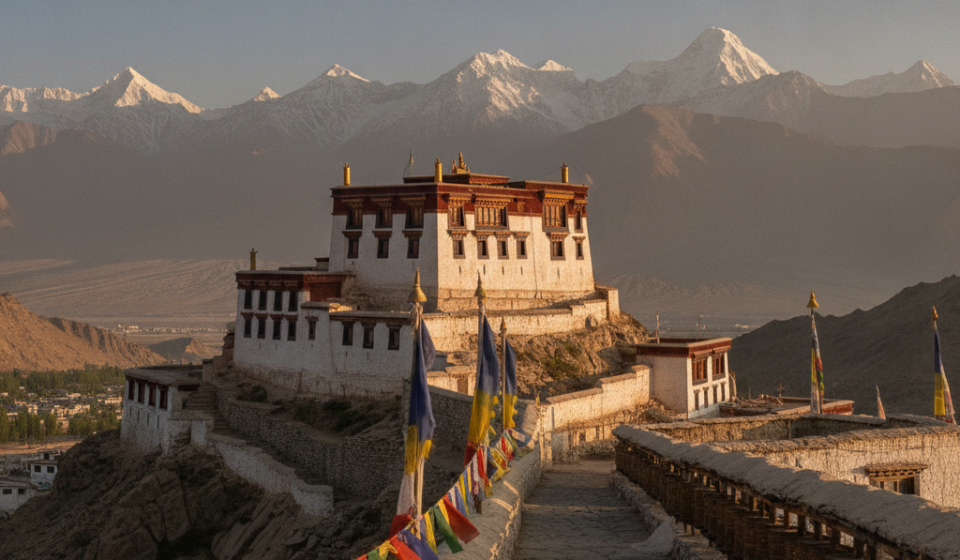
For those seeking remote high-altitude isolation, a slow travel itinerary India focused on Ladakh is unparalleled. The high-altitude desert requires physical deceleration by its very nature. Many travelers make the mistake of flying into Leh and immediately heading to Pangong Lake, resulting in acute mountain sickness and a rushed, unpleasant trip. A slow traveler, however, understands that time is the ultimate luxury in the mountains.
Allowing four days for acclimatization in this slow travel itinerary India prevents physical exhaustion and opens opportunities to explore Leh’s quiet lanes, historical palaces, and local markets. By booking a long-term stay in a village like Alchi or Phyang, travelers can participate in the daily rhythms of Ladakhi agricultural life, sample traditional barley-based cuisine, and spend hours inside ancient monasteries observing Buddhist monks at prayer. To design a safe and deeply immersive Himalayan journey, travelers can utilize dedicated Leh Ladakh tour packages designed around gradual acclimatization and localized village stays. Incorporating these safety buffers into your high-altitude plans ensures a healthy and transformative high-altitude experience.
A Comparative Overview of Slow Travel Destinations in India
To assist in selecting the perfect region for your unhurried journey, it is helpful to analyze how different destinations cater to specific interests and travel styles. The following comparison highlights how each regional slow travel itinerary India serves different analytical profiles and logistical requirements.
| Destination | Ideal Duration | Primary Focus | Key Slow Travel Activity | Best Season |
|---|---|---|---|---|
| Kerala Backwaters | 8-12 Days | Aquatic life and heritage | Canoe navigation and coir-weaving workshops | October to March |
| Garhwal Himalayas | 10-15 Days | Spiritual studies and wellness | Ashram stays and mountain hiking | September to November |
| Sikkim & Darjeeling | 10-14 Days | Indigenous culture and tea | Lepcha homestay immersion and tea plucking | March to May |
| Leh Ladakh | 12-18 Days | High-altitude monastic life | Gradual village integration and meditation | June to September |
Choosing among these options depends on what your personal slow travel itinerary India seeks to accomplish. Whether you prefer the coastal warmth of the south or the thin air of the northern valleys, each path requires a commitment to slowing down and respecting the local pace. A well-designed unhurried journey should never force a choice between physical comfort and cultural depth; rather, it should integrate both seamlessly.
Practical Planning Tips for Your Slow Travel Itinerary India
Executing a successful slow travel itinerary India requires careful operational preparation. Unlike conventional tours, where every hour is pre-planned, an unhurried journey demands a balance between structure and spontaneity. Here are the practical strategies necessary to plan an effective long-duration visit.
How to Choose the Right Base
The success of a slow travel itinerary India hinges upon choosing a singular operational base. Instead of changing hotels every night, select a central location with high-quality connectivity and access to local amenities. This base should serve as your launching pad for day trips into the surrounding countryside. When choosing your base, prioritize homestays or boutique heritage properties where the hosts are deeply connected to the local community, as they can provide invaluable insider recommendations that cannot be found online. A stable base is the foundation of any successful slow travel itinerary India because it creates a sense of belonging in a new environment.
Consider the following operational criteria when evaluating potential bases:
- Reliable communication infrastructure, including cellular coverage and electricity.
- Proximity to local food markets and healthcare facilities.
- Accessibility to secondary transport hubs like train stations or bus terminals.
Managing Logistics and Unpredictable Schedules
When managing logistics for a slow travel itinerary India demands a high tolerance for ambiguity. Transport delays, weather changes, and local festival closures are common occurrences across the subcontinent. Instead of viewing these disruptions as failures, the slow traveler views them as opportunities to engage further with the surroundings. Building buffer days into your schedule ensures that a missed train or a sudden downpour does not derail your entire travel plan. A flexible mindset transforms an operational delay in your journey into an unexpected cultural adventure.
Packing Essentials for Unhurried Journeys
Packing for a long-duration slow travel itinerary India involves prioritizing durability and versatility over quantity. Because you will be staying in places longer, you can easily utilize local laundry services, reducing the need for heavy baggage. Focus on lightweight, breathable clothing that respects local cultural norms (such as covering shoulders and knees when visiting religious sites). Additionally, carry reusable water purification tools, a high-quality journal, and a patient, open-minded attitude. The physical baggage you carry during your slow travel itinerary India should reflect the mental lightness you aim to achieve during your stay.
Specifically, your inventory should contain the following items:
- A reusable water purification bottle to minimize plastic waste.
- A durable, multi-pocket notebook for capturing daily reflections and local dialects.
- Versatile, quick-drying clothing suitable for conservative cultural settings.
- A compact medical kit containing personal prescriptions and rehydration salts.

The Role of Curated Journeys in Slow Travel
While independent exploration is highly rewarding, planning a long-duration stay in unfamiliar terrain can present significant logistical hurdles. For those who prefer structured planning, a curated slow travel itinerary India can be experienced through specialized group travel. Selecting the right operator ensures that your journey maintains its unhurried philosophy while handling the complex logistics of transport, local permits, and community access.
For travelers seeking shared experiences without the rush, exploring organized options like group tours can bridge the gap between structure and slow exploration. These curated journeys are specifically designed to spend multiple nights in each location, allowing travelers to build genuine connections with fellow explorers and local hosts alike. This approach is particularly beneficial for solo travelers or those venturing into culturally complex regions for the first time, ensuring safety, comfort, and deep immersion. A professionally designed slow travel itinerary India managed by experts ensures that you can focus entirely on the experience of travel rather than the administrative burdens of coordination.