The Ultimate Guide to Dark Tourism Sites in India: Understanding History Through Its Solemn Past

History is rarely a sequence of unblemished triumphs. Often, the stories that shape national identity are forged in moments of profound conflict, tragedy, and systemic struggle. While conventional leisure travel focuses on the pursuit of sun-soaked beaches or majestic palaces, a quieter, more introspective segment of tourism has begun to emerge. Travelers are increasingly drawn to locations associated with tragedy, conflict, and historical suffering. This shift in traveler behavior reflects a deep-seated human desire to engage with the complex realities of the past, transforming these spaces from simple ruins into deep educational classrooms. In this context, exploring historical curiosity leads to the growing popularity of dark tourism sites in india as key educational stops.
- Educational Classrooms: Discover how tragic historical sites are being transformed into profound spaces of learning and national remembrance.
- Diverse Landscapes of Tragedy: Explore the vast history of India, covering colonial struggles, industrial disasters, and modern security events.
- Respectful Pilgrimage: Understand the ethical necessity of visiting these solemn locations with dignity, mindfulness, and humility.
- Curated Travel Resources: Learn how structured travel packages can assist in coordinating sensitive itineraries across these poignant landmarks.
What is Dark Tourism and Why Does it Matter?
To understand why people seek out dark tourism sites in india, one must examine the psychological draw of tragedy. Human nature has long possessed an inherent interest in mortality and historical crises. This inclination is not driven by morbid fascination alone; rather, it stems from:
- A desire to comprehend the limits of human endurance and the systemic failures of the past.
- An effort to avoid voyeurism by using these spaces as repositories of collective memory.
- A need for physical anchors for historical events that might otherwise fade into abstract pages of history books.
Sociologists often classify these locations under thanatourism (the academic term for travel to sites of death), where dark tourism sites in india offer a quiet environment for reflection. This specialized branch of travel focuses on preservation, education, and remembrance. By visiting these spaces, travelers participate in a form of secular pilgrimage. They seek to pay tribute to the victims of political violence, natural catastrophes, or systemic injustice. It is a way of saying that the lives lost in these places still matter to the modern world.
But still, some critics argue that monetising these spaces is ethically questionable. This friction is precisely what makes the study of such sites so compelling. When managed with appropriate dignity, these destinations transform from mere points of interest into profound educational hubs. They challenge visitors to confront uncomfortable truths about human behavior, political power, and social vulnerability. Through this confrontation, society can theoretically learn to avoid repeating its historical errors.
The Historical Context of Thanatourism in India
India possesses a long history shaped by dynasties, empires, colonial struggles, and modern geopolitical shifts. Consequently, the geographical spread of dark tourism sites in india covers everything from colonial massacres to natural disasters. From the hard struggles of the freedom movement to industrial accidents and ancient regional conflicts, these events have left behind a physical footprint that remains visible today.
As historians have argued, studying dark tourism sites in india helps society piece together stories that textbook summaries leave out. A physical site provides an undeniable sense of scale and visceral reality. Standing in a space where monumental historical events occurred allows visitors to grasp the human cost of political decisions and military actions. It bridges the gap between historical theory and human empathy.
By exploring these dark tourism sites in india, scholars and students gain a direct, unvarnished look at the past. This physical engagement with history encourages a more critical examination of historical narratives.
| Site Name | Location | Historical Significance | Architectural Highlight | Significance Level |
|---|---|---|---|---|
| Cellular Jail Memorial | Port Blair, Andaman Islands | Colonial exile prison for political activists | Seven-wing radial design with central watchtower | National Heritage |
| Jallianwala Bagh | Amritsar, Punjab | 1919 massacre of peaceful civilian assembly | Preserved bullet-pocked walls and martyr’s well | National Memorial |
| Union Carbide Plant | Bhopal, Madhya Pradesh | 1984 toxic gas leak industrial disaster | Decommissioned pesticide manufacturing units | Industrial Memorial |
| Taj Mahal Palace Hotel | Colaba, Mumbai, Maharashtra | Target of the 2008 coordinated terror attacks | Indo-Saracenic iconic structure with memorial | Active Landmark |
| Gandhi Smriti | Tees January Marg, New Delhi | Assassination site of Mahatma Gandhi in 1948 | Footsteps monument and historical museum | National Shrine |
| Site Name | Best Visiting Hours | Recommended Months | Key Safety / Behavior Guideline |
|---|---|---|---|
| Cellular Jail Memorial | 09:00 AM – 12:30 PM, 01:30 PM – 04:45 PM | October to May | Maintain silence inside the cell wings; photography bans apply in certain galleries. |
| Jallianwala Bagh | 06:30 AM – 07:30 PM | October to March | Do not throw coins or litter near the Martyr’s Well; dress respectfully. |
| Bhangarh Fort | 06:00 AM – 06:00 PM (Strict) | October to March | Strictly no entry allowed after sunset or before sunrise. |
| Gandhi Smriti | 10:00 AM – 05:30 PM (Closed on Mondays) | September to March | Remove footwear where indicated; keep mobile phones on silent. |
Iconic Dark Tourism Sites in India to Visit
To fully comprehend the deep lessons embedded in the country’s history, travelers can visit several key locations across the subcontinent. Each site offers a unique perspective on different eras of struggle, sacrifice, and survival.
Cellular Jail National Memorial, Andaman and Nicobar Islands
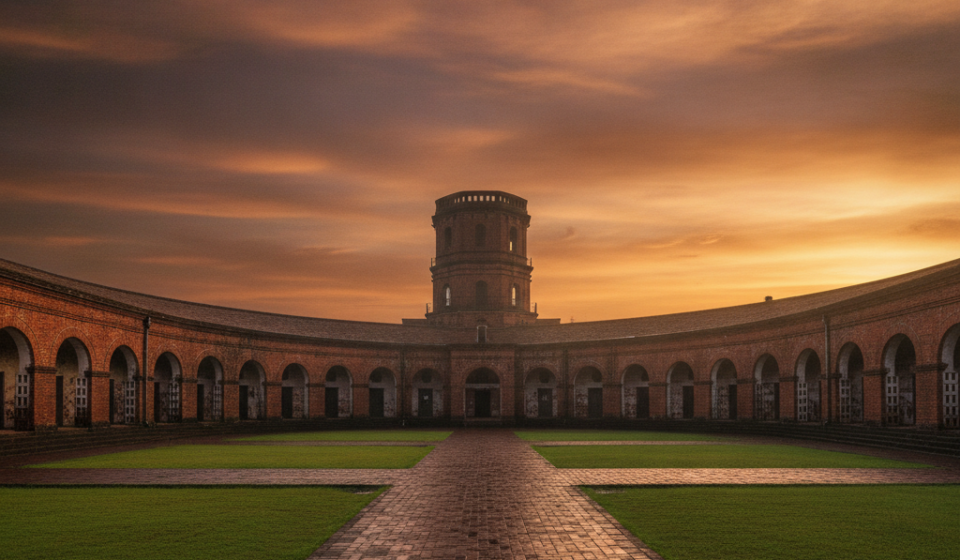
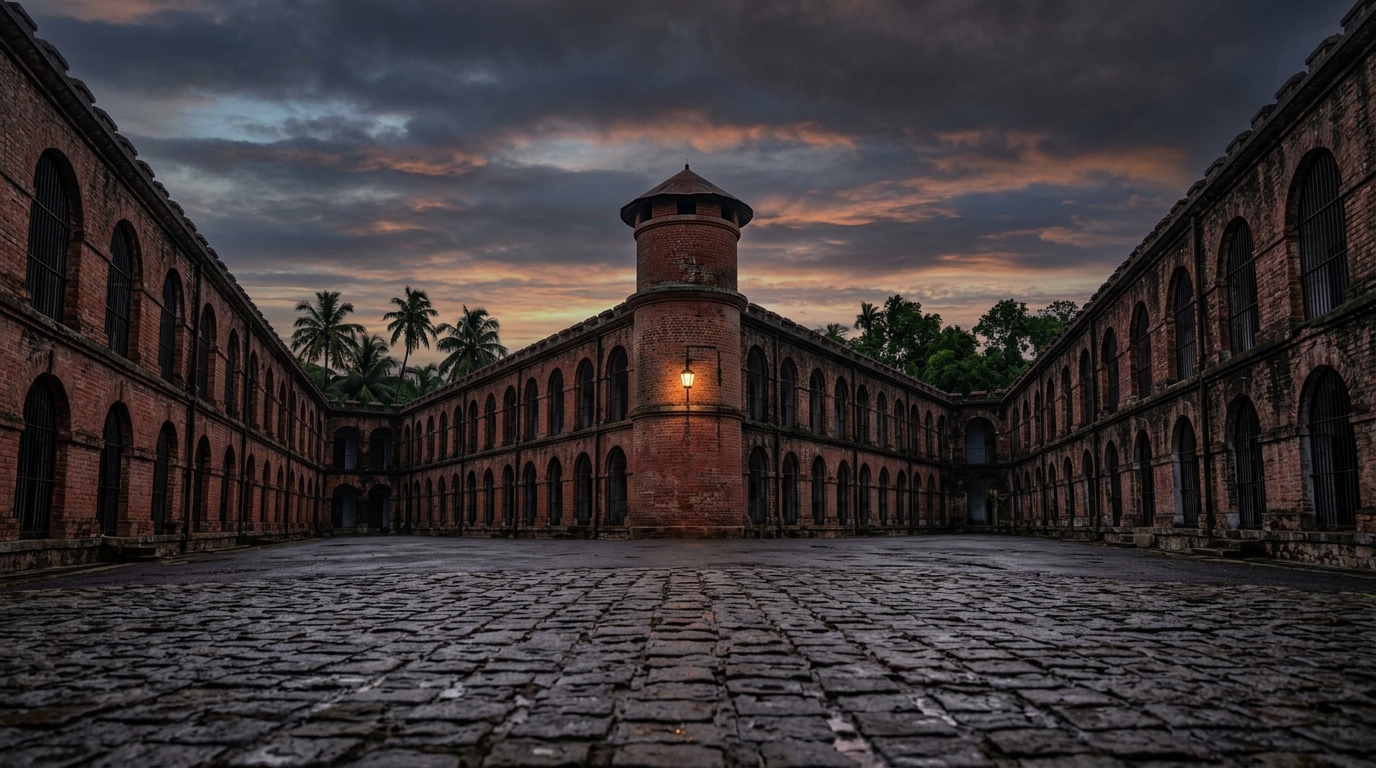
Among the premier dark tourism sites in india, the Cellular Jail National Memorial stands as a stark reminder of colonial cruelty. Constructed by the British between 1896 and 1906, this massive prison complex was specifically designed to house political dissidents from the Indian independence movement. The jail was commonly known as Kala Pani (meaning black waters), a reference to the remote and isolated nature of the Andaman islands, which made escape virtually impossible. The architecture of the jail itself was a tool of psychological torment, featuring a radial design with seven wings radiating from a central watchtower, allowing guards to monitor prisoners without being seen.
It remains one of the most visited dark tourism sites in india due to its heavy, preserved atmosphere. Walking through the narrow, damp cells, visitors can witness key historical elements:
- The harsh and compact conditions under which national icons like Vinayak Damodar Savarkar were kept.
- A design built specifically to ensure total isolation, preventing any form of communication between inmates.
- An enforced solitude intended to break the spirit of the freedom fighters, which ultimately became a symbol of resolute endurance.
Many travelers consider this fortress the most emotionally charged of all dark tourism sites in india. The site features a light and sound show in the evening, which narrates the harrowing stories of the prisoners. The preservation of this monument serves as a crucial educational resource. To assist with travel planning, visiting this site is highly recommended for anyone taking dedicated Andaman Tour Packages, which offer a structured way to experience both the natural beauty and the sobering history of the islands.
Jallianwala Bagh, Amritsar
When mapping out historical dark tourism sites in india, the town of Amritsar holds a central, tragic position. On April 13, 1919, a peaceful assembly of thousands of civilians gathered at Jallianwala Bagh garden to protest colonial policies and celebrate the spring festival of Baisakhi. Under the direct command of Brigadier-General Reginald Dyer, British troops blocked the sole narrow exit of the garden and opened fire on the unarmed crowd without warning. The firing continued for roughly ten minutes, resulting in hundreds of deaths and thousands of injuries, an event that permanently altered the course of the Indian freedom struggle.
The bullet holes in the brick walls make Jallianwala Bagh one of the most heartbreaking dark tourism sites in india. The site features several poignant landmarks that capture this tragic day:
- The Bullet-Pocked Walls: Brick walls scarred by gunfire, making this one of the most heartbreaking dark tourism sites in india.
- The Martyr’s Well: The historic well where dozens of people jumped to escape the relentless firing.
- The Flame of Liberty: A beautifully preserved red brick monument shaped like a flame.
- The Narrow Corridor: An entry path lined with historical exhibits to help visitors visualize the chaotic moments of that afternoon.
Its proximity to major cultural landmarks ensures it remains integrated with broader itineraries highlighting dark tourism sites in india. For those planning a visit, booking specialized Amritsar Tour Packages can help ensure a respectful and well-coordinated journey through Punjab’s rich history.
Union Carbide India Limited Plant, Bhopal
Industrial disasters have also left behind modern dark tourism sites in india that demand deep ethical caution. On the night of December 2-3, 1984, the Union Carbide pesticide plant in Bhopal experienced a massive leak of highly toxic methyl isocyanate gas. The toxic gas blanketed the surrounding residential neighborhoods, causing immediate panic and resulting in thousands of fatalities. It remains recognized as the worst industrial disaster in human history, with long-term consequences still affecting local communities.
Unlike other dark tourism sites in india, this location represents an ongoing conversation about corporate responsibility. The skeletal remains of the chemical factory stand in silence, a physical testament to the dangers of industrial negligence. While access to the plant is highly restricted for safety reasons, the surrounding area and the nearby Bhopal Disaster Memorial museum offer visitors a sobering look at the human cost of the tragedy.
Taj Mahal Palace Hotel (26/11 Memorial), Mumbai
In Mumbai, the memorial at the Taj Mahal Palace Hotel represents a very modern addition to dark tourism sites in india. In November 2008, a series of coordinated terrorist attacks across Mumbai paralyzed the city for four days. The historic hotel was one of the primary targets, undergoing a prolonged siege that resulted in the loss of numerous civilian and staff lives. The resilience shown by the hotel staff has since become a legendary tale of duty and courage.
The inclusion of active hospitality spaces within dark tourism sites in india highlights how life continues after tragedy. Today, the hotel features a quiet memorial inside its lobby, listing the names of all the victims of the attack. Visitors can pay their respects at this monument while observing the restored architectural glory. This juxtaposition of tragic remembrance and functional luxury serves as a powerful symbol of Mumbai’s indomitable spirit.
Gandhi Smriti, New Delhi
To experience a deeply personal sense of national loss, visiting Gandhi Smriti highlights the diversity of dark tourism sites in india. Located in New Delhi, this site was formerly known as Birla House, where Mahatma Gandhi spent the last 144 days of his life before his assassination on January 30, 1948. The property has been converted into a museum dedicated to his life and philosophy, preserving the exact path he walked to his daily prayer meeting.
This site shows how individual political assassinations shape the narrative of dark tourism sites in india. Standing at the exact spot where Gandhi was shot provides a profound connection to a turning point in history. The museum houses photographs, personal belongings, and interactive displays that offer a thorough educational experience. It is a space designed for quiet contemplation, asking visitors to reflect on the values of non-violence and tolerance.
Bhangarh Fort, Rajasthan
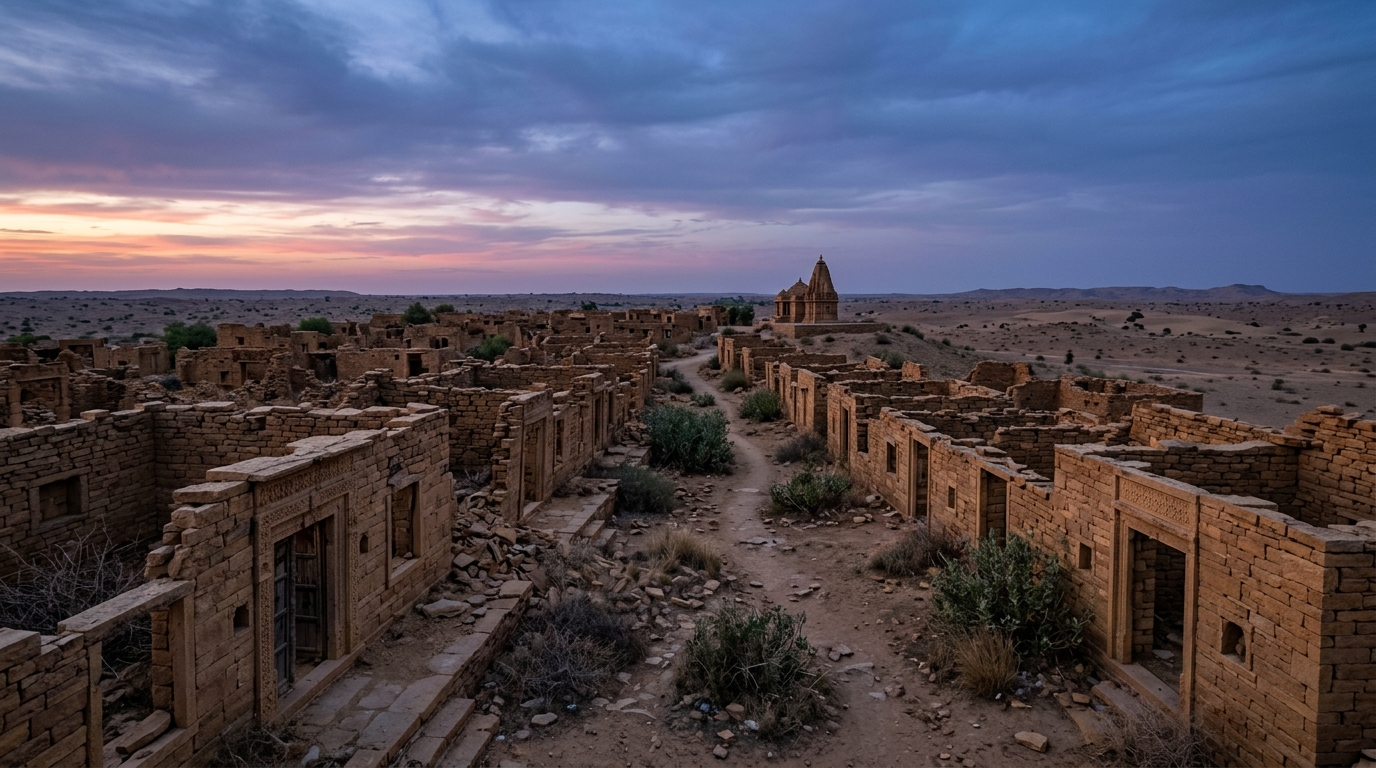
For those intrigued by paranormal myths combined with archaeological ruins, Bhangarh Fort stands out among dark tourism sites in india. Located in the Alwar district of Rajasthan, this seventeenth-century fort is widely reputed to be one of the most haunted locations in Asia. Today, the Archaeological Survey of India (ASI) has placed a signboard prohibiting entry into the fort premises after sunset and before sunrise, adding a layer of official mystery to the location.
This mix of folklore and history makes it one of the most uniquely positioned dark tourism sites in india. While the supernatural elements draw many thrill-seekers, the site also boasts impressive architectural ruins, including temples and market areas. Exploring Bhangarh during daylight hours offers a fascinating look at medieval Rajasthani architecture, while the heavy silence that hangs over the empty ruins provides a classic thanatourism experience.
The Ethical Responsibility of the Dark Tourist
Engaging with dark tourism sites in india requires a specific code of conduct that prioritises respect over curiosity. Because these locations are often associated with mass loss of life, political trauma, or ongoing community grief, tourists must approach them with a high degree of sensitivity. These are not standard recreational attractions, and treating them as such can be deeply offensive to local populations and surviving families. The primary goal of visiting these sites should always be education, remembrance, and the pursuit of historical understanding.
When visiting active dark tourism sites in india, tourists must remember that these are spaces of profound grief. This realization should guide every aspect of behavioral conduct, from dress code to photography. For instance, taking cheerful selfies at a massacre site or an industrial ruin is highly inappropriate. Instead, visitors should observe a quiet, respectful presence, keeping conversations muted and adhering strictly to local rules and guidelines. By maintaining these boundaries, travelers can ensure that their presence supports, rather than detracts from, the preservation of memory.
“Visiting a site of tragedy is not about capturing a moment of personal leisure; it is about witnessing a moment of collective history with silence and humility.”
Ethical Guidelines for Sombre Travel
- Do: Conduct historical research before visiting to understand the cultural and political context of the site.
- Do: Maintain a quiet and reflective demeanor, keeping voice levels down to respect other visitors.
- Do: Dress modestly, particularly when visiting memorial sites that double as places of spiritual or national significance.
- Don’t: Take insensitive photographs or selfies in areas clearly marked for remembrance or where tragic events occurred.
- Don’t: Touch, deface, or remove any physical artifacts, masonry, or natural elements from the memorial grounds.
- Don’t: Treat the tragedy as a theatrical performance or cheap entertainment; remain conscious of the real human lives affected.
Practical Guide for Planning a Sombre Journey
Planning trips to dark tourism sites in india requires careful preparation to balance historical education with travel logistics. Unlike standard holiday destinations, these sites may have specific visiting hours, security protocols, or emotional demands that require mental preparation. Travelers should plan their itineraries carefully, ensuring they allow sufficient time for reflection and recovery after visiting emotionally heavy locations. It is also beneficial to hire certified local guides who can provide accurate historical narratives, helping to avoid the sensationalized myths that often cloud tragic events.
| Planning Category | Recommended Action and Preparation |
|---|---|
| Mental Preparation | Research the historical timeline in advance to process the emotional gravity of the location beforehand. |
| Logistical Booking | Use registered guides and verified tour packages to secure transport and respectful pacing. |
| Respectful Photography | Look for official signage indicating photography bans; always ask for permission before filming. |
| Seasonal Planning | Schedule visits during cooler months (typically October to March) to ensure comfortable outdoor walking. |
FAQs
Understanding the nuances of thanatourism can help travelers approach these unique destinations with greater clarity. Below are answers to common questions regarding this reflective form of travel.
Is dark tourism in India safe for international travellers?
Yes, major national memorials such as the Cellular Jail in Port Blair and Jallianwala Bagh in Amritsar are highly secure, well-maintained heritage sites. They feature clear signage, paved pathways, and security personnel. However, some abandoned sites, such as Bhangarh Fort, require adherence to specific timing restrictions to prevent safety risks associated with uneven terrain and local wildlife after dark.
How does dark tourism benefit local communities in India?
When conducted ethically, dark tourism generates vital revenue for heritage preservation and local economies. Visitors pay entry fees, hire local guides, and support regional hospitality services. This economic activity ensures that municipalities have the resources required to maintain historical structures, fund educational museums, and keep the memory of significant events alive for future generations.
Why are dark tourism sites in india gaining popularity?
The rise of interest in dark tourism sites in india is driven by a global shift toward experiential travel. Modern travelers seek deeper educational value and authentic connections to history rather than simple leisure. Visiting these sites provides a tangible way to engage with complex historical narratives, fostering a greater understanding of national resilience and human survival.
Conclusion
Ultimately, visiting dark tourism sites in india is not about finding cheap thrills or chasing ghosts. It is a profound exercise in historical empathy, reminding travelers of the fragile nature of peace, justice, and human life. By choosing to step into these spaces of remembrance, visitors actively participate in keeping crucial historical lessons alive. Whether standing before the radial wings of the Cellular Jail or walking through the quiet gardens of Jallianwala Bagh, these journeys challenge the mind and touch the soul. They demand that society remembers the past, respects the struggle, and strives to build a more thoughtful and compassionate future.