The Ultimate Sethan Valley Travel Guide: How to Visit India’s Magical Igloo Village

Winter in the high Himalayas often evokes images of deep silence and snow-capped peaks. Deep within the Pir Panjal range of Himachal Pradesh, a small Buddhist settlement transforms every winter into an area reminiscent of the Arctic circle. This destination, known as Sethan, has emerged as India’s premier winter adventure outpost. Planning a journey to this high-altitude retreat requires meticulous preparation, which is why this detailed Sethan Valley travel guide exists to address the logistical intricacies of reaching India’s coveted igloo village. Far removed from the crowded streets of nearby commercial towns, this pristine settlement offers an unparalleled encounter with winter tourism. It is basically a sanctuary for winter sports enthusiasts and travelers seeking a quiet refuge in the snow.
Key Takeaways for Your Sethan Valley Trip
- High-Altitude Setting: Located at an elevation of 2,700 meters, this remote sanctuary sits 15 km beyond Manali, requiring mild acclimatization for some.
- Igloo Village Window: India’s premier hand-built snow igloos are open for overnight stays strictly during the peak winter months from mid-January to early March.
- Permits & Regulations: A daily 200 INR green tax per vehicle and forest entry permits must be paid and secured at the Prini forest check post.
- Tough Transit: The road features 35 sharp hairpin bends; standard front-wheel-drive vehicles cannot climb past Prini in winter, making local 4x4s with tire chains mandatory.
- Limited Connectivity: Expect highly inconsistent mobile signals, with Jio and BSNL offering basic coverage while Airtel is mostly unavailable.
An Introduction to Sethan Valley
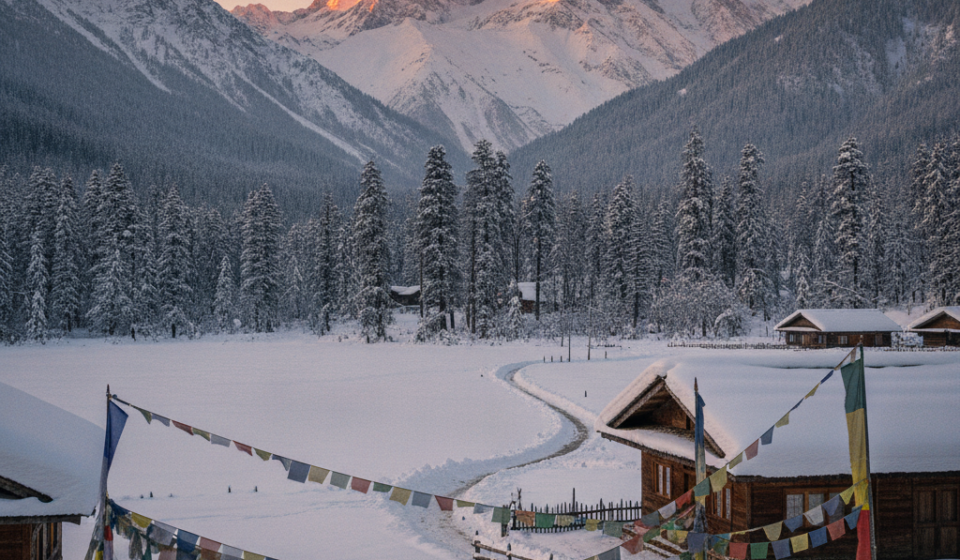
The history of Sethan Valley is deeply intertwined with migration and adaptation. Originally inhabited by the Kanawari community, a pastoralist group that moved herds of sheep and goats across high-altitude passes, the village has maintained its distinct cultural identity over centuries. To help modern travelers understand this remote region, this Sethan Valley travel guide outlines the essential history of the local communities. The residents are primarily of Buddhist heritage, and their unique architectural style (characterized by sturdy wooden homes built to withstand heavy winter snow) reflects a deep understanding of the local climate. Colorful Tibetan prayer flags flutter against the stark white winter background, creating a visual contrast that highlights the rich cultural lineage of the region.
Indeed, every reliable Sethan Valley travel guide emphasizes that the local residents, mostly belonging to the Kanawari community, maintain a lifestyle closely tied to nature. This close relationship is visible in their sustainable agricultural practices and their reverence for the surrounding forests. By analyzing the historic changes of the region, this Sethan Valley travel guide highlights how tourism has slowly become the economic backbone of this quiet settlement. What was once a summer grazing pasture has transitioned into a highly sought-after winter destination, though the community has worked diligently to ensure that this commercial shift does not erode their cultural values. This agricultural foundation remains strong, even as the winter months see an influx of tourists looking to experience the local hospitality. The community has managed this influx with remarkable resilience, establishing sustainable tourism initiatives that benefit local families directly.
Geographical Location and Terrain
Understanding the specific geography of the Kullu district is essential for any traveler planning an excursion. For precise positioning, this Sethan Valley travel guide notes that the village sits approximately 15 kilometers beyond Manali. The journey involves a steep, winding ascent that begins near the village of Prini, rising rapidly above the Beas River valley. The road climbs steadily through a series of dramatic sweeping curves, offering panoramic views of the spectacular Solang Valley and the town of Manali below.
When reviewing topographic maps, a thorough Sethan Valley travel guide must mention that the average elevation of the settlement is roughly 2,700 meters above sea level (an altitude that guarantees cold weather throughout the year). This altitude is high enough to induce mild acclimatization symptoms in sensitive travelers, though most visitors adapt within a day. This detailed Sethan Valley travel guide advises that the terrain transitions from dense pine forests to rocky, boulder-strewn meadows as one moves higher. The village itself is surrounded by towering peaks that block heavy winds, creating a micro-climate that allows snow to accumulate and remain intact for months at a time. This geographical pocket acts as a gateway to the high-altitude wilderness, providing views of major Himalayan summits including the majestic Deo Tibba (which stands at an elevation of 6,001 meters) and Indrasan. Geological formations are also highly notable, consisting of massive granite boulders that attract rock climbers during the warmer months of the year.
The Phenomenon of India’s First Igloo Village
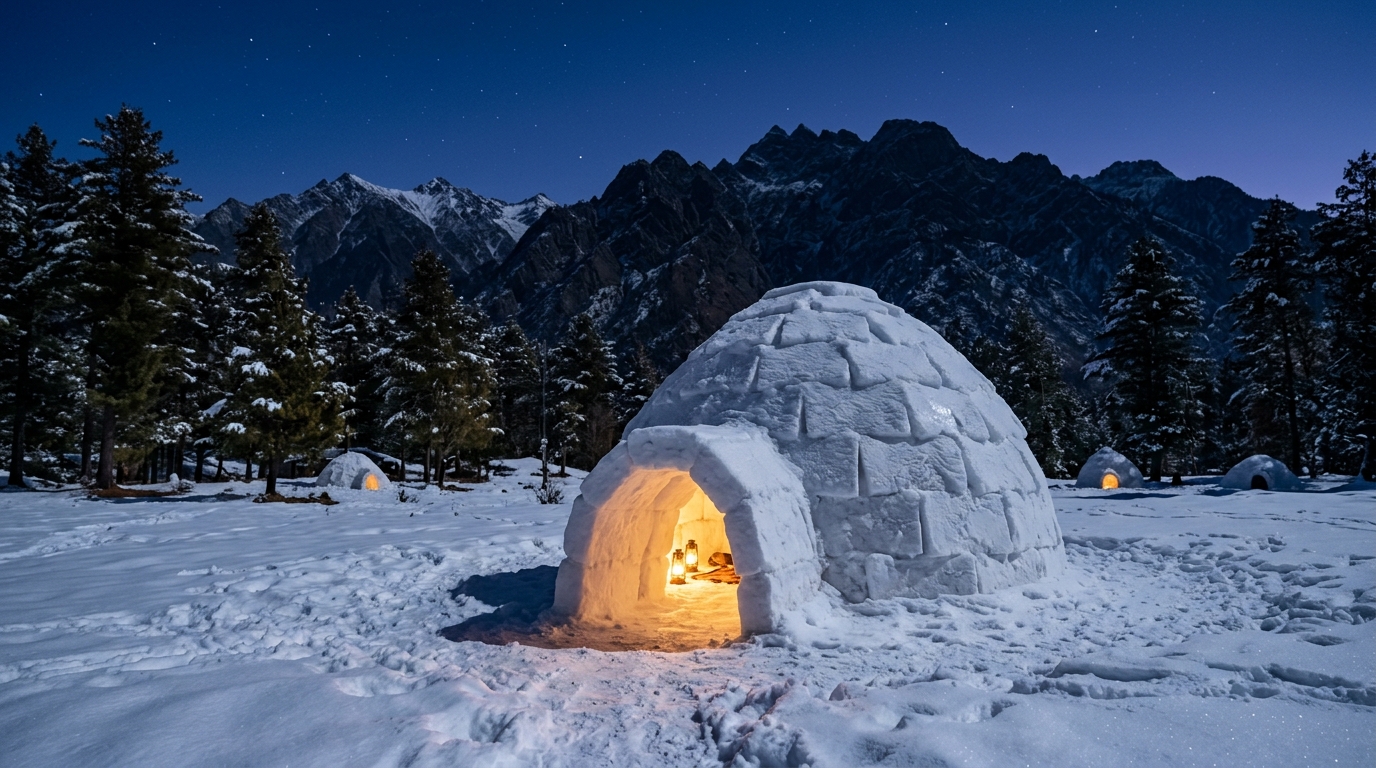
The concept of staying in a snow house is no longer restricted to polar expeditions. As a primary resource, this Sethan Valley travel guide explores the fascinating origin of India’s premier snow shelters. In 2017, local winter sports enthusiasts realized that the heavy, consistent snowfall in the valley offered the perfect material for constructing igloos. They began building experimental shelters, which quickly captured the attention of adventure travelers looking for alternative winter experiences. What started as an innovative local experiment has now matured into a highly organized winter phenomenon that draws travelers from all over the subcontinent.
Many travelers look at international destinations for winter experiences, but this Sethan Valley travel guide explains how local developers successfully adapted arctic building techniques here. Constructing an igloo is a highly technical process. It requires compacting wet, dense snow into uniform blocks, which are then laid in an upward, interlocking spiral pattern. Typically, it takes two skilled builders roughly fifteen hours of manual labor to complete a single, standard-sized igloo. According to safety parameters detailed in this Sethan Valley travel guide, these igloos are structurally engineered to maintain internal warmth. While the temperature outside might plunge to sub-zero levels, the packed snow acts as an insulator, trapping body heat and keeping the interior temperature hovering around zero to four degrees Celsius. This natural thermal barrier ensures that guests remain safe and comfortable throughout the cold Himalayan nights, providing an unforgettable experience of sleeping surrounded by ice.
Seasonal Breakdown: The Best Time to Visit
Climatic variations in this region dictate the nature of the travel experience. To plan the perfect holiday, this Sethan Valley travel guide examines the distinct climatological shifts throughout the year. The transition between seasons alters not only the temperature but also the accessibility of the region.
While winter is the most famous period, this Sethan Valley travel guide reveals that summer offers a completely different, lush green perspective. Our Sethan Valley travel guide categorizes the seasonal changes so that travelers can align their personal itineraries with their preferred outdoor activities. In January, winter temperatures frequently drop to -10 degrees Celsius, as recorded by the India Meteorological Department [IMD] in their seasonal climate assessments. This sub-zero environment is critical for maintaining the structural integrity of the igloos, which generally remain open for occupancy from mid-January to early March.
Let’s present a clear breakdown of the seasonal cycles in the valley to help travelers make informed decisions:
| Season | Months | Average Temperature | Primary Activities |
|---|---|---|---|
| Winter | December to March | -10°C to 5°C | Igloo Stays, Snowboarding, Backcountry Skiing |
| Spring / Summer | April to June | 10°C to 25°C | Trekking, Bouldering, Camping, Orchard Walks |
| Monsoon | July to September | 12°C to 22°C | Apple Harvesting, Nature Photography (High Rain Risk) |
| Autumn | October to November | 5°C to 15°C | Clear Peak Viewing, High-Altitude Trekking |
Critics say that visiting during the monsoon is too hazardous due to landslide risks. They are not entirely wrong (the road from Manali is prone to rockfalls) but they underestimate the absolute beauty of the valley when the apple orchards are laden with ripe fruit in late August. Still, for the majority of travelers, the dry, crisp days of autumn and the snow-filled winter months remain the most rewarding periods to plan a visit.
How to Reach Sethan Valley: Detailed Transport Routes
Reaching this high-altitude sanctuary requires a clear understanding of the mountain roads and local transit options. For those journeying from major urban hubs, this Sethan Valley travel guide provides step-by-step instructions for transit. The primary gateway to the region is the town of Manali, which is well-connected to major Indian cities.
Most travelers opt to take an overnight Volvo bus from Delhi or Chandigarh to Manali. From Manali, the journey to the village covers roughly 15 kilometers, but the steep elevation gain makes it a slow and demanding drive. The route begins at the commercial center of Manali and passes through the quiet suburb of Prini before climbing sharply into the mountains.
- Vehicle Limits: A critical transport tip in this Sethan Valley travel guide is that standard front-wheel-drive vehicles cannot climb the steep, icy curves beyond Prini during winter.
- Hairpin Bends: The road features 35 sharp hairpin bends, which quickly become covered in thick black ice and hard-packed snow.
- 4×4 Recommendation: This Sethan Valley travel guide recommends hiring a local 4×4 vehicle with tire chains to ensure a safe ascent to the village. These specialized vehicles are operated by experienced mountain drivers who understand how to handle the hazardous road conditions.
- Route Costs: During the peak of winter, hiring a private 4×4 taxi from Manali can cost approximately 3,000 to 4,500 INR for a one-way trip, reflecting the high-risk nature of the route.
For those arriving by air, the nearest airport is at Bhuntar (approximately 50 kilometers from Manali), though flights can be irregular due to weather. Alternatively, one can travel via Shimla, utilizing the regional roads to connect to the Kullu valley. For those planning a broader itinerary, combining this retreat with a wider Manali tour package is highly recommended to experience both the commercial highlights and the quiet wilderness of the region.
Permits and Regulatory Requirements
Due to the valley’s proximity to sensitive forest zones and hydroelectric projects, administrative entry regulations are strictly enforced. Regarding administrative rules, this Sethan Valley travel guide explains the mandatory green tax and local village entry permissions. The road to the village passes through a forest check post managed by the Himachal Pradesh Forest Department.
- Permit Access: Every vehicle entering this zone must obtain a permit from the Sub-Divisional Magistrate (SDM) office in Manali or pay the required entry fees at the Prini check post.
- Green Tax: Specifically, the local administration collects a daily green tax of 200 Indian Rupees (INR) per vehicle, based on regulations enforced by the District Administration of Kullu [Kullu Administration] since 2018. This revenue is utilized for waste management and ecological preservation in the valley.
- ID Requirements: This Sethan Valley travel guide reminds international visitors that carrying physical identification documents is mandatory at the forest check post. Failure to produce valid permits can result in being turned back at Prini, which can disrupt travel schedules significantly.
- Weather Restrictions: Additionally, during times of heavy snowfall, the local authorities may restrict access entirely to protect travelers from the danger of avalanches and road blockages.
Top Activities and Winter Sports
The unique geography of the valley has made it a major hub for adventure sports in northern India. For adventure enthusiasts, this Sethan Valley travel guide outlines the premier winter sports available in the valley. Unlike commercial ski resorts that rely on heavy machinery and lifts, this destination offers an authentic, raw encounter with the mountains.
- Snowboarding & Skiing: This Sethan Valley travel guide highlights snowboarding and skiing as the two most popular winter activities in the region. The deep powder snow that accumulates from December to March is ideal for these sports.
- Backcountry Skiing: The area is particularly famous for backcountry skiing (a discipline where skiers ascend slopes without lifts using adhesive skins on their skis, known as skinning, before descending through untouched snow). This activity offers an incredible thrill.
- Guide Requirement: But still, the physical toll on beginners is substantial, making it highly advisable to hire a certified local guide.
- Professional Slopes: The slopes here offer impressive vertical drops that attract professional athletes, according to sports classification logs maintained by the Indian Mountaineering Foundation [IMF] in recent surveys.
In summer, as highlighted in this Sethan Valley travel guide, the valley becomes a world-class bouldering and trekking destination. The massive granite blocks scattered across the valley floor provide hundreds of documented bouldering routes of varying difficulty. Additionally, the famous Hampta Pass trek begins just a few kilometers above the village, making it an essential summer route for hikers. The trek eventually leads to the cold desert of Lahaul, providing a stark geographic transition that remains a favorite among experienced backpackers.
Accommodation Options: Igloos, Homestays, and Campsites
Finding the right place to stay is crucial for enjoying this remote mountain environment. To help select the best lodging, this Sethan Valley travel guide details the three primary accommodation categories. Each option offers a distinct way to experience the local environment and culture.
| Accommodation Type | Best Season | Estimated Cost (INR) | Key Experience |
|---|---|---|---|
| Igloo Stays | Mid-January to early March | 5,000 – 8,000 / night | Sleeping in hand-built snow domes with specialized sub-zero thermal sleeping gear. |
| Traditional Homestays | Year-round | 1,500 – 3,000 / night | Warm Himachali hospitality, home-cooked local meals, and wood-fired tandoor heating. |
| Alpine Campsites | April to October | 2,000 – 4,000 / night | High-altitude outdoor camping under completely clear, unpolluted night skies. |
Choosing between a traditional wooden homestay and an igloo is a common dilemma, which this Sethan Valley travel guide aims to resolve. For those seeking the ultimate winter adventure, an igloo stay is an absolute must. These seasonal snow structures are typically outfitted with thick, high-density foam mattresses, thermal sleeping bags, and warm fleece liners to ensure guests remain warm despite the sub-zero temperatures. This Sethan Valley travel guide notes that booking homestays in advance is crucial during the peak winter months. Traditional homestays, run by local families, offer a cozy alternative with home-cooked Himachali meals and wood-fired heaters (locally known as tandoors). During the summer, camping in the alpine meadows becomes the preferred choice, allowing travelers to sleep under pristine, unpolluted night skies. The simple architecture of these lodgings ensures that the ecological impact on the surrounding forest remains minimal.
Essential Preparation and Packing Checklist
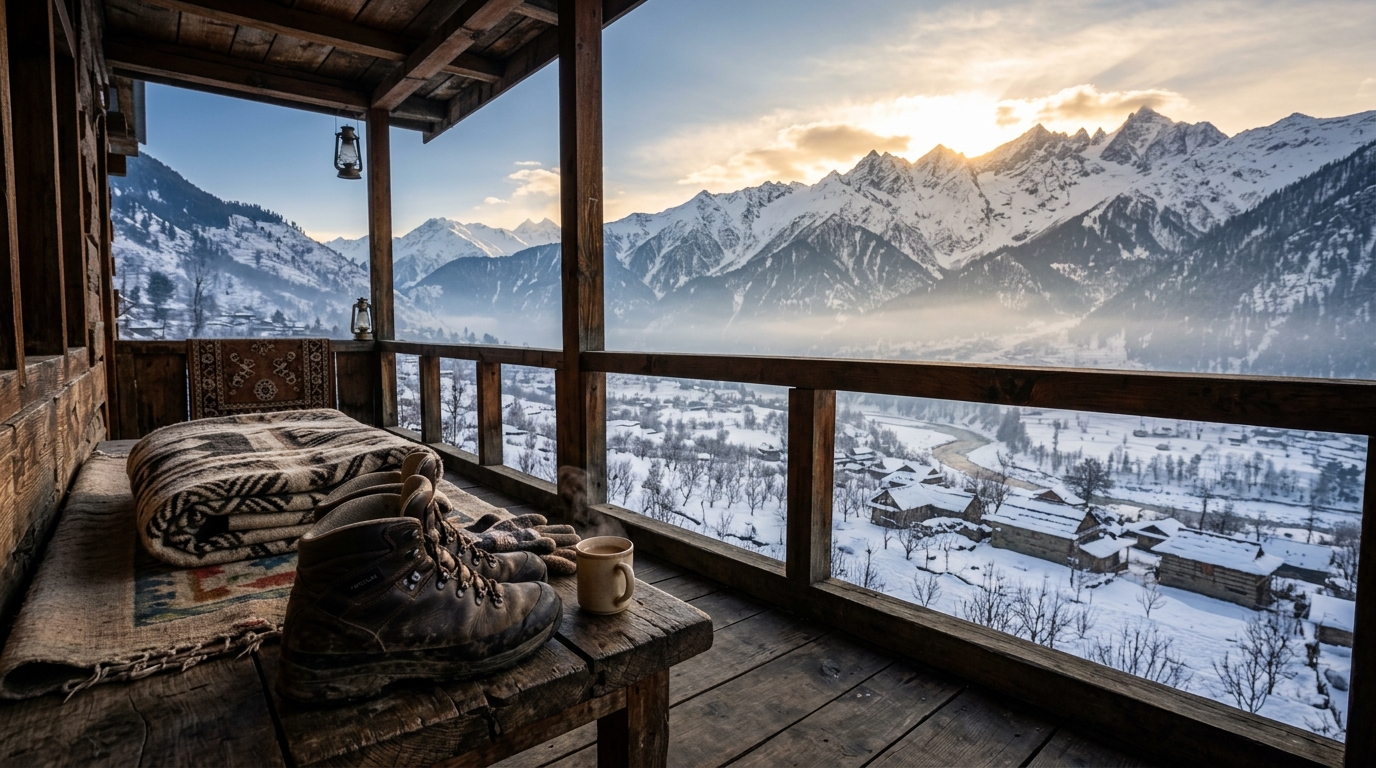
High-altitude winter travel requires meticulous preparation to ensure safety and comfort. To ensure a comfortable stay, this Sethan Valley travel guide provides a comprehensive packing checklist for sub-zero climates. The remote nature of the village means that specialty gear cannot be purchased locally.
Following the packing guidelines in this Sethan Valley travel guide will prevent cold-weather injuries such as frostbite. The key to staying warm is proper layering. Focus on high-quality thermal base layers and how long you plan to spend outdoors. High-end outer shells come later, but a reliable waterproof jacket is essential from day one. Earlier, we noted that the village sits at an altitude of roughly 2,700 meters. This elevation is the primary reason why specialized, heavy-duty sleeping bags are required for night stays, making a well-planned packing strategy critical to a successful adventure.
Here is a practical checklist of items that must be included in your travel luggage:
- Thermal Base Layers: High-quality merino wool or synthetic thermals to wick away moisture from the skin.
- Insulating Mid-Layers: Fleece jackets or down sweaters designed to trap body heat effectively in sub-zero environments.
- Waterproof Outer Shell: Windproof and waterproof jackets and trousers to protect against heavy snowfall and wind chill.
- Footwear: Waterproof trekking boots with deep tread, paired with multiple pairs of thick merino woolen socks.
- Accessories: Polarized sunglasses (crucial to prevent snow blindness), insulated gloves, and fleece-lined beanies.
- Personal Care: High-SPF sunscreen, cold cream, lip balm, and a personal first-aid kit containing altitude sickness medication.
FAQs
This section addresses the most common questions and practical concerns raised by travelers planning their journey to the valley. This Sethan Valley travel guide answers the most common inquiries regarding network connectivity and local infrastructure.
Is a special permit required to visit Sethan Valley?
Yes, a permit is mandatory. All visitors must obtain a forest department permit at the Prini check post. For vehicles, a green tax must be paid, and during heavy snow periods, only local 4×4 vehicles are allowed past the check post.
Can visitors find snow in Sethan Valley during the summer season?
Generally, snow melts from the lower valley by late April. However, the higher peaks and the nearby Hampta Pass retain snow well into June, offering trekking opportunities for those who wish to experience the snow during the warmer months.
What mobile networks function reliably in the valley?
Mobile connectivity is highly limited. While BSNL and Jio offer decent network coverage in certain sections of the village, Airtel connectivity is extremely weak. Data speeds can be highly inconsistent, making it advisable to complete all important digital tasks before leaving Manali.
How much does it cost to stay in a snow igloo?
An overnight stay in a snow igloo generally ranges from 5,000 to 8,000 INR per night, depending on the season and inclusion of activities. This price typically includes hot meals, snow trekking equipment, and professional guiding services.
As the final section of this Sethan Valley travel guide shows, careful preparation ensures a memorable Himalayan journey.