
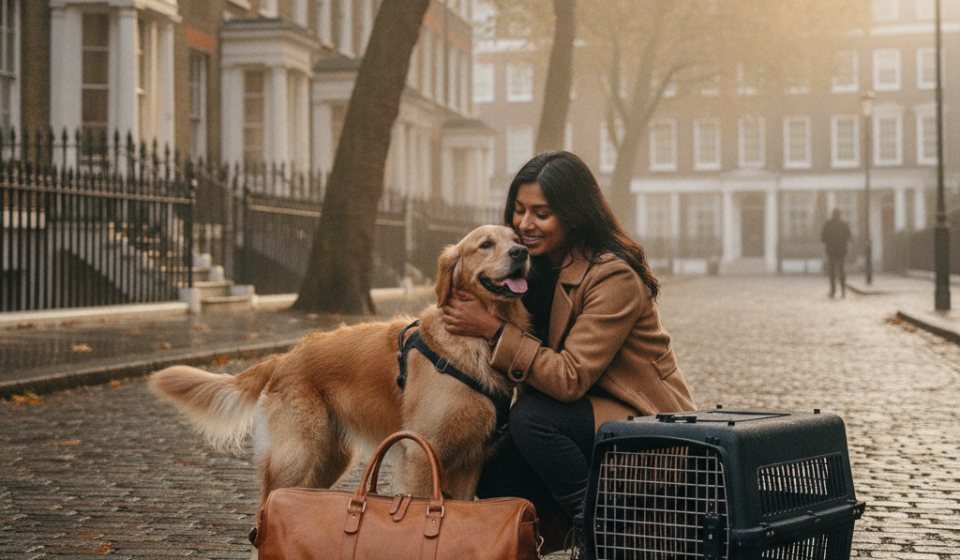

Relocating across international borders ranks among the most stressful events in adult life. When a four-legged family member is added to the itinerary, the administrative burden escalates. The process involves a complex web of veterinary certifications, blood tests, export clearances, and international import permits. Crucially, the process of planning a visa application for pet owners traveling from india requires months of meticulous preparation to ensure that beloved companions are not turned away at the destination border or subjected to stressful quarantine periods. Preparing early is the only way to safeguard both peace of mind and animal welfare. It is basically a structural process that leaves zero room for last-minute shortcuts.
Key Takeaways for Indian Pet Owners
- Early Planning Required: Initiate your preparations 3 to 4 months in advance to satisfy strict international timelines.
- Mandatory Microchipping: Your pet must have an ISO-compliant 15-digit microchip implanted before or on the day of their rabies vaccine.
- Titer Testing: Travel to the EU, UK, and other regions requires a FAVN Rabies Antibody Titer Test followed by a mandatory 90-day wait.
- Official Indian Clearance: All pets leaving India require an official Animal Health Certificate from the Animal Quarantine and Certification Services (AQCS).
- Aviation Compliance: Airlines strictly enforce IATA-approved travel crate dimensions; incorrect sizing will result in denied boarding.
Understanding the Complexity of International Pet Relocation from India
International pet travel is not as simple as booking a commercial airline ticket. Each country maintains strict biosecurity laws designed to protect local ecosystems and public health from zoonotic diseases like rabies. For Indian citizens, exporting a dog or cat requires compliance with both domestic regulations and the laws of the importing country. When managing a visa application for pet owners traveling from india, the pet owner must understand that animals are classified as live imports. This classification means the pet must undergo a formal clearance process that is entirely separate from human immigration.
Critics of strict pet immigration policies argue that these rules are excessively bureaucratic. They are not entirely wrong. The paperwork can feel overwhelming, but still, these protocols prevent the transmission of deadly viruses across borders. For instance, the United Kingdom has been rabies-free for decades. Consequently, any visa application for pet owners traveling from india must begin at least three to four months before the intended departure date. This dual-layered regulatory framework forms the core of the relocation process. A successful visa application for pet owners traveling from india depends heavily on executing each regulatory step in the correct chronological order. Failing to do so can result in the pet being returned to India at the owner’s expense.
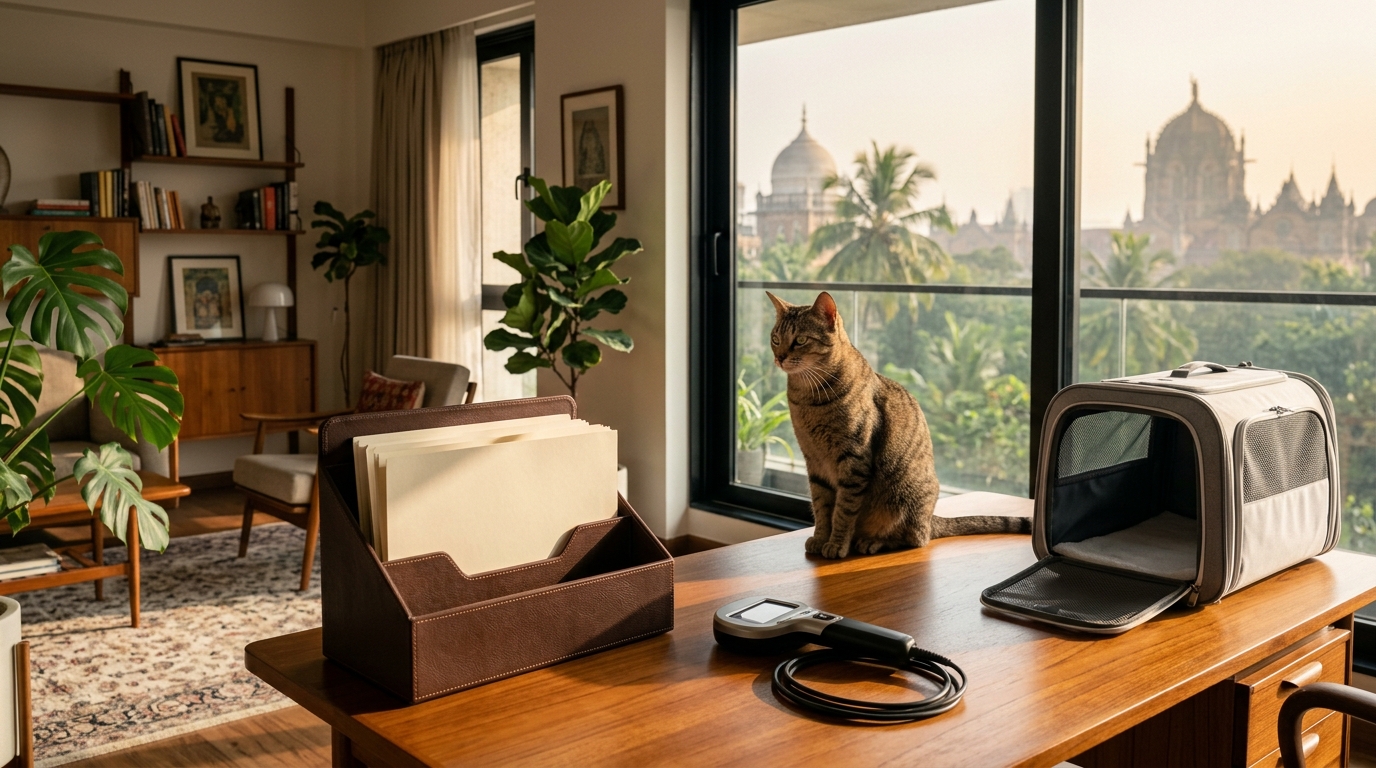
Essential Documentation Needed Before Starting Your Travel Journey
Before embarking on the formal visa procedures, pet owners must gather several critical medical and administrative files. This documentation is the foundation upon which any successful visa application for pet owners traveling from india is built. Without these medical prerequisites, no government agency will issue an export permit.
The documentation process is highly sequential and unforgiving of deviations. Managing a visa application for pet owners traveling from india requires strict adherence to this sequence:
- ISO Microchip Implantation: Must be completed first as the unique ID for all paperwork.
- Primary Vaccinations: Rabies and core vaccine administrations must follow microchipping.
- FAVN Antibody Titer Test: Blood draw and international lab processing to verify vaccine efficacy.
- Veterinary & AQCS Endorsements: Final physical inspection and official health certificates.
Pet owners must maintain a dedicated folder containing the original physical copies of all veterinary records, as digital versions are frequently rejected by airport quarantine officers.
ISO-Compliant Microchip Installation
The very first step in preparing a pet for international travel is the installation of an ISO-compliant microchip. This small electronic transponder, which is roughly the size of a grain of rice (depending on the manufacturer), is injected under the pet’s skin (typically between the shoulder blades). It serves as the animal’s permanent international identity card. When a border official scans the pet, the microchip must transmit a unique 15-digit number that matches all accompanying paperwork.
According to international standards, the microchip must comply with ISO standard 11784 or 11785 (a detail often overlooked during a visa application for pet owners traveling from india). Also, the microchip must be implanted before or on the exact day of the rabies vaccination. Any vaccination administered prior to microchip installation is considered legally invalid for international travel, requiring the pet to be revaccinated. This temporal sequence is arguably the most common administrative error made during a visa application for pet owners traveling from india.
Comprehensive Rabies and Core Vaccination Records
Vaccinations are the basis of global pet biosecurity. For dogs, vaccinations include Rabies and DHPPiL. For cats, the core vaccines are Rabies and FVRCP. All vaccinations must be active and administered by a registered veterinarian.
When compiling files for a visa application for pet owners traveling from india, the vaccination booklet must clearly show the date of administration, the vaccine batch number, the manufacturer’s label, and the veterinarian’s signature and stamp. The rabies vaccine must be at least 30 days old but less than one year old at the time of travel. When finalizing a visa application for pet owners traveling from india, any gap in the vaccination history can trigger an automatic rejection of the export permit.
The FAVN Rabies Antibody Titer Test
For travel to the European Union, the United Kingdom, Singapore, and several other regions, a Fluorescent Antibody Virus Neutralization (FAVN) test is mandatory. This blood test measures the level of rabies neutralizing antibodies in the pet’s system. According to guidelines established by the World Health Organisation, the result must be at least 0.5 International Units per milliliter (IU/ml) to prove the vaccine is effective.
The timeline for the FAVN test is exceptionally rigid and requires careful planning during a visa application for pet owners traveling from india. The blood sample must be drawn at least 30 days after the rabies vaccine was administered. The blood sample must be sent to certified laboratories abroad (such as those in Germany or Belgium). Depending on the laboratory used, getting the official certificate can take anywhere from three to six weeks.
Once the passing titer test result is received, many destination countries enforce a mandatory three-month waiting period before the pet can enter. For anyone organizing a visa application for pet owners traveling from india, this timeline means that spontaneous travel is completely impossible. Planning must begin a minimum of four months in advance.
The Step-by-Step Visa Application for Pet Owners Traveling from India
The administrative process of moving a pet involves coordinating with multiple regulatory bodies. This breakdown illustrates how a visa application for pet owners traveling from india is executed under the supervision of the Animal Quarantine and Certification Services (AQCS). To manage this complex task, pet owners should treat the process as a formal government application. Each step has its own specific fees, timelines, and documentation requirements.
| Timeline Milestone | Required Action Item | Responsible Authority / Lab | Standard Processing Window |
|---|---|---|---|
| Month 1 (Day 1) | ISO Microchip installation & Rabies vaccination | Registered Private Veterinarian | Immediate / 1 Day |
| Month 2 (Day 31) | Blood draw for FAVN Rabies Titer Test | Veterinary Clinic & Approved International Lab | 3 to 6 weeks |
| Month 2 to 5 | Post-Titer mandatory waiting period (UK/EU specific) | Biosecurity / Destination Customs Guidelines | 90-day quarantine alternative wait |
| 10 Days Prior to Flight | Obtain Local Veterinary Health Certificate | Registered Private Veterinarian | 1 to 2 days |
| 2 – 10 Days Prior to Flight | Schedule physical inspection and secure AQCS Export Permit | Animal Quarantine & Certification Services (AQCS) | 1 day |
Step 1: Identifying Destination-Specific Import Regulations
Every nation maintains its own unique pet import rules. For example, while the United States does not require a rabies titer test for pets arriving from India (provided they have a valid CDC Dog Import Permit), the EU enforces it strictly. The first phase of a visa application for pet owners traveling from india is to download the exact veterinary certificate template from the official government portal of the destination country.
It is highly recommended to consult the official TravelDham visa services page to check if there are specific consular guidelines or bilateral travel updates that might affect your journey. Some countries require an Import Permit issued by their Department of Agriculture before you can apply for the pet’s transit authorization, so this step must run parallel to your own visa application.
Step 2: Acquiring the Official Veterinary Health Certificate
Within ten days of departure, the vet must certify that the pet is free from infectious diseases, external parasites, and is clinically fit to undertake international travel. The veterinarian will then complete the specific country health certificate (such as the EU Annex IV certificate for Europe).
This health certificate is a critical component of the visa application for pet owners traveling from india. It must reference the pet’s microchip number, vaccination history, and the FAVN test results. Any illegible handwriting or mismatched dates on this document will result in immediate rejection during the subsequent government endorsement phases.
Step 3: Securing the AQCS Export Certification
Once the local veterinary certificate is ready, the pet owner must present the pet and all documentation to the nearest AQCS office in India. This step must occur between two and ten days before the flight departure. The AQCS officer will physically inspect the pet to verify its health and scan its microchip to confirm its identity.
To secure this final export certificate, which is required for any visa application for pet owners traveling from india, the owner must submit the following documents:
- Original vaccination card.
- FAVN certificate (if applicable).
- Completed country-specific health certificate.
- Owner passport and valid visa.
- Confirmed airline cargo booking.
Upon successful inspection, the AQCS will issue an official Animal Health Certificate. This certificate acts as the formal export permit, allowing the pet to legally clear customs at the Indian airport.
A Comparative Analysis of Key Global Destinations for Pets
The regulatory path for your pet depends entirely on your destination. Some countries are classified as rabies-free, while others are rabies-controlled. This classification dictates the complexity of the visa application for pet owners traveling from india. To assist in planning, the table below outlines the varying requirements across five major international destinations.
| Destination Country | Rabies Titer Test (FAVN) Required? | Import Permit Required? | Mandatory Quarantine Period | Key Documentation Highlight |
|---|---|---|---|---|
| United Kingdom | Yes (with 3-month wait) | No (uses Pet Travel Scheme) | None (if rules are met) | Official Great Britain Pet Health Certificate |
| European Union | Yes (with 3-month wait) | No | None (if rules are met) | EU Annex IV Certificate |
| United States | No (as of 2024 updates) | Yes (CDC Dog Import Permit) | None (from approved ports) | CDC Import Permit and Rabies Vaccination Certificate |
| United Arab Emirates | Yes (within 12 months) | Yes (MOCCAE Permit) | None (if rules are met) | MOCCAE Import Permit and Health Certificate |
| Canada | No | No | None | Canadian Food Inspection Agency (CFIA) Inspection |
Understanding these variations is essential when executing a visa application for pet owners traveling from india to ensure compliance with local biosecurity laws.
Aviation Guidelines: Airline Regulations and Approved Pet Crates
Securing government clearances is only half the battle. The pet must also be accepted for transport by the commercial airline. Airlines have strict quotas for the number of live animals permitted on a single flight, and they enforce rigid safety rules regarding pet carriers. This operational step must run concurrently with the visa application for pet owners traveling from india.
Pets can travel internationally in two main ways:
- In-Cabin Transport: This option is restricted to exceptionally small animals on select international airlines.
- Cargo Hold Travel: This option includes transport as excess baggage or manifest cargo, depending on airline and destination rules.
Regardless of the travel class, the pet crate must comply with the International Air Transport Association (IATA) Live Animals Regulations (LAR). This standard is strictly enforced by airlines. The crate must be constructed of rigid plastic or wood, have secure metal bolts, and feature adequate ventilation on all four sides. Crucially, the crate must be large enough for the pet to stand up, turn around, and lie down comfortably. If the airline agent deems the crate too small, they will deny boarding to the pet, completely disrupting your travel plans and your visa application for pet owners traveling from india.
Estimated Financial Outlay for International Pet Travel
Relocating a pet internationally is a substantial financial investment. Pet owners must budget for veterinary fees, laboratory charges, government endorsement fees, and airline shipping rates. These expenses are entirely separate from the standard costs of a human visa application.
The table below provides a realistic breakdown of the estimated costs associated with a visa application for pet owners traveling from india. These figures are approximations and can vary depending on the pet’s size, destination, and choice of airline.
| Expense Category | Estimated Cost (INR) | Frequency / Detail |
|---|---|---|
| Microchip & Core Vaccinations | ₹5,000 – ₹12,000 | One-time fee per pet |
| FAVN Rabies Titer Test (EU/UK Lab) | ₹25,000 – ₹35,000 | Includes international shipping of serum sample |
| Government Health Certificate (AQCS) | ₹2,000 – ₹5,000 | Processing and endorsement fee |
| IATA-Approved Travel Crate | ₹8,000 – ₹30,000 | Depends heavily on pet dimensions |
| Airline Live Animal Ticket (Hold/Cargo) | ₹60,000 – ₹2,50,000 | Calculated by volumetric weight of the crate |
| Import Permit (Destination Country) | ₹10,000 – ₹25,000 | Varies by destination government charges |
Budgeting for these expenses early in your visa application for pet owners traveling from india will prevent unexpected financial strain during the final weeks of relocation.

Practical Tips to Prepare Your Pet for Long-Haul Travel
The physical and psychological well-being of the pet must remain the highest priority. A long-haul international flight is an unnatural and potentially stressful experience for animals. While the paperwork for a visa application for pet owners traveling from india is being processed, the owner must actively prepare the pet for the flight.
Crate training is the most effective way to reduce travel-related stress. The travel crate should be purchased several weeks before the flight. It should be kept in the living space with its door open, containing the pet’s favorite blanket, toys, and treats. The pet should be fed inside the crate to build positive associations. Over time, the pet will begin to view the crate as a safe, secure den.
Additionally, pet owners should consult their veterinarian about dietary adjustments. It is generally recommended to feed the pet a light meal roughly six hours before departure to prevent motion sickness. Water should be available up until boarding. Most major airlines and veterinary bodies strongly advise against medicating pets for travel. Sedatives can cause respiratory issues at high altitudes, and most airlines will refuse to fly a sedated animal.
Finally, ensure you have secured comprehensive travel insurance for yourself and researched if your policy covers unexpected travel delays that might affect your pet’s transit schedule. Having a backup plan ensures that your visa application for pet owners traveling from india is fully supported by active contingency measures in case of scheduling adjustments.