
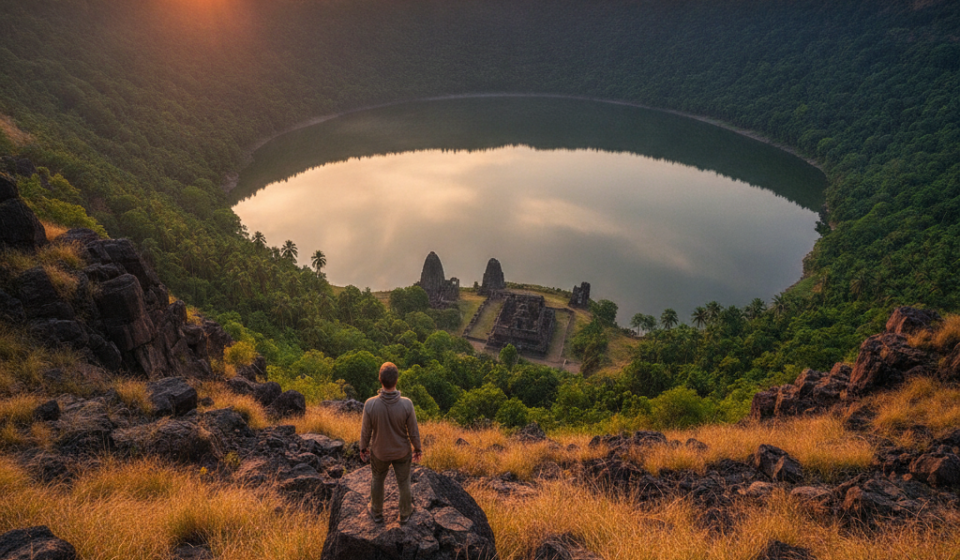

Deep within the basaltic plains of India’s Deccan Plateau lies a geological anomaly that has baffled scientists and captivated travelers for decades. Formed during the Pleistocene Epoch by a hyper-velocity meteorite impact, this massive crater is home to a unique saline-alkaline lake that defies conventional ecological rules. For those seeking an extraordinary journey into one of the planet’s rarest natural phenomena, this Lonar Lake travel guide offers a comprehensive roadmap to exploring a destination where science, history, and ancient mythology converge. The site remains a pristine example of impact craters on Earth, offering a unique opportunity to witness planetary-scale processes up close. Far from the typical tourist trails, this destination provides an immersive experience into the geological mysteries of our solar system. By understanding the unique origin and historical depth of this crater, travelers can fully appreciate the silent majesty of this ancient natural wonder.
Key Takeaways
- Unique Cosmic Origin: Lonar Lake is the world’s only hyper-velocity impact crater formed in hard basaltic rock.
- Dual-Chemistry System: The lake is a rare ecological marvel featuring separate saline and alkaline water zones that support unique microbial life.
- Rich Heritage: The crater rim is lined with ancient 11th-century temples showcasing Hemadpanthi architecture.
- Top Travel Season: The winter window (November to February) offers optimal trekking weather and exceptional birdwatching opportunities.
- Terrestrial Space Analog: Space agencies globally study this site due to its close geological similarity to craters on Mars and the Moon.
Geological Origin and Creation of the Crater
When assembling a definitive Lonar Lake travel guide, the physical origin of the basin stands as the most critical focal point. Unlike volcanic craters formed by internal pressure, this depression was created by an external cosmic impact. The surrounding basalt rock displays shock features that are only possible under extreme pressure and temperature conditions. This specific crater represents one of the very few sites where such planetary science can be studied on a solid basalt surface. To fully grasp the magnitude of this cosmic event, one must examine the raw physics of the impact itself.
The Meteorite Impact Event
Roughly 570,000 years ago (depending on which radioactive dating studies one consults), a massive meteor weighing over one million tonnes struck the Deccan Trap at an estimated speed of 90,000 kilometers per hour. The kinetic energy of this impact was equivalent to a six-megaton nuclear explosion, vaporizing rock and carving a crater measuring 1.8 kilometers in diameter and 150 meters in depth. This makes it the only hyper-velocity impact crater in basaltic rock on Earth. It is basically a distinction of immense value to planetary geologists, as basaltic surfaces dominate Mars and the Moon. In any rigorous Lonar Lake travel guide, understanding this cosmic genesis is essential to appreciating why the site feels so starkly different from the surrounding plains.
Scientific Significance of the Basaltic Rock
Basaltic rock covers most of the Deccan Plateau. Because the meteorite struck this hard volcanic rock, the crater has retained its original structure far better than craters formed in softer sedimentary environments. For researchers, this basin serves as a terrestrial analog (an extremely rare phenomenon on basaltic terrain) for Martian craters. Studying the erosion patterns and mineral formations here helps space agencies understand the geological history of Mars. This scientific connection elevates the crater from a simple tourist spot to an internationally significant scientific site. This Lonar Lake travel guide aims to highlight these lesser-known academic values for the curious explorer.
| Geological Metric | Scientific Value | Planetary Significance |
|---|---|---|
| Crater Diameter | 1.8 Kilometers | Allows comparison with mid-sized craters on the Martian surface. |
| Crater Depth | 150 Meters | Exposes multiple layers of ancient Deccan basalt flows. |
| Target Rock | Deccan Basalt | Provides a rare analog for volcanism on Mars and the Moon. |
| Estimated Kinetic Energy | 6 Megatons | Demonstrates the localized environmental disruption of major impacts. |
The presence of rare minerals like maskelynite, a glass-like substance formed only under shock pressures exceeding 300 kilobars, solidifies the impact theory. Standard volcanic activity cannot generate the pressures required to create maskelynite, making the meteorite theory undisputed among international scientific bodies.
The Chemical Marvel: Salt and Soda Water
Beyond its physical origins, the water body itself is a chemical anomaly. Unlike typical freshwater bodies, the lake features two distinct chemical zones that do not mix. This stratification makes the basin an incredibly complex system that requires a specialized Lonar Lake travel guide to explain. The chemical makeup of the lake is dynamic, responding to seasonal rainfall and evaporation rates. This delicate balance of minerals has created a habitat that supports rare microbial life while remaining hostile to most common aquatic organisms.
Alkalinity and Salinity Dynamics
The outer region of the lake maintains a neutral pH, while the inner deep waters exhibit extreme salinity and high alkalinity (often reaching a pH level of 10.5). This high concentration of sodium carbonate and sodium chloride is a consequence of the lake’s closed basin architecture. With no natural outlets, water escapes only through evaporation, leaving behind highly concentrated minerals over hundreds of thousands of years. When using a Lonar Lake travel guide to plan a walk along the shoreline, visitors must be careful not to submerge sensitive equipment or open wounds in these highly corrosive waters.
The Mysterious Color Change Phenomenon
In June 2020, the lake captured international headlines when its water suddenly turned a vibrant pink hue. This dramatic change (actually, a natural shift rather than a permanent state) lasted for several weeks. Scientific analysis conducted by the Agharkar Research Institute in Pune revealed that the coloration was caused by a massive bloom of Halorubrum, a species of salt-loving microarchaea. This organism thrives in high salinity and produces a red pigment during periods of intense sunlight and low water levels. As any reliable Lonar Lake travel guide will note, such visual anomalies demonstrate that this ecosystem is a living, breathing laboratory that continues to surprise us.
Flora and Fauna: An Ecological Oasis
Despite its harsh chemical environment, the surrounding crater walls are covered in dense forest. This creates a microclimate that supports a surprisingly diverse array of plant and animal life. This section of this Lonar Lake travel guide explores the rich biodiversity that makes the crater a designated Ramsar site. The steep slopes act as a barrier, sheltering the interior from the dry winds of the surrounding plains and keeping moisture locked within the basin. This unique geography has allowed a lush, jungle-like ecosystem to develop in an otherwise dry and agricultural region.
Resident and Migratory Bird Species
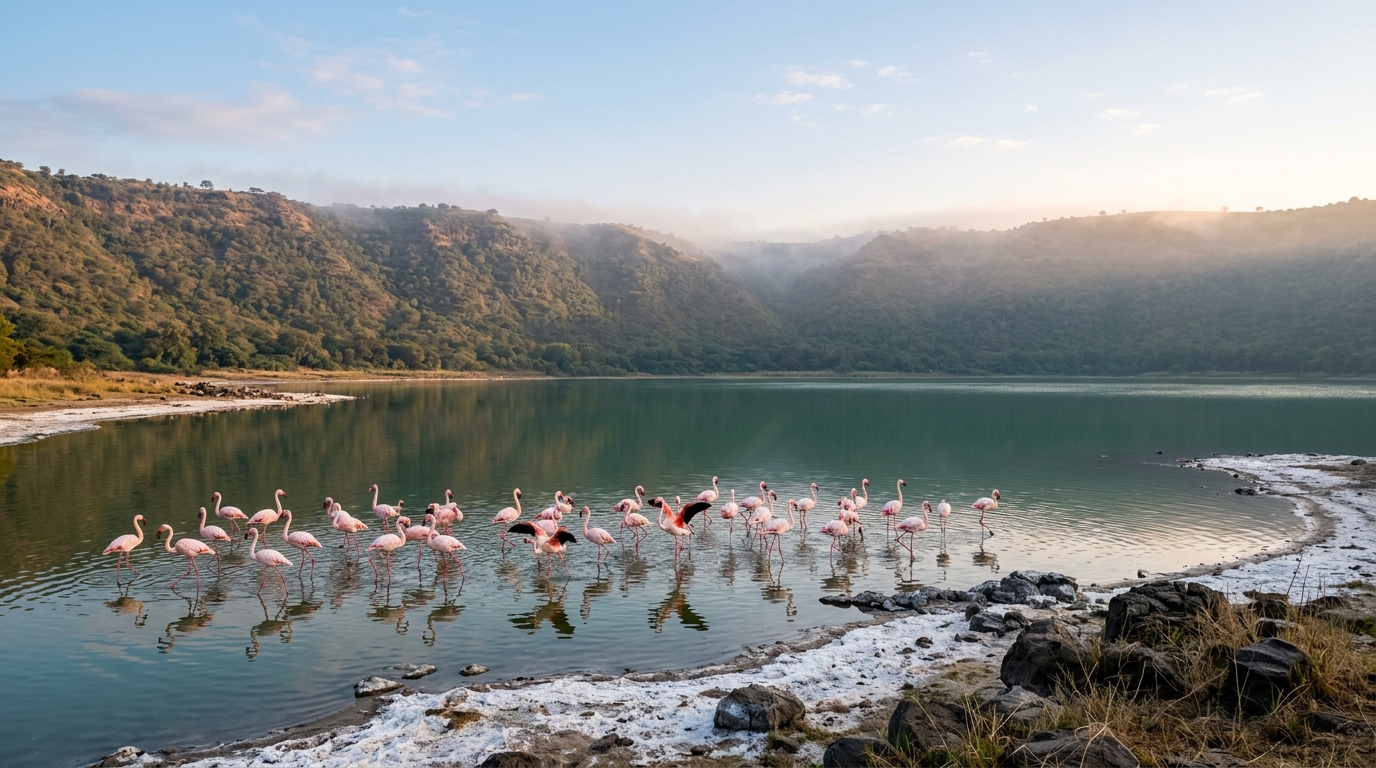
The lake and its surrounding wetlands serve as a vital pitstop for numerous bird species. During the winter months, migratory birds from as far away as Siberia fly to this secluded sanctuary. Visitors can spot spectacular flocks of flamingos, shelducks, shovelers, and grebes feeding on the rich algae along the shallow banks. For birdwatchers, this Lonar Lake travel guide highly recommends carrying a pair of high-quality binoculars, as the dense foliage and crater depth can make spotting smaller birds like the grey wagtail or the red-wattled lapwing somewhat challenging.
Forest Cover and Wildlife
The steep slopes of the crater are home to dense teak-dominated forests that shelter several mammal species. Gray langurs can be seen swinging through the canopy, while monitor lizards, mongooses, and even barking deer inhabit the undergrowth. Because the crater acts as a natural enclosure, these animals have developed a unique, somewhat isolated habitat. This detailed Lonar Lake travel guide emphasizes the importance of preserving this fragile environment by strictly adhering to the “leave no trace” policy while hiking down the trails.
Historical Heritage and Ancient Temples
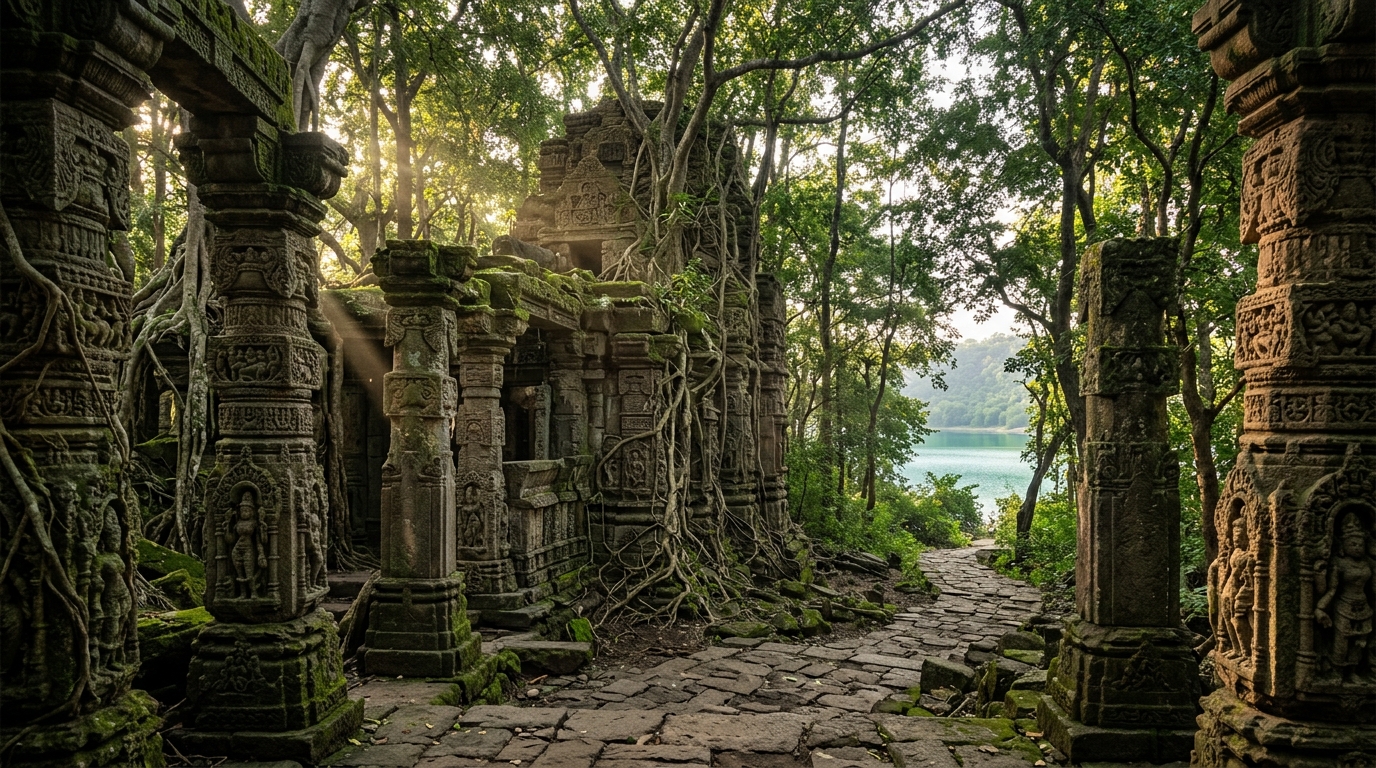
The crater is not merely a scientific curiosity. It also possesses immense historical and spiritual significance. Over the centuries, a collection of temples was constructed around the rim and inside the crater itself, dating back to the Chalukya and Yadava dynasties. This section of this Lonar Lake travel guide will illuminate these remarkable archaeological treasures. Many of these temples now stand in ruins, half-consumed by the advancing forest, creating an atmosphere of ancient mystery that rivals the famous temple ruins of Southeast Asia.
The Architectural Brilliance of Daitya Sudan Temple
Located in the center of Lonar town, the Daitya Sudan Temple is an outstanding example of Hemadpanthi architecture, a style characterized by the use of interlocking stone joints without mortar. Built around the 11th century to honor Lord Vishnu, the temple’s outer walls are covered in intricate stone carvings depicting various mythological stories, deities, and courtly scenes. Its design is reminiscent of the famous Khajuraho temples in Madhya Pradesh. Any comprehensive Lonar Lake travel guide must highlight this architectural masterpiece, which represents a time when local rulers sought to honor the cosmic event that created the crater.
Ruins and Mystical Shrines of the Crater Rim
As one treks down into the crater, several ancient temple ruins emerge from the dense foliage. Temples like the Kamalja Devi Temple, the Shankar Ganesh Temple, and the Dhar Temple are scattered along the water’s edge. Many of these structures are partially submerged during the monsoon season, creating a hauntingly beautiful scene. The Dhar Temple features a perennial freshwater spring that flows into the saline lake, a natural contradiction that continues to baffle pilgrims and tourists alike. This Lonar Lake travel guide suggests taking the time to explore these quiet stone ruins, as they offer a profound sense of serenity away from the tourist crowds.
Comprehensive Guide to Reaching Lonar Lake
Located in the Buldhana district of Maharashtra, the crater is relatively isolated from major urban centers. To help you plan your journey efficiently, this Lonar Lake travel guide outlines the primary transportation options available for reaching this remote scientific wonder. For travelers planning a broader tour of Maharashtra, booking a customized package through TravelDham Domestics can streamline the logistics of transportation and accommodation, ensuring a hassle-free journey.
| Mode of Transport | Nearest Connection Hub | Approximate Distance to Lonar | Key Recommendation for Travelers |
|---|---|---|---|
| Air Travel | Aurangabad Airport (Chhatrapati Sambhaji Nagar) | 140 Kilometers | Best for travelers from Delhi, Mumbai, or Hyderabad. Taxi hire is recommended for direct transfers. |
| Rail Travel | Jalna Railway Junction / Aurangabad Station | 90 km (from Jalna) / 140 km (from Aurangabad) | Cost-effective option with frequent express trains across central India. Connect to Lonar via MSRTC buses. |
| Road Travel | Pune / Mumbai Highways | 380 km (from Pune) / 480 km (from Mumbai) | Highly scenic route. Ideal for combines road tours that feature the historic Ajanta and Ellora Caves. |
Travel by Air
The nearest airport to Lonar is Aurangabad Airport (Chhatrapati Sambhaji Nagar Airport), situated approximately 140 kilometers away. This domestic airport is well-connected to major Indian metro cities like Mumbai and New Delhi. Upon arrival, travelers can hire a private taxi or board a state-run bus to reach Lonar. In this Lonar Lake travel guide, it is highly recommended to pre-book a taxi from the airport to avoid negotiating high fares upon arrival, especially if you plan to travel late in the afternoon. The drive from Aurangabad takes about three to four hours.
Travel by Rail
For rail travelers, the nearest major railway junction is at Jalna, located roughly 90 kilometers from Lonar. Alternatively, the Aurangabad Railway Station is also a highly viable choice with better train frequencies from across India. Both stations are connected to the central Indian railway grid, making them easily accessible. This Lonar Lake travel guide advises taking a local Maharashtra State Road Transport Corporation (MSRTC) bus from Jalna or Aurangabad straight to Lonar town for an affordable transit option. Taxis are also readily available at both stations for a more comfortable journey.
Travel by Road
Lonar is well-connected by a network of state highways to major cities in Maharashtra. The road trip from Pune (approximately 380 km) or Mumbai (around 480 km) is highly scenic, passing through historic terrain and agricultural heartlands. Many travelers opt to combine their trip to Lonar with visits to the nearby Ajanta and Ellora Caves. By utilizing this Lonar Lake travel guide as a planning tool, you can easily integrate a road trip to the crater into a comprehensive itinerary through Maharashtra travel packages.
Best Time to Plan Your Visit
The climate of central Maharashtra can be extreme, with scorching summer temperatures that can make hiking into the crater exhausting. Therefore, timing your trip is crucial. This Lonar Lake travel guide outlines the seasonal variations to help you choose the ideal window for your exploration. Choosing the right month can mean the difference between a pleasant walk through ancient ruins and an exhausting trek under a merciless sun.
Between November and February, the region experiences its winter season, which is widely considered the prime time to visit. During these months, temperatures range from a pleasant 15°C to 28°C, creating perfect conditions for trekking down the crater’s steep slopes. Furthermore, the winter months see the arrival of migratory birds, transforming the lake into a lively avian habitat. As highlighted in this Lonar Lake travel guide, visiting during winter ensures a comfortable outdoor experience without the intense heat of the Deccan summer.
In contrast, the summer months from March to June bring soaring temperatures that regularly exceed 40°C. The dry heat makes the physical descent into the crater physically demanding and potentially hazardous due to dehydration. However, the monsoon season from July to October brings a beautiful change, as the rains drape the crater walls in lush green foliage. But still, the trekking paths can become slippery and treacherous during heavy downpours. Thus, this Lonar Lake travel guide recommends the post-monsoon or winter season as the safest and most rewarding period for a visit.
| Season | Months | Average Temperature | Pros and Cons for Travelers |
|---|---|---|---|
| Winter (Recommended) | November to February | 12°C – 28°C | Pleasant weather, ideal for trekking, birdwatching is at its peak. Highly recommended in every Lonar Lake travel guide. |
| Summer (Avoid) | March to June | 25°C – 42°C | Scorching heat, low water levels, trekking is highly exhausting and uncomfortable. |
| Monsoon (Scenic but Slippery) | July to October | 22°C – 32°C | Lush green landscapes, beautiful waterfalls, but trails can be muddy and dangerous. |
Itinerary Planning: What to See and Do
To maximize your experience, a structured itinerary is highly beneficial. This Lonar Lake travel guide offers a suggested two-day plan that allows you to explore both the scientific and historical wonders of the region at a comfortable pace.
Day One: Crater Exploration & Ancient Architecture
- Start early in the morning around 6:00 AM to descend into the crater and avoid the harsh midday sun (trek takes 30 to 45 minutes).
- Explore the ancient temple ruins scattered along the saline shoreline, particularly the Kamalja Devi Temple.
- Observe the unique geological shoreline where freshwater springs meet the saline lake.
- Spend the afternoon visiting the magnificent Daitya Sudan Temple in town to marvel at its detailed 11th-century Hemadpanthi stone carvings.
Day Two: Satellite Craters & Local Culture
- Visit the nearby Ambar Lake (Chhota Lonar), a smaller crater located 1.5 kilometers away, likely created by a secondary fragment of the same meteorite.
- Spend the afternoon exploring local markets in Lonar town and trying authentic, spicy Maharashtrian cuisine.
- Utilize this structured approach from our Lonar Lake travel guide to ensure all historical and astronomical features of the area are covered.
Essential Travel Tips for Visitors
Visiting a unique ecological site like a meteor crater requires some preparation and caution. This final section of this Lonar Lake travel guide lists essential tips to ensure a safe, respectful, and highly enjoyable trip.
- Wear Durable Trekking Shoes: The trail descending into the crater is steep, rocky, and often slippery. Proper footwear with a good grip is essential to prevent injuries.
- Carry Sufficient Drinking Water: The microclimate inside the crater is warmer and more humid than the rim. Dehydration can happen quickly, so carry at least two liters of water per person.
- Do Not Touch the Water: The high alkalinity of the lake can irritate sensitive skin. Respect the local ecosystem and avoid swimming or wading in the lake.
- Hire a Local Guide: While you can explore independently, hiring a local guide is highly recommended. They can point out hidden ruins, explain geological formations, and provide local folklore that you won’t find in any standard Lonar Lake travel guide.
- Respect Wildlife and Heritage: The crater is a Ramsar wetland and a forest sanctuary. Do not litter, keep noise levels to a minimum, and do not damage any of the ancient temple structures.
- Carry Cash: Lonar is a small town, and although digital payments are widely accepted, internet connectivity can be unreliable. Having physical cash for small transactions is always a safe approach, as noted in this Lonar Lake travel guide.
Conclusion
Lonar Lake is a spectacular destination where cosmic history, rare geology, and ancient heritage meet. It is a rare privilege to walk the edge of a hyper-velocity impact crater, and the experience leaves a lasting impression on anyone who visits. By using this Lonar Lake travel guide, travelers can fully appreciate the scientific marvels and historical depth of this unique sanctuary. This comprehensive Lonar Lake travel guide aims to inspire an unforgettable journey to this mysterious crater.