
Planning a journey through the southern peninsula of India requires more than just picking a few destinations on a map. A well-crafted south india travel plan balances the mist-shrouded hill stations of the Western Ghats with the ancient stone-carved heritage of Dravidian temples and the tranquil coastal lagoons. Unlike rapid-fire sightseeing in other regions, this territory demands a deliberate, sensory approach. Understanding the geography, connectivity, and seasonal shifts of the southern states ensures a smooth transition from Karnataka’s tech hubs to the slow-paced waterways of Kerala. A methodical approach ensures that every region is experienced at its optimal pace rather than rushed through in a blur of transit corridors.
Key Takeaways
- Ideal Duration: Plan for 10 to 14 days to fully experience the cultural and landscape transitions.
- Best Time to Visit: October to March offers dry, moderate weather ideal for outdoor exploration.
- Regional Focus: Divide your trip into distinct zones (e.g., Western Coast/Kerala or Eastern Coast/Tamil Nadu) to avoid travel fatigue.
- Transport Strategy: Utilize express trains for city loops and hire private AC cabs for hilly terrains.
- Cultural Respect: Pack conservative attire for visiting active historical temples.
Designing the Ideal South India Travel Plan: Key Considerations
When constructing a comprehensive south india travel plan, travellers must evaluate several core factors to avoid logistical exhaustion. The southern region comprises five states and several union territories, each offering vastly different cultural settings and terrains. Attempting to cover all of them in a single short excursion often leads to excessive transit times. It is vital to prioritize regions based on personal travel preferences, whether the focus is on historical architecture, wildlife conservation, spiritual exploration, or coastal relaxation. Analyzing travel parameters systematically builds an itinerary that balances movement with meaningful immersion.
Determining Your Travel Duration
A successful south india travel plan should ideally span between ten and fourteen days to appreciate the regional diversity without rushing. A ten-day window allows for a focused exploration of a single state or a tightly knit dual-state loop, such as combining Karnataka and Kerala. Alternatively, a fourteen-day window opens up opportunities for a multi-state cross-peninsular journey, spanning from the eastern temples to the western shores. For those with less than a week, a highly localized itinerary focusing strictly on one pocket (such as the Bangalore-Mysore corridor or a specific hill station like Munnar) is the only practical choice. Proper planning prevents the common mistake of over-scheduling, which ruins the naturally relaxed rhythm of southern life.
Choosing the Best Season to Visit
Integrating weather patterns into the south india travel plan prevents monsoon disruptions and extreme heat waves. Identifying the best time to visit South India is crucial for executing a smooth journey:
- Winter (October to March): The absolute best time to visit South India. Temperatures remain moderate, humidity levels drop, and the mild climate is highly favorable for walking tours in Hampi or cruising the Alappuzha backwaters.
- Monsoon (June to September): Heavy downpours hit the west coast, occasionally disrupting road travel, but transforming Western Ghats hill stations into lush, green, misty paradises.
- Summer (April to May): Brings intense heat and humidity, making coastal travel uncomfortable, though high-altitude sanctuaries like Munnar and Ooty remain pleasantly cool.
Structuring Your Route: Regional Splits
Developing a balanced south india travel plan requires splitting the vast geography into logical, contiguous zones. By dividing the territory, a south india travel plan becomes much more manageable. The primary transit hubs (typically Bengaluru, Chennai, and Kochi) serve as excellent entry and exit points. A common approach is the Western Coast route, emphasizing the spice hills, wildlife sanctuaries, and coastal backwaters of Kerala and southwestern Karnataka. Another popular route is the Eastern Coast and Heritage route, focusing on the massive stone temples, French colonial architecture, and maritime history of Tamil Nadu and Pondicherry. Trying to merge both coasts into a brief itinerary usually leads to long rail journeys. True travel efficiency lies in mastering one sector before transitioning.
Comparative Analysis of South Indian Travel Hubs
To optimize the regional distribution of days, analyzing each major hub based on its climate, prime travel months, and recommended duration is highly beneficial. This visual matrix helps align a south india travel plan with seasonal reality. A well-constructed South India itinerary relies heavily on these regional distinctions, allowing for minimal transit overlaps.
| Region | Major Hubs | Best Season | Ideal Duration | Primary Highlights |
|---|---|---|---|---|
| Kerala Coast & Hills | Kochi, Munnar, Alleppey | October to March | 5 to 7 Days | Backwater houseboats, tea plantations, Kathakali dance. |
| Tamil Nadu Plains | Chennai, Madurai, Tanjore | November to February | 6 to 8 Days | Dravidian temples, classical music, heritage bronze art. |
| Karnataka Highlands | Bengaluru, Mysore, Coorg | October to March | 4 to 6 Days | Sandalwood palaces, coffee estates, wildlife sanctuaries. |
| Coromandel Coast | Pondicherry, Mahabalipuram | December to February | 2 to 3 Days | Colonial architecture, beachside cafes, rock temples. |
The Core South India Itineraries
Choosing the right path within a south india travel plan depends on whether the primary goal is cultural education, scenic relaxation, or physical exploration. The diverse geography of the peninsula accommodates several distinct routes. The following itineraries have been designed to balance travel time with immersive experiences, providing structured blueprints.
The Classic 10-Day Route: Heritage and Backwaters
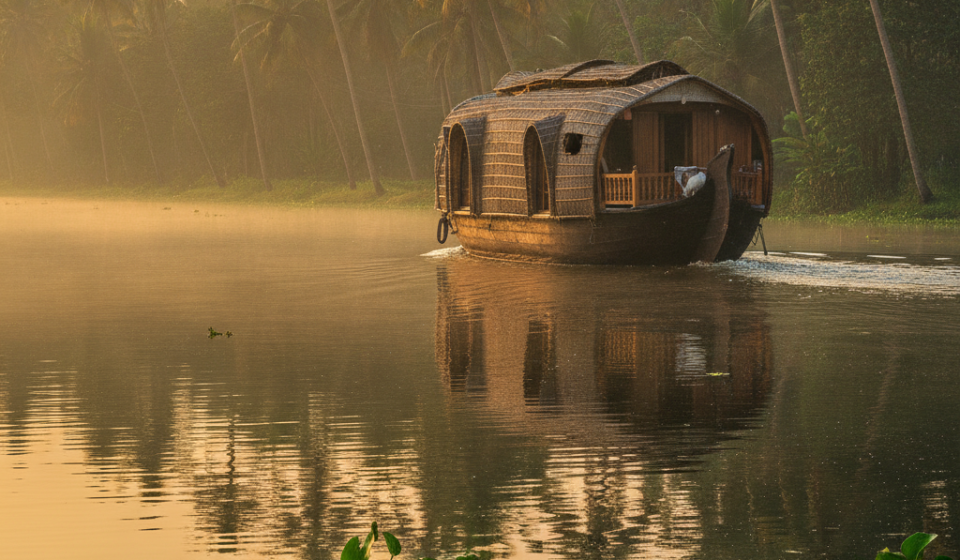
A standard 10-day south india travel plan often starts in Bengaluru before transitioning into historical Mysore. Mysore (known for its sandalwood legacy and the grand Amba Vilas Palace) acts as a gentle introduction to regional history. From Mysore, the route winds southward into the mist-covered hills of Wayanad in northern Kerala, offering a blend of spice plantations and ancient caves. Continuing southwest, travellers arrive at the historic port city of Kochi, where Portuguese, Dutch, and British architectural influences merge. The final leg of this route focuses on the pristine backwaters of Alappuzha, where staying in a traditional houseboat offers an unparalleled view of rural coastal life. Experiencing the backwaters often involves booking a *Kettuvallam* (a traditional thatched houseboat originally used to transport rice). This route offers a highly balanced South India itinerary, seamlessly blending active sightseeing with deep relaxation.
The 14-Day Grand South India Loop
For those with more time, a 14-day south india travel plan offers an incredible cross-peninsular voyage. Beginning in Chennai, the itinerary proceeds to the UNESCO-listed monuments of Mahabalipuram, famous for its rock-cut shore temples dating back to the Pallava dynasty. Heading south along the coast leads to Pondicherry, a unique French-influenced enclave characterized by mustard-yellow buildings and quiet seaside promenades. From Pondicherry, travellers move inland to Tanjore to marvel at the Brihadisvara Temple, an architectural wonder built entirely of granite without binding mortar. The journey continues to Madurai, one of the oldest continuously inhabited cities in the world, centered around the sprawling Meenakshi Amman Temple complex. Crossing the border into Kerala, the route climbs into the high-altitude tea country of Munnar before descending to the palm-fringed backwaters. This multi-state journey reveals the profound linguistic and cultural transitions between Tamil Nadu and Kerala, proving that the south is far from a monolith.
The 7-Day Quick Getaway: Hill Stations and Culture
A short 7-day south india travel plan must target a smaller geographic area to prevent transit fatigue. A highly recommended route focuses on the Karnataka highlands. Starting in Bengaluru, the itinerary moves directly to Mysore to explore local palaces and markets. From Mysore, a short drive west leads into the lush hills of Coorg (a premier coffee-producing region known for its unique Kodava culture and misty valleys). After spending a couple of days trekking through plantations and visiting Tibetan monasteries in Bylakuppe, the loop can conclude by returning to Bengaluru. This condensed plan keeps travel times under four hours, allowing maximum time to experience the destinations.
Essential Destinations to Include in Your Route
Deciding which places to feature in a south india travel plan can be overwhelming given the vast array of historic monuments and natural wonders. Each state possesses its own distinct personality and artistic achievements. To simplify the selection process, the following sections categorize the top places to visit in South India based on their primary travel appeal. Compiling a definitive list of places to visit in South India helps narrow down options.
Cultural Epicentres and Temple Towns
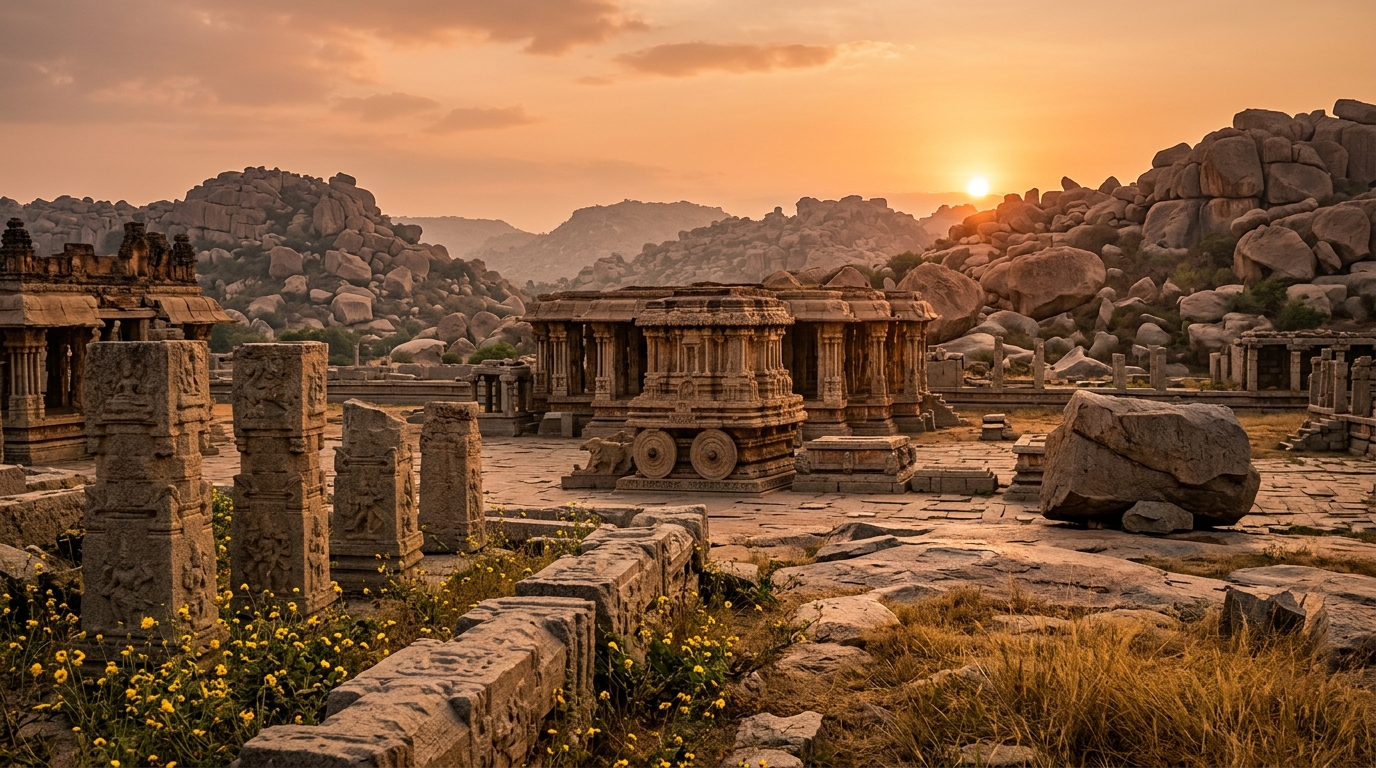
Including Hampi or Madurai in the south india travel plan highlights the architectural heights achieved by ancient dynasties. In Karnataka, the ruins of Hampi represent a vast open-air museum of the Vijayanagara Empire, where monolithic stone structures are scattered across a terrain of giant boulders. In contrast, the temple towns of Tamil Nadu are living monuments where religious rituals have continued uninterrupted for centuries. Dravidian architecture (characterised by towering *Gopurams* or temple gateways) dominates the skyline. According to a 2024 report by the Ministry of Tourism, Tamil Nadu welcomed over 218 million domestic tourists (a figure highlighting its cultural dominance). The Meenakshi Amman Temple in Madurai, with its soaring gopurams decorated with thousands of colorful figures, remains a masterpiece. Exploring the spiritual trails through Tamil Nadu offers a deep immersion into a culture that values preservation, where ancient rituals remain central to daily life.
Hill Stations and Wildlife Reserves
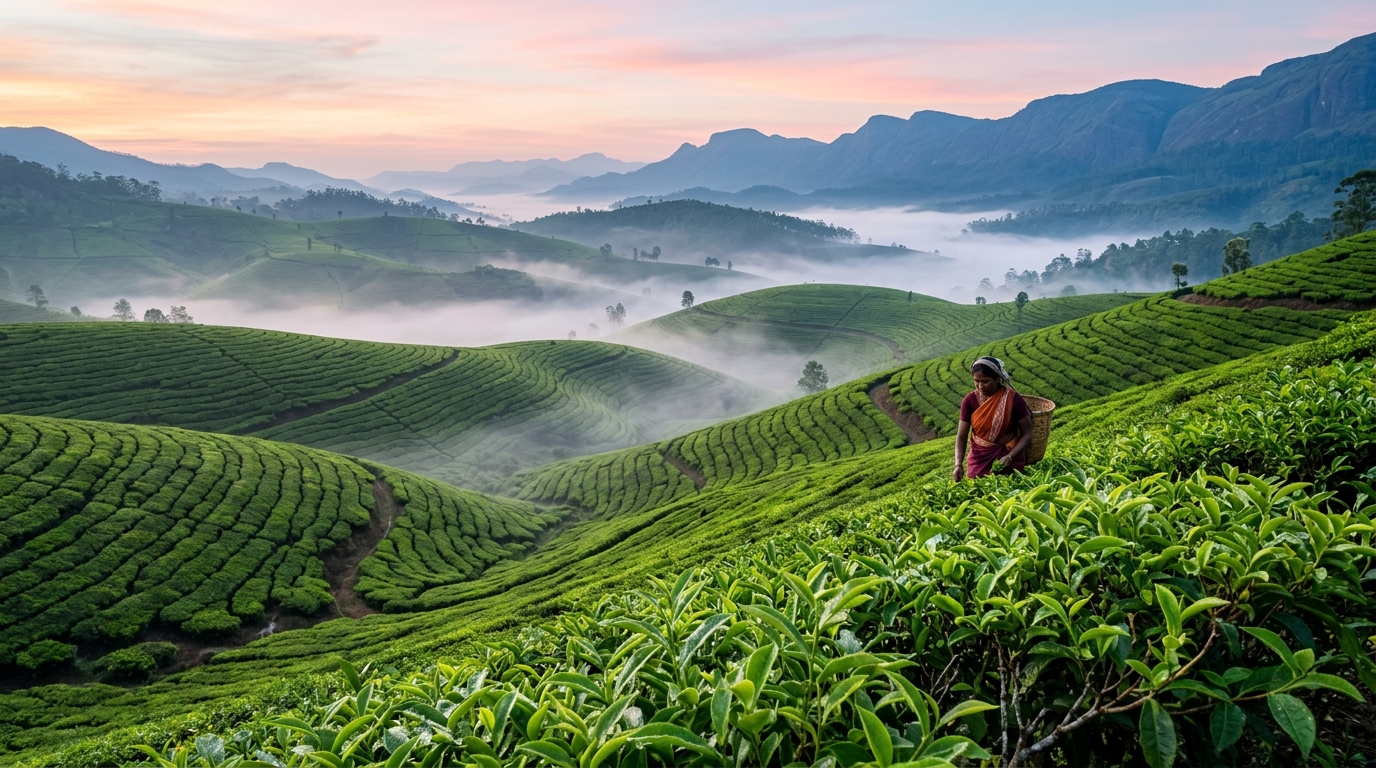
Adding Western Ghats hill stations to the south india travel plan offers a cool respite from the tropical plains. Munnar, located in Kerala, is a striking expanse of manicured tea estates rising to over 2,000 metres. Further north, the district of Coorg presents a rugged terrain of evergreen forests and expansive coffee estates. For wildlife enthusiasts, the Nagarhole and Bandipur National Parks, which form part of the Nilgiri Biosphere Reserve, offer opportunities to spot wild elephants and the elusive Bengal tiger. These reserves protect the unique flora and fauna of the Western Ghats (a recognized biodiversity hotspot). Visiting these sanctuaries provides a refreshing contrast to busy cities, letting travellers connect with nature.
Coastal Escapes and Quiet Beaches
No south india travel plan is complete without coastal elements, which vary from bustling ports to quiet shores. The cliffside beaches of Varkala in Kerala offer a dramatic setting where red clay cliffs overlook the Arabian Sea, creating a unique geological feature. For those seeking a quieter experience, the serene beaches of Marari offer a tranquil alternative, characterized by vast stretches of white sand. On the eastern coast, the beaches of Pondicherry provide a different charm, where French colonial history meets the Bay of Bengal. These coastal regions are ideal for unwinding after days of walking through temple complexes.
Practical Logistics for Your South India Journey
Managing logistics remains the most critical phase of executing a south india travel plan, as transport networks and accommodation standards vary across the region. A well-organized strategy ensures that transitions between states are smooth, comfortable, and safe. Paying close attention to transit methods and lodging options will elevate the entire travel experience, transforming a complex journey into a rewarding adventure.
Transit Methods: Flights, Trains, and Private Cabs
Optimising transport modes within the south india travel plan keeps travel times manageable. Choose your transit methods based on your routing needs:
- Air Travel: The region is well-served by major international airports (Bengaluru, Chennai, Kochi, and Thiruvananthapuram) that provide fast connections between distant hubs.
- Indian Railways: Highly efficient and scenic for long-distance overland travel. Express trains like the Shatabdi Express seamlessly connect major tourist centers like Chennai, Bengaluru, and Mysore.
- Private Cabs: Hiring a private, air-conditioned cab with an experienced driver is the most flexible choice for short distances, winding ghat roads, and hill station climbs, allowing for spontaneous stops along the way.
| Transport Mode | Ideal For | Relative Cost | Booking Advice |
|---|---|---|---|
| Domestic Flights | Inter-state long distances (e.g., Bengaluru to Kochi) | High | Book 4-6 weeks in advance for best rates. |
| Express Trains | Comfortable city-to-city day travel (e.g., Chennai to Mysore) | Medium-Low | IRCTC reservations open 120 days in advance; book AC classes (1AC, 2AC, CC) early. |
| Private AC Cabs | Hill stations, heritage routes, and flexible sightseeing | Medium-High | Hire via reliable local tour operators; ensure driver allowance is included. |
| Intercity Buses | Budget-conscious point-to-point transit | Low | Opt for AC Sleeper multi-axle buses (KSRTC, SETC, or private operators like KPN). |
Accommodation Types: Heritage Properties to Houseboats
Selecting the right lodging within your south india travel plan ensures comfort while adding a unique cultural layer. South India features diverse and immersive stay options:
- Heritage Properties: From converted 19th-century merchant mansions in Chettinad to colonial tea-bungalows in Munnar, these stays offer a deep historical connection.
- Traditional Houseboats: A key highlight of any Kerala itinerary, renting a private Kettuvallam with an onboard chef provides an iconic backwater experience.
- Eco-Resorts & Coffee Estates: Bangalore-Mysore and Coorg packages feature premium resorts nestled within coffee plantations, ideal for nature lovers.
Cultural Etiquette and Practical Packing Advice
Factoring cultural guidelines into the south india travel plan preserves respect for local traditions and ensures entry into sacred spaces. When visiting temples in Tamil Nadu and Karnataka, modest dress is strictly enforced; shoulders and knees must be covered, and footwear removed. Some traditional temples may require men to wear a traditional *dhoti* and women to wear a saree. Packing lightweight cotton clothing is essential due to the tropical climate, along with a sweater for high-altitude hill stations. It is wise to carry insect repellent, sun protection, and slip-on shoes for convenience.
Essential Packing and Preparation Checklist
Before launching a south india travel plan, verifying this checklist ensures that all critical items are accounted for. This systematic preparation helps prevent common travel oversights and guarantees your south india travel plan remains on track.
- Identity & Travel Documents: Original identification cards, printed flight tickets, hotel reservation confirmations, and physical copies of permits for protected forest areas.
- Climate-Appropriate Clothing: Lightweight linen or cotton trousers, breathable shirts, a light sweater for hill stations, and an umbrella for sudden tropical showers.
- Appropriate Temple Wear: At least one set of traditional attire (such as a long skirt, salwar kameez, or dhoti) to ensure compliance with strict temple entry dress codes.
- Health & Hygiene Kit: Prescribed medications, high-SPF sunscreen, insect repellents, hand sanitizer, and rehydration salts.
- Electronics & Adapters: A high-capacity power bank for long transit days, multi-plug travel adapters, and a quality camera.
Final Recommendations for Your South India Journey
Customizing an individual south india travel plan guarantees a personalized journey that aligns with specific budgets and interests. For those who prefer a curated experience, choosing custom South India tour packages can simplify the planning process. Professional assistance takes the complexity out of coordinating cross-border transport, booking heritage properties, and securing experienced local guides. Investing time in a meticulously researched south india travel plan rewards travellers with a profound appreciation for one of the most culturally rich and geographically diverse regions in Asia. Partnering with travel experts ensures that every logistics detail is managed with precision, making professional South India tour packages an attractive option.