South India Travel Plan: Your Comprehensive Guide to Planning a Memorable Trip

Planning a comprehensive journey through the southern peninsula of India requires more than a simple list of destinations. The region offers a distinct contrast to the northern plains, characterized by ancient Dravidian architecture, dense tropical canopies, and a slower, more deliberate pace of life. A well-conceptualized south india travel plan functions as an essential blueprint to reconcile these diverse geographical terrains and cultural assets into a cohesive travel experience. By organizing routes, transport, and cultural nuances in advance, travelers can avoid common logistical friction points and focus instead on the region’s culinary depth, historical sites, and natural sanctuaries.
Key Takeaways for Your South India Travel Plan
- Ideal Duration: Plan for at least 10 to 12 days to cover one or two major states without rushing.
- Best Time to Visit: The cooler dry season from October to March offers the most comfortable weather for temple tours and backwater cruises.
- Transport Strategy: Utilize express trains like Vande Bharat for long distances, and hire a private AC car with a driver for regional exploration.
- Cultural Respect: Dress modestly (shoulders and knees covered) when visiting active temple complexes, and always remove footwear before entering.
- Diverse Experiences: Balance your itinerary between the architectural marvels of Tamil Nadu, the serene backwaters of Kerala, and the historic ruins of Karnataka.
Understanding the Geography and Scope of the Region
The southern portion of India comprises five distinct states and two union territories, each possessing its own language, culinary traditions, and historical legacies:
- Kerala: Known for its tranquil backwaters, beaches, and tropical greenery.
- Tamil Nadu: The architectural heartland featuring towering temple complexes.
- Karnataka: A blend of modern technological hubs, royal palaces, and historic ruins.
- Andhra Pradesh & Telangana: Renowned for rich heritage, historic forts, and spicy cuisine.
- Pondicherry & Lakshadweep: Coastal union territories offering French colonial charm and pristine coral islands.
Attempting to cover all these regions within a single, brief visit is rarely practical. The Western Ghats, a mountain range older than the Himalayas, run parallel to the western coast, creating a natural barrier that separates the humid coastal plains of Karnataka and Kerala from the drier Deccan Plateau and the eastern plains of Tamil Nadu.
When designing a balanced south india travel plan, recognizing these natural divisions helps determine travel times. Road journeys across the Ghats, for example, involve winding roads (known locally as ghat sections) that can significantly increase transit times despite relatively short linear distances. In contrast, the eastern plains allow for faster highway travel between temple towns. The region’s extensive coastline provides ample opportunities for beach-focused travel, though the character of the Arabian Sea on the west differs markedly from the Bay of Bengal on the east.
Historically, the southern kingdoms (chiefly the Cholas, Cheras, Pandyas, Chalukyas, and Vijayanagara emperors) remained largely independent of northern dynasties, allowing Dravidian art and architecture to develop along a continuous, uninterrupted trajectory. This historical isolation explains the massive scale of living temple complexes in the south, which remain centers of daily social and cultural life. Understanding this background ensures that when scheduling visits to these monuments, travelers view them not merely as historic ruins, but as active cultural institutions.
Choosing the Right Season for Travel
Climatic variation across the southern peninsula is pronounced, meaning that timing is the cornerstone of any south india travel plan. The region generally experiences three main seasons: a hot dry season, a wet monsoon season, and a cooler dry season. The cooler dry season, which spans from October to March, is widely considered the peak window for tourism. During these months, temperatures remain moderate, typically hovering between 20 and 32 degrees Celsius, making urban exploration and temple visits comfortable.
The monsoon season, divided into the Southwest Monsoon (June to September) and the Northeast Monsoon (October to November), brings heavy rainfall that alters travel feasibility. Kerala and western Karnataka receive the brunt of the Southwest Monsoon, which renders beaches unusable and creates safety concerns in hill stations due to potential landslides. Developing a south india travel plan around these monsoon cycles requires careful planning; for instance, while Kerala’s hills may be treacherous in July, Tamil Nadu’s dry eastern plains remain largely accessible during this period.
Conversely, the summer months from April to May bring intense heat, with inland temperatures often exceeding 40 degrees Celsius. Coastal humidity also peaks during this time, making outdoor activities challenging during midday hours. However, this is the optimal period to visit high-altitude hill stations like Ooty, Kodaikanal, and Munnar, where the elevation provides relief from the lowland heat.
Here is a summary of seasonal travel conditions across the region:
| Season | Months | Regional Suitability |
|---|---|---|
| Cool Dry Season | October to March | Ideal for coastal areas, heritage temple towns, and backwater cruises. Moderate humidity. |
| Hot Dry Season | April to May | Best restricted to high-altitude hill stations (Munnar, Coorg, Ooty) to avoid extreme lowland heat. |
| Monsoon Season | June to September | Excellent for viewing waterfalls and Ayurvedic treatments, but coastal activities are restricted. |
Essential Destinations to Include in Your Itinerary
A comprehensive journey must carefully balance different regional highlights. Rather than attempting a superficial tour of all five states, selecting representative hubs guarantees a more rewarding experience. Each sub-region offers unique sights, from misty hills to ancient stone carvings.
The Serene Waters and Hills of Kerala
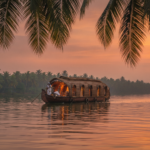
Kerala remains a focal point for many international and domestic travelers. No south india travel plan can be complete without experiencing the unique water-based ecosystems of Alappuzha (formerly Alleppey) and Kumarakom. The backwaters (a system of brackish lagoons, canals, and lakes running parallel to the Arabian Sea) are best experienced via traditional kettuvallams (wooden houseboats). These vessels, originally used to transport harvested rice, have been converted into slow-moving lodging units that allow travelers to observe rural agrarian life at an unhurried pace.
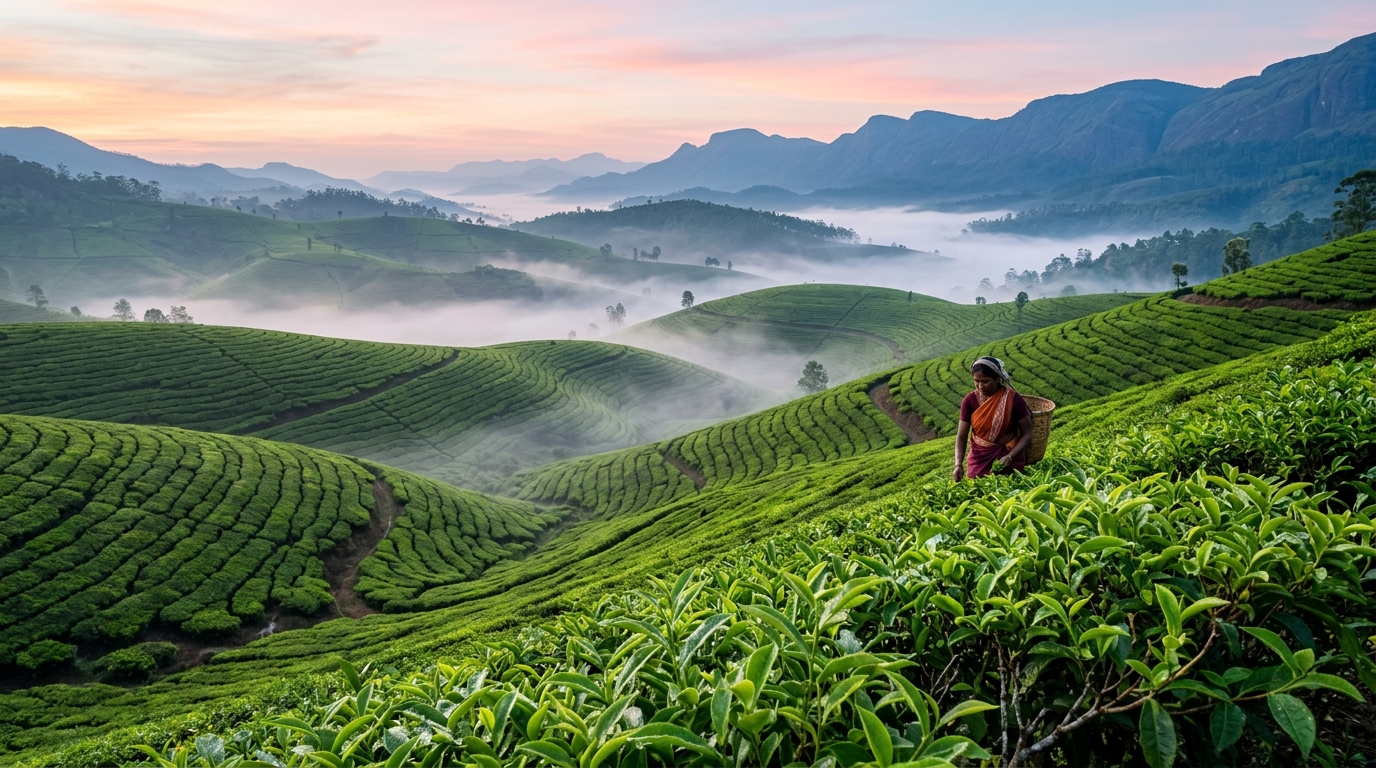
Beyond the waterways, the hill station of Munnar offers vast tea plantations dating back to the British colonial era. Munnar sits at an elevation of roughly 1,600 meters, providing a cool climate and excellent opportunities for trekking in the Eravikulam National Park, which protects the endangered Nilgiri tahr (a rare mountain goat native to these hills). For those interested in exploring these lush landscapes, booking dedicated Kerala tour packages is an effective way to coordinate transport between the coastal backwaters and the elevated interior plantations.
The Living Monuments of Tamil Nadu
If Kerala represents the natural sanctuary of the south, Tamil Nadu stands as its architectural bastion. The state is home to thousands of ancient temples, many of which are designated UNESCO World Heritage Sites. The towns of Madurai, Thanjavur, and Tiruchirappalli contain magnificent structures defined by towering gopurams (ornate entrance gateways) covered in thousands of colorful stucco figures. The Meenakshi Amman Temple in Madurai, a vast complex covering 45 acres, operates as a massive spiritual and economic center, drawing thousands of devotees daily.
Further north along the coast lies Mamallapuram (Mahabalipuram), featuring rock-cut monuments carved directly out of granite hills during the Pallava dynasty in the seventh century. The Shore Temple and the Five Rathas must feature on a comprehensive south india travel plan because they show the transition from rock-cut architecture to structural stone masonry. These coastal monuments, constantly battered by salty sea breezes, have survived centuries of maritime weather, standing as durable symbols of ancient engineering. Exploring Tamil Nadu travel options offers deep insight into these historic coastal and temple settlements.
The Architectural Grandeur of Karnataka
Karnataka offers a diverse mix of progressive metropolitan areas and spectacular historical ruins. The capital, Bangalore, serves as a modern technological hub, yet it retains historic parks and colonial-era palaces. A short distance away lies Mysore (Mysuru), famed for the Amba Vilas Palace, an opulent structure that combines Indo-Saracenic, European, and Rajput architectural styles. The palace is particularly notable for its weekly illumination, when nearly 100,000 light bulbs outline its grand facade, attracting spectators from across the region.
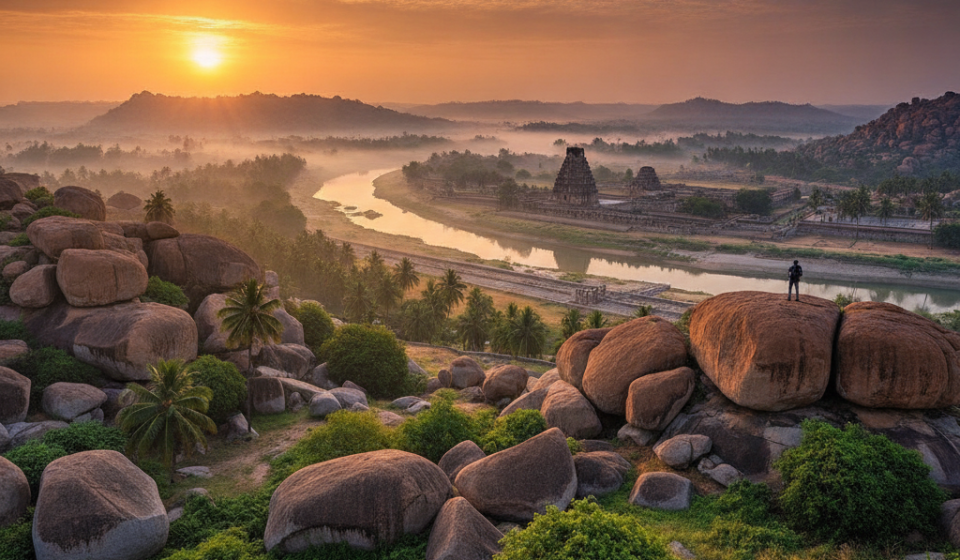
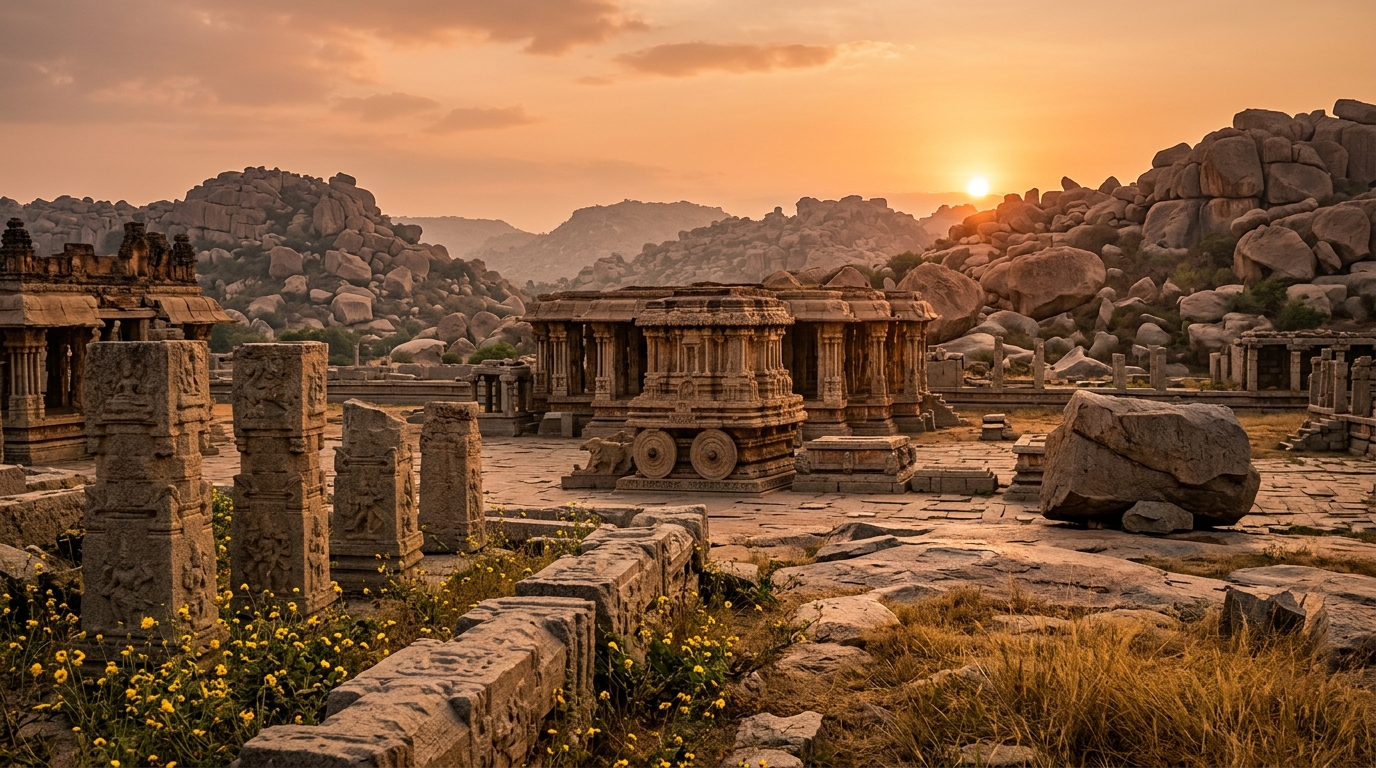
However, the primary archaeological jewel of the state is Hampi, the ruined capital of the historic Vijayanagara Empire. Situated along the banks of the Tungabhadra River, Hampi is a vast, boulder-strewn landscape containing hundreds of temples, palaces, and ancient marketplaces. The Virupaksha Temple remains an active site of worship, while the Vittala Temple complex features iconic stone musical pillars and a famous stone chariot. Exploring this expansive ruin requires at least two full days, making its inclusion a priority when constructing a south india travel plan.
The Colonial Enclaves of Pondicherry
The Union Territory of Pondicherry (Puducherry) adds a distinct colonial-era dimension to the south india travel plan. Having remained under French administrative control until 1954, the town’s seaside quarters preserve a distinct Mediterranean architectural style. The French Quarter features mustard-colored villas, tree-lined avenues, and streets bearing French names (such as Rue de la Marine), contrasting sharply with the bustling Tamil Quarter just across the canal.
This coastal enclave is also famous for Auroville, an experimental township founded in 1968 by Mirra Alfassa (known as “The Mother”). Auroville is designed as an international community dedicated to human unity and sustainable living. At its center stands the Matrimandir, a massive golden sphere clad in gilded stainless steel discs, which serves as a silent meditation chamber. The town’s unique blend of French culinary heritage, spiritual institutions, and coastal beaches provides a relaxed transition between the intense temple trails of Tamil Nadu and the natural landscapes of Karnataka.
Crafting Your Route: Popular South India Travel Plan Itineraries
A successful south india travel plan depends on thematic clarity. Given the physical scale of the region, attempts to combine deep temple exploration with remote hill sanctuaries often result in excessive transit times. It is far more practical to structure itineraries around geographical corridors. Below are three refined routing options designed to suit different travel styles and durations.
The Classic Southern Heritage Trail (12 Days)
This itinerary focuses heavily on the historical, architectural, and cultural evolution of the region, moving from modern tech hubs to ancient stone kingdoms. It requires efficient rail or road transport, making it an ideal option for history enthusiasts. This structured sequence makes for an exceptionally well-balanced south india travel plan.
- Day 1-2: Arrive in Chennai; explore the colonial history of Fort St. George and the Kapaleeshwarar Temple.
- Day 3-4: Drive to Pondicherry with a stop at the Mamallapuram rock-cut monuments. Spend Day 4 walking through the French Quarter.
- Day 5-6: Travel inland to Thanjavur; visit the Brihadisvara Temple (a monumental Chola structure built entirely of granite).
- Day 7-8: Drive to Madurai; explore the Meenakshi Amman Temple and witness the evening prayer ceremonies.
- Day 9-10: Board a morning train or hire a private vehicle to Mysore; explore the Mysore Palace and Chamundi Hill.
- Day 11-12: Depart from Bangalore; enjoy the botanical gardens and return via the international airport.
The Western Ghats and Coastal Wilderness Loop (10 Days)
For heritage enthusiasts, a specialized south india travel plan focusing on historical landmarks provides deep satisfaction. But for travelers prioritizing biodiversity, high-altitude spice plantations, and serene water bodies, a nature-centric south india travel plan should instead favor the high elevations of the Western Ghats before descending to the Arabian Sea coast.
- Day 1-2: Land in Kochi (Cochin); explore the historic Fort Kochi area, Chinese fishing nets, and Jewish Synagogue.
- Day 3-5: Travel upward to Munnar; tour the tea estates, visit Kolukkumalai (among the highest tea plantations globally), and hike in the national parks.
- Day 6-7: Proceed to Thekkady (Periyar National Park); participate in a guided spice plantation walk and view wildlife around the lake.
- Day 8-9: Descend to Alappuzha; board a traditional houseboat for an overnight cruise through the backwaters.
- Day 10: Transfer to Kochi airport for departure.
The Deccan Heritage and Karnataka Explorer (10 Days)
This route covers the drier interior plateau, highlighting the dramatic transition from royal palaces to spectacular ancient ruins.
- Day 1-2: Arrive in Bangalore; visit Cubbon Park and local microbreweries (which represent the city’s modern culture).
- Day 3-4: Drive to Mysore; visit the heritage markets, the palace, and the nearby historic island town of Srirangapatna.
- Day 5-6: Travel northwest to Chikmagalur; stay on a historic coffee estate and trek up Mullayanagiri, the highest peak in Karnataka.
- Day 7-9: Drive north to Hampi; spend two full days exploring the vast archaeological ruins and watching the sunset from Hemakuta Hill.
- Day 10: Drive to Hubli or return to Bangalore for departure.
Let us compare these routes systematically to help select the correct trajectory:
| Itinerary Name | Primary Focus | Pace | Best Starting Point |
|---|---|---|---|
| Southern Heritage Trail | Temples, Colonial Architecture, Cultural History | Moderate-Fast | Chennai (MAA) |
| Coastal Wilderness Loop | Wildlife, Tea Estates, Houseboats, Nature | Relaxed | Kochi (COK) |
| Deccan Heritage Explorer | Ruins, Coffee Plantations, Royal Palaces | Moderate | Bangalore (BLR) |
Practical Logistics and Getting Around
Evaluating transportation methods is critical for a south india travel plan. The regional infrastructure is generally well-developed, but transit speeds are often lower than those in western nations. Choosing the correct mode of transport depends on budget, comfort preferences, and the specific terrain.
To help you choose the best transit options for your south india travel plan, here is a comparison of regional transport methods:
| Transport Mode | Ideal Travel Distance | Pros | Cons |
|---|---|---|---|
| Domestic Flights | 500+ km (Inter-state) | Fastest transit; connects major airports like Bangalore, Chennai, Kochi. | Higher cost; requires early arrival and luggage limits. |
| Express Trains (Shatabdi/Vande Bharat) | 100 – 500 km | Punctual, comfortable, scenic, and highly cost-effective. | Requires booking 30-60 days in advance; fixed schedules. |
| Private AC Car & Driver | Local / Under 200 km | Complete flexibility, door-to-door transit, allows rural sightseeing stops. | Slower over long distances due to winding ghat roads and traffic. |
| Auto-rickshaws & Metros | Intra-city (Local) | Quick navigation through city traffic; extremely cheap. | Rickshaws require fare negotiation (unless using app-based booking). |
Air and Rail Connectivity
Major entry hubs include Chennai, Bangalore, and Kochi, all of which feature modern international airports with direct global connections. For long-distance domestic travel between major hubs (such as Chennai to Bangalore, or Bangalore to Kochi), domestic flights are frequent and reasonably priced.
The Indian Railways network offers an efficient and culturally immersive way to cover large distances. Express trains like the Shatabdi and Vande Bharat operate daily on key routes (such as Bangalore-Mysore and Chennai-Bangalore), offering air-conditioned seating and punctual service. For overnight journeys, booking First Class AC (1AC) or Second Class AC (2AC) sleeper berths in advance is highly recommended to prevent delays in the execution of the south india travel plan. Tickets should be secured at least 30 to 60 days before travel, particularly during peak winter months.
Road Transport and Private Drivers
For regional travel within a state, hiring a private car with an experienced driver remains the most flexible and popular option. Unlike self-driving (which is generally discouraged due to complex traffic patterns, narrow rural roads, and unpredictable obstacles), hiring a professional driver allows travelers to stop at rural markets and historic sites along the way. Most reputable travel agencies provide air-conditioned vehicles (such as the Toyota Innova) with drivers who are familiar with local routes and dialects.
For local transport within bustling metropolitan cities, you can choose from several efficient options:
- Metro Networks: Available in Bangalore and Chennai, providing a fast and efficient escape from infamous road congestion.
- App-Based Ride-Hailing Services: Platforms like Uber and Ola are highly reliable for securing pre-calculated standard fares.
- Auto-Rickshaws and Public Buses: Ideal for budget-conscious travelers, though it is highly recommended to use app-based auto bookings or agree on a fixed price prior to boarding.
Accommodation Framework
Accommodation budgeting represents another major pillar of a south india travel plan. The hospitality sector in the south ranges from ultra-luxury heritage hotels to budget-friendly homestays.
- Heritage Resorts: Properties like converted palaces in Mysore or restored merchant mansions in the Chettinad region of Tamil Nadu offer historical immersion.
- Eco-lodges and Homestays: Particularly popular in Coorg, Chikmagalur, and Munnar, these properties are situated within coffee or tea estates, offering local home-cooked meals.
- Backwater Houseboats: In Kerala, renting a private houseboat provides overnight lodging coupled with onboard catering prepared by a personal chef.
Cultural Etiquette and Packing Guidelines
Southern India remains socially conservative, particularly within rural areas and religious complexes. Integrating these elements into a south india travel plan ensures respectful interactions with local communities and smooth entry into heritage sites.
When visiting active temple complexes, both men and women must dress modestly. Shoulders and knees should be fully covered; sleeveless tops, shorts, and tight-fitting athletic wear are generally not permitted. Most temples require visitors to remove footwear before entering the outer courtyard. Carrying a spare pair of thick socks can protect feet from hot stone pavements during midday visits. Additionally, some orthodox temples in Tamil Nadu and Kerala require men to wear a traditional veshti (unstitched cloth wrapped around the waist) and remove their shirts before entering the inner sanctum.
A thoughtful south india travel plan respects these differences. Photographers should always seek permission before photographing local residents, particularly during religious rituals or bathing ceremonies. Inside temple sanctums, photography is strictly prohibited to maintain the sanctity of the deities.
In terms of packing, lightweight cotton clothing is essential due to year-round humidity. A light jacket or sweater is necessary if the itinerary includes hill stations like Munnar or Ooty, where nighttime temperatures can drop significantly. Adequate sun protection, insect repellent, and personal medications should be carried, as access to specific brands can be limited in remote forest reserves or plantation homestays.
Structuring Your Budget and Financial Planning
An itemized financial outline completes a realistic south india travel plan. The cost of travel in the southern states is highly variable, though generally lower than in northern tourist corridors. Knowing where to allocate funds can help maximize comfort while keeping expenses predictable.
Credit and debit cards are widely accepted in urban hotels, high-end restaurants, and modern shopping complexes. However, cash remains necessary for paying entrance fees at smaller heritage monuments, purchasing local handicrafts, tipping service staff, and dining at traditional local eateries. Carrying small denominations (such as 100, 200, and 500-rupee notes) is advisable, as local vendors often struggle to provide change for larger notes. Digital payment systems, such as UPI (Unified Payments Interface), have become nearly universal, though foreign travelers may face challenges setting up these applications without an Indian bank account.
To assist in financial planning, the following table outlines estimated daily expenses for different travel tiers:
| Travel Tier | Estimated Daily Cost (INR) | Inclusions |
|---|---|---|
| Budget | 2,500 – 4,000 | Standard homestays, public rail transport, local vegetarian dining. |
| Mid-Range | 6,000 – 12,000 | 3-star boutique hotels, private AC vehicle with driver, entrance fees. |
| Premium / Luxury | 18,000+ | Heritage palace hotels, luxury houseboats, specialized guided tours. |
These estimates are subject to seasonal fluctuations. During the peak winter festival season (mid-December to January), accommodation prices can rise by 30 to 50 percent. Booking well in advance is essential to secure competitive rates and prevent unexpected budget increases to optimize the cost-efficiency of the south india travel plan.
Frequently Asked Questions
How many days are ideal for a south india travel plan?
A minimum of 10 to 12 days is highly recommended when organizing a comprehensive south india travel plan. This duration allows for a relaxed exploration of one major state (such as Kerala or Tamil Nadu) or a combined cross-border itinerary focusing on specific cultural or natural corridors. Attempting to cover multiple states in less than a week leads to exhaustive travel days and limited time at the destinations.
Is it safe to travel solo in South India?
Yes, the southern states are generally considered safe for solo travelers, including women. Cities like Bangalore, Mysore, and Kochi are progressive and have active public spaces. Standard travel safety practices (such as avoiding unlit streets late at night, booking registered transport, and keeping emergency contacts handy) should still be followed to support a smooth south india travel plan.
Can a south india travel plan combine hills and beaches?
Absolutely. The unique geography of the Western Ghats makes it highly feasible. A traveler can easily incorporate both in a single south india travel plan; for example, in Kerala, one can spend the morning in the misty tea plantations of Munnar and reach the coastal backwaters or beaches of Marari within a five-hour drive.
What is the local food like, and is it very spicy?
Southern Indian cuisine is distinct from northern food, relying heavily on rice, lentils, coconut, and tamarind. Signature dishes include idlis, dosas, vadas, and various coconut-based curries. While some traditional preparations (especially Andhra and Chettinad dishes) can be highly spiced, most tourist-focused hotels and restaurants can adjust the spice levels upon request to suit international palates.