
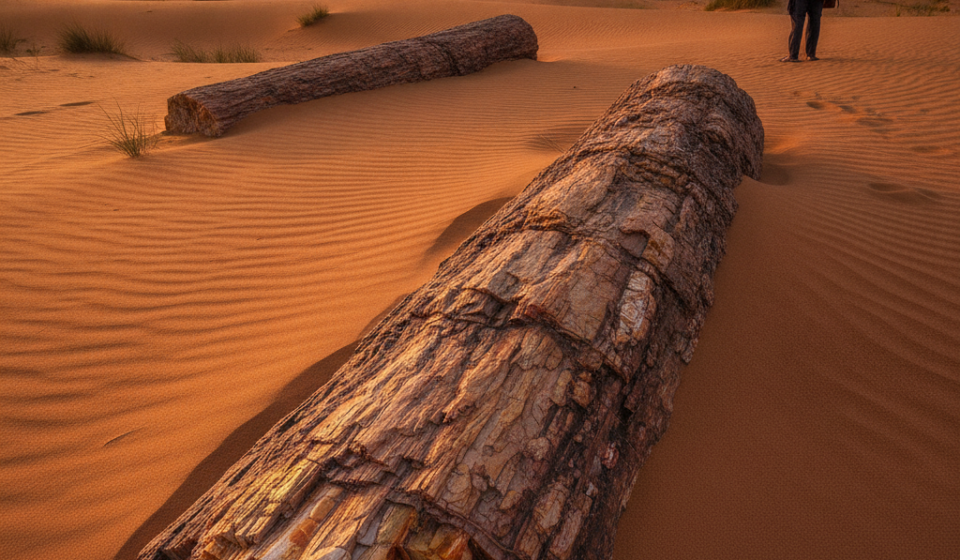

India’s geological record spans over three billion years, offering an extraordinary window into the history of life on Earth. While historic temples, forts, and royal palaces typically dominate tourist itineraries, the nation also houses ancient biological archives preserved in stone. Long before humans walked the subcontinent, colossal sauropods roamed central India, and vast prehistoric forests covered what are now arid deserts. Today, travelers can explore this deep history firsthand by visiting a fossil park in india. These protected sites safeguard rare petrified wood, prehistoric marine specimens, and dinosaur nesting grounds. They are basically physical archives of a bygone era.
Key Takeaways
- Rich Geological History: India houses diverse fossil deposits ranging from 180-million-year-old Jurassic wood to mammalian fossils from the Ice Age.
- Major Sites: Key locations include Mandla, Shivalik, Tiruvakkarai, Akal, Indroda, and Ghughua.
- Indroda Dinosaur Park: Renowned as one of the largest dinosaur egg nurseries globally.
- Travel Planning: Ideal visiting times are the cooler winter months, and collecting fossils is strictly prohibited.
The Geologic Legacy: Why India is a Fossil Goldmine
The Indian landmass was not always located where it sits today. Millions of years ago, it formed part of the southern supercontinent known as Gondwanaland, alongside Antarctica, South Africa, Australia, and South America. When this massive tectonic plate drifted northward and collided with the Eurasian plate, the dramatic impact folded the earth to form the mighty Himalayas. This immense geologic movement trapped ancient marine life, prehistoric flora, and massive fauna in successive rock layers. For any scientific observer, visiting a fossil park in india provides a tangible connection to this monumental tectonic journey. Critics might argue that fossils are mere stones. But still, they hold the exact physical map of our drifting continents.
The country’s unique stratigraphic record contains some of the world’s most significant fossil finds. From the Mesozoic dinosaur nesting sites of Gujarat to the Tertiary plant remains in Madhya Pradesh, the sheer variety of preserved life is staggering. Many of these sites remain untouched, offering pristine opportunities for researchers and casual travelers alike. To preserve these fragile geological treasures (a complex task for any administrative body), the Geological Survey of India (GSI) has designated several locations as National Geological Monuments. When planning an educational trip, choosing a fossil park in india allows one to witness these ancient wonders in their natural, preserved settings. Each designated fossil park in india serves as a vital repository of our planet’s shared evolutionary timeline.
Top Fossil Parks in India to Visit
Across the Indian subcontinent, specific geographical pockets serve as exceptional evolutionary archives. Each site tells a distinct story, whether of ancient tropical rainforests, inland lakes, or prehistoric coastal zones. Travelers seeking an unconventional holiday experience that blends history, science, and nature can find highly specialized reserves scattered across several states. Here is a comprehensive guide to the most prominent options for exploring a fossil park in india.
Mandla Plant Fossils National Park, Madhya Pradesh
Located in the Mandla district of Madhya Pradesh, this unique reserve is home to some of India’s most stunning plant specimens. The fossils found here date back to the late Cretaceous period, approximately 65 million years ago. During this epoch, a massive volcanic event known as the Deccan Traps erupted across central India, burying lush coastal forests in layers of volcanic ash and silica-rich water. This sudden burial prevented decay, allowing silica to slowly replace the organic plant tissues over millennia, resulting in petrified wood.
Visitors to this fossil park in india can discover a wide array of botanical treasures. Key attractions and features include:
- Petrified Plant Specimens: Highly detailed remains of ancient palms, banana plants, and gymnosperms dating back 65 million years.
- Microscopic Cellular Detail: Structures preserved so perfectly that their cellular architecture is visible under magnification.
- Informative Exhibition Center: A systematic display of petrified seeds, fruits, and massive tree trunks.
- Taphonomy Studies: Real-world examples of how organic matter turns to stone via silica replacement.
For travelers exploring central India, adding this destination to their itinerary provides deep context to the region’s ancient tropical history. Exploring such remote destinations is made simple with curated domestic tour packages that cover transportation and local expert guides. Selecting this particular fossil park in india guarantees an eye-opening look at prehistoric botanical diversity.
Shivalik Fossil Park, Himachal Pradesh
Situated in the Sirmaur district of Himachal Pradesh (often referred to as Suketi Fossil Park), this site is a monument of global paleontological significance. The Shivalik hills are famous for yielding an abundant collection of mammalian fossils from the Pliocene and Pleistocene epochs. During these periods, roughly 2.5 million years ago, the region was characterized by warm, wet lowlands inhabited by diverse mammalian species. When these animals died near riverbeds, their bones were covered by sediment, eventually turning to stone.
What makes this fossil park in india unique is its life-sized fiberglass models of extinct prehistoric giants. Visitors can view detailed representations of:
- Colossochelys atlas: An incredibly massive prehistoric giant land tortoise.
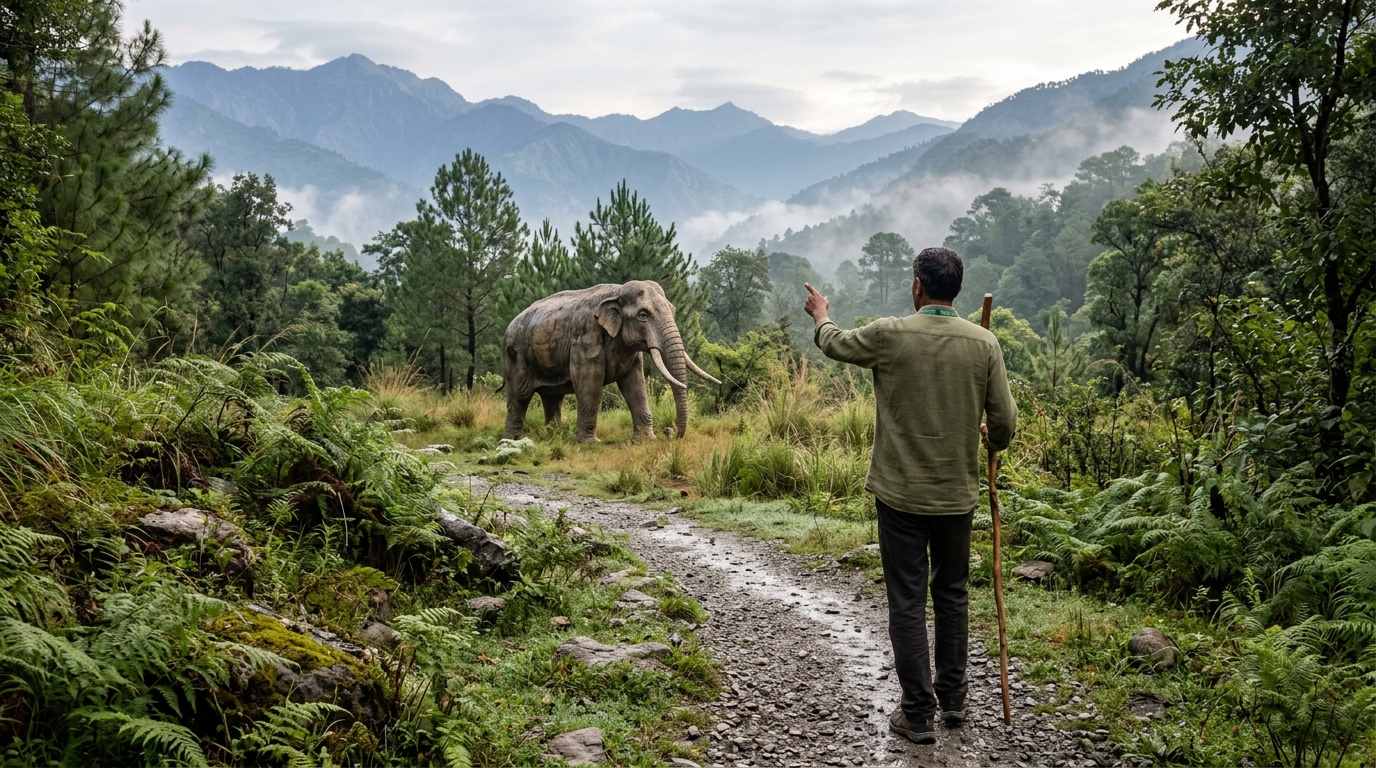
- Stegodon ganesa: An ancient, tusked elephant ancestor that once roamed the region.
- Saber-Toothed Cats: Formidable predators that dominated the mammalian food chain.
Additionally, the on-site museum houses an impressive collection of authentic skulls, teeth, and limbs recovered from the surrounding hills. It represents a vital educational stop for families, students, and anyone interested in the mammalian evolution of the Indian subcontinent. It is easily accessible via the scenic foothills of Himachal, making it an excellent addition to a north Indian holiday. A tour of this fossil park in india delivers unmatched educational insights.
National Fossil Wood Park, Tiruvakkarai, Tamil Nadu
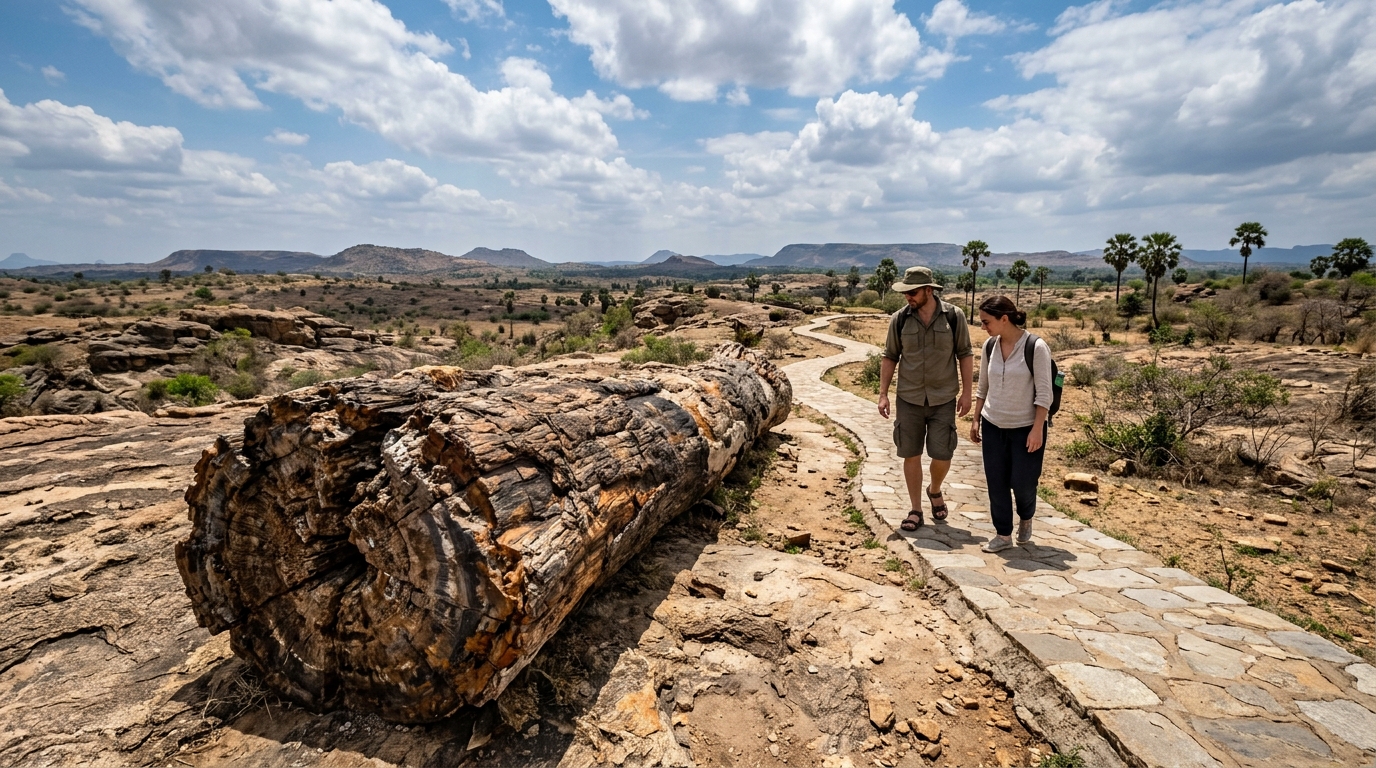
Tiruvakkarai in Tamil Nadu is home to a spectacular display of fossilized wood that dates back to the Mio-Pliocene epoch, approximately 20 million years ago. This geologic reserve, managed by the Geological Survey of India, features massive petrified tree trunks scattered across a barren landscape. Geologists believe that ancient rivers transported these giant trees from nearby forests to their current location during a massive prehistoric flood. Over time, the trees were buried under sand and clay, leading to a slow process of petrification.
The site showcases over 200 petrified logs, some of which measure up to 30 meters in length and 1.5 meters in diameter. Walkways allow visitors to observe these ancient trunks up close, noticing how the wood has transitioned into beautiful, colored silica that resembles hard rock. For travelers who find themselves in southern India, visiting this fossil park in india is a highly rewarding day trip. It lies near Villupuram, just a short drive from the popular tourist hub of Puducherry, blending effortlessly with coastal holiday plans. Touring this Southern fossil park in india reveals the hidden geological treasures of the Deccan plateau.
Akal Wood Fossil Park, Jaisalmer, Rajasthan
Deep within the Thar Desert of Rajasthan, near the golden city of Jaisalmer, lies a barren, wind-swept landscape containing proof of a vastly different past. Akal Wood Fossil Park stands as silent evidence that the arid desert was once a warm, humid, tropical forest. It was basically a coastal environment bordered by a primeval ocean. The fossilized wood specimens found here date back to the Jurassic period, roughly 180 million years ago. During this era, giant gymnosperms and non-flowering plants thrived in a coastal environment.
The park covers a vast area where massive, petrified tree trunks lie partially exposed on the desert floor. Highlights of this ancient site include:
- Visible Growth Rings: Tree trunks displaying clear growth lines that reveal the climatic cycles of the Jurassic era.
- Mineralized Wood Fibers: Organic wood tissues that have transformed over millions of years into solid jasper and chalcedony.
- Primeval Climate Evidence: Clear geological proof that the arid Thar Desert was once a lush, coastal, tropical forest bordered by an ocean.
Visiting this fossil park in india provides a stark, beautiful contrast to the typical sand dunes and palaces of Rajasthan. It is an ideal addition to a custom Rajasthan tour, easily reached by travelers staying in Jaisalmer. Those interested can browse specialized itineraries via our Jaisalmer travel guide to plan a seamless trip to this desert wonder. Including this iconic fossil park in india in travel plans guarantees a unique experience.
Indroda Dinosaur and Fossil Park, Gujarat
Often referred to as India’s Jurassic Park, the Indroda Dinosaur and Fossil Park in Gandhinagar, Gujarat, is one of the largest dinosaur nurseries in the world. Spread across the banks of the Sabarmati River, this extensive reserve contains an incredible collection of fossilized dinosaur eggs and bones. Paleontologists working in the region have unearthed nests belonging to the Cretaceous period, showing that Gujarat was a major habitat for these massive reptiles.
The park features an open-air exhibition divided into various sections, including a dinosaur section, a fossil section, and a botanical garden. Visitors can view fossilized eggs of the Rajasaurus narmadensis, a predatory dinosaur that once roamed the Narmada River valley. The sheer size and preservation quality of these dinosaur nests are genuinely remarkable. Anyone seeking to understand the reptilian history of the subcontinent will find this fossil park in india to be an absolute treasure trove. The site is highly educational, making it a favorite destination for student groups, nature enthusiasts, and curious travelers visiting Gujarat. Spending a day at this specialized fossil park in india offers unparalleled insights into prehistoric life.
Ghughua Fossil Park, Madhya Pradesh
Situated in the Dindori district of Madhya Pradesh, Ghughua Fossil Park is another magnificent reserve dedicated to prehistoric plant life. Established in 1970, this park houses well-preserved fossils of plants, leaves, fruits, and seeds that lived between 65 million and 67 million years ago. The discovery of these specimens has helped scientists piece together the historical geography of India, revealing that the region once shared a climate similar to modern-day Australia and Africa.
Among the most remarkable discoveries at Ghughua is the fossil of a eucalyptus tree, which is a plant species now native to Australia. This find suggests that the Indian plate was once geographically closer to other southern landmasses before its long journey north. Visitors can walk through the well-maintained pathways to see petrified palm trees and ancient conifers. Choosing to visit this fossil park in india offers a rare chance to see how continents have drifted and how climates have dramatically transformed. It represents an exceptional scientific stopover for anyone traveling between the famous national parks of Kanha and Bandhavgarh. A stop at this remote fossil park in india will enrich any wildlife safari itinerary.
Comparing India’s Premier Fossil Destinations
To help travelers plan their journey through deep time, a direct comparison of these key geological reserves is helpful. Each park offers a unique window into a specific geological era, showcasing different types of prehistoric life. The table below summarizes the key details of each prominent fossil park in india.
| Fossil Park | Location | Geological Era | Primary Fossil Type | Estimated Age |
|---|---|---|---|---|
| Mandla Plant Fossils Park | Madhya Pradesh | Late Cretaceous | Petrified tree trunks, seed, and fruit fossils | 65 Million Years |
| Shivalik Fossil Park | Himachal Pradesh | Pliocene-Pleistocene | Vertebrate fossils (mammals, reptiles) | 2.5 Million Years |
| National Fossil Wood Park | Tamil Nadu | Mio-Pliocene | Petrified wood logs of conifers and palms | 20 Million Years |
| Akal Wood Fossil Park | Rajasthan | Jurassic | Petrified tree trunks and marine fossils | 180 Million Years |
| Indroda Dinosaur Park | Gujarat | Cretaceous | Dinosaur eggs, bones, and fossilized nests | 66 Million Years |
| Ghughua Fossil Park | Madhya Pradesh | Late Cretaceous | Eucalyptus, palm, and ancient plant fossils | 66 Million Years |
This comparative view highlights the diverse evolutionary history preserved across the subcontinent. From the ancient Jurassic forests of Rajasthan to the mammalian giants of Himachal Pradesh, each fossil park in india provides a unique educational experience. Deciding which site to visit depends largely on whether one is fascinated by plant petrification or the skeletal remains of dinosaurs and prehistoric mammals. Regardless of personal preference, visiting an established fossil park in india promises an engaging journey into earth sciences.
What to Know Before You Visit a Fossil Park in India
Exploring these delicate geological reserves requires a different mindset than visiting standard wildlife parks or historical monuments. These sites protect irreplaceable scientific resources that have survived for millions of years. Understanding the local guidelines and preparation steps ensures a rewarding and responsible visit to any fossil park in india.
First and foremost, visitors must remember that fossil extraction or collection is strictly prohibited by law. These sites are protected under the Geological Survey of India and local state forest departments. Taking even a tiny fragment of petrified wood as a souvenir damages the integrity of the site and can lead to severe legal penalties. Instead, travelers are encouraged to take high-quality photographs and purchase replica models from authorized park souvenir shops if available. Preserving each fossil park in india remains a collective global responsibility.
Additionally, many of these parks are located in remote, arid, or semi-arid regions where summer temperatures can become extreme. For instance, Akal Wood Fossil Park in Rajasthan experiences intense heat during the summer months, making the winter season (from October to March) the most comfortable time to visit. Similarly, when visiting a fossil park in india, wearing sturdy walking shoes, carrying plenty of drinking water, and using sun protection are essential, as most pathways are open-air and require extensive walking. Ensuring adequate preparation before traversing these expansive outdoor reserves prevents discomfort and allows visitors to focus entirely on the ancient natural history around them.
To maximize the educational value of the visit, hiring a local certified guide is highly recommended. Many of these parks feature subtle geological formations that are easy to overlook without expert assistance. A knowledgeable guide can point out delicate leaf impressions, growth rings in petrified wood, or small bone fragments embedded in rock layers that an untrained eye would miss. This small investment transforms a simple walk into an immersive journey through deep geological time, reinforcing why every designated fossil park in india is so scientifically valuable.
- Do Not Touch or Remove Specimen Fragments: Always respect the preservation boundaries and keep all fossils exactly where they lie.
- Plan Your Visit Around the Weather: Opt for cooler winter months, particularly when visiting desert or central Indian locations.
- Wear Proper Footwear: Expect rough, unpaved gravel paths and dusty trails that require closed-toe walking shoes.
- Hire a Local Certified Guide: Gain professional insights into the stratigraphic layers and fossil structures that are otherwise hard to spot.
- Support the Local Economy: Buy educational books, guides, or approved replicas from the official visitor centers to help fund ongoing preservation efforts.
By adhering to these simple practices, travelers can help ensure that each precious fossil park in india remains intact for future generations of scientists, students, and curious explorers.
FAQs
To assist in planning a trip to these ancient reserves, here are answers to some of the most frequently asked questions regarding a fossil park in india.
What is the oldest fossil park in India?
While several sites claim incredible antiquity, Akal Wood Fossil Park near Jaisalmer is one of the oldest, featuring plant remains from the Jurassic period that are roughly 180 million years old. For visible, macro-sized wood fossils, this desert-based fossil park in india stands as a premier historic destination.
Are there dinosaur fossils in India?
Yes, India has rich deposits of dinosaur remains, particularly in Gujarat. Indroda Dinosaur and Fossil Park is famous for its collection of fossilized eggs, nests, and skeletal reconstructions. Visiting a fossil park in india that features these reptilian relics provides an unforgettable look into the Mesozoic era.
How can I visit Akal Wood Fossil Park?
Akal Wood Fossil Park is located approximately 17 kilometers from the city of Jaisalmer in Rajasthan. It is easily accessible by hiring a private taxi or driving along the Jaisalmer-Barmer highway. Since the park is situated within a dry desert environment, the best time to visit is during the cooler months from October to March. This makes accessing this famous desert-based fossil park in india straightforward for all visitors.
Is fossil collection allowed in these parks?
No, collecting or removing fossils of any size is strictly illegal at any fossil park in india. These geological monuments are strictly protected under federal and state conservation laws. Any unauthorized removal of petrified wood, bone fragments, or sedimentary rocks is subject to heavy fines and legal prosecution. Safeguarding each designated fossil park in india ensures that these rare remnants of life are preserved for future research.