
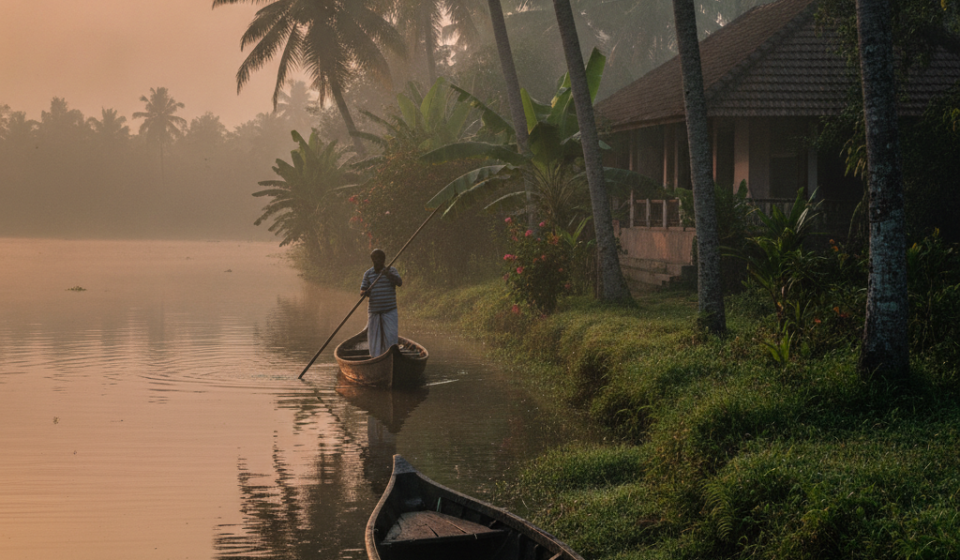

The global shift toward mindful travel has exposed a growing fatigue with overcrowded monuments and standardized resort corridors. Instead, discerning travelers are redirecting their attention to the quiet rhythms of agrarian life, where ancient traditions remain integrated into daily existence. Engaging with rural tourism in india is no longer just a trend for the alternative explorer. It represents a profound shift toward authentic cultural exchange, offering a direct window into the craft heritages, culinary legacies, and communal values that define the sub-continent. By stepping off the metalled highways and into the unpaved lanes of regional settlements, one experiences a version of the country that has remained largely untouched by the rapid pace of urban development. This is not about superficial sightseeing. It is basically an immersion into a lifestyle where community welfare and environmental balance are prioritized over commercial gain. This engagement acts as a bridge between two worlds, helping modern urbanites reconnect with raw agricultural production and the essential natural resources that sustain human civilizations.
Key Takeaways:
- Deep Cultural Immersion: Step away from commercial zones to experience authentic heritage, arts, and unhurried regional lifestyles.
- Socioeconomic Impact: Direct traveler spending supports local homestays, cooperatives, and women-led micro-enterprises.
- Ecological Stewardship: Learn valuable lessons in traditional conservation, biodiversity preservation, and eco-friendly architecture.
- Personal Well-being: Enjoy a natural digital detox while aligning with peaceful agricultural routines and farm-to-table dining.
The Rise of Rural Tourism in India
The historical structure of tourism on the sub-continent has traditionally centered on major monument corridors and coastal retreats. However, the development of rural tourism in india represents a vital development in how global visitors perceive the country. This shift is supported by government initiatives designed to diversify the travel sector beyond metropolitan hubs. As highlighted in a report by the Ministry of Tourism, rural initiatives act as a primary driver for local economic growth, helping to redistribute wealth to agrarian districts. This framework encourages community-owned cooperatives to establish homestays, curate workshops, and manage guided walks, converting agricultural settlements into self-sustaining cultural destinations. This systematic development is often coordinated by regional tourism boards, which provide marketing grants and technical assistance to family-owned ventures, ensuring that the influx of travelers aligns with local carrying capacities.
The growth of rural tourism in india is closely linked to a rise in sustainable travel. Critics sometimes argue that inviting visitors into remote settlements can dilute local traditions. They are not entirely wrong, but structured community management ensures that the growth of rural tourism in india protects fragile ecosystems while channeling economic benefits directly to local residents. Modern travelers seek genuine interactions that offer educational value and emotional resonance, finding that the isolation of traditional settlements has preserved ancestral customs that have faded from urban centers.
Those who engage in rural tourism in india find that the slower pace of life fosters a profound sense of personal well-being. This therapeutic journey offers several restorative advantages:
- Rejuvenating Daily Routines: Aligning with natural daylight and the quiet pacing of agricultural life helps re-establish circadian rhythms.
- Organic Food Systems: Enjoying fresh, local, farm-to-table meals free from processed additives or chemical preservatives.
- Digital Detoxification: Escaping constant connectivity and sensory overload to cultivate deep mindfulness in a serene environment.
Key Benefits of Engaging in Village Tourism
The economic impact of rural tourism in india is highly significant for local communities. When travelers stay in community-run lodges, their expenditure directly supports local livelihoods. As reported by the World Bank, roughly 64% of India’s population continues to reside in rural areas (depending on how municipal boundaries are classified), which underlines the importance of creating diverse income streams beyond basic agriculture. By establishing tourism infrastructure, villages can mitigate the challenges of seasonal unemployment, reducing the pressure on youth to migrate to overcrowded urban centers. This financial model bypasses commercial intermediaries, placing the control of tourism revenues directly into the hands of village committees (often referred to as village panchayats), creating a self-determining economic environment that fosters community pride.
Cultural preservation acts as another core pillar of rural tourism in india. Many traditional crafts struggle to survive in an industrialized market. However, when visitors show interest in these techniques, it provides both financial incentive and cultural pride to local artisans. This dynamic ensures that complex ancestral skills are passed down to younger generations rather than being lost to history. It is basically a sustainable ecosystem where heritage conservation is funded directly by visitor interest. The practice of rural tourism in india acts as an active preservation mechanism that validates the identity of rural communities.
When evaluating rural tourism in india, travelers must also recognize the environmental benefits. Community-led initiatives often prioritize conservation, as local guides understand that their livelihoods depend on maintaining pristine natural environments. From organic farming to the preservation of sacred groves, these programs encourage ecological stewardship. Visitors learn valuable lessons in resource efficiency and living in balance with local flora, demonstrating that conservation can be economically viable. Through mutual respect, rural tourism in india successfully bridges the gap between urban sophistication and rural wisdom, proving that sustainable development is a shared human journey.
Top Regions for Authentic Rural Experiences
The geographic diversity of rural tourism in india is immense, with each province presenting distinct cultural identities, culinary profiles, and architectural styles. To appreciate the full breadth of these experiences, travelers should consider the unique regional offerings across the sub-continent.
Northern India: Heritage and High-Altitude Homesteads
Northern regions present unique opportunities for rural tourism in india, ranging from high-altitude Himalayan hamlets to historic estate villages in Rajasthan. In the mountains, places like Pragpur in Himachal Pradesh demonstrate how traditional slate-roofed architecture can be preserved while providing heritage hospitality. Further west, artisanal heritage is a cornerstone of rural tourism in india in Rajasthan. In rural areas surrounding Jaipur, communities practice ancient block-printing, pottery, and hand-weaving, many of which hold Geographic Indication (GI) status (a legal protection for authentic regional crafts). Staying in these heritage-rich settlements allows travelers to participate in workshops led by master craftspersons, providing a deep understanding of historical trade routes. Additionally, high-altitude Ladakh homestays provide an essential look into local resilience, offering dry-land farming lessons and warm mountain hospitality, which highlights the social importance of rural tourism in india in remote mountainous terrains.
Western India: Salt Deserts and Tribal Crafts
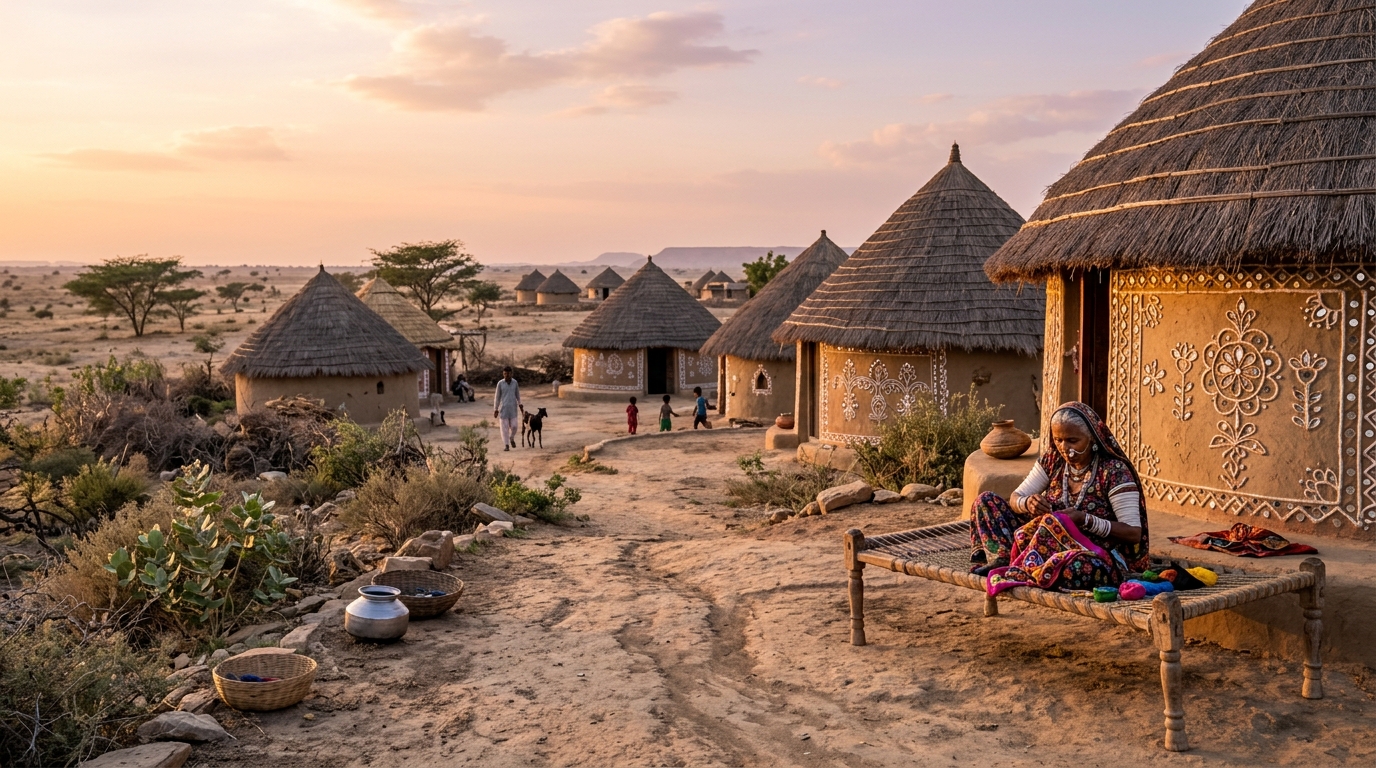
Western territories also demonstrate the power of community-based travel, particularly in the arid stretches of Gujarat. The communities involved in rural tourism in india within Gujarat, especially around the Rann of Kutch, have gained international recognition for their intricate embroidery. Villages like Hodka invite visitors to stay in traditional mud-brick huts (locally called bhungas) which are naturally insulated against the extreme desert climate. These visits provide direct access to craft cooperatives managed entirely by local women. By purchasing textiles directly from these artisans, travelers bypass intermediaries, ensuring that the financial benefits remain within the community. Thus, rural tourism in india in the western corridor serves as an essential economic vehicle for female advancement.
Southern India: Spice Plantations and Backwater Life
Southern states have pioneered structured models for rural tourism in india, focusing on ecological harmony and agricultural heritage. In Kerala, the backwater settlement of Kumarakom serves as an exemplary model of sustainable community tourism. Here, travel initiatives are closely tied to traditional occupations such as backwater fishing, coir-making, and organic spice cultivation. This approach demonstrates how rural tourism in india can merge with conservation efforts. Visitors can traverse calm water networks in traditional non-motorized canoes, stay in eco-friendly ancestral homes, and dine on organic local meals. This holistic experience has made the southern model of rural tourism in india highly regarded globally, arguably serving as the benchmark for low-impact travel on the sub-continent. Similarly, in the coffee-growing highlands of Coorg, homestays nestled within spice plantations offer a look into estate life, showcasing how travel can protect delicate ecosystems.
Eastern and North-Eastern India: Sacred Forests and Living Root Bridges
North-eastern states offer a pristine environment for rural tourism in india, characterized by strong tribal identities and remarkable ecological practices. In Meghalaya, the village of Mawlynnong has achieved renown for its cleanliness and community-led waste systems. The surrounding forests are home to living root bridges, which are grown over generations from the roots of rubber trees, demonstrating an extraordinary form of bio-engineering. By promoting rural tourism in india in these remote areas, local clans maintain their matrilineal social structures and traditional land conservation. In the eastern plains, villages in West Bengal and Odisha are famous for their artistic traditions. In places like Raghurajpur in Odisha, every household is dedicated to Pattachitra painting, where supporting these artisan villages through rural tourism in india preserves ancient crafts and provides vital livelihoods.
A Comparative Guide to Rural Destinations
The structured expansion of rural tourism in india is detailed across various regions, each offering unique cultural specialties and experiences. To assist travelers in planning their itineraries, the following table compares key regional hubs based on primary activities, ideal seasons, and key attractions. This comparative tool helps visitors align their personal travel preferences with the appropriate regional highlights.
| Region | Representative Villages | Primary Cultural Focus | Optimal Travel Window |
|---|---|---|---|
| Northern India | Pragpur, Lachen | High-altitude farming, woodcarving, heritage architecture | October to March |
| Western India | Hodka, Nagoor | Intricate embroidery, pottery, desert safaris | November to February |
| Southern India | Kumarakom, Aranmula | Coir weaving, backwater fishing, organic farming | September to March |
| Eastern India | Pipli, Mawlynnong | Applique work, living root bridge treks, waste management | October to April |
This comparative breakdown illustrates how the diverse nature of rural tourism in india allows for different types of engagement depending on the season and traveler interests. Whether one is drawn to the high-altitude heritage of the north or the aquatic rhythms of the south, the opportunities for deep cultural integration are abundant. Each province provides a distinct window into the nation’s layered heritage, making multiple visits highly rewarding.
What to Expect: Daily Life in an Indian Village
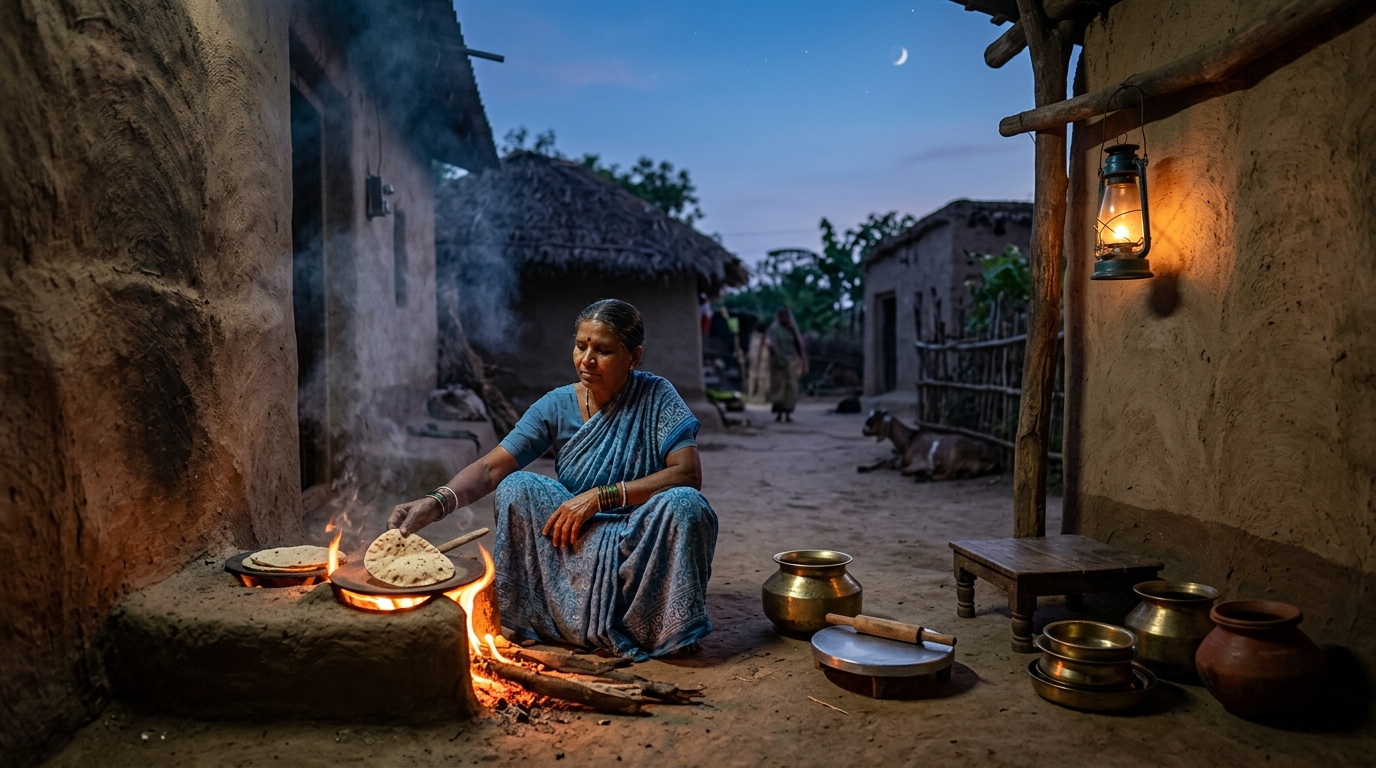
Understanding daily activities enhances the value of rural tourism in india, helping visitors transition from passive observers to active participants. Daily life in these agricultural communities is structured around natural light and seasonal demands. Mornings typically begin at dawn, marked by the preparation of traditional hearths and the tending of livestock. Travelers are often invited to participate in these early activities, gaining practical insight into rural food production systems. This immediate connection to the land is a rare privilege for those accustomed to urban environments, offering a grounded perspective on resource consumption.
Participating in local chores makes rural tourism in india truly memorable. Depending on the region, guests can actively participate in daily tasks:
- Agricultural Activities: Milking cows, feeding livestock, or tending to seasonal organic vegetable patches.
- Artisanal and Craft Making: Learning to spin clay on a potter’s wheel or practicing traditional handloom weaving techniques.
- Culinary Practices: Preparing local recipes using stone-ground spices on rustic firewood stoves.
Evenings are generally reserved for communal gatherings. In many villages, community members gather in central courtyards to share folklore, perform traditional music, or discuss local affairs. But still, the impact of television and mobile networks is visible in some areas, making these traditional gatherings even more vital to preserve. These informal gatherings offer a rare opportunity for travelers to engage in direct dialogue with elders, learning about the community’s history, social structures, and plans for the future. It is a slow, meaningful form of engagement that emphasizes human connection over digital distraction, showcasing the true essence of rural tourism in india.
Guidelines for Responsible and Ethical Village Travel
The long-term viability of rural tourism in india depends entirely on the behavior of its visitors. Because these destinations are living communities rather than commercial theme parks, travelers must approach them with a high degree of sensitivity and respect. Simple choices can dictate whether a visit has a positive or negative impact on the host population. It is critical to recognize that visitors are guests in private spaces (and often in multi-generational family homes where multiple families live together).
Responsible travelers who choose rural tourism in india must observe several core principles to preserve local dignity:
- Prioritize Cultural Decorum: Dress conservatively, aligning with local norms. This typically means covering shoulders and knees, particularly when entering homes or religious structures.
- Request Permission: Always ask before photographing individuals, particularly children, religious ceremonies, or private residences. Respecting personal privacy is fundamental.
- Minimize Waste: Many remote villages lack advanced municipal waste disposal systems. Travelers should carry reusable water bottles and pack out any non-biodegradable waste.
- Support Local Economy Directly: Purchase handicrafts directly from creators at fair prices rather than aggressive bargaining, which can undermine the artisan’s livelihood.
Ethical standards dictate that rural tourism in india should respect local hierarchies and social structures. Visitors should seek to understand regional customs rather than imposing external expectations. By acting as respectful guests, travelers help foster a welcoming environment that ensures these villages remain open to future cultural exchanges. This respectful exchange is the foundation of sustainable travel, ensuring that tourism acts as a positive force for social cohesion rather than disruption.
Planning Your Rural India Journey
Proper preparations before embarking on rural tourism in india ensure a safe, comfortable, and mutually beneficial experience. Unlike standard domestic travel options, visiting remote settlements requires a flexible mindset and thorough planning. Accommodations in these areas are generally simple, focusing on cleanliness and hospitality rather than luxury amenities. Travelers should expect shared facilities, traditional bedding, and simple home-cooked meals. This simplicity is part of the charm, encouraging travelers to appreciate the local way of living. Additionally, arranging local transportation, such as hiring village-based guides or using regional bus networks, contributes directly to the village economy and provides a more authentic commute.
To ensure your planning matches real-world realities, consult this quick pre-departure preparation checklist:
| Category | Preparation Details | Essential Items to Carry |
|---|---|---|
| Health & Hygiene | Ensure up-to-date vaccinations and carry custom medical kits | Personal medication, insect repellent, water purification tablets |
| Cultural Decorum | Pack clothes that cover shoulders and knees | Modest cotton clothing, easy-to-remove slip-on shoes |
| Cash & Connectivity | Prepare for low mobile signals and lack of ATMs | Sufficient physical INR cash, pre-downloaded offline maps |
| Waste Control | Minimize your plastic and non-biodegradable footprint | Reusable water bottles, metal straws, small waste disposal bags |
Safeguarding your health while exploring rural tourism in india involves drinking only filtered or boiled water, packing essential medications, and securing comprehensive travel protection. It is highly recommended to secure reliable travel insurance prior to departure, especially when visiting areas far from major urban medical facilities. Having this safety net allows you to immerse yourself fully in the experience without unnecessary worry, knowing that any medical contingencies are fully covered.
The future of rural tourism in india lies in balanced, thoughtful growth that honors the country’s ancient heritage while providing modern opportunities for its rural citizens. For those willing to step outside their comfort zones, the rewards are immense. Ultimately, rural tourism in india offers an unmatched perspective on the nation’s true character, proving that the heart of India is found not in its gleaming skyscrapers, but in its quiet, enduring villages. Participating in this model of travel is not simply a leisure choice, but a conscious act of cultural appreciation and preservation. By choosing to walk these unpaved paths, travelers play an active role in keeping these traditions alive for generations to come.