
Beneath the fractured tectonic plates of the Indian subcontinent lies an immense network of geothermal energy. For thousands of years, this subterranean heat has forced mineral-saturated water up through the earth’s crust, forming some of the most remarkable hot springs in india. While modern wellness resorts often rely on synthetic treatments and artificial heating, these ancient thermal pools offer something entirely different. They provide natural, mineral-rich thermal therapy that has healed weary travellers since antiquity. From the snow-capped passes of Ladakh to the forested valleys of Maharashtra, these natural basins serve as vital community hubs, sacred pilgrimage points, and ancient wellness sanctuaries. Exploring these geological phenomena offers an opportunity to connect with the raw geological forces of the earth while experiencing time-tested physical rejuvenation.
Key Takeaways
- Geothermal Abundance: India’s tectonic activity fuels spectacular, mineral-dense geothermal springs across diverse landscapes.
- Balneotherapeutic Benefits: Natural minerals like sulfur, silica, and lithium help alleviate muscle aches, joint pains, and skin ailments.
- Diverse Regions: Acclaimed wellness sanctuaries are scattered throughout the northern Himalayas, northeastern forests, and western plains.
- Safety & Etiquette: Short soaking times (15 to 20 minutes) and deep hydration are essential to enjoy these springs safely.
The Science and Legend of Thermal Waters in India
The scientific study of these mineral springs reveals that geothermal heat is not merely a geological accident. It is basically the result of deep crustal mechanics, where groundwater percolates deep into the earth, gets superheated by magma or hot rocks, and then rises back to the surface through faults and joints. These geothermal springs are powered by the geothermal gradient, which is the rate of increasing temperature with respect to increasing depth in the Earth’s interior. As the water travels back upward, it dissolves surrounding rock minerals, absorbing high concentrations of minerals:
- Sulfur: Fights skin infections and reduces stubborn joint inflammation.
- Silica: Enhances skeletal strength and promotes cell regeneration.
- Lithium & Calcium: Calms the nervous system and relieves persistent muscular tension.
This specific biochemical makeup forms the foundation of balneotherapy, which is the scientific term for treating health conditions through mineral baths.
But still, science only tells half the story when it comes to the geological distribution of hot springs in india. For centuries, local communities have viewed these thermal pools through a lens of spiritual reverence. Ancient legends surrounding hot springs in india often attribute their creation to great sages or divine interventions. For instance, many scriptures describe how deities created these thermal basins to provide warmth and healing to pilgrims in otherwise uninhabitable, freezing mountain environments. This blend of scientific reality and mythological heritage makes the study of these thermal systems incredibly compelling. In this comprehensive guide, we will uncover the most rejuvenating hot springs in india to help plan an informed, therapeutic journey across the subcontinent.
Prime Therapeutic Hot Springs in Northern India
The northern region of India, dominated by the majestic Himalayan range, contains some of the most active geothermal fields on the continent. The collision of the Indian and Eurasian tectonic plates has created deep fissures that allow superheated water to ascend rapidly. For travellers seeking both physical recovery and dramatic mountain views, visiting the legendary hot springs in india located within these northern valleys is an unparalleled experience.
| Thermal Site | State / UT | Approx. Elevation | Estimated Temp Range | Key Features & Mineral Profile |
|---|---|---|---|---|
| Manikaran | Himachal Pradesh | 1,760 m | 85°C – 95°C | Highly radioactive, heavy sulfur, adjacent to Parvati River |
| Vashisht | Himachal Pradesh | 2,050 m | 43°C – 49°C | Rich in lithium and calcium, stone temple bath houses |
| Panamik | Ladakh | 3,100 m | 65°C – 80°C | Extremely high sulfur, scenic Nubra Valley setting |
| Chumathang | Ladakh | 3,900 m | 90°C – 95°C | Bubbling riverbed vents, rich in borate and sodium |
| Tapt Kund | Uttarakhand | 3,133 m | 45°C | Saturated with sulfur, sacred pre-temple ritual bath |
Manikaran, Himachal Pradesh
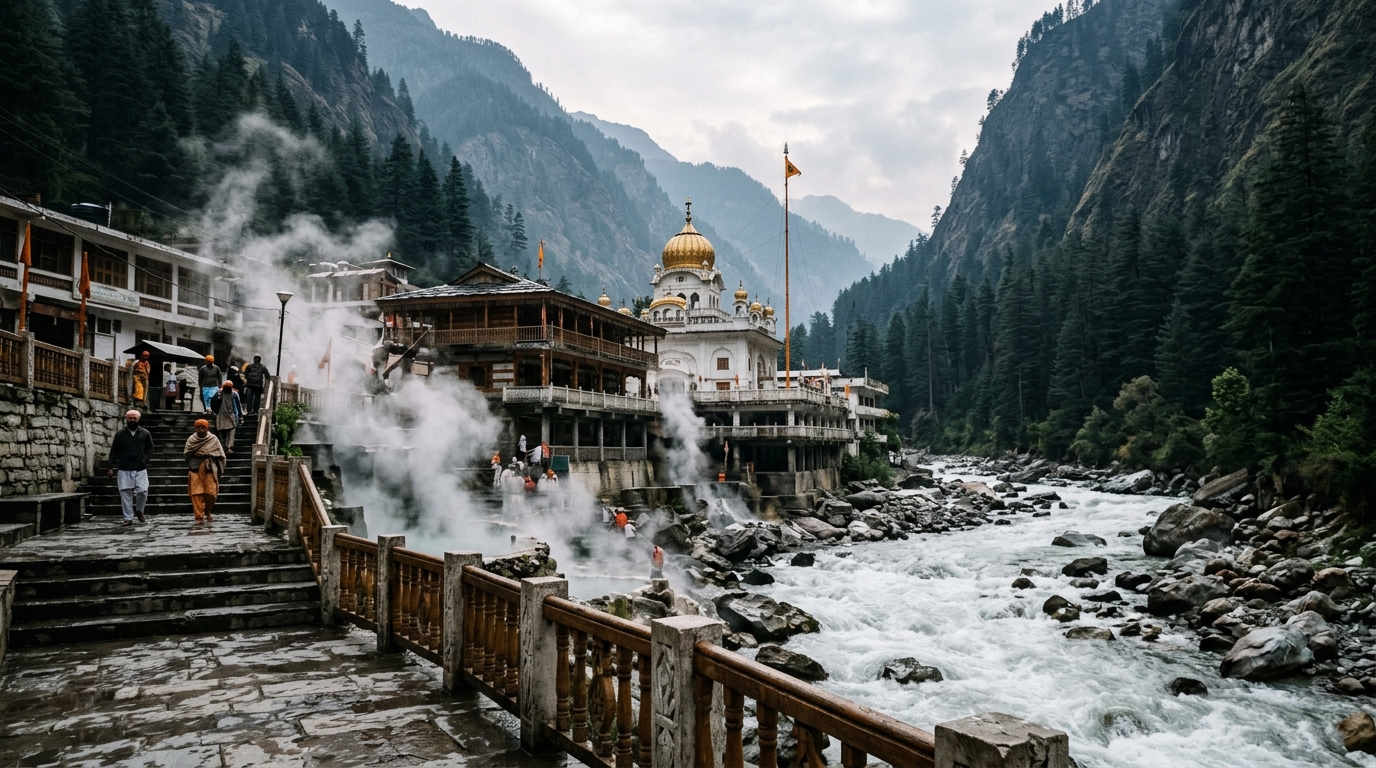
Situated in the Parvati Valley at an altitude of roughly 1,760 metres (depending on the exact measurement point), Manikaran hosts some of the most active hot springs in india. The thermal waters here are so hot that local priests regularly cook rice and pulses directly in the boiling pools as a holy offering. The water is highly radioactive, containing trace amounts of radon and a heavy concentration of dissolved sulfur, which is typical for many sulfur springs in the volcanic zones.
Balneotherapy experts note that the unique mineral composition at Manikaran is highly effective for managing chronic joint pain and skin conditions. Because the main temple pools can be excessively hot, separate baths have been constructed to regulate the temperature for safe public bathing. Given its proximity to Kasol, visitors often stay in the nearby settlement and walk or drive to the springs. For an organized journey, travellers can review Kasol travel packages on TravelDham to coordinate their regional itinerary. The chemical analysis of these mineral springs reveals that the high mineral content remains stable throughout the year, offering consistent therapeutic waters to those who visit.
Vashisht, Himachal Pradesh
Just three kilometres from the bustling town of Manali lies the quiet village of Vashisht, renowned for its ancient stone temples and natural hot water springs. The Vashisht thermal spring emerges from a granite rock structure, feeding public bath houses divided into separate sections for men and women. The water temperature ranges between 43°C and 49°C, which is ideal for muscular relaxation.
The water here is rich in lithium, calcium, and sodium, making it highly ranked among the most accessible hot springs in india. Bathing in these waters is believed to alleviate skin diseases and joint stiffness:
- Accessibility: An easy 3 km trip from central Manali.
- Infrastructure: Features dedicated stone public bath houses with segregated facilities.
- Therapeutic Value: Ideal for post-trek recovery due to high lithium and calcium content.
For those staying in the region, Vashisht represents an easy and highly beneficial excursion. Tourists can explore Manali travel packages on TravelDham to find accommodations located close to these healing mineral waters. Managing the thermal profile of the natural hot springs in india requires structured maintenance, and the local temple committee ensures that the Vashisht baths are cleaned daily to preserve their hygienic properties.
Panamik, Ladakh
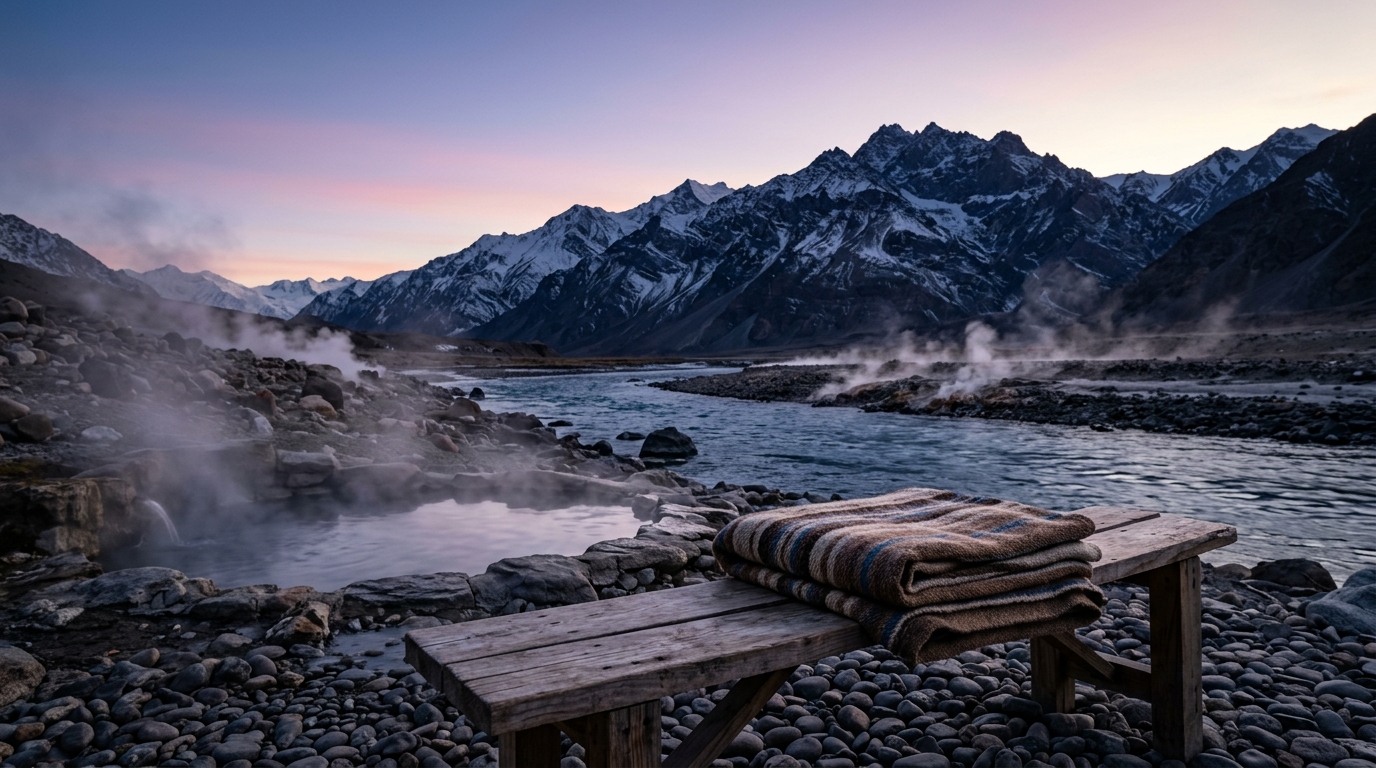
Located in the remote Nubra Valley, Panamik is arguably one of the most northern geothermal sites in the country. Situated at an altitude of over 3,000 metres, this village offers a stark contrast of steaming thermal pools set against snow-covered, barren mountains. The water at Panamik is exceptionally rich in sulfur and silicates, and it flows into a public bathing complex managed by the local administration.
This destination remains one of the most remote hot springs in india. The local population has long relied on these waters to treat rheumatism, skin allergies, and poor blood circulation. To experience these high altitude hot springs in india, travellers must cross the famous Khardung La pass:
- High Altitude Preparation: Requires proper acclimatization due to the 3,000+ meter elevation.
- Unique Landscape: View of cold, arid desert mountains right from the steaming baths.
- Optimal Season: Open primarily from June to September before heavy snowfall blocks regional roads.
The journey is physically demanding (a common challenge in high altitude terrain), but the reward of soaking in therapeutic waters in such an isolated location is unmatched. Due to extreme winter conditions, the ideal time to visit Panamik is between June and September, when the roads are clear and the thermal complex is fully operational.
Chumathang, Ladakh
Further south-east of Leh, along the banks of the cold Indus River, lies Chumathang. Unlike other thermal sites, Chumathang presents a raw, wild picture of geothermal activity. Steam vents rise directly from the riverbed, and the water is so hot that it frequently bubbles and spits at the surface, demonstrating the raw geological power behind hot springs in india.
The local community has constructed simple, functional bathing cubicles to harness the hot water for therapeutic purposes. The springs are highly mineralized, with significant levels of sulfur, borate, and sodium. Medical practitioners in the traditional Tibetan system of medicine, known as Sowa Rigpa, frequently recommend Chumathang for patients suffering from chronic pain and joint inflammation. Analyzing these unique cold climate occurrences of hot springs in india reveals that the water temperature remains remarkably hot even when the ambient air temperature drops far below freezing. This makes Chumathang a fascinating stop for anyone exploring Ladakh’s geological wonders.
Tapt Kund, Uttarakhand
Located just below the sacred Badrinath Temple, Tapt Kund is a natural thermal spring that holds immense spiritual and physical significance. Before entering the temple shrine, pilgrims traditionally bathe in these waters to purify both body and mind. The water temperature hovers around 45°C, providing a comforting warmth in the chilly Himalayan climate.
The purification ritual is integral to the holy nature of hot springs in india. Chemically, the water is saturated with sulfur and calcium, which provides relief from physical exhaustion and muscle pain after a strenuous pilgrimage. For those planning a spiritual journey, Tapt Kund is a central stop on the sacred Char Dham Yatra. Travelers can review comprehensive Char Dham tour packages on TravelDham to organize their pilgrimage efficiently. Understanding the spiritual importance of geothermal hot springs in india helps visitors appreciate how closely nature and faith are intertwined in the Indian subcontinent.
Renowned Mineral Springs of Eastern and Northeastern India
While northern peaks boast intense thermal flows, the eastern and northeastern hot springs in india offer distinct mineral compositions and serene, forested environments. The geology of these regions is characterized by ancient metamorphic rocks and faults that allow mineral-rich water to rise from deep crustal sources.
Bakreshwar, West Bengal
Bakreshwar, located in the Birbhum district, is famous for its multiple thermal springs, each possessing unique physical and chemical characteristics. There are ten individual hot springs here, with Agni Kund being the hottest, maintaining a constant temperature of roughly 80°C. Other springs, such as Surya Kund and Dudh Kund, offer slightly lower temperatures suitable for bathing.
When studying the chemical properties of hot springs in india, Bakreshwar stands out due to the high concentration of helium gas bubbling through the water. As Geological Survey of India reports indicate, the mineral composition here is exceptionally rich in sodium, sulfate, and silicic acid. These elements are highly effective in treating skin diseases and joint stiffness. The surrounding temple complex attracts both wellness seekers and religious devotees, making it unique among the hot springs in india. The local administration has established systematic bathing areas to ensure that visitors can experience the healing properties of these mineral springs in a safe, controlled environment.
Rajgir, Bihar
Rajgir, an ancient city of immense historical and religious importance, is home to several hot springs located at the foot of the Vaibhava Hills. The water from these springs flows through spout structures carved into stone, feeding separate bathing pools. The temperature of the water ranges from 35°C to 42°C, making it highly comfortable for extended bathing.
The thermal site at Rajgir is one of the oldest recorded hot springs in india:
- Historical Relevance: Visited by religious figures for over two millennia; deeply revered in Buddhist and Hindu texts.
- Gentle Temperatures: Range of 35°C to 42°C permits comfortable, prolonged submersions.
- Stone Spouts: Water is traditionally funneled through carved stone spouts representing holy symbols.
The water is believed to contain therapeutic minerals derived from deep underground rock formations, with a high content of sodium, bicarbonate, and trace minerals. These elements are particularly helpful for curing arthritis, skin allergies, and blood circulation issues. The historical significance and the distinct thermal profile of these hot springs in india draw thousands of tourists annually, making Rajgir a premier destination for historical tourism and geological wellness.
Yumthang Valley, Sikkim
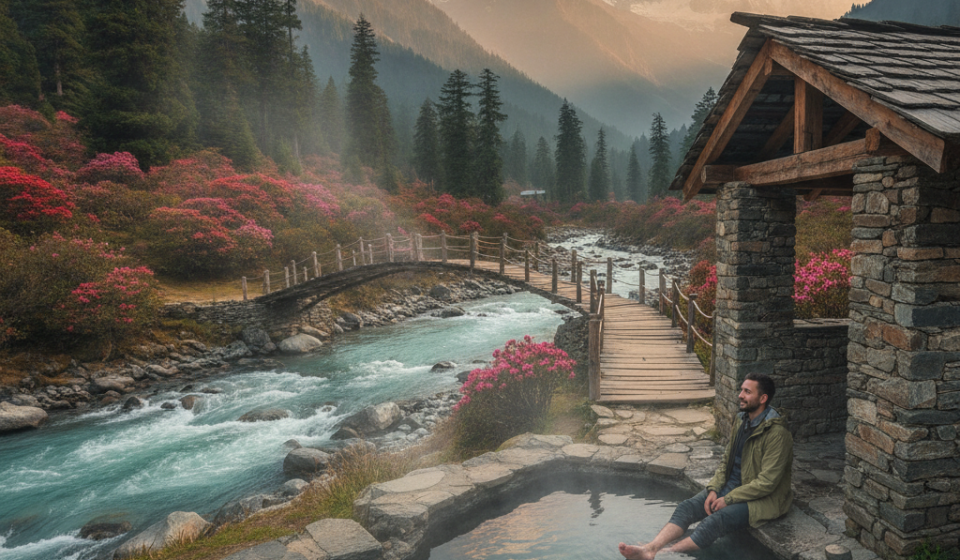
The alpine valley of Yumthang, situated at an altitude of nearly 3,600 metres, is home to a famous thermal spring located just across the pedestrian bridge over the Lachung River. The thermal water is channeled into two covered pools, one for men and one for women, surrounded by breathtaking mountain views.
The stunning natural setting represents a scenic wonder among the high alpine hot springs in india. The water contains high levels of sulfur, which is known to benefit those suffering from skin ailments, bone pain, and joint stiffness. Exploring the geographical reach of natural hot springs in india reveals that Yumthang is highly valued for its pure, undisturbed thermal ecosystem. Visitors should note that because of the high altitude, taking time to acclimate is necessary before attempting a hot dip, as rapid temperature changes can affect blood pressure.
Jakrem, Meghalaya
Located roughly 64 kilometres from the capital city of Shillong, Jakrem is a lesser-known but highly potent thermal site in the northeastern region. The hot spring here is famous for its intense sulfur smell and high mineral concentration, which has led to the development of a health resort around the site.
Jakrem stands out among the eastern hot springs in india as a dedicated wellness sanctuary. The water is exceptionally rich in minerals that help relieve joint pain, muscular aches, and skin disorders. The quiet, green surroundings of the Khasi Hills provide a peaceful atmosphere that enhances the healing process. While some critics argue that the remote locations of these thermal sites make them impractical for average tourists, wellness enthusiasts maintain that the untouched purity and lack of commercial crowds far outweigh the travel effort.
Notable Geothermal Sites in Western and Central India
Transitioning to the western hot springs in india, the geological context shifts from mountain ranges to ancient basaltic plateaus and fracture zones. These sites offer unique thermal experiences that are deeply embedded in regional culture and geology.
Unapdev, Maharashtra
Situated in the Jalgaon district of Maharashtra, near the Satpura hills, Unapdev is a prominent thermal spring that flows through a carved cow-mouth structure (known as a Gomukh) into a communal pond. The temperature of the water remains consistently warm throughout the year.
The presence of this thermal site demonstrates the tectonic distribution of hot springs in india. The water at Unapdev is rich in sulfur and silicates, which are recognized for their skin-cleaning properties and their ability to relieve rheumatic pain. The site is highly revered by local communities who visit not only for religious rituals but also for the practical medical benefits of the mineral-rich waters. It serves as an excellent example of a natural thermal spring situated outside the mountainous regions of the country.
Tulsi Shyam, Gujarat
Located inside the Gir National Park, Tulsi Shyam is famous for its ancient Krishna temple and three hot water springs with varying temperatures. The water in the first pool is warm, the second is hot, and the third is nearly boiling.
This thermal site illustrates the cultural value of hot springs in india. The water contains high levels of sulfur and other therapeutic minerals, which are highly effective in treating joint pains and skin allergies, though not without exceptions when handling near-boiling temperatures. Visitors must be cautious when approaching the hottest pool, but the lower-temperature pools offer an excellent opportunity for therapeutic bathing. The unique combination of wildlife exploration in the surrounding Gir Forest and thermal healing at the temple makes Tulsi Shyam an outstanding destination in western India.
Therapeutic Benefits of Mineral-Rich Thermal Baths
The health benefits of bathing in natural geothermal pools are supported by both ancient traditional medicine and modern clinical research. The term balneotherapy refers to the therapeutic use of natural mineral water to cure diseases. This therapy works through a combination of thermal, chemical, and physical mechanisms. Taking a dip in the natural hot springs in india allows the body to absorb trace minerals directly through the skin, while the hydrostatic pressure of the water improves blood circulation and reduces stress.
Research indicates that the heat of the water dilates blood vessels, which increases oxygen flow to tissues and accelerates the body’s natural healing processes. Furthermore, high concentrations of sulfur and silica act as natural anti-inflammatory agents, offering relief to individuals suffering from chronic conditions like rheumatoid arthritis, osteoarthritis, and eczema.
To help plan a therapeutic journey, the table below outlines the primary mineral attributes of major hot springs in india and their associated health benefits:
| Mineral Compound | Primary Healing Benefit | Representative Indian Thermal Site |
|---|---|---|
| Sulfur | Cleanses skin infections, reduces joint pain and inflammation | Manikaran, Yumthang Valley |
| Silica | Strengthens bone structure, improves skin elasticity and health | Panamik, Bakreshwar |
| Lithium | Calms the nervous system, promotes mental relaxation and sleep | Vashisht |
| Calcium | Supports muscle function, relieves skeletal tension | Tapt Kund, Rajgir |
| Sodium | Enhances lymphatic circulation, maintains fluid balance | Chumathang, Unapdev |
This geological and biochemical diversity ensures that each thermal site offers a unique wellness profile, making structured exploration highly rewarding for health-conscious travellers.
Essential Guidelines for Visitors
To fully enjoy the therapeutic benefits of hot springs in india, visitors must adhere to strict safety guidelines. Because thermal waters contain high levels of dissolved minerals, prolonged exposure can lead to dehydration. Safety is paramount when visiting hot springs in india, and following these structured steps will ensure a safe experience:
- Limit Bathing Duration: Do not soak for more than 15 to 20 minutes at a time.
- Stay Hydrated: Drink plenty of fresh water before and after bathing to compensate for fluid loss.
- Check Temperatures: Always test the water temperature with a hand before stepping in.
- Maintain Hygiene: Shower thoroughly before entering public thermal pools to preserve cleanliness.
- Consult Experts: Individuals with heart conditions or high blood pressure should consult a doctor before bathing.
Focus on physical safety, and how long you soak. Spiritual respect comes naturally when visiting these sacred heritage locations.
Conclusion
India’s diverse geothermal resources offer a unique path to wellness, blending geological wonders with ancient spiritual traditions. From the high-altitude passes of Ladakh to the quiet valleys of West Bengal, these natural thermal pools provide an authentic, chemical-free way to rejuvenate. By understanding the mineral profiles and safety guidelines outlined in this guide, travellers can plan a highly effective wellness journey. Experiencing the remarkable hot springs in india is an unforgettable adventure that connects the traveler directly to the healing power of the earth.