Experience India’s Vibrant Culture: A Guide to Traditional Festivals and Where to Celebrate Them

India’s calendar since ancient times has been structured around seasonal cycles and cosmic alignments. Today, experiencing the traditional festivals of india is not merely about taking photographs of vibrant crowds. It is about witnessing ancient traditions that remain fully active in the modern world. For the international traveler or the dedicated domestic explorer, these traditional festivals of india serve as entry points into the country’s complex social and spiritual structures. Understanding where and how to participate in these celebrations is the key to transforming a standard holiday into a profound cultural journey.
Key Takeaways
- Lunisolar Alignment: Most traditional festivals of India shift dates annually based on lunar and solar cycles rather than the Gregorian calendar.
- Regional Diversity: Major celebrations like Makar Sankranti and Dussehra feature highly distinct, regional variations across different states.
- Rigorous Planning Needed: High-demand destinations like Varanasi (for Dev Deepawali) and Vrindavan (for Holi) require bookings 6 to 8 months in advance.
- Cultural Respect: Modest dressing, removing footwear at temples, and obtaining consent before photography are vital safety and cultural guidelines.
The Cultural Significance of Traditional Festivals of India
The cultural framework of the subcontinent is deeply intertwined with its sacred geography and agrarian rhythms. Historically, the traditional festivals of india emerged as markers of harvest cycles, astronomical shifts, and mythological triumphs. These events are not isolated occurrences. They are the living fabric of community life. In a land characterized by vast linguistic and regional diversity, the traditional festivals of india function as a unifying force, bringing together people of different backgrounds in shared reverence.
To comprehend these celebrations, one must understand how they align with the traditional lunisolar calendar. Most events do not follow the Gregorian system. Instead, they shift annually based on the phases of the moon or the movement of the sun. This astronomical alignment ensures that rituals correspond precisely with seasonal transitions (such as the winter solstice or the onset of monsoon rains).
Also, the traditional festivals of india represent a profound synthesis of art, philosophy, and devotion. From the complex geometric patterns of *rangoli* drawn on thresholds to the classical dance forms performed in temple yards, these celebrations serve as repositories of ancient knowledge systems. Observing how the traditional festivals of india integrate ancient knowledge systems offers an invaluable perspective. It is basically an immersive study of how ancient societies conceptualized the relationship between humanity, nature, and the divine.
Spring Celebrations and the Traditional Festivals of India
Spring in India is a period of dramatic climatic change. As the cold winter winds recede, the environment transforms with fresh agricultural yields and blossoming flora. This transition is marked by some of the most dynamic and colorful gatherings on the subcontinent, celebrating life and renewal.
Holi: The Festival of Colors
Among the spring-themed traditional festivals of india, Holi stands out as a globally recognized celebration of joy and equality. Originating from ancient Hindu mythology, the festival commemorates the triumph of devotion over malice, symbolized by the burning of the demoness Holika. Today, it is celebrated with the enthusiastic throwing of colored powders (known as *gulal*) and water, dissolving social barriers for a single day of uninhibited celebration.
While celebrated nationwide, the most intense experience occurs in the Braj region of Uttar Pradesh. The towns of Mathura and Vrindavan offer an unparalleled week-long immersion. Devotees participate in traditions like the Lathmar Holi of Barsana, where women playfully beat men with wooden sticks, and spectacular flower-throwing rituals at temple complexes. Planning an itinerary through Mathura-Vrindavan ensures a culturally accurate and deeply moving experience.
Makar Sankranti and Uttarayan
As one of the most widely celebrated traditional festivals of india, Makar Sankranti marks the transition of the sun into the zodiac sign of Capricorn (Makara). This movement signals the end of the winter solstice and the gradual lengthening of days. The festival is celebrated under various names across different states, each reflecting local agricultural and culinary traditions.
The diverse regional manifestations of these traditional festivals of india highlight the nation’s cultural plurality:
- Gujarat: The sky is filled with millions of kites during the International Kite Festival (Uttarayan), transforming the horizon into a canvas of competitive sport and color.
- Tamil Nadu: The harvest festival is celebrated as Pongal, featuring elaborate boiling-pot rituals to thank the sun deity.
- Assam: Bhogali Bihu brings communities together around large bonfires to share traditional rice cakes.
Critics say modern celebrations disrupt urban bird populations. They are not entirely wrong. However, conservation efforts have introduced bird-safe threads to protect the local environment.
Monsoon and Autumn: Experiencing the Grandeur of Traditional Festivals of India
The arrival of the monsoon rains revitalizes the fertile plains of India, paving the way for a series of highly dramatic and grand celebrations during the autumn months. These festivals are characterized by elaborate temporary structures, public processions, and theatrical performances.
Durga Puja: The Cultural Epoch of the East
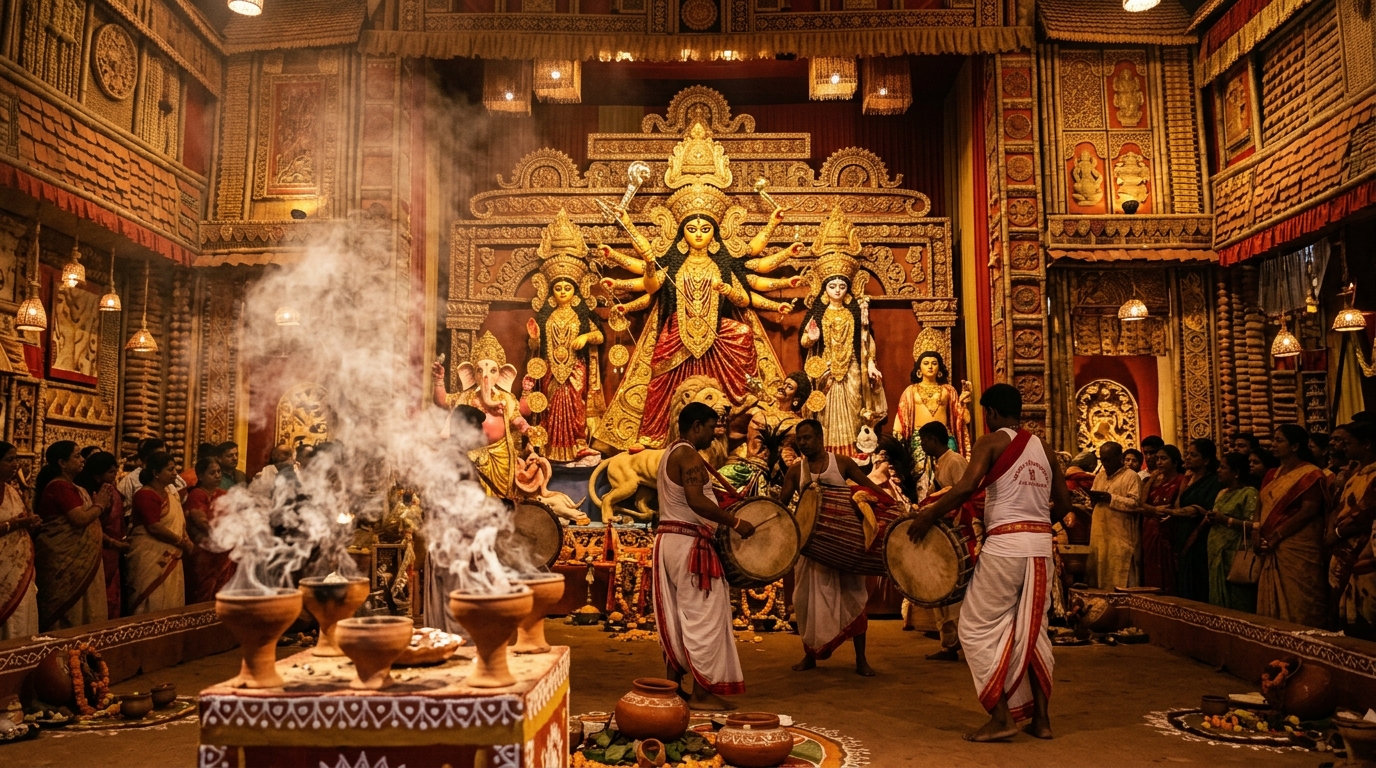
When discussing the autumn traditional festivals of india, Durga Puja is, arguably, the most spectacular artistic showcase. Primarily celebrated in West Bengal, particularly in Kolkata, this festival honors the goddess Durga and her victory over the buffalo demon Mahishasura. For five days, the city of Kolkata is transformed into an open-air art gallery, featuring thousands of custom-designed temples (known as *pandals*) that house exquisite clay idols of the deity.
Durga Puja is unique among the traditional festivals of india due to its seamless integration of religious devotion and secular art. Neighborhoods compete to create innovative pandal designs using traditional handicraft techniques. This artistic focus earned the festival an official inscription on the UNESCO Representative List of the Intangible Cultural Heritage of Humanity in 2021. Visitors can expect a spectacular sensory feast of rhythmic drumming (the rhythmic beats of the *dhak*), aromatic incense, and public feasting.
Ganesh Chaturthi: Community and Grandeur
In the western state of Maharashtra, Ganesh Chaturthi reigns supreme as the most anticipated public celebration. The festival commemorates the birth of the elephant-headed deity Ganesha, the lord of new beginnings and remover of obstacles. What began as a private domestic worship was transformed into a massive public festival in the late nineteenth century by the nationalist leader Bal Gangadhar Tilak, effectively redefining the socio-political dynamics of traditional festivals of india.
Today, the streets of Mumbai feature enormous clay idols of Ganesha, some exceeding twenty feet in height. For ten days, communities gather for daily prayers, musical performances, and charitable activities. The festival culminates in the *visarjan* procession, where these idols are carried through cheering crowds to the Arabian Sea for ritual immersion, symbolizing Ganesha’s return to his heavenly abode.
Dussehra: The Triumph of Good over Evil
The ten-day festival of Dussehra is celebrated across the country, yet different regions celebrate these traditional festivals of india in remarkably diverse ways:
- Northern India: The festival culminates in the dramatic burning of towering effigies of the demon king Ravana, symbolizing the victory of Lord Rama.
- Mysuru (Southern India): The city hosts a royal celebration dating back over four centuries, where the illuminated Mysore Palace, adorned with over 100,000 light bulbs, serves as the backdrop for a grand procession featuring decorated elephants.
- Kullu Valley: Dussehra brings together over two hundred local deities for a week-long congregation in the Himalayan foothills.
Winter Light: The Spiritual Depth of Traditional Festivals of India
As the year draws to a close, the cool winter months host some of the most visually stunning and spiritually intense celebrations in India, focusing heavily on the symbolism of light conquering darkness.
Diwali: The Festival of Lights
Perhaps the most globally recognized of all traditional festivals of india, Diwali (or Deepavali) represents the ultimate triumph of light over darkness and knowledge over ignorance. The festival marks the return of Lord Rama to his kingdom of Ayodhya after a fourteen-year exile. To guide his path, citizens illuminated the streets with thousands of clay lamps (known as *diyas*), a tradition that continues to define the festival’s aesthetic today.
As is common with major traditional festivals of india, preparation begins weeks in advance. On the main night of Diwali, families gather to perform prayers to Lakshmi, the goddess of wealth, before illuminating their homes with oil lamps. For an unforgettable visual experience, travelers should visit the historic city of Jaipur, where local markets are elaborately illuminated, or the ancient city of Ayodhya, where millions of clay lamps are lit along the banks of the Sarayu River.
Dev Deepawali: The Light of the Gods
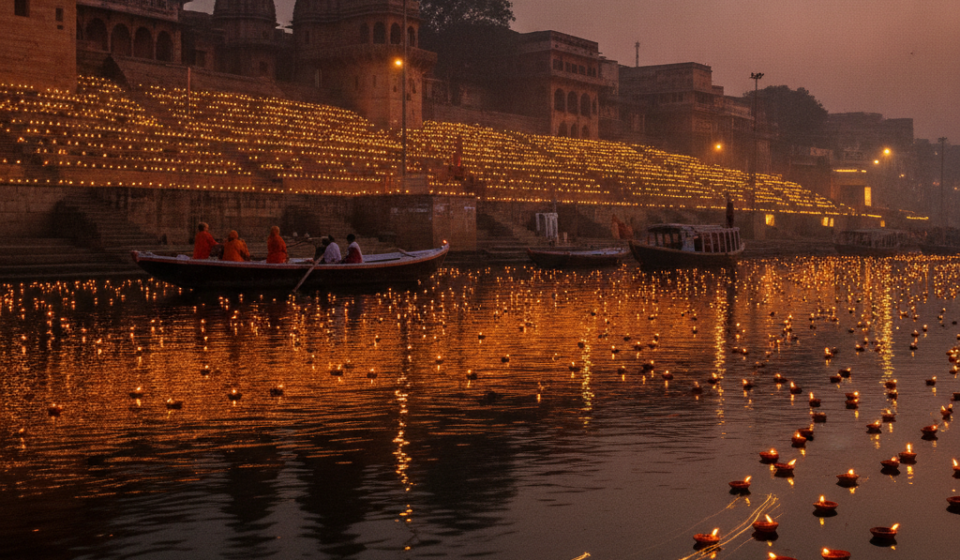
Fifteen days after Diwali, on the full moon of the Hindu month of Kartika, the city of Varanasi celebrates Dev Deepawali. According to belief, this is the day when the gods descend to earth to bathe in the sacred Ganges River. This celebration stands apart from other traditional festivals of india due to its concentrated focus on a single, sacred geographic location.
“The steps of the ghats are illuminated with a quiet brilliance, transforming the ancient city of Varanasi into a cosmic map of light and devotion.”
During Dev Deepawali, every single ghat in Varanasi is illuminated with hundreds of thousands of earthen lamps. The sight of these countless flickering lights reflecting off the dark waters of the Ganges is arguably one of the most spiritually charged views in the world. Capturing the spiritual essence of traditional festivals of india, Varanasi hosts spectacular evening prayer rituals (known as *Maha Aarti*) at Dashashwamedh Ghat, attracting thousands of pilgrims and international observers who view the proceedings from wooden boats. To witness this spectacle, booking a journey to Varanasi well in advance is highly recommended.
Regional and Indigenous Festivals of India
While the major pan-Indian festivals receive significant international attention, the regional and indigenous celebrations offer an equally rich exploration of local tribal cultures and distinct geographical identities.
Hornbill Festival: The Festival of Festivals
Among the tribal and regional traditional festivals of india, the Hornbill Festival of Nagaland is a magnificent display of indigenous heritage. Held annually in the first week of December at the Kisama Heritage Village, this festival brings together seventeen major Naga tribes to showcase their traditional dances, songs, crafts, and culinary styles.
Named after the Indian Hornbill (a bird revered in Naga folklore), the festival acts as an essential platform for cultural preservation. Visitors can observe elaborate warrior dances, traditional wrestling matches, and musical performances that combine ancient chants with modern rock elements. The festival provides a rare, structured opportunity to experience the diverse cultural landscape of Northeast India in a controlled and highly engaging environment.
Onam: The Harvest Legend of Kerala
In the southwestern state of Kerala, the agricultural ties of traditional festivals of india are beautifully demonstrated through Onam. This ten-day harvest festival commemorates the mythical golden reign of King Mahabali, a legendary ruler who is believed to visit his subjects during this period. The celebration is marked by a deep sense of egalitarianism and communal harmony.
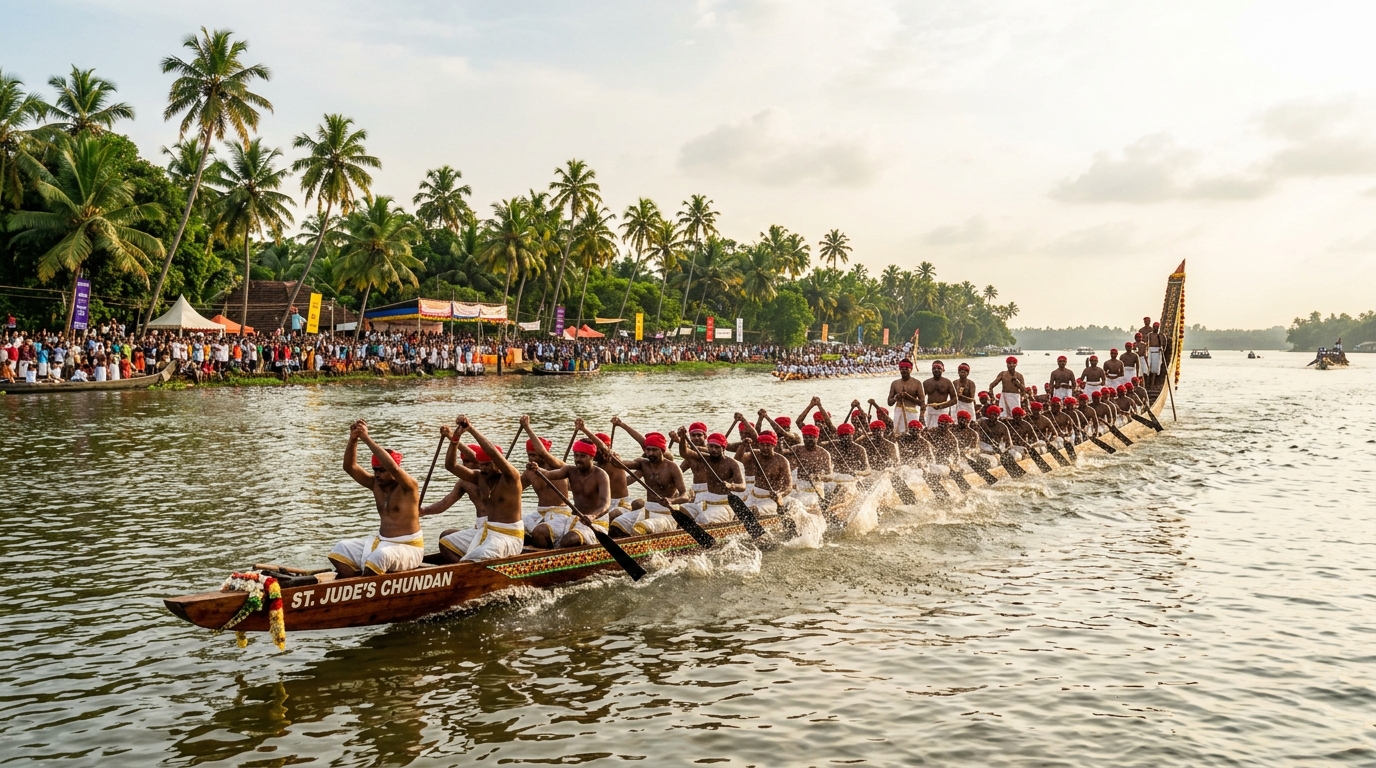
What distinguishes Onam from other traditional festivals of india is its emphasis on secular social celebration. Communities create elaborate floral carpets (known as *Pookalam*), participate in tiger dances (known as *Pulikali*), and organize the famous snake boat races (known as *Vallam Kali*) on Kerala’s backwaters. The festival culminates in the *Onam Sadya*, a grand vegetarian feast served on a banana leaf. Planning a cultural exploration of Kerala during Onam provides an exceptional look at the state’s unique heritage.
Planning Your Travel Around the Traditional Festivals of India
Attending the major traditional festivals of india requires meticulous preparation and a clear understanding of regional dynamics. For the modern FIT (Free Independent Traveler) seeking an authentic encounter, collaborating with a local DMC (Destination Management Company) is essential to secure reliable logistics and knowledgeable local guides.
The administrative and physical logistics for these traditional festivals of india can be demanding. For a seamless experience, travelers should structure their travel arrangements around these core logistics priorities:
- Accommodation Bookings: Secure hotels and homestays six to eight months prior to major events, particularly in historic cities like Varanasi, Amritsar, or Mathura.
- Transport & Transit: Pre-book flights and trains early as transit systems experience severe delays and rapid capacity limits during peak festival seasons.
- Document Security & Safety: Keep secure digital and physical copies of your travel documents, passport, and visa credentials. Remain highly alert in crowded public venues.
| Festival Location | Best Booking Window | Permit / Registration Required? | Local Transport Recommendation |
|---|---|---|---|
| Mathura & Vrindavan (Holi) | 4-5 months in advance | No permits required | Pre-booked private taxi or authorized local e-rickshaw |
| Kolkata (Durga Puja) | 3-4 months in advance | Maha Panchami pass recommended for premium pandals | Kolkata Metro or pre-arranged walking tours |
| Varanasi (Dev Deepawali) | 6-8 months in advance | Boat safety clearances needed for Ganges river viewing | Pre-booked registered motorboats or hand-rowed wooden boats |
| Kohima (Hornbill Festival) | 5-6 months in advance | Inner Line Permit (ILP) required for domestic / registration for foreign tourists | Pre-booked private 4×4 vehicles |
Engaging with the traditional festivals of india as an informed and respectful observer transforms the experience from a simple holiday into a profound cultural exchange. To assist in planning, the following table outlines key travel details for some of India’s most significant cultural gatherings.
| Festival Name | Primary Location | Approximate Month | Key Cultural Highlight |
|---|---|---|---|
| Holi | Mathura and Vrindavan, Uttar Pradesh | March | Sacred flower-throwing and Lathmar celebrations |
| Durga Puja | Kolkata, West Bengal | October | Exquisite, custom-designed community pandals and artistic idols |
| Ganesh Chaturthi | Mumbai, Maharashtra | September | Massive community prayers and grand beach immersions |
| Diwali | Ayodhya and Jaipur, Rajasthan | November | Intricate market illuminations and lighting of clay diyas |
| Dev Deepawali | Varanasi, Uttar Pradesh | November | Hundreds of thousands of lamps illuminating the Ganges ghats |
| Hornbill Festival | Kohima, Nagaland | December | Sixteen tribes celebrating together with warrior dances and crafts |
| Onam | Kochi and Alleppey, Kerala | August / September | Egalitarian harvest feasts and dramatic backwater boat races |
This curated overview of the traditional festivals of india showcases the incredible breadth of experiences available. Depending on the source of the travel itinerary, visitors can focus on spiritual immersion, artistic discovery, or culinary exploration. But still, the key is proper timing. Most festivals occur during the pleasant post-monsoon or early winter months (roughly from October to March), making it the ideal season for extensive travel.
To ensure a safe and respectful journey, travelers should adhere to a few essential cultural guidelines:
- Dress respectfully: Always choose modest clothing that covers the shoulders and knees when visiting temples or community pandals.
- Seek consent before photography: Photographing worshippers during intimate prayer rituals should only be done with permission.
- Manage personal safety: Large crowds can be overwhelming, so always carry minimal cash and secure your personal belongings.
- Respect local customs: Remove footwear before entering temples, and always accept religious offerings with your right hand.
Conclusion
Experiencing the traditional festivals of india offers an unforgettable window into a civilization that has masterfully balanced ancient devotion with rapid modern development. These celebrations are far more than mere tourist attractions. They are the heartbeat of the subcontinent, expressing deep philosophical concepts through public spectacles, communal harmony, and artistic innovation. The legacy of the traditional festivals of india is one of absolute resilience and continuous evolution, proving that ancient traditions can thrive in a modern, connected world.
Whether witnessing the glowing lamps of Dev Deepawali reflecting off the Ganges in Varanasi, or joining the ecstatic crowds of Holi in the sacred temples of Vrindavan, participating in these traditional festivals of india will leave an indelible mark on any traveler’s memory. These celebrations teach valuable lessons about community, patience, and the profound beauty of shared joy. By planning ahead, traveling with respect, and remaining open to the incredible energy of these mass gatherings, visitors can transcend the boundaries of standard sightseeing. They will discover the true, vibrant essence of India’s living heritage.