
Securing an international visa remains the final, most critical milestone for academic, professional, or leisure travel. While document accuracy is paramount, personal presentation plays an equally vital role in determining success. Establishing an appropriate visa interview dress code stands as one of the most practical steps for candidates appearing before consular offices in India. Consular interviews are notoriously brief, often concluding in under three minutes. In this high-stakes environment, physical appearance serves as an immediate indicator of credibility, character, and intent. Preparing a thoughtful visa interview dress code is not merely about choosing garments. It is about constructing a visual narrative that reinforces the legitimacy of an application (which is often a decisive factor in securing an approval) and minimizes the potential for consular doubt.
Key Takeaways
- First Impressions are Crucial: Since consular interviews average under three minutes, your professional presentation immediately signals credibility.
- Align Style with Visa Category: Work visa applicants should stick to business formal (suits), while student and tourist applicants can wear polished business casuals.
- Stick to Muted, Neutral Tones: Navy, charcoal grey, black, and white convey maturity, while bright colors or large logos create unnecessary distractions.
- Grooming Matters: Neat hairstyles, trimmed facial hair, clean nails, and organized documents complete the professional image.
- Avoid Red Flags: Strictly steer clear of distressed denim, graphic t-shirts, athletic apparel, and excessively heavy perfumes or colognes.
The Importance of First Impressions at the Consulate
Consular officers operate under immense daily time pressure, conducting dozens of interviews during a single shift. They must evaluate credibility, ties to the home country, and the legitimacy of travel plans in a matter of minutes. In this high-velocity environment, visual cues matter immensely. Some applicants argue that attire is irrelevant if financial documents and sponsorship letters are flawless. They are not entirely wrong. But still, they underestimate how an officer’s first impression sets the tone for the entire interaction. Adhering to a conservative visa interview dress code signals to the consular officer that the candidate respects the embassy, the host country, and the formal process itself.
This is essentially a psychological cue that helps put the interviewer at ease. When an applicant looks organized, professional, and composed, they project stability. A 2024 survey on consular interview dynamics noted that professional presentation positively influences the initial rapport between the applicant and the consular officer. This is particularly true for applications under Section 214(b) of the US Immigration and Nationality Act, where candidates must overcome the legal presumption of immigrant intent. Presenting as a polished professional directly aligns with the profile of a credible traveler who intends to respect visa terms.
Core Principles of an Effective Visa Interview Dress Code
When planning an outfit, the primary goal is to project a professional, conservative, and trustworthy image. The foundation of an effective visa interview dress code rests on clean lines, neutral colours, and a well-tailored fit. There is no requirement to purchase expensive designer wear, but clothes must be clean, wrinkle-free, and fit properly. As far as current consular guidelines suggest, there is no official mandatory uniform. However, sticking to business professional or business casual attire is always the safest path.
Think of the consulate as a conservative corporate office. Bright, fluorescent colours, loud patterns, and overly casual clothes (such as shorts or distressed jeans) can create a jarring visual distraction. When planning your visa interview dress code, choose neutral tones. Navy blue, charcoal grey, black, and white are excellent choices because they convey maturity. Depending on the local weather, choose lightweight fabrics like breathable cotton to keep yourself comfortable.
Here is a look at the foundational rules to keep in mind:
- Opt for Formal or Semi-Formal Attire: Business formal is always preferred for work visas, while business casual works well for tourist or student visas.
- Prioritise Comfort: Waiting times at the center can stretch for several hours. Ensure clothes are comfortable to sit and stand in.
- Ensure Proper Fit: Avoid clothes that are too tight, too loose, or physically restrictive.
- Keep Branding Minimal: Avoid wearing clothes with large corporate logos or aggressive graphics.
Dress Code for Men: Traditional and Western Options
The appropriate visa interview dress code for male candidates in India involves choosing classic, structured garments. Male applicants have the flexibility to wear Western formal wear or traditional Indian attire, provided the overall look remains conservative.
Western Formal Wear Options
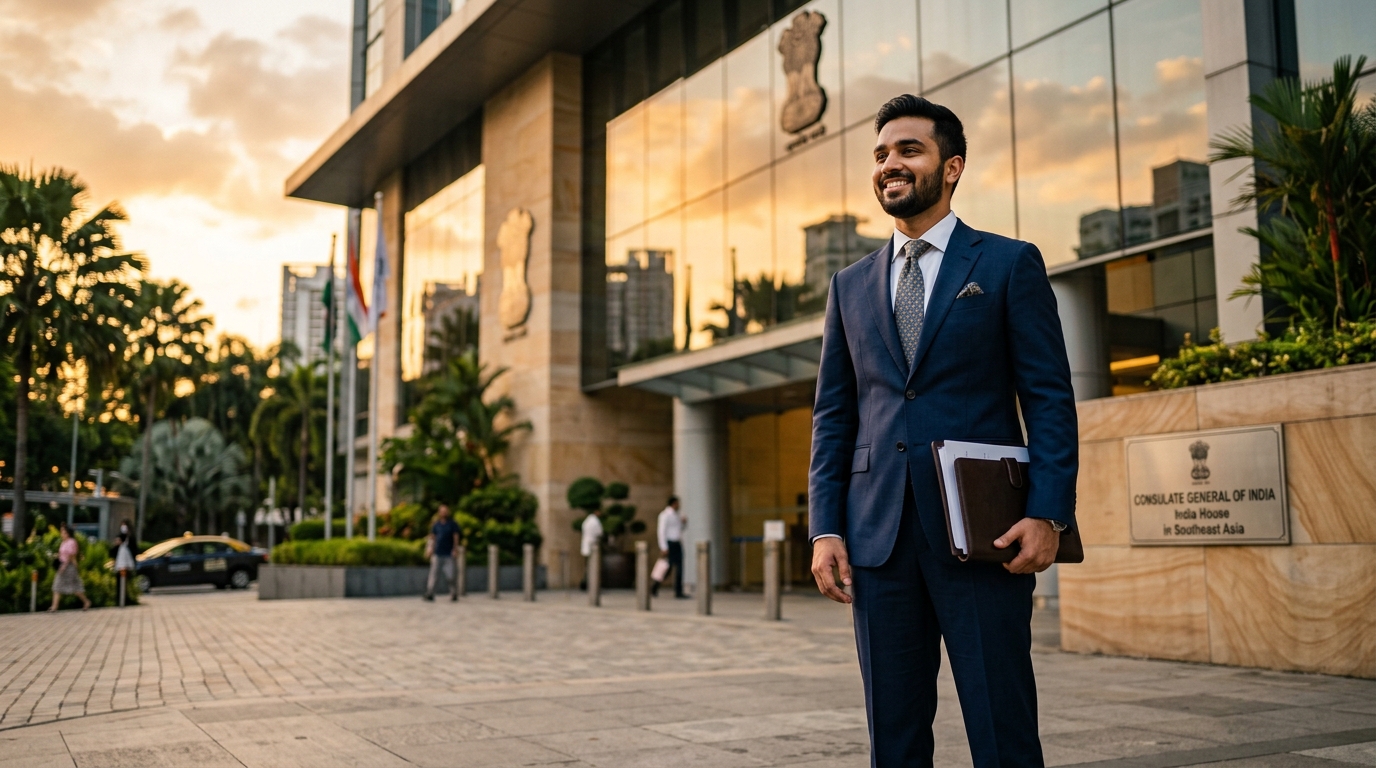
- Business Suits: A classic business suit remains the standard for work visas like the H-1B or L-1. Select a well-fitted suit in navy blue or charcoal grey, paired with a solid white shirt and a conservative tie (a simple stripe works best) to ensure your visa interview dress code remains highly reliable.
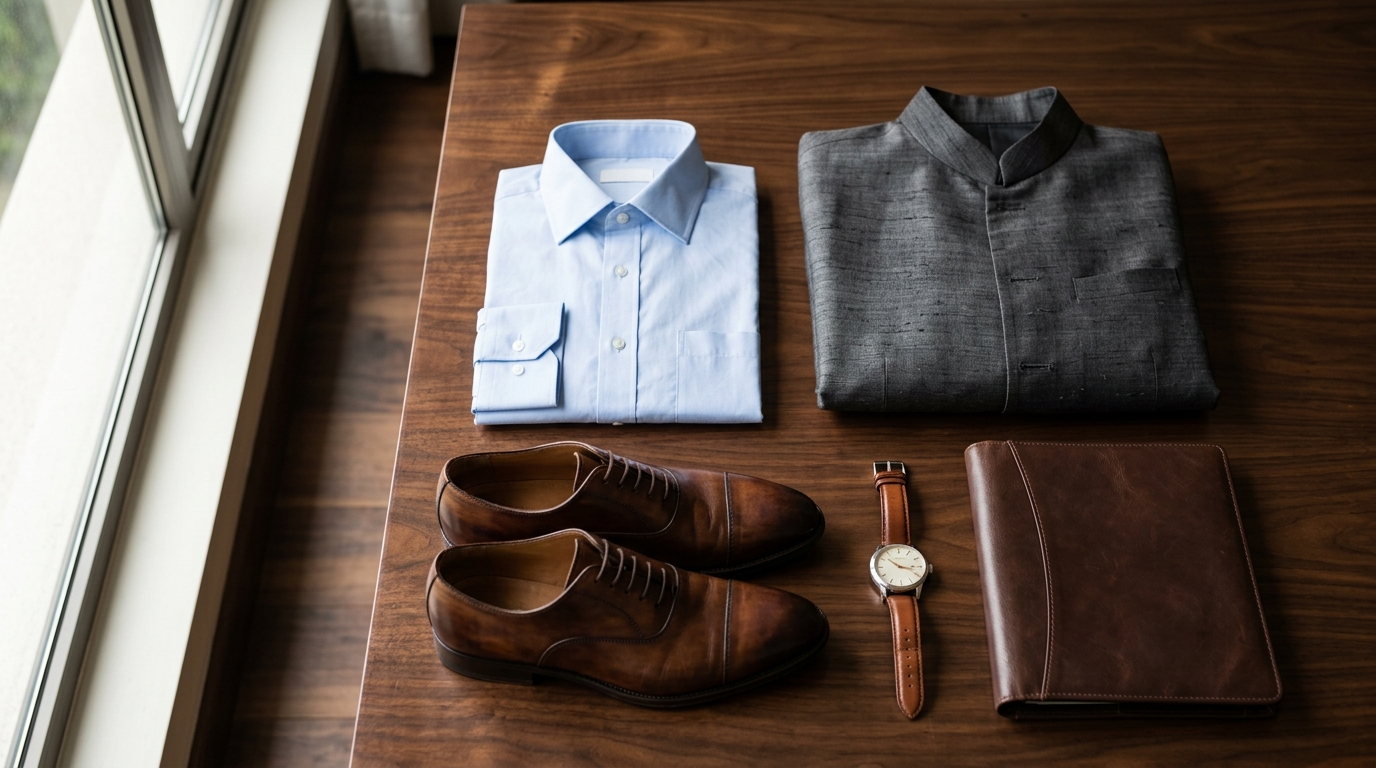
- Smart Business Casuals: If you are applying for a tourist visa (such as the B1/B2) or a student visa (such as the F-1), pair a long-sleeved, ironed dress shirt with high-quality trousers or chinos. Ensure that your shirt is neatly tucked in and your belt matches your shoes. Even in business casual settings, your presentation should remain polished and respectful.
Traditional Indian Options
- Kurta with Nehru Jacket: For men who prefer traditional Indian attire, a formal kurta paired with a Nehru jacket is an excellent option. Ensure the kurta is premium cotton in a solid, muted colour.
- Structured Bottoms: Pair traditional tops with formal trousers or structured churidars rather than casual, loose pajamas.
Your shoes must be formal and clean. Oxfords, derbies, or high-quality leather loafers are the best options. Avoid wearing sports shoes or open-toed footwear. Do not forget to wear formal dark socks that match your trousers.
Dress Code for Women: Balancing Formality and Comfort
For female candidates, the visa interview dress code offers several classic options, spanning both Western formal wear and traditional Indian attire. The key is to find a balance between professional modesty, elegance, and comfort. Whether choosing Western or traditional garments, the visa interview dress code must project competence.
Western Professional Attire
- Tailored Suits: A tailored pantsuit or skirt suit in a neutral shade like navy is an excellent choice. If you choose a skirt, ensure it falls at or below the knee.
- Formal Blouses: Alternatively, pair a formal, conservative blouse with dark, well-fitted trousers for a clean, sharp look.
Traditional Indian Attire
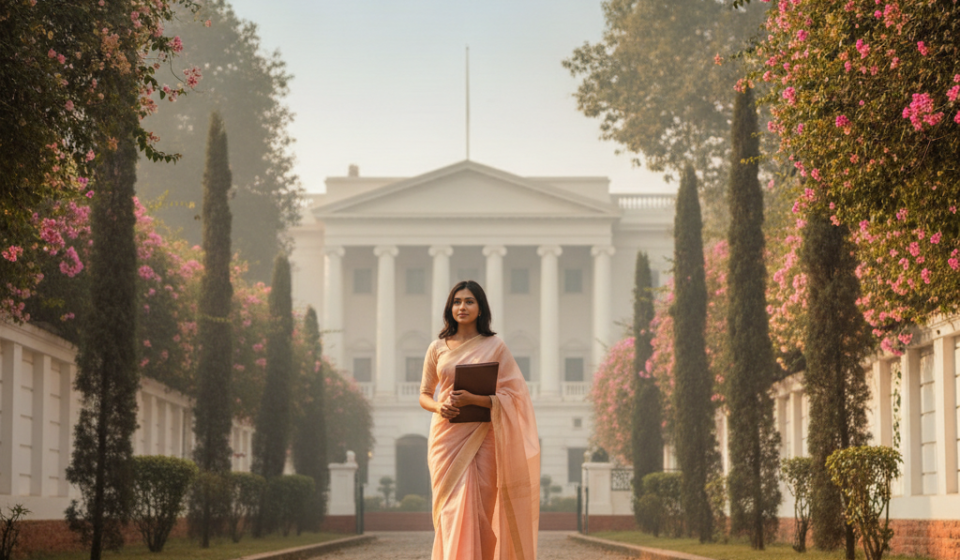
- Formal Sarees: A simple cotton or raw silk saree in muted tones projects maturity and is highly respected by consular officers in India. Avoid heavy embroidery, sequins, or wedding wear outfits (opt for pastel shades instead of heavy brocades).
- Salwar Kameez: An elegant salwar kameez or a clean-cut kurta paired with a dupatta works beautifully. Consular officers in India are accustomed to formal Indian wear, making it a standout choice for an Indian visa interview dress code.
Footwear should be professional and comfortable. Closed-toe flats, moderate blocks, or sensible heels are ideal. Since you will be walking and standing on hard surfaces, avoid excessively high stiletto heels or flimsy sandals. Keep your footwear choice simple, clean, and practical.
How to Align Your Visa Interview Dress Code with Your Visa Category
It is crucial to align your visa interview dress code with the specific class of visa you are applying for. Different visas carry different expectations from the interviewing officer, and your outfit should match the narrative of your application.
For business and work visas, a formal business suit is almost non-negotiable. Your appearance must reflect professional caliber immediately.
| Visa Category | Standard Processing Fee (USD) | Primary Document Checklist Focus | Ideal Attire Style |
|---|---|---|---|
| Business / Work (B1, H-1B, L-1) | $185 / $205 | Employment petition, support letters, professional degrees | Business Formal |
| Student (F-1, M-1, J-1) | $185 (+ SEVIS fee) | I-20 Form, academic marksheets, financial solvency proofs | Smart Business Casual |
| Tourist / Visitor (B2) | $185 | Detailed travel itinerary, proof of home-country ties, bank statements | Business Casual |
Under United States consular guidelines, standard visa fees like the B1/B2 are set at $185 (which is roughly INR 15,500 depending on exchange rates), making the interview a valuable appointment where mistakes must be minimised.
On the other hand, student applicants can adopt a slightly more relaxed visa interview dress code, but still highly professional. If you are applying for a student visa (such as the F-1 for the United States or a student visa for Germany), you want to look like a dedicated student. A smart button-down shirt paired with trousers or a clean, formal kurta shows that you respect the academic path. You do not need a three-piece suit, but wearing a casual t-shirt might signal a lack of seriousness. Your Designated School Official (DSO), who is the university administrator managing student records, would likely tell you that presenting yourself as a credible student is half the battle.
For tourist and visitor visas, a clean business casual look is highly recommended. It signals that you are a responsible, self-funded traveler who can afford the trip and respect the destination country’s regulations.
Critical Flaws: What Not to Wear to Your Interview
When evaluating what to avoid, some mistakes can completely ruin your visa interview dress code. An improper visa interview dress code can inadvertently raise red flags about your lifestyle, intentions, or respect for the process.
First, stay away from clothing featuring political slogans, controversial graphics, or large commercial logos. Your clothing should merely support your credibility. Secondly, avoid athletic wear, loungewear, hoodies, and crop tops, which have no place in a consulate.
Keep your visa interview dress code professional by omitting heavy accessories. Excessive jewelry, noisy bracelets, or oversized belts can be highly distracting. They can also cause unnecessary delays during the security screening process where all metal objects must be scanned.
Here is a list of items you should strictly avoid:
- Distressed or Ripped Denim: Even if highly fashionable, ripped jeans are viewed as unprofessional.
- Slogans and Graphic T-shirts: These can be interpreted as informal or even offensive.
- Athletic Wear: Gym clothes, tracksuits, and running shoes should be left at home.
- Excessive Perfume or Cologne: Strong scents can cause discomfort in enclosed interview booths.
- Uncomfortable Footwear: High heels or tight shoes can make standing in queues painful.
Grooming, Styling, and Final Preparation Checklist
A flawless visa interview dress code is only effective if paired with neat personal grooming. Your grooming is the final layer of your visa interview dress code, ensuring that you project a clean, organized image from head to toe.
- Hair & Beard Styling: Ensure that your hair is neatly styled and kept away from your face. For men, a clean-shaven look or a neatly trimmed beard is essential. For women, keeping hair tied back or styled neatly prevents you from constantly adjusting it during the interview, which can be perceived as a sign of nervousness.
- Nail Care: Ensure your nails are clean and trimmed. If you wear nail polish, opt for neutral or pastel shades rather than bright, fluorescent colours.
- Document Organization: On the day of your interview, organize all your documents in a clean, professional folder. Carrying a messy stack of papers can ruin the professional impression you have worked so hard to create with your attire. Having your passport, DS-160 confirmation, appointment letter, and financial proofs systematically organized allows you to retrieve them smoothly when requested.
Summary Matrix of Recommended Attire
To make your preparation seamless, we have compiled a comprehensive reference matrix. This table provides a quick guide to aligning your visa interview dress code with your purpose of travel, ensuring you select the most appropriate outfit for your specific appointment.
| Visa Category | Recommended Dress Code Style | Ideal Men’s Outfit | Ideal Women’s Outfit |
|---|---|---|---|
| Business / Work Visas (H-1B, L-1, Schengen C) | Business Formal | Dark suit, light shirt, conservative tie, leather dress shoes. | Tailored pantsuit, formal skirt suit, or premium silk saree in muted tones. |
| Student Visas (F-1, J-1, National Visa) | Business Casual / Smart Casual | Collar shirt, chinos or formal trousers, neat loafers or brogues. | Formal kurta with dupatta, elegant salwar suit, or formal blouse with trousers. |
| Tourist / Visitor Visas (B1/B2, Tourist Schengen) | Business Casual | Button-down shirt, formal trousers or dark chinos, neat shoes. | Smart semi-formal dress, clean kurta set, or trousers paired with a professional blouse. |
Conclusion
In summary, mastering your visa interview dress code is about showing respect for the immigration process and presenting yourself as a credible, law-abiding traveler. While your documents and financial statements establish your eligibility on paper, your visual presentation solidifies your credibility in person. When you invest time in your visa interview dress code, you are taking control of the narrative, ensuring that the consular officer’s first impression is one of professionalism, stability, and respect.
For comprehensive support with your visa applications, document verification, and expert interview preparation, explore the dedicated services at TravelDham Visa Services. Let our team of travel experts handle the complexities of your journey, ensuring your application is as flawless as your professional presentation.