
Rural Tourism in India: Discover Authentic Village Life and Unique Cultural Experiences

The rapid urbanization of the Indian subcontinent has fostered a profound yearning for simplicity, cultural depth, and ecological balance. While modern metropolitan centers continue to expand, the heart of the country remains rooted in its agricultural plains, forested hills, and coastal hamlets. Engaging with rural tourism in india offers an unparalleled gateway to these preserved heritages, allowing global travelers to experience the customs, culinary practices, and architectural wonders of agrarian life. This specialized sector of travel is not merely an alternative to conventional itineraries. It represents a fundamental shift in how travelers perceive heritage, communal ecology, and local economic structures. By stepping away from typical tourist corridors, visitors encounter living traditions that have survived generations, thereby supporting sustainable growth and experiencing cultural interactions that are both educational and deeply memorable.
Key Takeaways:
- Authentic Cultural Immediacy: Rural tourism in India offers direct immersion into ancestral lifestyles, local crafts, and heritage.
- Economic Empowerment: Community-Based Tourism (CBT) models redirect up to 45% more income directly to indigenous hosts and women-led cooperatives.
- Eco-Friendly Living: Villages like Mawlynnong and Kumarakom pioneer waste management and sustainable wetland agricultural systems.
- Unmatched Culinary and Artistic Traditions: Travelers enjoy fresh, regional farm-to-table cuisine and help preserve dying folk performing arts.
The Rise of Rural Tourism in India
Why Modern Travelers Seek the Countryside
The global tourism sector has witnessed a structural realignment over the last decade. Travelers increasingly reject sanitized, standardized resort experiences in favor of authentic, immersive environments. This shift is particularly evident in the Indian context, where the rise of interest in rural tourism in india has gathered substantial momentum. According to a Ministry of Tourism report from 2024, state-sponsored rural tourism projects received a 15% funding increase to enhance basic infrastructure and capacity building. This funding reflects a broader governmental recognition of the sector’s potential.
Modern travelers, often categorized in industry parlance as FIT (Free Independent Travelers who plan their own paths rather than booking pre-packaged group tours), seek destinations that offer mental clarity, physical rejuvenation, and genuine human connection. The growth of rural tourism in india offers a structured mechanism to access these tranquil environments without compromising safety or essential comfort, facilitated by organized transport networks. Key experiences available to visitors include:
- Seasonal Harvest Participation: Observing and participating directly in agricultural cycles.
- Artisanal Craft Creation: Learning traditional hands-on crafts from local masters.
- Heritage Lodging: Sleeping in structures built with ancient, climate-resilient architectural techniques.
- Ecological Awareness: Gaining a deep appreciation for the delicate balance between human civilization and natural ecosystems.
These immersive encounters transform temporary visitors into lifelong advocates of environmental conservation and heritage preservation.
Socio-Economic Impact on Indigenous Communities
Critics of rapid tourism development often express concerns regarding cultural commercialization and environmental degradation. These concerns are valid, but still, when managed through Community-Based Tourism (CBT) models, the positive outcomes are undeniable. (CBT is an industry framework where local communities directly manage and benefit from tourism activities.) Advocates of rural tourism in india emphasize that decentralized hospitality prevents mass migration to urban centers by creating viable, localized livelihoods. A study by the National Sample Survey Office (NSSO) indicates that over 70% of India’s population resides in rural areas, making rural economic stability a national priority. By establishing homestays and guided village walks, households can diversify their agricultural income. Also, village tourism serves as a model of sustainable development by prioritizing the needs of local families.
A 2025 financial estimate by the World Travel & Tourism Council showed that local homestay programs generate up to 45% more direct income for hosts than conventional lodging systems.
This economic inflow directly funds local advancements, acting as a catalyst for community-wide development. The primary benefits include:
- Infrastructure and Welfare: Funding local educational programs, healthcare facilities, and ecological conservation initiatives.
- Gender Parity and Financial Independence: Empowering women who frequently manage hospitality operations, culinary services, and craft cooperatives.
- Habitat and Heritage Preservation: Discouraging destructive industrial development by highlighting the economic value of natural habitats and historical structures.
- Cultural Safeguarding: Fostering a sense of pride that encourages the preservation of folklore, language, and artisanal skills that might otherwise be lost to modernization.
To explore these regions comfortably, many travelers coordinate their visits through structured domestic travel packages that bridge the gap between urban logistics and rural hospitality.
Top Regions to Experience Authentic Village Life
Mawlynnong, Meghalaya: Asia’s Cleanest Village
Nestled in the East Khasi Hills of Meghalaya, Mawlynnong has gained international recognition for its remarkable cleanliness and collective civic responsibility. The village pioneered a form of rural tourism in india that centers on environmental stewardship and indigenous Khasi traditions. Here, the local community maintains a strictly organized waste management system where every resident participates in daily cleaning activities. Bamboo trash cans are positioned at regular intervals, and the collected waste is converted into organic compost. This model of rural tourism in india relies heavily on community governance, demonstrating that ecological preservation can coexist with international tourism. Visitors to Mawlynnong can traverse the famous living root bridges, which are grown over decades from the roots of the Ficus elastica tree by generations of Khasi elders. These bridges represent a brilliant feat of bio-engineering, growing stronger as they age, and providing a safe pathway over torrential monsoon rivers. Staying in local bamboo stilt houses provides an intimate look at the matrilineal Khasi culture, where family heritage and property are passed down through the female line, offering an enlightening perspective on social structures.
Raghurajpur, Odisha: The Living Heritage Art Village
For those interested in classical artistic expressions, an exceptional destination for rural tourism in india is Raghurajpur, located in the Puri district of Odisha. This village is populated entirely by artisans who practice Pattachitra, an ancient form of scroll painting on cloth or dried palm leaves. Every home in Raghurajpur doubles as a studio, with walls adorned with intricate murals depicting mythological narratives. This art-centric rural tourism in india preserves not only visual arts but also performing arts, such as the traditional Gotipua dance, which is the precursor to classical Odissi dance. Visitors can sit alongside master craftsmen, learning the precise techniques of extracting natural pigments from minerals, seashells, and charred coconut husks. The village environment functions as an open-air museum, where the boundary between daily life and creative expression is completely integrated. This immersion provides a profound understanding of how religious devotion, historical narrative, and manual craftsmanship intersect in rural Indian societies, passing uninterrupted from master to apprentice over countless generations.
Hodka and Dehar Villages, Gujarat: Crafting Culture in Kutch
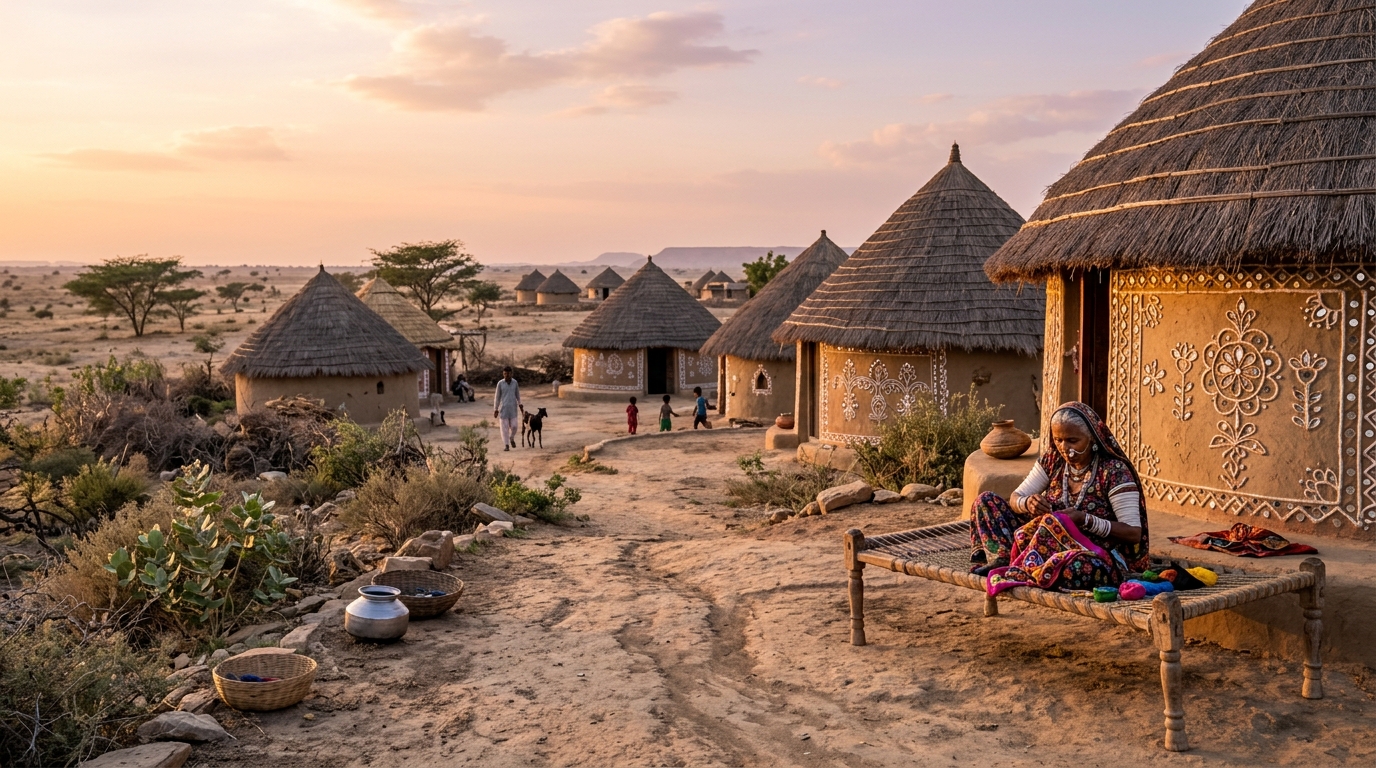
The arid expanse of the Rann of Kutch presents a starkly beautiful background for some of the most vibrant artisanal traditions in Western India. The village of Hodka, inhabited by the pastoral Halepotra community, is central to rural tourism in india because of its exquisite embroidery, leatherwork, and traditional clay-walled huts known as Bhungas. These circular structures are engineered to withstand earthquakes and extreme desert temperatures, showcasing a deep-seated architectural intelligence. Promoters of rural tourism in india highlight Hodka as a successful model of cooperative tourism, where the village cooperative manages lodging and cultural exhibitions. Visitors can observe the complex geometric patterns of Mutwa embroidery, characterized by tiny mirrors stitched into colorful fabric. Similarly, Dehar village offers a window into the nomadic lifestyle of desert communities, where cattle herding and textile weaving form the twin pillars of survival. Engaging with these communities during the dry winter months, particularly in the context of the region’s seasonal desert festivals, provides an evocative look at resilience, artistic genius, and hospitality in one of the country’s most challenging geographic environments.
Kumarakom, Kerala: Backwaters and Sustainable Living
In the southern state of Kerala, the village of Kumarakom presents a completely different ecological paradigm. Situated on the banks of Vembanad Lake, Kumarakom has redefined rural tourism in india by integrating luxury eco-tourism with community-led conservation. The region is famous for its intricate network of canals, mangrove forests, and paddy fields cultivated below sea level. Through the Responsible Tourism Mission of Kerala, the local population offers tourists guided experiences in traditional fishing, clam collection, and coir making (coir is a natural fiber extracted from the husk of coconuts). This structured integration acts as a benchmark for rural tourism in india’s eco-sensitive zones, which illustrates how village tourism can thrive in ecologically fragile wetlands without compromising the habitat. Travelers can enjoy traditional Ayurvedic treatments, learn about the cultivation of native red rice, and board beautifully restored wooden kettuvallams (traditional houseboats) that glide through the tranquil waters. To experience this unique blend of aquatic tranquility and cultural depth, booking dedicated Kerala tour packages ensures a well-planned, authentic journey through the southern countryside.
Experiencing Diverse Cultural Traditions
Culinary Heritage and Farm-to-Table Dining
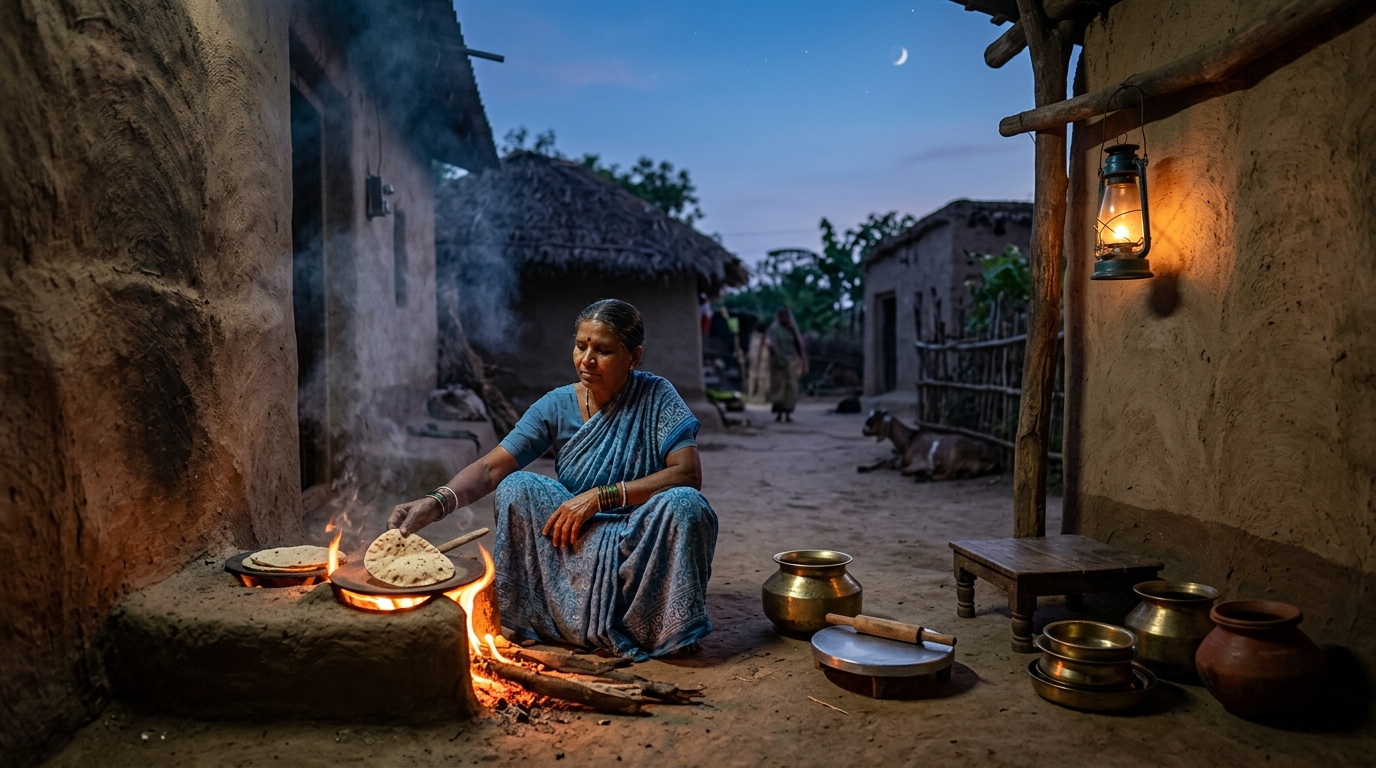
One of the most immediate ways to connect with rural life is through its gastronomy. Unlike urban restaurants that source ingredients through complex global supply chains, village households rely on immediate, seasonal harvests. This food-based rural tourism in india introduces travelers to culinary techniques that are rapidly disappearing from mainstream dining. In Punjab, for example, visitors can enjoy Makki di Roti (maize flatbread) cooked on a traditional clay oven (known as a chulha), accompanied by Sarson ka Saag (mustard greens) harvested directly from adjacent fields. In the coastal villages of Maharashtra, meals feature fresh catch cooked with freshly ground coconut and regional spices. This culinary dimension of rural tourism in india connects visitors directly to the agricultural calendar. It also showcases the resurgence of ancient millets like Ragi, Jowar, and Bajra, which are celebrated for their high nutritional value and ecological resilience. Travelers learn to appreciate that food is not merely sustenance but a reflection of soil composition, climatic variation, and ancestral wisdom. It is basically an organic, educational experience that fosters a profound respect for the agrarian communities that feed the nation.
Traditional Art Forms and Folk Performances
Folk traditions in rural tourism in india provide an emotional bridge between visitors and hosts. These performances are rarely staged for mere entertainment. Instead, they are deeply rooted in seasonal celebrations, religious rites, and historical storytelling. In Rajasthan, evening gatherings around a communal fire feature the hypnotic movements of the Kalbelia dance, which mimics the movements of a cobra, or the dramatic storytelling of Phad paintings accompanied by folk instruments like the Ravanhatha and the single-stringed Ektara. By supporting rural tourism in india, visitors provide these artists with a sustainable platform to perform, ensuring that younger generations find economic incentive in learning their ancestors’ crafts. This mutual benefit prevents these complex, expressive art forms from becoming extinct. It is a living, breathing heritage that thrives on the curiosity and respect of the global traveler, offering a stark contrast to the highly digital, impersonal entertainment of the modern era.
Planning Your Rural Indian Expedition
Optimal Travel Seasons and Climatic Conditions
Due to India’s vast geography, planning a trip focused on rural tourism in india requires a detailed understanding of regional weather patterns. The country experiences extreme climatic shifts, from the freezing winters of the Himalayas to the scorching summers of the Deccan Plateau. Generally speaking, the peak season for rural tourism in india generally spans from October to March, when the weather across most of the country is dry, cool, and conducive to outdoor activities. During these months, the agricultural fields are often in full bloom, presenting picturesque vistas of yellow mustard in the north or lush green paddy in the south. However, certain regions, like the high-altitude villages of Ladakh or the pristine valleys of Himachal Pradesh, are best visited during the summer months from June to September, when the mountain passes are clear of snow. Additionally, planning for rural travel India requires matching regional festival calendars with travel dates to capture local harvests and celebrations.
Packing Essentials and Code of Conduct
Venturing into the Indian countryside requires careful physical preparation and a highly respectful mindset. Participation in rural tourism in india demands that travelers dress modestly, adhering to local cultural sensitivities. Loose-fitting cotton clothing that covers the shoulders and knees is highly recommended across all regions. Footwear should be durable yet easy to remove, as it is customary to enter rural homes and places of worship barefoot. To prepare effectively, travelers should consult the following checklist of packing essentials:
- Modest Clothing: Breathable, long-sleeved garments made from organic fabrics to respect local social norms and shield against sun exposure.
- Durable Footwear: Slip-on walking shoes that can be easily removed before entering homes, temples, and communal spaces.
- Personal Sanitation: Biodegradable toiletries, high-quality insect repellent, and eco-friendly soap to minimize environmental impact on delicate rural water systems.
- Hydration Kits: Reusable water purification bottles to reduce single-use plastic waste in areas lacking standardized recycling infrastructure.
The ethical guidelines of rural tourism in india ensure that visitors do not disrupt the delicate local balance. Photography of residents, particularly women and religious ceremonies, must always be preceded by explicit permission. It is also important to purchase handicrafts directly from local cooperatives or individual artists, ensuring that financial benefits remain within the host community rather than flowing to urban intermediaries.
Comparative Overview of Rural Destinations in India
Selecting the appropriate destination for rural tourism in india depends largely on a traveler’s cultural interests, preferred climate, and artistic inclinations. The diverse regions of the country offer vastly different experiences, ranging from high-altitude agricultural practices to tropical coastal management. To facilitate an informed decision-making process, the table below provides a structured comparison of notable rural destinations, outlining their geographical location, primary cultural focus, optimal travel windows, and distinct regional activities.
| Destination | State | Primary Cultural Focus | Optimal Traveling Months | Unique Regional Activity |
|---|---|---|---|---|
| Mawlynnong | Meghalaya | Eco-Stewardship and Matrilineal Culture | October to May | Living Root Bridge Trekking |
| Raghurajpur | Odisha | Fine Arts and Mythological Paintings | November to February | Pattachitra and Gotipua Art Workshops |
| Hodka | Gujarat | Desert Crafts and Pastoral Architecture | October to March | Bhunga Stays and Mutwa Mirror Embroidery |
| Kumarakom | Kerala | Aquatic Livelihoods and Organic Farming | September to March | Houseboat Cruises and Coir Making Workshops |
FAQs
Is rural tourism in india safe for solo travelers?
Yes, rural tourism in india is generally safe for solo travelers, provided they exercise standard precautions and respect local social norms. Village communities are famous for their warm hospitality and deep-seated cultural respect for guests. However, safety in rural tourism in india depends heavily on pre-planning, which is why solo travelers are advised to book through verified operators or community cooperatives. It is always wise to arrive at your destination during daylight hours, dress conservatively, and keep local emergency contacts readily accessible to ensure a secure, rewarding experience.
Does rural tourism in india benefit local communities?
Yes, responsible rural tourism in india redirects financial benefits directly to the host families and local developmental projects. By staying in homestays, hiring local guides, and purchasing crafts directly from artisans, travelers create a sustainable economic ecosystem. This financial independence helps fund local infrastructure, improve healthcare, and support educational programs within the village. It also incentivizes the community to preserve their natural resources and cultural heritage rather than converting them for industrial use.
How can travelers book authentic rural tourism in india packages?
Authentic packages can be booked through state tourism boards, specialized community cooperatives, or established domestic travel companies that specialize in sustainable itineraries. It is advisable to choose operators that emphasize Community-Based Tourism (CBT) models, ensuring that a significant portion of the booking fee directly supports the host community rather than urban-based middlemen. Doing so guarantees an authentic, mutually beneficial engagement.
What is the future of rural tourism in india?
The future of this sector is highly promising, driven by a growing global demand for sustainable, slow-paced travel. With improved digital connectivity and government-led infrastructure initiatives, more remote hamlets are becoming accessible. The continuous evolution of this travel segment will likely see an increased focus on eco-preservation, digital detox retreats, and structured educational stays that benefit both travelers and host communities alike, creating a more balanced and respectful travel dynamic globally.