
South India since it became a premier global travel destination has always stood apart from the fast-paced corridors of the north. The southern peninsula offers a distinct geographical rhythm where ancient stone temples meet mist-shrouded tea plantations and sleepy canal systems. Developing a comprehensive South India trip plan requires balancing the tropical western coastline with the dense forests of the Western Ghats. For years, travelers focused solely on isolated enclaves like the houseboat circuits of Alleppey or the temple corridors of Madurai. Today, modern regional connectivity allows for integrated journeys that blend historical inquiry with raw natural appreciation. Designing such an itinerary demands an understanding of monsoon cycles, local cultural protocols, and regional distances. It is not merely about selecting destinations on a map but about understanding how different states connect to form a cohesive journey.
Key Takeaways for Your South India Trip Plan
- Diverse Itinerary Options: Choose between a 7-day classic Kerala nature trail, a 10-day Tamil Nadu heritage loop, or shorter offbeat beach and hill escapes.
- Optimal Season: The best window to visit is from October to March, avoiding the intense summer heat and monsoon downpours.
- Seamless Logistics: Pre-booking train tickets (up to 120 days in advance) and hiring private drivers for hill ascents are highly recommended.
- Rich Cultural Demographics: South India caters exceptionally well to heritage enthusiasts, nature lovers, beach wanderers, and spiritual pilgrims.
Why Choose South India for Your Next Vacation?
When contemplating a South India trip plan, the traveler is met with an extraordinary diversity of experiences that few other regions can match. Unlike the arid plains of the north, the southern states boast a lush topography defined by the ancient Western and Eastern Ghats. This geographical layout creates microclimates that range from the cool mountain air of Ooty to the humid, sun-drenched beaches of Kovalam. Thus, the first step in any South India trip plan is deciding whether to focus on historical architectural wonders and deep natural reserves. Coastal towns are best saved for later.
Historically, South India remained largely isolated from the rapid geopolitical shifts that reshaped the northern plains over the centuries. This isolation preserved a rich Dravidian culture that remains visible in everyday life, from temple rituals to classical dance forms. The preservation of these ancient traditions is not just for tourists. It is basically a living, breathing aspect of local identity. Many travelers opt for structured Tamil Nadu tour packages to simplify these long-distance transitions and avoid the complexities of independent route planning.
Furthermore, the architectural achievements in this region are staggering. The structural temples of the Pallavas and the soaring Gopurams (the monumental, highly decorated gateway towers of southern temples) stand as monuments to medieval engineering. Each state possesses a distinct language, culinary style, and historical narrative. This diversity makes a unified journey highly rewarding, though it does require careful logistics.
Key Travel Styles and Demographics
To draft an effective South India trip plan, one must first identify the primary focus of the journey. Identifying the right places to visit in South India depends heavily on individual travel preferences. The southern states serve various travel demographics, each requiring a different pace and travel style. Understanding these categories ensures that the final itinerary aligns with expectations.
The Heritage and Architecture Enthusiast
For these travelers, a South India trip plan must center on the great dynasties of the past. The region is home to several UNESCO World Heritage Sites and ancient wonders:
- Hampi (Karnataka): Explore the sprawling 41-square-kilometer ruins of the legendary Vijayanagara Empire, featuring majestic stone chariots and royal pavilions.
- Great Living Chola Temples (Tamil Nadu): Admire the towering granite architecture of Tanjore and Darasuram, built to honor medieval deities.
- Belur and Halebidu (Karnataka): Marvel at the peerless, intricate soapstone carvings representing the peak of Hoysala craftsmanship.
These historical sites require extensive walking and local expert guides to fully comprehend the historical context. While critics say that visiting too many ruins causes fatigue, hiring an engaging local storyteller completely changes the experience.
The Nature and Wildlife Lover
The Western Ghats represent one of the world’s hottest biodiversity hotspots, housing thousands of species of flora and fauna. Integrating these wild environments into your South India trip plan offers a sharp contrast to the bustling cities:
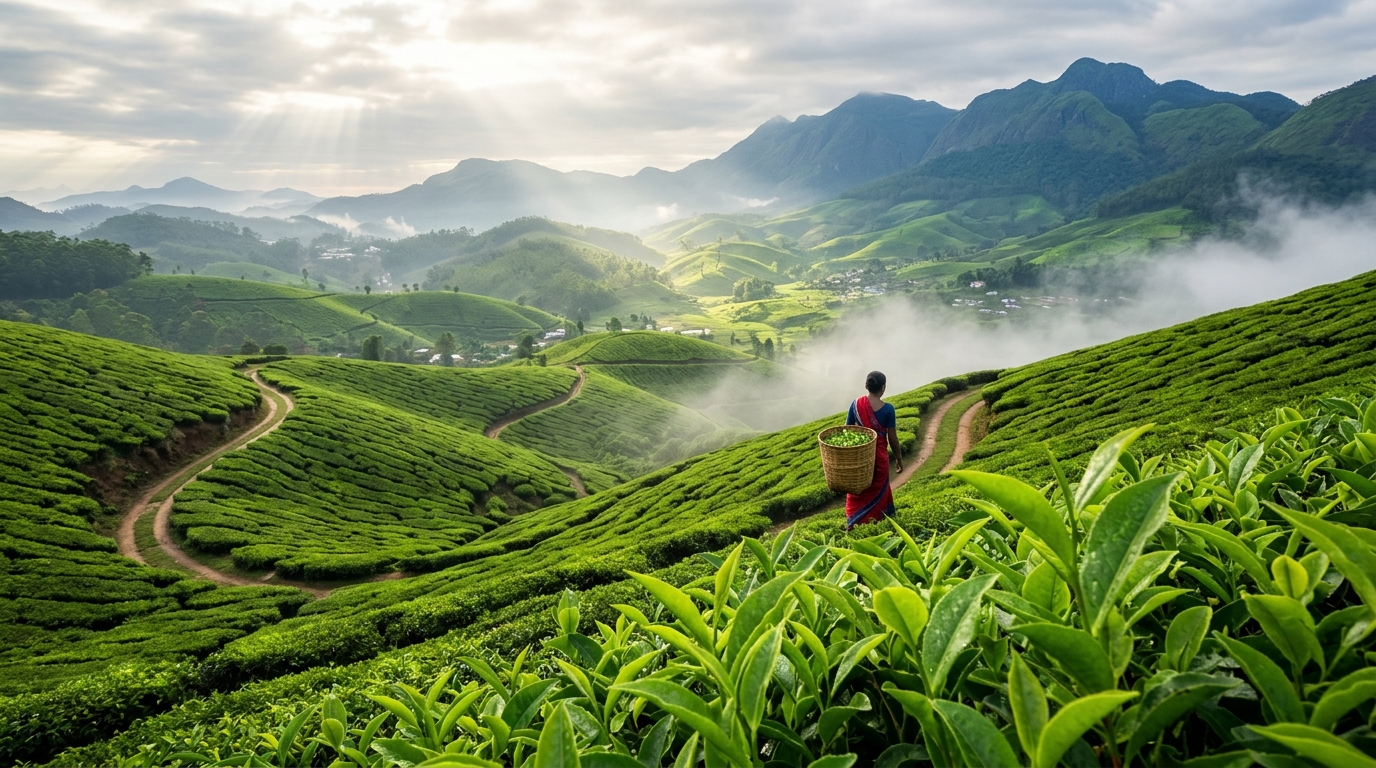
- High-Altitude Hill Stations: Munnar and Coorg offer sprawling tea and coffee estates, serving as the major agricultural and scenic highlights of the Western Ghats region.
- Wildlife Sanctuaries: Reserves like Nagarhole, Wayanad, and Periyar provide prime opportunities to observe wild elephants, gaurs, and the elusive Bengal tiger.
These national parks are strictly managed by local forest departments, meaning jungle safaris and entry permits must be booked well in advance to secure your spot.
The Coastal Wanderer
With a coastline stretching along the Arabian Sea and the Bay of Bengal, South India offers remarkably varied beach experiences. The cliffs of Varkala provide dramatic sunset views, while the calm waters of Marari are ideal for quiet relaxation. For those seeking a vibrant, French-influenced seaside town, Pondicherry offers colonial architecture and clean promenades. Including these relaxed shores in a South India trip plan ensures a balanced pace, preventing the temple fatigue that can sometimes occur during intense overland itineraries.
The Spiritual Pilgrim
South India is a major center for spiritual tourism, attracting millions of devotees annually. The temple towns of Madurai, Tirupati, and Rameshwaram are famous for their sacred architecture and ancient rituals. As reported by the Ministry of Tourism in its 2024 annual statistics, Tamil Nadu recorded over 218 million domestic visits, largely driven by pilgrims visiting sacred temple complexes. Designing a South India trip plan around these holy spaces requires respect for local temple dress codes, separate queues, and specific festival calendars. The sheer energy of a morning temple ritual in Madurai is an unforgettable sensory experience, deeply resonant with those seeking architectural or spiritual insights.
Drafting Your Perfect South India Trip Plan: Itinerary Options
There is an overwhelming list of places to visit in South India, which can make planning difficult. To help you execute this, we have outlined several options so you can finalize a South India trip plan that aligns with your timeline. Whether you have a single week or a broader ten-day window, these structures provide a balanced mix of activities.
The Classic 7-Day Kerala Backwaters and Hills Itinerary
The classic Kerala route remains a staple of any South India trip plan. This specific South India itinerary focuses on the transition from cool mountain air to warm backwaters. It is designed to minimize travel strain while maximizing exposure to diverse natural environments. To experience these emerald panoramas, booking curated Kerala tour packages ensures a hassle-free journey through the backwaters.
The journey typically begins in Kochi, a historic port city defined by Chinese fishing nets and colonial spice warehouses. From Kochi, travelers ascend into the Western Ghats to Munnar, a premier hill station surrounded by emerald tea plantations. Munnar offers excellent trekking and opportunities to visit the Tata Tea Museum.
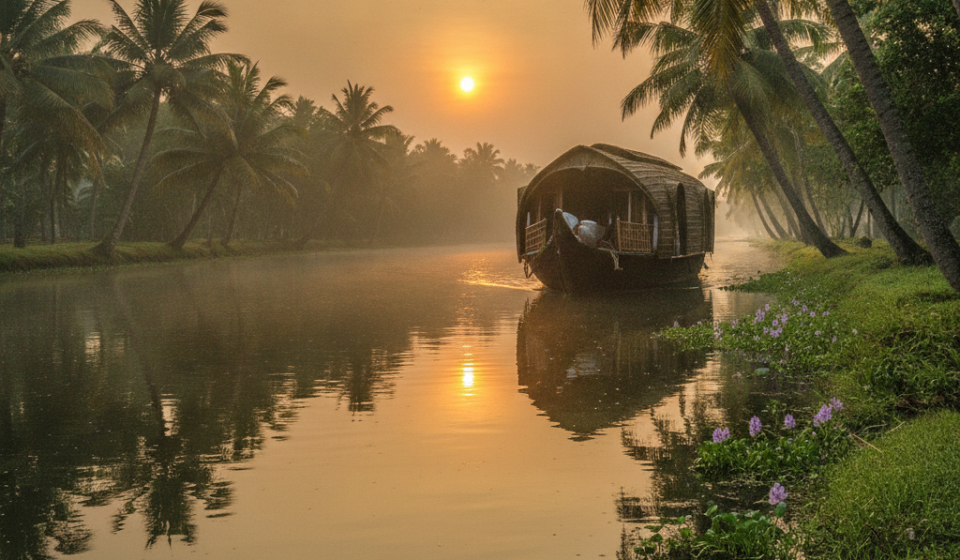
After two days in the hills, the route descends to Thekkady, home of the Periyar National Park. Here, a boat safari offers views of wildlife drinking at the lake edge. The itinerary then moves to Alleppey, the heart of the backwaters. When executing this specific South India trip plan, spending a night on a private Kettuvallam (a traditional wooden houseboat converted into luxury lodging) is highly recommended. The journey concludes with a return to Kochi for departure.
The Heritage Trail: 10-Day Tamil Nadu and Karnataka Itinerary
For history scholars, this is the ultimate South India trip plan. It covers the major architectural epochs of the Deccan and the Dravidian plains. A heritage-rich South India itinerary like this requires private road transport due to the distances between ancient capitals.
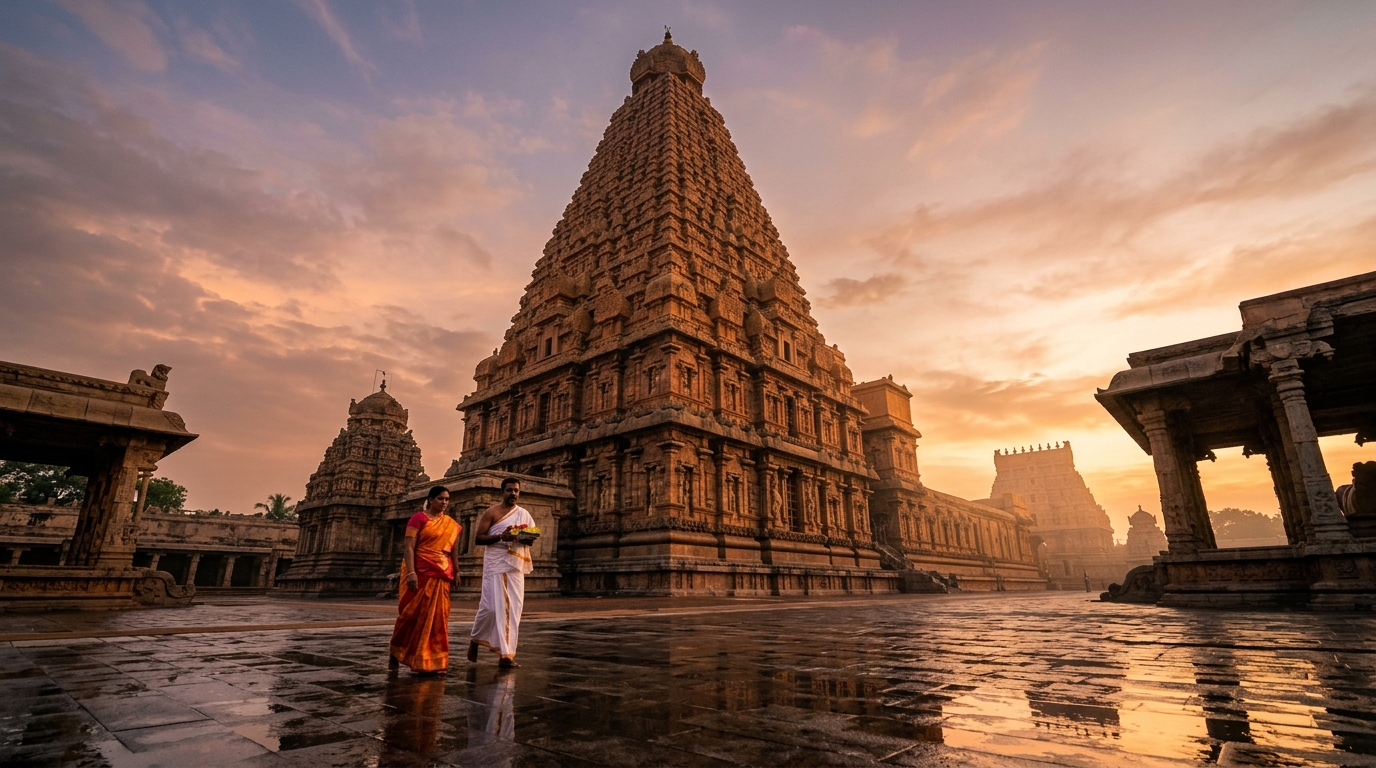
The route starts in Chennai, moving quickly to Mahabalipuram to view the 7th-century rock-cut shore temples of the Pallavas. From there, travelers head south to Tanjore (Thanjavur) to marvel at the Brihadeeswarar Temple, a masterpiece of Chola architecture built entirely of granite.
Continuing inland, the trail leads to Madurai, one of the oldest continuously inhabited cities in the world. The Meenakshi Amman Temple, with its towering, multi-colored Gopurams, serves as the spiritual heart of the city. From Madurai, the itinerary crosses into Karnataka, leading to Mysore (Mysuru), famous for its majestic palace and sandalwood incense. The trip culminates in Bangalore, the modern capital, providing a stark contrast to the historic cities visited along the way. This South India trip plan highlights the architectural transition from rock-cut shrines to grand royal palaces.
The 5-Day Short Break: Coorg and Mysore Itinerary
This is a highly popular South India trip plan for regional professionals and international travelers with limited time. It focuses on the southwestern corner of Karnataka, offering a blend of royal heritage and tranquil highland landscapes. Choosing specialized Coorg tour packages can simplify hotel and transport bookings, allowing for a smooth transition from the plains to the mountains.
The tour starts in Bangalore and proceeds directly to Mysore. A single day in Mysore is sufficient to explore the Mysore Palace, Chamundi Hills, and the vibrant Devaraja Market. The palace is particularly spectacular on Sunday evenings when it is illuminated by nearly one hundred thousand light bulbs.
From Mysore, travelers climb into the forested hills of Coorg (Kodagu). Coorg is often referred to as the Scotland of India due to its mist-covered hills (though local growers prefer to compare it to the highlands of East Africa). A well-rounded South India trip plan in this region balances active coffee estate tours with visits to the Namdroling Monastery (the Golden Temple) in Bylakuppe, which houses over five thousand Tibetan Buddhist monks. The journey ends with a smooth drive back to Bangalore.
The Offbeat Beach Escape: Gokarna and Pondicherry Itinerary
Adding Gokarna and Pondicherry to a South India trip plan reveals a fascinating contrast between the west and east coasts of the peninsula. While Gokarna on the Arabian Sea offers rugged cliffs and a bohemian, spiritual atmosphere, Pondicherry on the Bay of Bengal represents a unique blend of French colonial heritage and Tamil culture. For travelers seeking a relaxed pace, this South India itinerary offers coastal diversity.
The trip begins in Gokarna, where beaches like Kudle and Om Beach are framed by the rocky Western Ghats. Gokarna is far less commercialized than Goa, making it ideal for quiet beach trekking and yoga retreats.
After enjoying the western coast, travelers take an overnight train or flight to Chennai and drive south to Pondicherry. The French Quarter of Pondicherry, with its yellow-washed colonial villas and cobblestone streets, feels worlds apart from typical Indian towns. Visitors can spend days exploring the quiet lanes, dining in French-style cafes, and visiting Auroville, an experimental township focused on human unity. This South India trip plan is perfect for those who have already seen the main tourist hubs and want a slower, more coastal experience.
Essential Elements of a Successful South India Trip Plan
No South India trip plan is complete without addressing practical logistics. The region’s vast geography and unique climate require careful preparation. To ensure a comfortable and rewarding journey, travelers must pay close attention to several key details.
The Best Time to Visit
While the southern states are a year-round destination, the climate varies dramatically by season. The peninsula experiences two distinct monsoons: the Southwest monsoon (June to September) and the Northeast monsoon (October to November). Historical data recorded by the India Meteorological Department (IMD) shows that summer temperatures in the interior plains frequently exceed 40 degrees Celsius in April and May, making sightseeing highly uncomfortable.
Consequently, the ideal months to execute a South India trip plan are between October and March. During this winter window, the weather is pleasantly cool, with daytime temperatures hovering around 25 to 30 degrees Celsius. This is the perfect time for both beach lounging and temple explorations. Hill stations like Ooty and Kodaikanal can get quite cold at night, occasionally dropping below 10 degrees Celsius, so bringing light layers is advisable.
Managing Transportation and Logistics
Efficient transit is the backbone of a successful South India trip plan. The southern states are connected by a vast railway network and modern multi-lane highways. For short distances and hill station climbs, hiring a private car with a professional driver is the most reliable option. It provides flexibility and eliminates the stress of managing winding mountain roads.
For longer distances, such as traveling between Kochi and Madurai, overnight trains or domestic flights are highly efficient. Bangalore, Chennai, and Kochi serve as major international and domestic aviation hubs. Planning transit early is crucial to keeping your South India trip plan on track, especially since train reservations in India often open 120 days in advance and fill up rapidly.
| Mode of Transport | Best Suited For | Pros | Cons / Booking Window |
|---|---|---|---|
| Private AC Cab | Short distances & hill station climbs (e.g., Mysore to Coorg) | Maximum flexibility, door-to-door comfort, avoids mountain driving stress | More expensive for long-distance solo travelers |
| Indian Railways (Train) | Interstate journeys (e.g., Chennai to Madurai) | Scenic, budget-friendly, comfortable overnight sleeper classes available | Sells out quickly; reservations open 120 days in advance |
| Domestic Flights | Long-distance hubs (e.g., Bangalore to Kochi) | Fastest travel time, connects all major regional airports | Airport transfers required; baggage limits apply |
Culinary Highlights to Experience
A successful South India trip plan should allocate dedicated time for culinary exploration. Southern cuisine relies heavily on rice, lentils, coconut, and a complex array of native spices, offering unique regional variations:
- Tamil Nadu: Legendary multi-course vegetarian meals served on banana leaves, featuring sambar, rasam, and various vegetable poriyals.
- Kerala: Renowned for its aromatic seafood, particularly Karimeen Pollichathu (pearl spot fish grilled in a banana leaf) and light Appams served with vegetable or meat stew.
- Karnataka: Famous for comfort foods like Bisi Bele Bath (a spicy rice, lentil, and veggie blend) and the iconic, crispy Mysore Masala Dosa.
Indeed, a food-focused South India trip plan is highly recommended, as the culinary journey is just as rich as the physical one.
A Comparative Overview of South India Itineraries
To assist in selecting the ideal route, the following table compares the key features of each recommended South India trip plan. This matrix helps travelers decide which South India trip plan matches their current schedule and travel goals.
| Itinerary Name | Primary Theme | Ideal Duration | Key Destinations | Best Suited For |
|---|---|---|---|---|
| Kerala Backwaters & Hills | Nature & Relaxation | 7 Days | Kochi, Munnar, Alleppey | Couples & Families |
| The Heritage Trail | Architecture & History | 10 Days | Chennai, Tanjore, Madurai, Mysore | History Enthusiasts |
| Coorg & Mysore Escape | Royal Heritage & Coffee Estates | 5 Days | Bangalore, Mysore, Coorg | Busy Professionals |
| Offbeat Beach Escape | Coastal Culture & Leisure | 7 Days | Gokarna, Pondicherry | Solo Travelers & Friends |
This structured comparison highlights how easily a South India trip plan can be tailored to specific needs. Whether seeking a quick, five-day escape into the cool hills of Karnataka or a deep, ten-day historical dive through the temple towns of Tamil Nadu, there is an itinerary that fits every style.
Frequently Asked Questions (FAQs)
Assembling a comprehensive South India trip plan often raises practical questions. Below are direct answers to the most common queries received by travel experts to help you prepare.
How many days are ideal for a South India trip?
For a truly comprehensive South India trip plan, ten to fourteen days are ideal. This duration allows you to explore at least two states, such as combining the natural beauty of Kerala with the historical architecture of Tamil Nadu. If you are limited to a week, it is best to focus entirely on a single state to avoid spending too much time in transit.
What is the most efficient way to travel between states in South India?
Domestic flights are the most efficient option for a multi-state South India trip plan when traveling between major cities like Bangalore, Chennai, and Kochi. However, for a more scenic and cultural experience, the Indian Railways network is excellent. Executing the journey via comfortable, air-conditioned sleeper trains is both cost-effective and memorable for a South India trip plan. For shorter interstate travel, hiring a private vehicle with a driver remains the most flexible choice.
Is South India suitable for solo female travelers?
South India is generally considered very safe and welcoming for solo female travelers, ensuring peace of mind when executing a South India trip plan. The southern states have high literacy rates and a progressive social environment. While general travel safety precautions apply, such as avoiding isolated areas late at night and utilizing pre-arranged transport, though not without exceptions, most travelers report positive, respectful interactions with local communities.
What are the must-pack items for a trip to South India?
Packing the right items ensures your South India trip plan remains comfortable across different terrains. Essential items include light, breathable cotton clothing to handle the coastal humidity, a sturdy pair of walking shoes for temple tours, and a light jacket if visiting hill stations like Munnar or Ooty. Additionally, dress codes at major temples require conservative attire (covering shoulders and knees), so packing a few sarongs or shawls is highly recommended.