
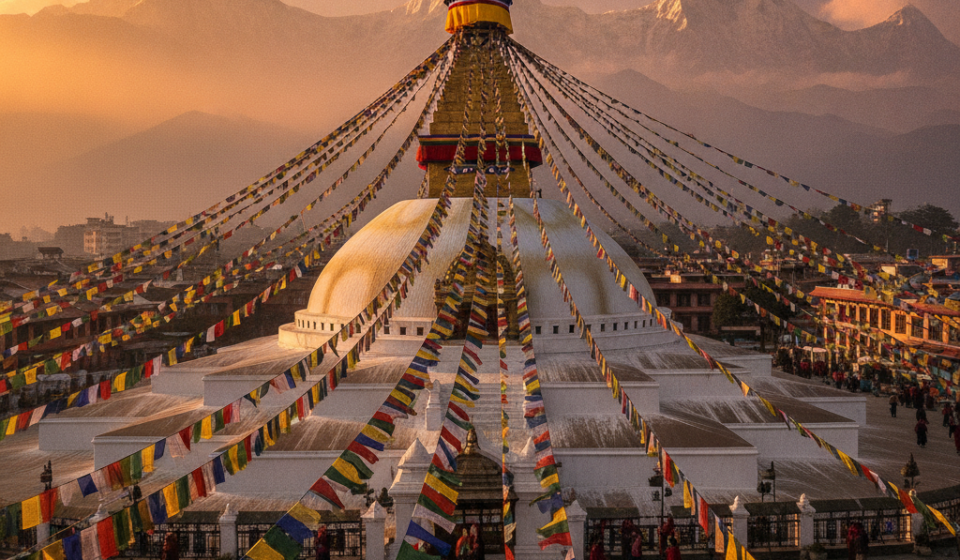

Nepal, with its towering Himalayan peaks and deeply rooted cultural sanctuaries, has long been a magnetic destination for travelers. For Indian citizens, the geographical proximity and unique bilateral treaties make this landlocked neighbor remarkably accessible. Yet, preparation for crossing an international boundary demands absolute clarity on border regulations, especially regarding the question: is passport required for nepal? Understanding the exact documentation mandates is essential for a seamless transition across the border, preventing unexpected delays or deportations at immigration checkpoints. Due to the historical and geopolitical ties, the movement of citizens is governed by specific treaties that differ from standard international travel rules. This detailed analysis outlines the current nepal travel requirements for indian citizens, legal alternatives, and procedural protocols necessary for an orderly trip.
Key Takeaways for Indian Travellers
- Primary Documents: A valid Indian Passport or an original physical Voter ID Card are the only universally accepted documents for adults.
- Aadhaar and Driving Licences: These documents are strictly NOT recognized as valid travel IDs by Nepalese immigration.
- Air Travel Rules: You must present either your passport or Voter ID to board flights between India and Nepal.
- Age-Based Exemptions: Children under 18 can travel with birth certificates and school IDs, while seniors over 65 have relaxed ID criteria.
Understanding the Indo-Nepal Treaty of Peace and Friendship
The foundational framework governing the movement of individuals between India and Nepal is rooted in the 1950 Indo-Nepal Treaty of Peace and Friendship. This historic agreement established a unique bilateral relationship, allowing citizens of both nations to cross the border without standard international restrictions. The treaty essentially permits free movement, employment, and residency for citizens in either country, reflecting deep cultural, social, and economic ties. Under the provisions of this treaty, the border remains largely open, and millions of individuals cross the land boundaries annually for trade, tourism, and family visits.
However, the open border does not equate to a complete absence of regulation. Security considerations and administrative needs have led both governments to implement systematic identity verification measures. While the treaty grants the right to travel, contemporary security protocols require individuals to prove their citizenship at designated entry points, particularly for air travel. Consequently, travelers must comply with specific identification standards to verify their Indian nationality before entry is authorized.
Is Passport Required for Nepal for Indian Citizens?
To resolve the core question of whether is passport required for nepal, one must look at the specific travel regulations enforced by the government. The direct answer is that a valid Indian passport is highly recommended, but it is not the sole document that can grant entry. A common misconception among first-time international travelers is whether is passport required for nepal when visiting a neighbor with open borders.
To clarify, the straightforward answer to “is passport required for nepal” is both yes and no, depending on what alternative documents are available. Under the official guidelines, an Indian citizen does not strictly require a passport to enter Nepal, provided they carry alternative official identification that proves their Indian citizenship beyond doubt.
However, this flexibility is subject to strict conditions. The immigration authorities at airports and land border checkpoints require specific, government-issued documents to authenticate identity. If a traveler possesses a valid Indian passport, the entry process is remarkably fast and efficient. Ultimately, while a passport is not legally mandatory under the bilateral framework, it remains the most secure, widely recognized, and hassle-free document for international transit. It is basically the gold standard for crossing the border, ensuring that the traveler faces no unnecessary questioning from border officials.
Alternative Official Documents for Indian Citizens Travelling to Nepal
Even though the short answer to is passport required for nepal is technically negative if alternative identification is held, certain rules must be obeyed. Travelers must understand which documents are legally recognized and which are strictly rejected by Nepalese immigration authorities. The bilateral agreements specify only two primary documents as acceptable proof of citizenship for adult Indian nationals. These are a valid Indian passport and a voter identity card. To assist travelers in planning their journey, the following comparative analysis summarizes the acceptability of various identification documents at Nepalese immigration checkpoints. This table outlines the specific documents required for nepal tour preparation:
| Document Type | Acceptability Status | Key Considerations and Constraints |
|---|---|---|
| Valid Indian Passport | Fully Accepted | Must have at least six months of validity remaining from the date of entry. |
| Voter Identity Card | Fully Accepted | Must be a physical card issued by the Election Commission of India. |
| Aadhaar Card | Not Accepted | Strictly rejected by Nepalese immigration authorities for entry. |
| Driving Licence | Not Accepted | Cannot be used as primary proof of citizenship at immigration. |
| PAN Card | Not Accepted | Not recognized as valid citizenship proof for border crossing. |
| Emergency Certificate | Fully Accepted | Issued by the Indian Embassy in Kathmandu for emergency repatriation. |
As indicated in the comparative analysis, the acceptable documents required for nepal tour are highly specific. Carrying unapproved documents will result in denial of entry. For broader visa details and regional travel protocols, travelers can consult the comprehensive TravelDham Visa Information Page.
The Validity of the Voter Identity Card
When investigating if is passport required for nepal, many tourists discover the power of the Voter ID card. Officially known as the EPIC (Elector Photo Identity Card), this is the only fully recognized alternative to a passport for adult Indian citizens. If a traveler asks is passport required for nepal when using land crossings, the voter identity card serves as an absolute alternative.
However, the document must be an original, physical card issued by the Election Commission of India. Digital copies or soft versions stored on mobile devices are strictly not accepted. The photograph must be clear, and personal details must match travel bookings perfectly to avoid immigration delays. For this reason, travelers utilizing a voter ID card for nepal must ensure their physical card is in pristine condition before embarking on their travel to Nepal from India.
The Acceptability of Aadhaar Card, Driving Licence, and PAN Card
Many people assume that since Aadhaar is widely accepted in India, no other document is necessary, prompting the question: is passport required for nepal if I have an Aadhaar card? It is vital to understand that the Aadhaar Card is strictly not recognized as a valid travel document by Nepalese immigration.
Because Aadhaar is not valid for Nepal immigration, the query is passport required for nepal remains highly relevant for Aadhaar-only holders. Similarly, driving licences, PAN cards, and ration cards are not accepted as valid citizenship proof for crossing the border. These documents lack the legal standing required under bilateral agreements for international transit. Attempting to travel to Nepal using only an Aadhaar card will result in being turned back at immigration. Therefore, travelers must ensure they possess either a valid passport or a physical voter identity card before initiating their journey.
Document Requirements for Kids and Senior Citizens
Special provisions exist for specific demographics, particularly minors and senior citizens, who may not possess a standard voter identity card. The regulatory authorities have established relaxed guidelines for these groups to facilitate smoother transit, though strict documentation is still required to prevent cross-border trafficking and administrative confusion.
Guidelines for Children Under 18 Years
Parents frequently search whether is passport required for nepal for minors who do not yet possess a voting card. For children under the age of 18, a passport is the most straightforward document. However, if the minor does not have a passport, alternative documents are permitted.
To address whether is passport required for nepal for infants, school-age children can present alternative documents instead. Minors can enter Nepal using the following documents:
- Original birth certificate (written in English or Hindi)
- Valid school identity card (for school-going children)
- Valid identification documents of accompanying parents (either a passport or voter ID card) establishing the familial relationship
For young children, the birth certificate remains one of the primary documents required for nepal tour crossings.
Rules for Elderly Indian Citizens Over 65 Years
Senior citizens also wonder if is passport required for nepal or if their age grants them special documentation exemptions. Under the bilateral guidelines, Indian citizens aged 65 years and older (or under 15) are granted slight concessions.
These age groups are permitted to travel using other photo-identity documents if they do not possess a passport or voter card. Acceptable options include:
- Senior Citizen Card
- Central/State Government issued Pension Book
- CGHS Card or other official government photo identity proofs
Nevertheless, to ensure a completely seamless journey with zero administrative friction, carrying a passport is always the recommended course of action.
Travelling to Nepal by Air vs. Land Border
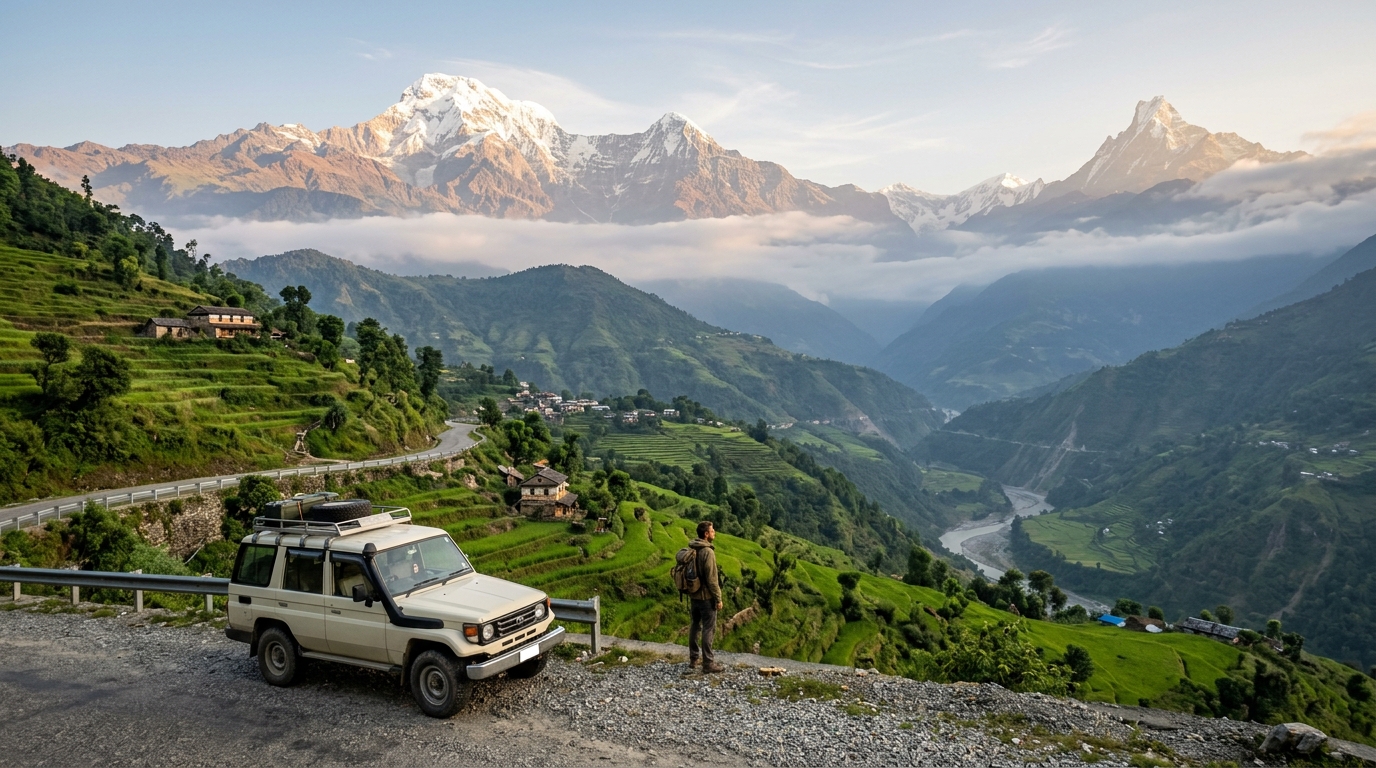
The mode of transportation chosen for travel to Nepal from India dictates the exact application of immigration rules. Air travel and land crossings have different logistical workflows, and travelers must adapt their preparation accordingly. The table below compares the key procedural differences between flying and crossing by land:
| Feature | Air Travel (Flying) | Land Border Crossing (Road) |
|---|---|---|
| Accepted Primary Documents | Valid Passport or Physical Voter ID Card only | Passport, Voter ID Card, or authorized alternative IDs (for minors/seniors) |
| Process & Registration | Strict immigration counter check at both origin and destination airports | Manual registration at land border checkpoints (e.g., Sonauli, Raxaul) |
| Transit with Own Vehicle | Not Applicable | Allowed subject to customs (Bhansar) and local route permits |
| Document Loss Recovery | Must obtain Emergency Certificate from the Embassy in Kathmandu | Must obtain Emergency Certificate or land border transit clearance |
Flying from India to Kathmandu
Airports enforce strict international travel guidelines, which brings us back to the question: is passport required for nepal when flying? If you are boarding a flight from Delhi to Kathmandu, understanding whether is passport required for nepal can save you from being turned away at the boarding gate.
Airlines operating flights between India and Nepal strictly adhere to Civil Aviation Requirements. When checking in at an Indian airport, passenger identity and citizenship are verified. The only documents that airline staff will accept are a valid passport or an original voter ID card. Passengers attempting to board with Aadhaar or driving licences will be denied boarding. This rule applies to both Indian airlines and Nepal-based carriers operating the route.
Crossing the Indo-Nepal Border by Road
At land borders like Sonauli, Raxaul, Panitanki, or Banbasa, the enforcement of whether is passport required for nepal is less stringent, provided you have alternative valid ID. Land crossings allow for more flexible transit, but random checks are common.
While border officials may not stop every single pedestrian or local vehicle, non-local travelers must register their entry. Having a physical voter identity card or a passport is essential when passing through immigration offices near the border. Furthermore, carrying these documents is crucial because Nepalese police and security forces frequently establish checkpoints along major highways, such as the Siddhartha Highway or the Prithvi Highway. Failing to produce valid identity proof during these checks can lead to serious legal complications, fines, or detention.
Customs Regulations and Vehicle Permits for Indian Travellers
Driving a personal vehicle across the border is a popular option for many adventure enthusiasts. However, this requires a clear understanding of customs regulations, local permits, and financial protocols to avoid vehicle confiscation.
Bhansar and Route Permit Process
When bringing a personal vehicle into Nepal, some drivers wonder if is passport required for nepal to obtain a vehicle permit. The vehicle permit process, known locally as obtaining a Bhansar (which refers to the Nepalese vehicle customs permit), is highly regulated.
To drive an Indian-registered vehicle in Nepal, the driver must present several key documents at the border customs office:
- The vehicle’s original Registration Certificate (RC).
- A valid Indian Driving Licence.
- A valid vehicle insurance policy that covers international transit.
- A pollution control certificate.
The customs authorities will issue a temporary permit (Bhansar) for a specific number of days, usually up to 30 days per calendar year. The fee is charged on a daily basis depending on the vehicle class. It is essential to keep the physical Bhansar receipt inside the vehicle at all times, as traffic police regularly inspect foreign-registered vehicles.
Indian Currency Restrictions in Nepal
Managing financial matters in Kathmandu requires proper ID, highlighting why knowing is passport required for nepal for monetary transactions is critical. Nepal’s economy is highly integrated with India’s, and Indian currency is widely accepted.
However, strict regulations govern the denomination of Indian banknotes that can be legally possessed or spent in Nepal. Under current central bank guidelines, Indian currency notes of denominations of INR 100 or lower are freely accepted. However, higher denomination notes, such as INR 200, INR 500, and the now-demonetized INR 2000 notes, are strictly banned in Nepal. Carrying these high-denomination notes is a punishable offence. Travelers should rely on INR 100 notes, credit cards, or convert their Indian Rupees into Nepalese Rupees (NPR) at authorized exchange booths immediately after crossing the border.
Emergency Situations and the Role of the Indian Embassy
No travel plan is immune to unforeseen emergencies, such as the loss of identification documents. In such events, knowing how to secure assistance from official diplomatic channels is paramount.
The Indian Embassy in Kathmandu plays a vital role in assisting distressed citizens. In case of lost documents, the Indian Embassy can issue an Emergency Certificate, showing why knowing whether is passport required for nepal is central to an emergency backup plan. An Emergency Certificate (EC) acts as a temporary travel document, allowing the citizen to return to India.
To obtain an EC, the traveler must: file a local police report immediately, submit an application to the embassy with passport-sized photos, and pay the administrative fee. This process ensures that citizens can safely return home if their primary identification is lost.
Frequently Asked Questions Regarding India-Nepal Travel Documentation
This section addresses the most common practical questions regarding whether is passport required for nepal under the latest bilateral regulations.
Can I travel to Nepal with an expired Indian passport?
To answer is passport required for nepal for expired document holders, the immigration department strictly rejects invalid passports. An expired passport is not considered a valid travel document under any international or bilateral protocol. If your passport has expired, you cannot use it for immigration clearance. However, you can still travel if you possess an original, valid voter identity card. Attempting to travel with an expired passport and no alternative ID will result in denial of entry.
Is Aadhaar card accepted at Nepal immigration?
If you wonder is passport required for nepal when only traveling with a digital copy, please note physical documents are mandatory. The Aadhaar card, whether in physical or digital form (such as m-Aadhaar), is strictly not accepted at Nepalese immigration checkpoints. Despite being a primary identity document within India, bilateral treaties have not yet been updated to include Aadhaar as a recognized cross-border document. Therefore, travelers must not rely on Aadhaar and should ensure they carry their passport or voter identity card instead.
What should I do if I lose my documents in Nepal?
Ultimately, the answer to is passport required for nepal remains a clear no, provided a traveler holds a valid voter ID card for nepal. But if you lose your physical voter card or passport while inside Nepal, you must immediately contact the Indian Embassy in Kathmandu. Filing a local police report is the first mandatory step. With the police report copy, you can apply for an Emergency Certificate at the embassy. This temporary document will allow you to clear immigration and return to India safely.
Conclusion
When preparing your itinerary, the question of whether is passport required for nepal should not deter you from exploring this beautiful Himalayan nation. The open-border policy provides unparalleled travel flexibility, allowing Indian citizens to experience the cultural and natural wonders of Nepal with minimal administrative barriers.
So, is passport required for nepal? No, but carrying one guarantees the most hassle-free international experience possible. By ensuring that you carry either a valid physical passport or a voter identity card, and avoiding invalid documents like Aadhaar, you can focus entirely on enjoying your journey. Proper documentation is the ultimate foundation of a safe, enriching, and memorable Nepalese adventure.