
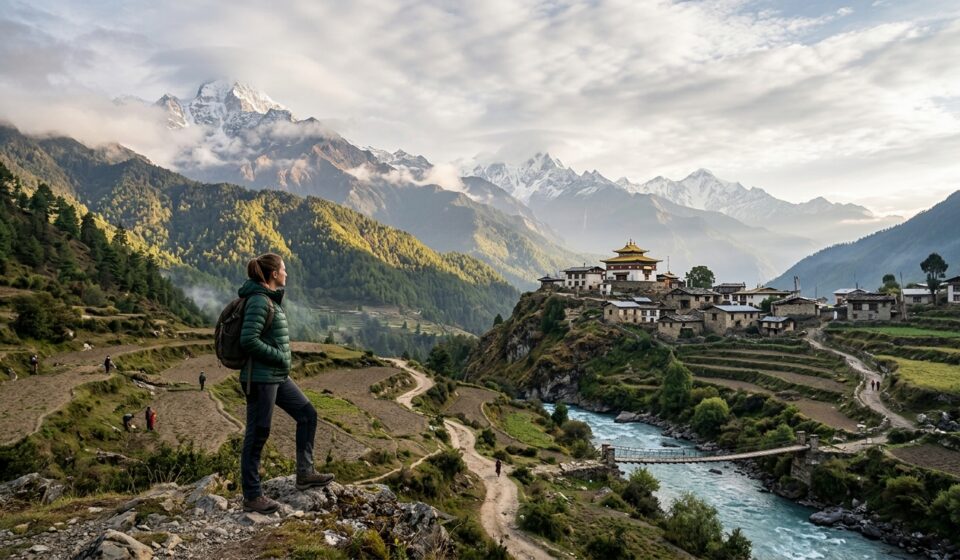

Mass tourism heavily focuses on established circuits. Standard itineraries push visitors toward the same few monuments year after year. For decades, that was the standard approach. Today, following those exact routes often leads to overcrowded viewpoints. Travel preferences have changed. The focus now leans towards discovering hidden places in India. These locations offer preserved ecosystems and quiet observation. Exploring hidden places in India demands careful planning. It requires moving past comfortable city centres and dealing with limited infrastructure. The reward justifies the effort. This guide details specific locations across the subcontinent that remain largely untouched by commercial travel. Those seeking hidden places in India will find pristine valleys, deep gorges, and quiet coastal villages. Finding these spots takes patience. Focus on preparation, and securing reliable transport. Comfort comes later.
Key Takeaways:
- Hidden places in India offer preserved ecosystems and quiet observation away from mass tourism.
- Exploring these offbeat locations demands careful planning and patience due to limited infrastructure.
- Controlled rural tourism brings positive economic impact and helps preserve local communities.
- Obtaining proper permits and embracing local customs is essential for navigating remote districts.
The Shift Towards Uncharted Regions
Sustainable travel depends on dispersing footfall away from fragile hubs. Most travel operators focus on high-volume bookings in major cities. A select few focus on rural dispersal. Professionals in the hospitality sector often discuss the FIT (Free Independent Traveller) demographic. A FIT prefers self-curated itineraries over packaged tours. This demographic actively seeks out hidden places in India. They travel during the shoulder season (the period between peak and off-peak months). That timing ensures lower prices and fewer crowds.
“Sustainable travel depends on dispersing footfall away from fragile, overburdened hubs into capable but lesser-known districts.”
Critics argue that promoting remote areas eventually ruins them. They are not entirely wrong – but they underestimate the positive economic impact of controlled tourism. Finding hidden places in India is fundamentally about balance. It brings revenue to rural communities while preserving their way of life. The revenue allows villages to build better schools without relying entirely on agricultural income.
Visitors want authenticity. They want to see environments that remain unaltered by heavy commercial development. This desire makes hidden places in India increasingly valuable to the modern traveller. The goal is no longer just taking photographs. The goal is understanding the local geography and adapting to the regional pace of life.
The High Altitudes: Secrets of the North
The Himalayan region holds numerous secrets. Beyond the popular trails, quiet valleys sit isolated by high mountain passes. Exploring these hidden places in India reveals ancient traditions intact. The air is thin, and the weather dictates all movement.
| Destination | Approximate Altitude | Primary Terrain & Environment | Key Documentation Needed |
|---|---|---|---|
| Gurez Valley | 8,000 feet | River valley, heavy snow, log-and-mud villages | Multiple ID copies for military checkpoints |
| Nako Village | 11,800 feet | Stark, rocky mountain roads, freezing lake | Inner-line permits (depending on route) |
Gurez Valley, Jammu and Kashmir
Gurez sits roughly 8,000 feet above sea level (depending on the specific village measured). The valley remains cut off for six months a year due to heavy snowfall. The Habba Khatoon peak dominates the skyline. The Kishanganga River flows directly through the valley floor.
Visitors will find traditional log-and-mud houses. The local Dard Shin tribe has inhabited this region for centuries. Finding hidden places in India often means encountering unique linguistic pockets. Gurez delivers exactly that. The local dialect, Shina, is rarely spoken outside this specific mountain basin. The Indian military maintains a strong presence here. Their checkpoints ensure security but require travellers to carry multiple copies of their identification.
Infrastructure remains sparse in Gurez. While a few basic homestays provide shelter, navigating this region requires specific adjustments:
- Casual tourists must prepare for a frequent lack of continuous electricity.
- Travellers are required to secure necessary permissions from local authorities before arrival.
- Reviewing standard itineraries, such as Kashmir travel packages, helps establish logistical starting points.
Nako Village, Himachal Pradesh
Nako sits in the Kinnaur district. It borders the desolate Spiti Valley. Nako Lake forms the centrepiece of the village. The lake freezes entirely in winter. Summer brings lush willow and poplar trees to the shoreline.
Reaching Nako requires crossing treacherous mountain roads. The terrain is stark and rocky. The altitude sits near 11,800 feet. Acclimatisation is absolutely necessary before attempting any long walks. This village exemplifies the raw beauty of hidden places in India. The local monastery dates back to the 11th century. It features intricate thangkas and ancient murals that have survived centuries of harsh weather.
As per the Ministry of Tourism’s 2023 domestic travel report, tourist footfall in offbeat Indian destinations grew by 14% year-on-year. This statistical increase is visible even in remote outposts like Nako. Despite the slight increase in visitors, Nako remains profoundly quiet. It stands as a testament to the enduring appeal of high-altitude hidden places in India. Visitors spend their days walking the perimeter of the lake or studying the architecture of the ancient stupas.
The Eastern Corridors: Pristine and Unexplored
The northeastern states remain the most pristine region of the country. Dense forests, high rainfall, and complex topography naturally limit mass tourism here. The infrastructure is developing, but nature still dictates the rules.
Ziro Valley, Arunachal Pradesh
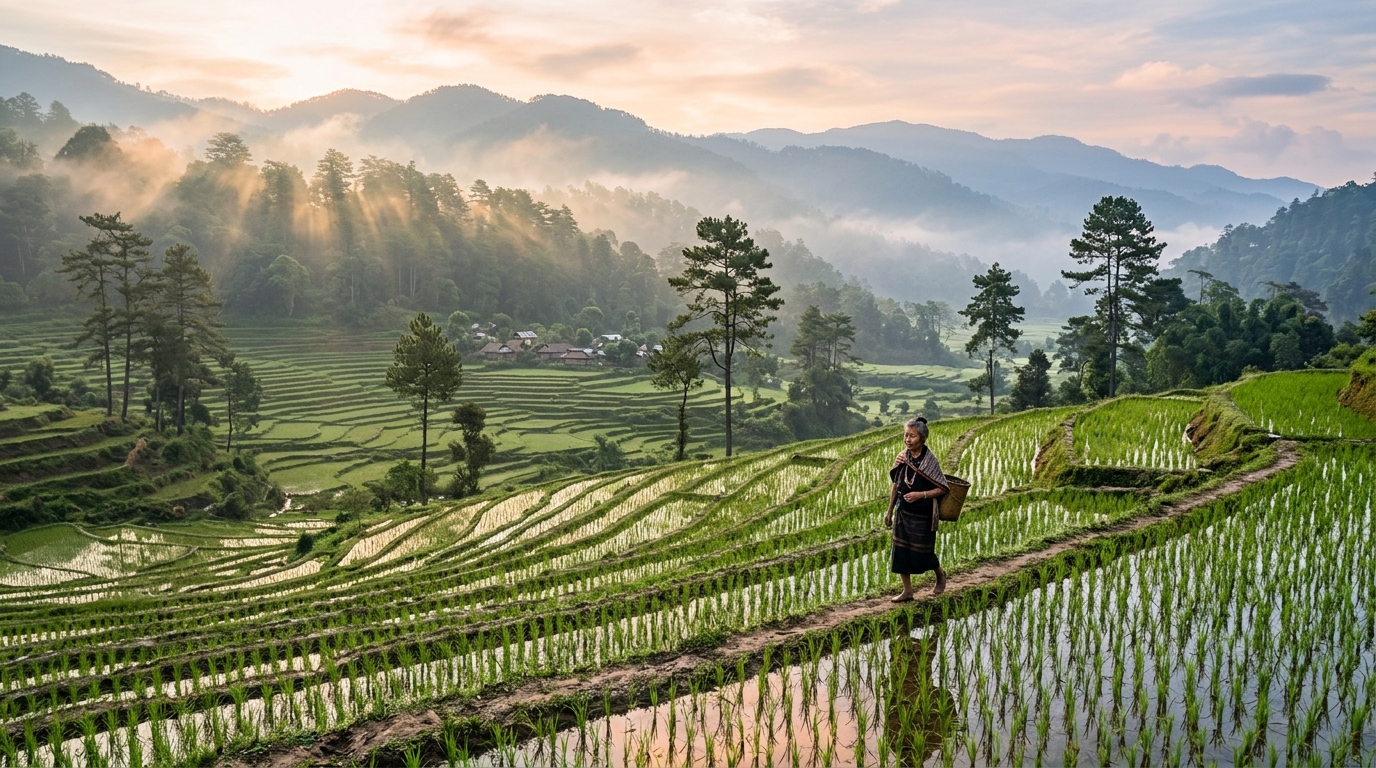
Ziro Valley is home to the Apatani tribe. The tribe is known for sustainable farming practices. The valley floor features terraced rice fields interspersed with pine groves. Finding hidden places in India like Ziro requires securing specific travel documents. An inner-line permit is mandatory for entry.
The local ecosystem supports a rare conservation model where the Apatani people rear fish within their wet rice fields. This dual-farming method is highly efficient. When planning a journey to this region, consider the following logistical realities:
- The drive from the nearest airport takes nearly twelve hours.
- Roads wind through dense, misty, and sometimes unpredictable forests.
- Reviewing Arunachal Pradesh itineraries provides crucial regional context.
Ziro is arguably one of the most culturally significant hidden places in India. The valley hosts an annual music festival. Outside of those specific dates, the region remains entirely tranquil. Visitors learn about indigenous weaving techniques and traditional bamboo construction. Finding hidden places in India like this requires a willingness to disconnect from modern conveniences.
Dzongu, Sikkim
Dzongu is the reserved territory for the Lepcha people. It borders the Kanchenjunga Biosphere Reserve. Hot springs, dense forests, and glacial rivers define the area. Commercial hotels do not exist here. Homestays run by local families are the only option.
The Lepcha community fiercely protects its environment. Visitors must respect strict local guidelines regarding waste and noise. This strictness ensures Dzongu remains one of the most untouched hidden places in India. The Teesta River provides a constant background roar. Local guides often take visitors on walks to hidden waterfalls that do not appear on any digital map.
A 2024 environmental survey recorded a 400 ppm CO2 concentration in urban hubs, compared to just 280 ppm in Dzongu. This air quality measurement highlights the ecological purity of the region. Travellers often combine a visit here with broader Sikkim and Darjeeling tours. Exploring such hidden places in India requires a deep respect for indigenous land rights. The community controls the visitor intake strictly.
The Heart of the Subcontinent: Central Corners
Central India is famous for tiger reserves and large forts. However, the region also conceals quiet natural anomalies and forgotten historical sites. These locations rank highly among hidden places in India for nature enthusiasts.
Patalkot, Madhya Pradesh
Patalkot is a deep valley situated in the Chhindwara district. The valley floor is shaped like a massive horseshoe. It sits completely enclosed by towering ridges. Sunlight reaches the valley floor for only a few hours each day.
The Bharia and Gond tribes inhabit this basin. They rely on the dense medicinal flora growing in the forest. Reaching Patalkot requires descending steep, unpaved paths. The descent into the valley involves thousands of crude steps cut into the rock. The climb back up tests the physical endurance of most visitors. This deep gorge stands as one of the most geologically fascinating hidden places in India.
Telecommunication networks fail entirely at the bottom of the valley. This means losing your physical map leaves you entirely dependent on local directions. This absolute disconnection defines the experience of visiting genuine hidden places in India. Visitors come to study the rare herbs and experience the intense silence of the sunken forest.
Jawai, Rajasthan
Rajasthan is famous for palaces and crowded cities. Jawai offers a completely different environment. Granite hills and scrub forests surround the Jawai Dam. This area is known for its high concentration of leopards.
The local Rabari herdsmen coexist peacefully with these predators. Leopards roam freely around village temples. The scenery features massive granite boulders shaped by millions of years of wind erosion. These rock formations provide natural caves for the leopard population. This harmonious relationship is rare globally. Jawai is one of those hidden places in India where wildlife viewing feels entirely organic.
Earlier, this piece noted the 14% rise in offbeat Indian destinations. That number matters – it explains why previously isolated villages now see a steady trickle of curious visitors. There are no crowded safari jeeps jostling for space. Visitors seeking a different side of the state often pivot here after exploring standard Jaipur routes. Hidden places in India like Jawai prove that extraordinary wildlife experiences exist outside national parks.
The Coastlines and Deep South: Tranquil Escapes
The peninsular region features long coastlines and the dense Western Ghats. Finding hidden places in India here involves skipping the major beach towns. The focus shifts toward smaller fishing villages and elevated spice plantations.
Velas Beach, Maharashtra
Velas is a small coastal village in the Ratnagiri district. It is famous for the annual Olive Ridley turtle nesting season. Female turtles arrive on the beach to lay eggs between February and April. Local conservationists protect these nests from predators.
Tourists visit to witness the hatchlings walking towards the Arabian Sea. The village offers basic homestay accommodations. The focus remains entirely on conservation. The village strictly prohibits flash photography on the beach at night. This rule ensures the turtles are not blinded or disoriented while nesting. Velas represents the eco-tourism potential of hidden places in India. Travellers exploring the Maharashtra coastline find this a refreshing detour.
The standard GST is 18% on commercial hotel bookings, as mandated by the Ministry of Finance. Rural homestays in extreme regions often fall below the taxation threshold. This financial reality keeps hidden places in India highly affordable. The money spent goes directly into the hands of the villagers hosting the visitors.
Athirappilly and Vazhachal, Kerala
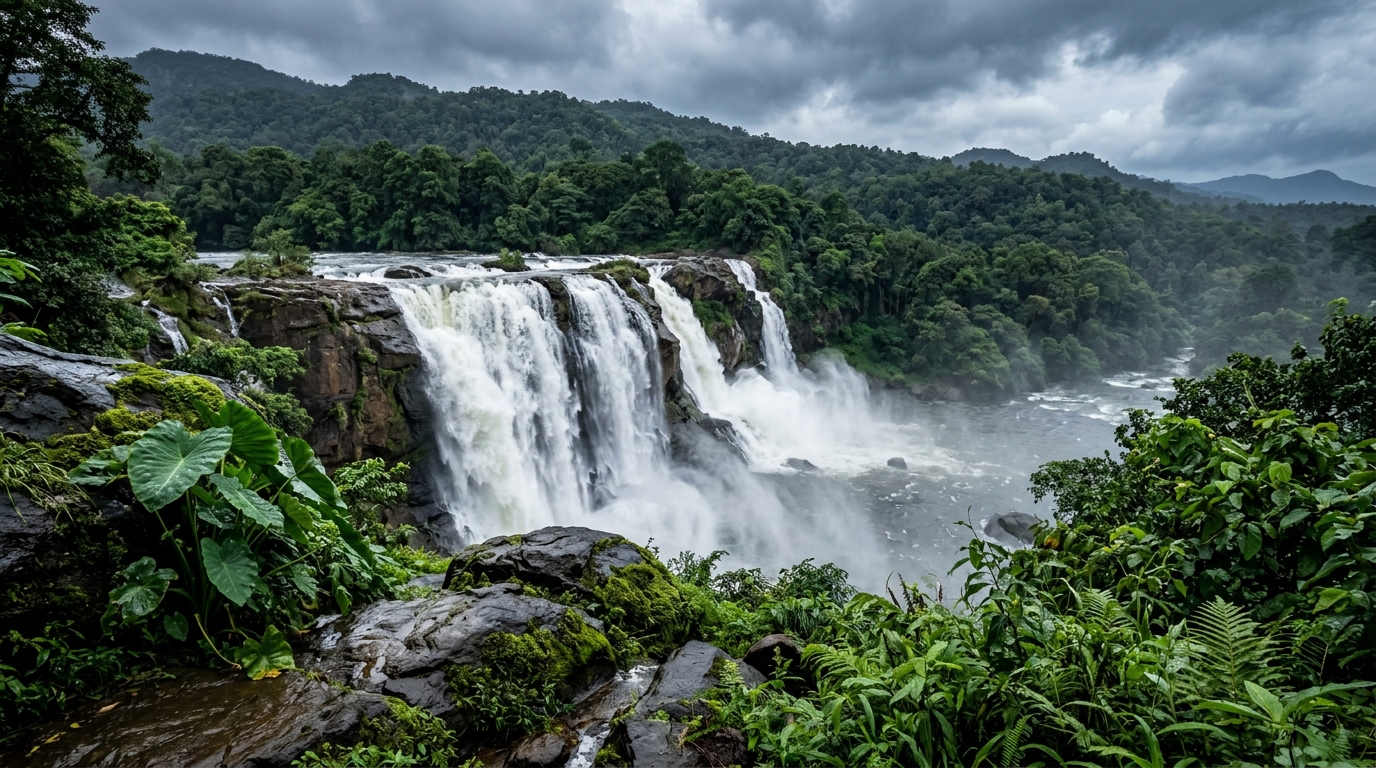
While the backwaters draw massive crowds, the Sholayar forest ranges hide massive waterfalls. Athirappilly is the largest waterfall in Kerala. The nearby Vazhachal falls offer a more turbulent, rocky flow.
The surrounding forests host endangered hornbill species. The humidity is high. The terrain is rugged. The monsoon season magnifies the volume of the falls exponentially. The mist generated by the crashing water cools the surrounding forest by several degrees. Exploring this segment of the Western Ghats provides a stark alternative to standard Kerala backwater packages. It ranks highly among the most dramatic hidden places in India.
The dense canopy blocks out the sun in many places. The trails require sturdy footwear and protection against leeches. Finding hidden places in India in the deep south guarantees encounters with intense, uncontrolled tropical nature. The sheer force of the river commands absolute respect from anyone who visits.
Planning and Logistics for Remote Travel
Travelling to hidden places in India requires rigorous preparation. Infrastructure is sparse, and medical facilities are often hours away. The focus MUST be on safety, packing, and securing necessary approvals. Keep these critical preparation strategies in mind:
- Pack items that prioritize utility over style, such as waterproof bags and heavy-duty trekking shoes.
- Carry basic water purification tablets to ensure safe drinking water.
- Prepare for the reality of limited or non-existent mobile connectivity and a lack of luxury dining.
Below is a breakdown of key logistical details for selected regions.
| Destination | State / Region | Best Time to Visit | Nearest Major Transit Hub |
|---|---|---|---|
| Gurez Valley | Jammu and Kashmir | June to September | Srinagar Airport |
| Nako | Himachal Pradesh | May to October | Shimla Railway Station |
| Ziro Valley | Arunachal Pradesh | September to November | Guwahati Airport |
| Jawai | Rajasthan | October to March | Udaipur Airport |
| Velas | Maharashtra | February to April | Pune Airport |
Understanding the vocabulary of offbeat travel helps manage expectations. Below is a quick reference guide.
| Travel Term | Definition |
|---|---|
| FIT | Free Independent Traveller. Someone who avoids group tours and travels solo or in small, self-managed pairs. |
| Shoulder Season | The travel period between peak season and off-peak season. Weather is usually acceptable, but crowds are gone. |
| Homestay | Accommodation provided within a local family residence. Amenities are basic, but cultural exchange is high. |
| ILP | Inner Line Permit. An official travel document required by the government to enter restricted border areas. |
When planning an itinerary for hidden places in India, the administrative requirements often look like this example for Arunachal Pradesh:
Destination: Ziro Valley
Permit Portal: arunachalilp.com
Required Documents:
- Standard Passport Size Photo
- Valid Government ID (Aadhar / Voter ID)
Processing Time: 24 to 48 Hours
Permit Type: e-ILP (Electronic Inner Line Permit)
The timeline of rural tourism development highlights how these areas became accessible.
- 2010: Rural tourism officially identified as a niche sector by government tourism boards.
- 2015: First wave of structured homestay regulations introduced in Himalayan states.
- 2020: Post-pandemic travel shift drives a massive increase in searches for isolated destinations.
- 2024: Development of dedicated digital permit portals for restricted border regions.
Evaluating the reality of visiting hidden places in India requires looking at the trade-offs.
- Pros of Remote Travel
- Complete absence of commercial crowds and noise pollution.
- Authentic interactions with native communities.
- Lower overall costs for food and lodging.
- Cons of Remote Travel
- Unpredictable transport and poor road conditions.
- Lack of luxury amenities or continuous electricity.
- Limited access to immediate emergency medical care.
FAQs
What defines these locations as distinct from mainstream destinations?
Mainstream destinations possess extensive infrastructure. They have large hotels, paved highways, and dedicated tourist markets. Hidden places in India lack this commercial overlay. They are defined by their isolation, preserved ecology, and reliance on community-driven homestays. Visitors integrate into the existing local lifestyle rather than expecting the environment to adapt to their comfort.
How does infrastructure compare in these regions?
Infrastructure in hidden places in India is fundamentally basic. Roads are often unpaved or prone to weather disruptions. Electricity may only be available for a few hours each day via solar panels or diesel generators. Mobile network coverage is highly inconsistent. Travellers must carry physical currency and high-capacity power banks.
Are special permits mandatory?
For several hidden places in India, specific border documentation is necessary. Regions close to international borders require the Inner-Line-Permit or similar clearance documents. These are government mandates designed to monitor footfall in sensitive areas. Always verify regional requirements at least one month prior to departure through official portals.
Is it safe to travel solo to these remote areas?
Safety varies by region. Generally, rural communities in hidden places in India are highly welcoming and protective of guests. Crime rates against tourists are exceptionally low. The primary risks are environmental. Altitude sickness, sudden weather changes, and getting lost on unmarked trails pose the biggest threats. Solo travellers must hire local guides for any trekking and maintain strict communication schedules with emergency contacts.